SSA A.I CyberSecurity Scoring
01/04/2026
Access Monitoring Plan
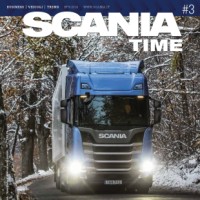
No incidents recorded for Scania Schweiz AG in 2026.
Nissan Motor Corporation is a global car manufacturer that sells a full line of vehicles under the Nissan and INFINITI brands. Nissan’s global headquarters in Yokohama, Japan, manages operations in four regions: Japan-ASEAN, China, Americas, and AMIEO (Africa, Middle East, India, Europe & Oceania). For more information about our products, services and commitment to sustainable mobility, visit nissan-global.com. You can also follow us on Facebook, Instagram, Twitter and LinkedIn and see all our latest videos on YouTube.
Honda Cars India Ltd. (HCIL), a leading manufacturer of premium cars in India, was established in December 1995 with a commitment to provide Honda’s passenger car models and technologies, to the Indian customers. HCIL’s corporate office is based in Greater Noida, UP and its state-of-the-art manufacturing facility is located at Tapukara, District. Alwar, Rajasthan. Honda’s models are strongly associated with advanced design and technology, apart from their established qualities of durability, reliability, safety, and fuel-efficiency. The company has a strong sales and distribution network spread across the country. Besides the new car business, Honda offers one stop solution for buying and selling pre-owned cars through its business function Honda Auto Terrace. The Honda Certified Pre-owned cars come with an assurance of quality and peace of mind that caters to the diverse and burgeoning needs of pre-owned car buyers across the country.
DENSO is one of the world's largest automotive suppliers with a 75-year history of providing advanced automotive systems and technology to automakers worldwide. While our products are featured on nearly every vehicle make and model on the road today, we're also looking to innovate beyond automotive so we can maximize how we support the evolving needs of society. Globally, we have 158,000 employees, including 27,000+ in North America, working together every day to pursue our Two Great Causes: Green -- which represents our goal of achieving carbon neutrality by 2035 through our products, processes and facilities; and Peace of Mind -- which focuses on developing solutions for safer and more seamless experiences across society. Together, they help us pursue our mission of contributing to a better world.
"Love of invention will never end." - Carl Benz Learn more about us as we continue to pioneer the future of driving excellence. Data privacy: mb4.me/provider_privacy Mercedes-Benz AG Mercedesstraße 120 70372 Stuttgart Germany Phone: +49 7 11 17-0 E-Mail: [email protected] For inquiries regarding the content on this website, please contact any of the provided contacts. You may address your concerns in English or your respective native language. Represented by the Board of Management: Ola Källenius, Chairman; Jörg Burzer, Mathias Geisen, Olaf Schick, Michael Schiebe, Britta Seeger, Oliver Thöne, Harald Wilhelm Chairman of the Supervisory Board: Martin Brudermüller Domicile and Court of Registry: Stuttgart; commercial register no. HRB 762873 VAT ID: DE 321281763
Volvo Trucks supplies complete transport solutions for discerning professional customers with its full range of medium- and heavy-duty trucks. Customer support is provided via a global network of dealers with 2,200 service points in about 130 countries. Volvo trucks are assembled in 12 countries across the globe. In 2024 approximately 134,000 Volvo trucks were delivered worldwide. Volvo Trucks is part of the Volvo Group, one of the world’s leading manufacturers of trucks, buses, construction equipment and marine and industrial engines. The group also provides complete solutions for financing and service. Volvo Trucks’ work is based on the core values of quality, safety and environmental care.
The Volkswagen Group with its headquarters in Wolfsburg is one of the world’s leading automobile manufacturers and the largest carmaker in Europe. The Group is made up of ten brands from seven European countries: Volkswagen, Volkswagen Nutzfahrzeuge, ŠKODA, SEAT, CUPRA, Audi, Lamborghini, Bentley, Porsche and Ducati. Our group sells vehicles in 153 countries and operates 114 production plants worldwide. Each working day, around 675,000 employees worldwide produce cars, are involved in vehicle-related services or work in the other fields of business. Our goal is to make mobility sustainable for us and for future generations. Our promise: With electric drive, digital networking and autonomous driving, we make the automobile clean, quiet, intelligent and safe. At the same time, our core product becomes even more emotional and offers a completely new driving experience. It is also becoming part of the solution when it comes to climate and environmental protection. In this way, the car can continue to be a cornerstone of contemporary, individual and affordable mobility in the future. #Shapingmobility Imprint & Legal: http://vw.de/legal-notice DAT: http://vw.de/dat
LEONI is a global provider of products, solutions and services for energy and data management in the automotive industry. The group of companies has around 87,000 employees in 21 countries and generated consolidated sales of EUR 5 billion in 2024. The partnership between LEONI and Luxshare Group has been effective since mid-2025. LEONI's largest customer group comprises the global car, commercial vehicle and component supply industry. The company is one of the world's largest suppliers of complex wiring systems and customer-specific cable harnesses. It’s value chain also comprises related components, from development to production. As an innovation partner with distinctive development and systems expertise, LEONI supports its customers on the path to increasingly sustainable and connected mobility concepts, from autonomous driving to alternative drives as well as charging systems. To this end, LEONI develops wiring systems that reduce complexity and enable higher levels of automation through zonal architecture, for example. Imprint: https://www.leoni.com/en/imprint/ Privacy statement: https://www.leoni.com/en/data-protection/
Iveco Group N.V. (MI: IVG) is the home of unique people and brands that power your business and mission to advance a more sustainable society. The seven brands are each a major force in its specific business: IVECO, a pioneering commercial vehicles brand that designs, manufactures, and markets heavy, medium, and light-duty trucks; FPT Industrial, a global leader in a vast array of advanced powertrain technologies in the agriculture, construction, marine, power generation, and commercial vehicles sectors; IVECO BUS and HEULIEZ, mass-transit and premium bus and coach brands; IDV, for highly specialised defence and civil protection equipment; ASTRA, a leader in large-scale heavy-duty quarry and construction vehicles; and IVECO CAPITAL, the financing arm which supports them all. At 31st December 2023, Iveco Group employed more than 36,000 people around the world and had 20 industrial sites and 31 R&D centres.
Motherson is a diversified global design, engineering, manufacturing and assembly (DEMA) specialist, delivering full-system solutions to customers across a wide range of industries. With a robust network of 425 state-of-the-art facilities across 44 countries, and a dedicated workforce of more than 200,000 professionals, Motherson is continually working toward its vision of being a globally preferred sustainable solutions provider for its stakeholders. The group recorded revenues of USD 21.2 billion in 2024-25 and is ranked among the top 15 automotive suppliers worldwide. As a trusted partner to OEM customers, Motherson offers an extensive, versatile product portfolio spanning the entire spectrum of the mobility industry. This includes passenger and commercial vehicles, two- and three-wheelers, rolling stock, off-highway vehicles, earthmoving, material-handling and agricultural machinery. Its product range encompasses electrical distribution systems, fully assembled vehicle interior and exterior modules, rear vision systems, moulded plastic parts and assemblies, injection moulding tools, rubber components, lighting systems, and machined metal products. Beyond the automotive sector, Motherson has strategically diversified into industries such as health and medical, aerospace, consumer electronics, logistics, and industrial IT solutions. This expansion reflects the group’s adaptability and unwavering commitment to meeting its customers' evolving needs. Motherson believes its employees are its partners in progress, its biggest asset. The organisation nurtures an environment where employees thrive as dynamic professionals and individuals. The organisation is responsive to its employees' professional aspirations and provides a range of growth opportunities, enabling them to advance professionally and to take on strategic roles within the organisation.



Latest updates, reports, and threat intel affecting the global network.
Authentication bypass using an alternate path or channel vulnerability in N-able N-central allows Authentication Bypass. This issue affects N-central: through 2026.1.
Improper Verification of Cryptographic Signature in ueberauth guardian allows an unauthenticated attacker to revoke a victim's session with a forged token. Guardian.revoke/3 in lib/guardian.ex decodes the supplied token with peek/1, which performs no signature verification (it only base64-decodes the JWT header and payload). The resulting unverified claims are forwarded directly to the configured token module's revoke callback and the implementation's on_revoke callback, a state-mutating sink. The sibling operations refresh/2 and exchange/4 both call decode_and_verify first, so the signature is checked before anything acts on the claims; revoke/3 is the only state-mutating path that acts on claims without verifying the signature. An attacker who knows or guesses a victim's identifying claim values (jti, sub) can forge a JWT carrying those claims, sign it with an arbitrary key, and submit it to any endpoint that funnels a caller-supplied token into Guardian.revoke/3 (the standard logout / session-revocation pattern). When the token module mutates state keyed by the claims (whitelist deletion or blacklist insertion, for example a GuardianDb-style store), the victim's legitimate session is evicted. This is an unauthenticated session-revocation denial of service; the attacker never needs the signing secret. This issue affects guardian: from 1.0.0 before 2.4.1.
Allocation of Resources Without Limits or Throttling vulnerability in ueberauth guardian (Guardian.Permissions module) allows a denial of service via BEAM atom-table exhaustion. This vulnerability is associated with program file lib/guardian/permissions.ex and program routines 'Elixir.Guardian.Permissions':encode_permissions!/1, 'Elixir.Guardian.Permissions':encode_permissions_into_claims!/2, 'Elixir.Guardian.Permissions':do_encode_permissions!/2. The Guardian.Permissions mixin installs a public encode_permissions!/1 function on every module that does use Guardian.Permissions. For each key of the supplied map, encode_permissions!/1 calls String.to_atom(to_string(k)) before any validation runs. The integer-value clause of do_encode_permissions!/2 then short-circuits straight to encoding without validating the key against the configured permission set, so a key with an integer value is interned as a fresh atom with no exception raised. Atoms are never garbage collected and the BEAM atom table is a fixed-size resource (default roughly 1,048,576 entries), so each unique attacker-chosen key permanently consumes one slot. An attacker who can influence a permission map that reaches encode_permissions!/1 (for example a permissions map read from a request body and passed into token issuance via encode_permissions_into_claims!/2) can mint an unbounded number of atoms and exhaust the atom table, crashing the entire BEAM node and every service running on it. The sibling decode_permissions/1 is not affected because it skips keys absent from the configured permission set. This issue affects guardian: from 2.0.0 before 2.4.1.
Allocation of Resources Without Limits or Throttling in ueberauth guardian allows denial of service via unbounded atom creation from attacker-controlled binary input. Guardian.Permissions.AtomEncoding encodes permission scopes by passing arbitrary binaries to String.to_atom/1. When encode/3 in lib/guardian/permissions/atom_encoding.ex is called with a list, each binary entry is handled by the encode_value/3 binary clause, which calls String.to_atom(value) with no allow-list check. The perm_set argument (the application's small, finite set of legitimate permission names) is discarded, so any external string flows straight into atom creation. This encoder is selected with use Guardian.Permissions, encoding: Guardian.Permissions.AtomEncoding and reached through the imported encode/3 entry point. String.to_atom/1 creates a brand-new atom for every previously unseen binary, atoms are never garbage collected, and the BEAM atom table is fixed at roughly 1,048,576 entries by default. An application that funnels attacker-influenced permission scopes (from a request body, a JWT claim, or other external input) into encode/3 therefore mints one permanent atom per distinct value. A modest stream of varied, unauthenticated input permanently consumes the atom table and crashes the BEAM node with system_limit, taking down every application running on it. The default encoder is Guardian.Permissions.BitwiseEncoding, which is not affected. This issue affects guardian: from 2.0.0 before 2.4.1.
Allocation of Resources Without Limits or Throttling in ueberauth guardian allows denial of service via unbounded atom creation from attacker-influenced binary input. Guardian.Plug.Keys derives connection and session namespace keys by passing arbitrary binaries to String.to_atom/1. base_key/1 in lib/guardian/plug/keys.ex converts any binary into the atom :"guardian_<input>", and the derived helpers claims_key/1, resource_key/1, and token_key/1 create a second atom on top of that. key_from_other/1 likewise converts a regex-captured binary through String.to_atom/1. The public specs advertise String.t() as a valid argument, so passing a string is documented usage, and higher-level entry points such as Guardian.Plug.current_token(conn, key: key) thread the caller-supplied key straight into these functions. String.to_atom/1 creates a brand-new atom for every previously unseen binary, atoms are never garbage collected, and the BEAM atom table is fixed at roughly 1,048,576 entries by default. An application that routes attacker-influenced data (a tenant identifier, header, or other request input) into a Guardian key therefore mints one permanent atom per distinct value. A modest stream of varied, unauthenticated input permanently consumes the atom table and crashes the BEAM node, taking down every application running on it. This issue affects guardian: from 0.1.0 before 2.4.1.
curl -i -X GET 'https://api.rankiteo.com/underwriter-getcompany-history?
linkedin_id=axa' -H 'apikey: YOUR_API_KEY_HERE'
Every week, Rankiteo analyzes billions of signals to give organizations a sharper, faster view of emerging risks. With deeper, more actionable intelligence at their fingertips, security teams can outpace threat actors, respond instantly to Zero-Day attacks, and dramatically shrink their risk exposure window.
Rankiteo is a unified scoring and risk platform that analyzes billions of signals weekly to help organizations gain faster, more actionable insights into emerging threats. Empowering teams to outpace adversaries and reduce exposure.