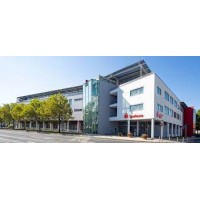
Sparkassenverband Rheinland-Pfalz A.I CyberSecurity Scoring
18/03/2026
Access Monitoring Plan
No incidents recorded for Sparkassenverband Rheinland-Pfalz in 2026.
Founded in 1957, Al Rajhi Bank is one of the largest Islamic banks in the world with total assets of SR 384 billion (US$ 102 billion), a paid up capital of SR 25 billion (US$ 6.66 billion) and an employee base of over 9,600 associates. With over 58 years of experience in banking and trading activities, the varions individuel establishments under the Al Rajhi name were merged into the umbrella 'Al Rajhi trading and exchange corporation' in 1978 and it was in 1988 that the bank was established as a Saudi share holding company. Deeply rooted in Islamic banking principles, the Sharia compliant banking group is instrumental in bridging the gap between modern financial demands and intrinsic values, whilst spearheading numerous industry standards and development. With an established base in Riyadh, Saudi Arabia, Al Rajhi Bank has a vast network of over 570 branches, over 152 dedicated ladies branches, more than 5,190 ATM's, 106,000 POS terminals installed with merchants and the largest customer base of any bank in the Kingdom, in addition to 232 remittance centers across the kingdom. The first men's branch was opened in Aldirah in 1957, with the first ladies branch being opened in AlShmaisi in 1979.
Banque Misr (BM) was established in 1920 by the pioneer economist and financial expert Mohamed Talaat Harb Pasha, who spearheaded the concept of investing in national savings and directing them toward economic and social development. Thus, Banque Misr was established as the first wholly Egyptian-owned bank. Banque Misr has funded many businesses spanning across multiple domestic sectors, such as: textiles, insurance, transportation, aviation, entertainment, and filmmaking. Currently, BM owns shares in 157 companies across different fields, ranging from finance, tourism, housing, agriculture and food, and communication and information technology. A true pioneer in the region, Banque Misr became the first bank in Egypt and North Africa to comply with PCI data security standards, upon obtaining the latest version of the global Payment Card Industry Data Security Standard (PCI DSS 3.2.1) certification. Utilizing the latest technology in the banking sector, Banque Misr is constantly looking to expand customer access to banking services. Today, Banque Misr is proud to offer one of Egypt’s largest ATM networks, located across all areas of Egypt. Banque Misr’s role is visible in all economic fields due to its geographic outreach. The bank has more than 20,000 employees, serving a large base of more than 13 million clients in Egypt, with a total paid-up capital amounting to EGP 15 billion. The bank has more than 800 electronically integrated local branches located nationwide to provide the best and most accessible services to customers. Banque Misr also values its regional and international presence, which includes its five branches in the United Arab Emirates and one in France. In addition, the bank’s international presence includes subsidiaries in Lebanon and Germany, as well as representative offices in China, Russia, South Korea, and Italy and a global network of correspondents.
Bank Rakyat Indonesia (BRI) adalah salah satu bank milik pemerintah yang terbesar di Indonesia. BRI didirikan di Purwokerto, Jawa Tengah oleh Raden Bei Aria Wirjaatmadja pada 16 Desember 1895. BRI telah hadir lebih dari 129 tahun memberi pelayanan terbaik bagi seluruh lapisan masyarakat, BRI turut andil dalam upaya membangun negeri dan Memberi Makna Indonesia. Didukung oleh 8.200 lebih jaringan kantor, 686,128 jaringan e-channel, 1.064.219 Agen BRILink serta jaringan satelit BRIsat, membuat BRI terus berusaha menjadi yang pertama dalam mendukung perekonomian masyarakat. Melalui visi "The Most Trusted Lifetime Financial Partner for Sustainable Growth” menjadikan BRI fokus pada pengembangan SDM unggul, berkarakter kuat, dan ber-AKHLAK. Sebagai bentuk komitmen BRI dalam memberikan economic value bagi Negara, tahun 2024 BRI telah memberikan setoran Dividen terbesar diantara BUMN lainnya sebesar Rp. 25.1 Triliun. Kinerja BRI terus tumbuh dan berkelanjutan. Terbukti pada tahun 2024 BRI berhasil membukukan laba sebesar Rp60,64 Triliun dan menjadi Bank dengan laba terbesar di Indonesia. BRI tidak hanya tempat bekerja, tapi tempat kamu Belajar, Bertumbuh, dan Berkontribusi mengoptimalkan semua potensi terbaikmu untuk semua nasabah BRI. BRI dan Seluruh Insan BRILiaN, Siap Memberi Makna Indonesia.
ING ING is a global bank with a strong European base. With 14,500 employees in the Netherlands, we’re one of the biggest employers of the country. Our research tells us that we stand out here because of our great working culture, competitive benefits, and interesting work. We believe in sustainable progress for all, not just for the few. We aim to support and contribute to economic, social and environmental progress. Collaborative and inclusive We’re proud of our diverse and multinational make-up. Joining the ING team means contributing to a collaborative and inclusive culture, having a hybrid way of working, and being part of the positive impact that we strive to make on people and the planet. Purpose ING's purpose is empowering people to stay a step ahead in life and in business. This purpose guides us in everything we do. Rather than telling our people what to do, we trust them and encourage them to carve out their career in a way that works best for them. We want to enable them to grow in their own way, without being held down. Because doing great things starts by doing your thing.
HDFC Bank Limited (also known as HDB) is an Indian banking and financial services company headquartered in Mumbai. It is India's largest private sector bank by assets and world's fifth largest bank by market capitalisation as of August 2023, following its takeover of parent company HDFC. It is the third largest company(as of 6th September 2023) by market capitalisation of $150 billion on the Indian stock exchanges. It is also the sixteenth largest employer in India with nearly 1.73 lakh employees.
La Banque Postale is a ‘bank like no other’ driven by the post office values of local presence and service. As heir to La Poste Financial Services, it is the only bank to have been tasked with a mission to provide access to banking services under the law introduced to modernise the French economy in 2008. Accessible, straightforward, local, transparent, useful, substantial and supportive… La Banque Postale is the bank for everyone : nearly half of the French population has at least one of the Bank’s products. It serves more 10 million active personal customers and 475,000 business customers. More and more customers join La Banque Postale every day, attracted by its commitment to build a long-term relationship with each individual on the basis of sound advice and trust. This trust is earned and strengthened on a day-to-day basis by the Bank’s teams working in post offices, financial centres, subsidiary companies and central services departments. Because it is a ‘bank like no other’, La Banque Postale puts the interest of its customers above all other considerations at the heart of its organisational structure. Being a ‘bank like no other’ means being useful by offering a range of no-frills products and services tailored to meet the essential needs of all customers at affordable prices. It also means supporting everyone in achieving their life goals, offering everyday financial management products and delivering a more comfortable life with real peace of mind.

DBS is a leading financial services group in Asia with a presence in 19 markets. Headquartered and listed in Singapore, DBS is in the three key Asian axes of growth: Greater China, Southeast Asia and South Asia. The bank's "AA-" and "Aa1" credit ratings are among the highest in the world. Recognised for its global leadership, DBS has been named “World’s Best Bank” by Global Finance, “World’s Best Bank” by Euromoney and “Global Bank of the Year” by The Banker. The bank is at the forefront of leveraging digital technology to shape the future of banking, having been named “World’s Best Digital Bank” by Euromoney and the world’s “Most Innovative in Digital Banking” by The Banker. In addition, DBS has been accorded the “Safest Bank in Asia“ award by Global Finance for 14 consecutive years from 2009 to 2022. DBS provides a full range of services in consumer, SME and corporate banking. As a bank born and bred in Asia, DBS understands the intricacies of doing business in the region’s most dynamic markets. DBS is committed to building lasting relationships with customers, as it banks the Asian way. Through the DBS Foundation, the bank creates impact beyond banking by supporting social enterprises: businesses with a double bottom-line of profit and social and/or environmental impact. DBS Foundation also gives back to society in various ways, including equipping communities with future-ready skills and building food resilience. With its extensive network of operations in Asia and emphasis on engaging and empowering its staff, DBS presents exciting career opportunities. For more information, please visit www.dbs.com
Equitas Small Finance Bank is an active member of the communities where we live and work, and a strong philanthropic partner enabling individuals, families, businesses, and entire communities in their financial aspirations with seamless banking services. We take the responsibility to be good neighbours, and are committed to our legacy of giving back to our communities. We aim at changing the way banking is imagined delivered and experienced – with Fairness & Transparency being the key drivers.
Founded in 1851, the Bank of the Philippine Islands is the first bank in the Philippines and in Southeast Asia. Together with its subsidiaries and affiliates, BPI, a universal bank, offers a wide range of financial products and services that serve both retail and corporate clients. Get ready to start a bright future with us. We have diverse talents and expertise — from individuals who keep up with the gyrations of the financial markets, to those who collect and analyze data, to people who help clients with their simple or complex financial needs and even tech-savvy millennials with a knack for creating apps. Our Mission We are your trusted financial adviser, nurturing your future and making life easier Our Vision Building a better Philippines -- one family, one community at a time Our Values We are Nurturing. We act with Integrity. We are Customer Obsessed. We act with Excellence. WHY CHOOSE BPI 1. Rich heritage in banking and finance - BPI continues to pave the way for the Philippine banking and financial industry, supporting economic growth and nation-building. 2. Reputation for financial prudence and client trust - BPI is widely known and respected for its financial expertise and prudence, client trust, and industry leadership. 3. Culture of excellence - BPI has a culture of excellence, where employees feel that they are working on something meaningful, significant and purpose-driven, towards a common goal and purpose.
Latest updates, reports, and threat intel affecting the global network.
A vulnerability in keras-team/keras version 3.15.0 allows unsafe deserialization of attacker-controlled PyTorch pickle data through the public `keras.layers.TorchModuleWrapper.from_config` method. This method invokes `torch.load(..., weights_only=False)` without requiring an explicit unsafe opt-in, such as a `safe_mode=False` parameter. When called outside a `SafeModeScope(True)` context, the absence of an ambient safe mode state permits unsafe deserialization by default. This issue can lead to arbitrary code execution if untrusted Keras layer configurations are processed using this method. The vulnerability arises because the method does not enforce safe deserialization practices unless explicitly guarded by Keras safe mode.
In the Linux kernel, the following vulnerability has been resolved: iommu/amd: Remove latent out-of-bounds access in IOMMU debugfs In iommu_mmio_write() and iommu_capability_write(), the variables dbg_mmio_offset and dbg_cap_offset are declared as int. However, they are populated using kstrtou32_from_user(). If a user provides a sufficiently large value, it can become a negative integer. Prior to this patch, the AMD IOMMU debugfs implementation was already protected by different mechanisms. 1. #define OFS_IN_SZ 8 ensures the user string <= 8 bytes, so e.g. 0xffffffff isn't a valid input. if (cnt > OFS_IN_SZ) return -EINVAL; 2. Implicit type promotion in iommu_mmio_write(), dbg_mmio_offset is int and iommu->mmio_phys_end is u64 if (dbg_mmio_offset > iommu->mmio_phys_end - sizeof(u64)) return -EINVAL; 3. The show handlers would currently catch the negative number and refuse to perform the read. Replace kstrtou32_from_user() with kstrtos32_from_user() to parse the input, and check for negative values to explicitly prevent out-of-bounds memory accesses directly in iommu_mmio_write() and iommu_capability_write().
In the Linux kernel, the following vulnerability has been resolved: sysfs: don't remove existing directory on update failure When sysfs_update_group() is called for a named group and create_files() fails (e.g. -ENOMEM), internal_create_group() calls kernfs_remove(kn) on the group directory. In the update path, kn was obtained via kernfs_find_and_get() and refers to a directory that already existed before this call. Removing it silently destroys a sysfs group that the caller did not create. Only remove the directory if we created it ourselves. On update failure the directory remains as it is left empty by remove_files() inside create_files(), but can be repopulated by a retry.
In the Linux kernel, the following vulnerability has been resolved: mm/damon/sysfs-schemes: call missing mem_cgroup_iter_break() damon_sysfs_memcg_path_to_id() breaks mem_cgroup_iter() loop without calling mem_cgroup_iter_break(). This leaks the cgroup reference. Fix the issue by calling mem_cgroup_iter_break() before the break. The issue was discovered [1] by Sashiko.
In the Linux kernel, the following vulnerability has been resolved: efi: Allocate runtime workqueue before ACPI init Since commit 5894cf571e14 ("acpi/prmt: Use EFI runtime sandbox to invoke PRM handlers") ACPI PRM calls are delegated to a workqueue which runs in a kernel thread, making it easier to detect and mitigate faulting memory accesses performed by the firmware. Rafael reports that such PRM accesses may occur before efisubsys_init() executes, which is where the workqueue is allocated, leading to NULL pointer dereferences. Since acpi_init() [which triggers the early PRM accesses] executes as a subsys_initcall() as well, and has its own dependencies that may be sensitive to initcall ordering, deferring acpi_init() is not an option. So instead, split off the workqueue allocation into its own postcore initcall, as this is the only missing piece to allow EFI runtime calls to be made. This ensures that EFI runtime call (including PRM calls) are accessible to all code running at subsys_initcall() level.
curl -i -X GET 'https://api.rankiteo.com/underwriter-getcompany-history?
linkedin_id=axa' -H 'apikey: YOUR_API_KEY_HERE'
Every week, Rankiteo analyzes billions of signals to give organizations a sharper, faster view of emerging risks. With deeper, more actionable intelligence at their fingertips, security teams can outpace threat actors, respond instantly to Zero-Day attacks, and dramatically shrink their risk exposure window.
Rankiteo is a unified scoring and risk platform that analyzes billions of signals weekly to help organizations gain faster, more actionable insights into emerging threats. Empowering teams to outpace adversaries and reduce exposure.