CAA A.I CyberSecurity Scoring
28/11/2025
Access Monitoring Plan
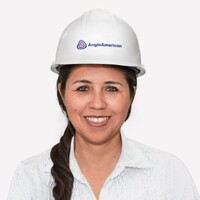
No incidents recorded for Chile - Anglo American in 2026.
With a history spanning 122 years, Gerdau is Brazil's largest steel producer, one of the leading producers of long steel in the Americas and of special steel in the world. In Brazil, Gerdau also produces flat steel and iron ore for its own use. Gerdau also has a new business division, Gerdau Next, which fosters entrepreneurship in segments adjacent to the steel industry. Guided by its purpose of empowering people who build the future, Gerdau has operations in nine countries and over 30,000 direct and indirect employees. Gerdau is the largest recycling company in Latin America and uses scrap as an important input, with 73% of the steel it produces made from scrap. Every year, Gerdau transforms 11 million tonnes of scrap into a variety of steel products. Gerdau also is the world’s largest charcoal producer, with over 250 hectares of planted forests in the state of Minas Gerais. As a result of its sustainable production matrix, Gerdau currently has one of the industry’s lowest average greenhouse gas emissions (CO₂e), of 0.86t/CO₂e per tonne of steel, which is about half the global industry average of 1.91 t/CO₂e per tonne of steel (worldsteel). By 2031, Gerdau’s target is to reduce its carbon emissions to 0.83 t/CO₂e per tonne of steel. Gerdau’s shares are listed on the São Paulo (B3), New York (NYSE) and Madrid (Latibex) stock exchanges.
Sandvik is a global, high-tech engineering group providing solutions that enhance productivity, profitability and sustainability for the manufacturing, mining and infrastructure industries. We are at the forefront of digitalization and focus on optimizing our customers’ processes. Our world-leading offering includes equipment, tools, services and digital solutions for machining, mining, rock excavation and rock processing. In 2024, the Sandvik Group had approximately 41,000 employees, sales in more than 150 countries and revenues of about SEK 123 billion.
Tata Steel is one of the world’s most diversified integrated steel producers, with a capacity of 35 million tonnes per annum (MTPA) across India, the Netherlands, the UK, and Thailand. The World Economic Forum has recognised Tata Steel’s Jamshedpur, Kalinganagar and IJmuiden plants as Manufacturing Lighthouses. With over 76,000 employees worldwide, Tata Steel is a Great Place to Work®-certified organisation. In India, Tata Steel operates in Jamshedpur and Gamharia in Jharkhand, and in Kalinganagar (including Neelachal Ispat Nigam Limited) and Meramandali in Odisha, with an overall capacity of 26.6 MTPA. The Company has captive mining operations in India, including collieries in Jharia and West Bokaro, as well as iron ore mines in Noamundi, Katamati, Joda East, Khondbond, Vijaya II, and Koida. It also operates iron ore assets in Labrador and Northern Quebec, Canada. Tata Steel aims to achieve Net Zero emissions by 2045. The upcoming 0.75 MTPA electric arc furnace-based steelmaking facility in Ludhiana is the Company’s first low-emission plant in India. In the UK, Tata Steel is transitioning to a 3.2 MTPA EAF-based steelmaking route, following the decommissioning of its heavy-end assets in 2024. In 2025, the Government of the Netherlands and Tata Steel signed a non-binding Joint Letter of Intent for the first phase of the transition to low-emission steel production at IJmuiden. Focused on sustainability, innovation, agility, and fostering deep relationships with customers and communities, Tata Steel aspires to become the most respected and valuable metals and mining company globally.
Fundada em 1941, a CSN representa um marco no processo de industrialização do Brasil. O seu aço viabilizou a implantação das primeiras indústrias nacionais, núcleo do atual parque fabril brasileiro. Ao longo de mais de oito décadas, a CSN segue fazendo história, sendo hoje um dos mais eficientes complexos siderúrgicos integrados do mundo, com atuação em cinco segmentos estratégicos da economia: Siderurgia, Mineração, Logística, Cimentos e Energia. Atualmente, entre seus ativos, a empresa conta com uma usina siderúrgica integrada; cinco unidades industriais, sendo duas delas no exterior; minas de minério de ferro, calcário, dolomita e estanho; uma forte distribuidora de aços planos; terminais portuários; participações em ferrovias; somos a 2ª maior produtora de cimentos do Brasil, com uma capacidade de 16,3 mtpa; e temos participação em usinas hidrelétricas distribuídas pelo Brasil. Com uma gestão firme e inovadora, a empresa valoriza a força empreendedora do capital nacional e o enorme potencial brasileiro de competitividade no setor siderúrgico. Multinacional com orgulho de ser brasileira, a empresa acredita e investe no país. Com a força do trabalho de seus mais de 30 mil colaboradores, enfrenta com sucesso os desafios da economia globalizada. JUNTE-SE À CSN! A Companhia Siderúrgica Nacional busca atrair e desenvolver profissionais que se identifiquem com a sua cultura, valorizando sempre a diversidade. Venha você também fazer parte da história do maior complexo siderúrgico da América Latina, um grupo que tem como essência “fazer bem, fazer mais e fazer para sempre”.
Over the last 35 years, we have partnered the country in its journey to self-reliance, by embracing sustainability, adopting cutting-edge technology and having innovation and R&D initiatives at the heart of our culture. From humble beginnings with a single plant in 1982, we are now India's leading manufacturer of value-added and high-end steels. Our plants in Karnataka, Tamil Nadu and Maharashtra have a total capacity of 29.7 MTPA, and we are scaling up existing plants and opening new ones to take that figure to 40 MTPA. Globally, we own a plate and pipe mill in the US, and mining assets in the US, Chile and Mozambique. But we're not ones to rest on our laurels. Driven by decades of experience and a dynamic culture, we constantly seek new ways to revolutionize steelmaking. To begin with, we integrate sustainability into everything we do. We benchmark our business vision and governance systems, manufacturing and sales processes, and even our customer and community engagement initiatives, against global best-in-class standards. We bolster these sustainability initiatives, by staying on the cutting edge of technology. It's a strategy that has helped us create the largest product portfolio in India, and at the same time, become India's largest exporter of steel with a presence in more than 100 countries. Today, nearly 40% of our products are high-value steels, a figure we intend to take up to 50% soon. We’ve made this technological prowess possible with a relentless focus on innovation and R&D. It has helped us stay ahead of competition, customise our offerings as per client requirements, partner with global leaders such as JFE Steel, Marubeni Itochu Steel, Praxair and Severfield Rowen Plc. to be cost-efficient, and be seen worldwide as a purveyor of high-end, value-added steel.
Our story began in 1874, when we first supplied explosives to the Victorian goldfields in Australia. Since then, we have grown to become one of the world’s leading mining and infrastructure solutions providers. From the production and supply of explosives, blasting systems, mining chemicals and geotechnical monitoring to our cutting-edge digital solutions and comprehensive range of services, we sustainably mobilise the earth’s resources. With 150 years of expertise, our 14,000+ community of engineers, scientists, technologists, operators, business specialists and on-site crew support customers in surface and underground mines, quarry, construction, and oil and gas operations. Sustainability is integral to our operations. Our approach to sustainability begins with ensuring we operate our business responsibly, and by prioritising the safety of our people, customers, and communities. We are in a unique position to leverage our expertise in technology to create safer and more responsible solutions and deliver positive economic, social, and environmental contributions through our business activities.
We are a global mining company producing iron ore, pellets, and nickel, and we are committed to becoming one of the safest, most trustworthy mining company in the world. With a workforce of 120,000 employees, we work every day to transform natural resources into prosperity and sustainable development for the approximately 30 countries in which we operate. In addition to mining, we have operations in logistics, energy, and steelmaking. We self-generate 54% of the energy we use, and in Brazil alone, more than 1 million people travel on our passenger trains on the Vitória-Minas and Carajás railroads every year. We continuously reassert our commitment to the future of our planet by, among other initiatives, protecting 8,500 km² of natural land and investing in R&D to lead the sustainable mining revolution, with the ultimate goal of becoming a carbon-neutral company by 2050. We are constantly evolving, always aiming to be a diverse and inclusive company. We are pursuing a goal of doubling our female workforce by 2030 and increasing representation among our leadership. Our activities are governed by a policy of transparency, safety and security, ethics, and respect in order to protect the environment and encourage the development of our employees. We are Vale.
Jindal Steel is one of India’s foremost integrated steel producers, renowned for its scale, efficiency, and commitment to excellence. Operating on a robust mine-to-metal model, the Company leverages captive resources, advanced manufacturing capabilities, and a global distribution network to deliver high-performance steel solutions. With an investment footprint exceeding USD 12 billion, Jindal Steel runs state-of-the-art facilities in Angul, Raigarh, and Patratu, and maintains strategic operations across India and Africa. Its diversified and future-ready product portfolio underpins core sectors such as infrastructure, construction, and manufacturing, powering progress through strength and sustainability. Take the next step in your career with Jindal Steel by submitting your application to our Talent Acquisition team at "[email protected]"
AM/NS India is a joint venture between the world's leading steel companies, ArcelorMittal and Nippon Steel. Established in December 2019, post-acquisition of Essar Steel, we are an integrated flat steel manufacturer - from iron ore to ready-to-market products. With over 300 steel grades - many substituting imports, we serve an array of contemporary industries (agriculture, automotive, infrastructure, defence, energy, etc.) and contribute to an Aatmanirbhar Bharat. Our portfolio encapsulates hot rolled coils / sheets / plates, cold rolled coils / sheets, galvanized coil / sheets, pre-painted galvanized coil / sheets, pipelines, etc. We ascribe to advancement with sustainability and envision creating 'Smarter Steels, Brighter Futures'. Our vision has nestled in empowering communities by providing employment to more than 16,00,000 individuals and enriching millions of lives across the country through our CSR interventions. We are inspired by ArcelorMittal's XCarb programme and Nippon Steel's Zero Carbon initiative and stand in alignment with India's vision to be carbon-neutral by 2070. Our recent partnership with Greenko for renewable power and storage facility is a notable step in that direction. Our MoUs with National Small Industries Corporation and National Skill Development Corporations are devised to bolster the MSME ecosystem in India. We prioritize health and safety and foster a culture of innovation by placing research and development at the heart of our operations. We are a committed partner to the nation, and our avid growth story will be purposeful, inclusive, and sustainable.
Latest updates, reports, and threat intel affecting the global network.
Authentication bypass using an alternate path or channel vulnerability in N-able N-central allows Authentication Bypass. This issue affects N-central: through 2026.1.
Improper Verification of Cryptographic Signature in ueberauth guardian allows an unauthenticated attacker to revoke a victim's session with a forged token. Guardian.revoke/3 in lib/guardian.ex decodes the supplied token with peek/1, which performs no signature verification (it only base64-decodes the JWT header and payload). The resulting unverified claims are forwarded directly to the configured token module's revoke callback and the implementation's on_revoke callback, a state-mutating sink. The sibling operations refresh/2 and exchange/4 both call decode_and_verify first, so the signature is checked before anything acts on the claims; revoke/3 is the only state-mutating path that acts on claims without verifying the signature. An attacker who knows or guesses a victim's identifying claim values (jti, sub) can forge a JWT carrying those claims, sign it with an arbitrary key, and submit it to any endpoint that funnels a caller-supplied token into Guardian.revoke/3 (the standard logout / session-revocation pattern). When the token module mutates state keyed by the claims (whitelist deletion or blacklist insertion, for example a GuardianDb-style store), the victim's legitimate session is evicted. This is an unauthenticated session-revocation denial of service; the attacker never needs the signing secret. This issue affects guardian: from 1.0.0 before 2.4.1.
Allocation of Resources Without Limits or Throttling vulnerability in ueberauth guardian (Guardian.Permissions module) allows a denial of service via BEAM atom-table exhaustion. This vulnerability is associated with program file lib/guardian/permissions.ex and program routines 'Elixir.Guardian.Permissions':encode_permissions!/1, 'Elixir.Guardian.Permissions':encode_permissions_into_claims!/2, 'Elixir.Guardian.Permissions':do_encode_permissions!/2. The Guardian.Permissions mixin installs a public encode_permissions!/1 function on every module that does use Guardian.Permissions. For each key of the supplied map, encode_permissions!/1 calls String.to_atom(to_string(k)) before any validation runs. The integer-value clause of do_encode_permissions!/2 then short-circuits straight to encoding without validating the key against the configured permission set, so a key with an integer value is interned as a fresh atom with no exception raised. Atoms are never garbage collected and the BEAM atom table is a fixed-size resource (default roughly 1,048,576 entries), so each unique attacker-chosen key permanently consumes one slot. An attacker who can influence a permission map that reaches encode_permissions!/1 (for example a permissions map read from a request body and passed into token issuance via encode_permissions_into_claims!/2) can mint an unbounded number of atoms and exhaust the atom table, crashing the entire BEAM node and every service running on it. The sibling decode_permissions/1 is not affected because it skips keys absent from the configured permission set. This issue affects guardian: from 2.0.0 before 2.4.1.
Allocation of Resources Without Limits or Throttling in ueberauth guardian allows denial of service via unbounded atom creation from attacker-controlled binary input. Guardian.Permissions.AtomEncoding encodes permission scopes by passing arbitrary binaries to String.to_atom/1. When encode/3 in lib/guardian/permissions/atom_encoding.ex is called with a list, each binary entry is handled by the encode_value/3 binary clause, which calls String.to_atom(value) with no allow-list check. The perm_set argument (the application's small, finite set of legitimate permission names) is discarded, so any external string flows straight into atom creation. This encoder is selected with use Guardian.Permissions, encoding: Guardian.Permissions.AtomEncoding and reached through the imported encode/3 entry point. String.to_atom/1 creates a brand-new atom for every previously unseen binary, atoms are never garbage collected, and the BEAM atom table is fixed at roughly 1,048,576 entries by default. An application that funnels attacker-influenced permission scopes (from a request body, a JWT claim, or other external input) into encode/3 therefore mints one permanent atom per distinct value. A modest stream of varied, unauthenticated input permanently consumes the atom table and crashes the BEAM node with system_limit, taking down every application running on it. The default encoder is Guardian.Permissions.BitwiseEncoding, which is not affected. This issue affects guardian: from 2.0.0 before 2.4.1.
Allocation of Resources Without Limits or Throttling in ueberauth guardian allows denial of service via unbounded atom creation from attacker-influenced binary input. Guardian.Plug.Keys derives connection and session namespace keys by passing arbitrary binaries to String.to_atom/1. base_key/1 in lib/guardian/plug/keys.ex converts any binary into the atom :"guardian_<input>", and the derived helpers claims_key/1, resource_key/1, and token_key/1 create a second atom on top of that. key_from_other/1 likewise converts a regex-captured binary through String.to_atom/1. The public specs advertise String.t() as a valid argument, so passing a string is documented usage, and higher-level entry points such as Guardian.Plug.current_token(conn, key: key) thread the caller-supplied key straight into these functions. String.to_atom/1 creates a brand-new atom for every previously unseen binary, atoms are never garbage collected, and the BEAM atom table is fixed at roughly 1,048,576 entries by default. An application that routes attacker-influenced data (a tenant identifier, header, or other request input) into a Guardian key therefore mints one permanent atom per distinct value. A modest stream of varied, unauthenticated input permanently consumes the atom table and crashes the BEAM node, taking down every application running on it. This issue affects guardian: from 0.1.0 before 2.4.1.
curl -i -X GET 'https://api.rankiteo.com/underwriter-getcompany-history?
linkedin_id=axa' -H 'apikey: YOUR_API_KEY_HERE'
Every week, Rankiteo analyzes billions of signals to give organizations a sharper, faster view of emerging risks. With deeper, more actionable intelligence at their fingertips, security teams can outpace threat actors, respond instantly to Zero-Day attacks, and dramatically shrink their risk exposure window.
Rankiteo is a unified scoring and risk platform that analyzes billions of signals weekly to help organizations gain faster, more actionable insights into emerging threats. Empowering teams to outpace adversaries and reduce exposure.