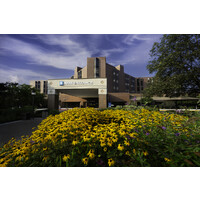
UPMC A.I CyberSecurity Scoring
01/04/2026
Access Monitoring Plan
UPMC has 27.54% fewer incidents than the average of same-industry companies with at least one recorded incident.
UPMC has 2.91% fewer incidents than the average of all companies with at least one recorded incident.
UPMC reported 1 incidents this year: 0 cyber attacks, 0 ransomware, 0 vulnerabilities, 1 data breaches, compared to industry peers with at least 1 incident.
Since its start in 1855 as the nation's first hospital devoted exclusively to caring for children, The Children's Hospital of Philadelphia has been the birthplace for many dramatic firsts in pediatric medicine. The Hospital has fostered medical discoveries and innovations that have improved pediatric healthcare and saved countless children’s lives. Today, The Children's Hospital of Philadelphia is one of the leading pediatric hospitals and research facilities in the world. Our 150 years of innovation and service to our patients, their families and our community reflect an ongoing commitment to exceptional patient care, training new generations of pediatric healthcare providers and pioneering significant research initiatives.
Boston Children's Hospital is a 404-bed comprehensive center for pediatric health care. As one of the largest pediatric medical centers in the United States, Boston Children's offers a complete range of health care services for children from birth through 21 years of age. (Our services can begin interventions at 15 weeks gestation and in some situations we also treat adults.) We have approximately 25,000 inpatient admissions each year and our 200+ specialized clinical programs schedule 557,000 visits annually. Last year, the hospital performed more than 26,500 surgical procedures and 214,000 radiological examinations. Our team of physicians and nurses has been recognized by a number of independent organizations for overall excellence, and we're proud to share some notable examples with you here.
King Faisal Specialist Hospital and Research Centre (KFSH&RC) is a 2415 -bed tertiary/quaternary care hospital with facilities in Riyadh, Jeddah & Madinah in the Kingdom of Saudi Arabia. offering Established in 1970 on land donated by the late King Faisal Bin Abdulaziz, in the capital city of Riyadh and officially opened in April 1975 by King Khalid Bin Abdulaziz with a current total land area of 921,000 square meters KFSH&RC employs over 16,000 employees from over 63 different nationalities Highly specialized in inpatient and outpatient medical care, KFSH&RC participates in many clinical and research studies; it is consistently recognized and ranked as one of the nation's top hospital specializing in Oncology, Organ Transplantation, Cardiovascular Diseases Neurosciences and Genetic Diseases. King Faisal Specialist Hospital and Research Centre provides the level of specialized health care in an robust and striving educational and research environment. KFSH&RC is accredited by the Joint Commission International (JCI) and is proud to be one of only six hospitals outside of the USA to have achieved Magnet Hospital status awarded by the American Nurses Credentialing Centre (ANCC) and more recently, KFSH&RC was the first hospital outside of Northern America to be awarded Stage 7 HIMSS Electronic Medical Records, the highest level of using Electronic Health Records
Det handler om liv. Om at bringe liv til verden og skabe livskvalitet. Om at redde liv og forbedre liv. Som medarbejder i Region Hovedstaden træder du ind i en verden af muligheder og mangfoldighed med plads til dine ambitioner. Du er en del af et stærkt fagligt miljø, hvor vi har fingeren på pulsen og gør hinanden bedre. Det er noget af det, vi gerne vil vise dig på Region Hovedstadens LinkedIn-profil. Gå ind på www.regionh.dk/job og læs mere om jobmulighederne.
Tenet Healthcare Corporation (NYSE: THC) is a diversified healthcare services company headquartered in Dallas. Our care delivery network includes United Surgical Partners International, the largest ambulatory platform in the country, which operates ambulatory surgery centers and surgical hospitals. We also operate a national portfolio of acute care and specialty hospitals, other outpatient facilities, a network of leading employed physicians and a global business center in Manila, Philippines. Our Conifer Health Solutions subsidiary provides revenue cycle management and value-based care services to hospitals, health systems, physician practices, employers, and other clients. Across the Tenet enterprise, we are united by our mission to deliver quality, compassionate care in the communities we serve. For more information, please visit www.tenethealth.com.
Molina Healthcare is a FORTUNE 500 company that is focused exclusively on government-sponsored health care programs for families and individuals who qualify for government sponsored health care. Molina Healthcare contracts with state governments and serves as a health plan providing a wide range of quality health care services to families and individuals. Molina Healthcare offers health plans in Arizona, California, Florida, Idaho, Illinois, Kentucky, Massachusetts, Michigan, Mississippi, Nevada, New Mexico, New York, Ohio, South Carolina, Texas, Utah, Virginia, Washington and Wisconsin. Molina also offers a Medicare product and has been selected in several states to participate in duals demonstration projects to manage the care for those eligible for both Medicaid and Medicare.
We are Erasmus MC. Our roots lie in Rotterdam, a city and port of international standing. We are the most innovative university medical center in the Netherlands and one of the world’s leading centers of scientific research. We are committed to achieving a healthy population and pursuing excellence in healthcare through research and teaching. Day in, day out, our staff, volunteers and students work with passion and dedication to achieve everything we stand for: safe, first-rate healthcare for patients with complex issues, unusual and rare conditions or acute needs. But we also stand for top-quality teaching that attracts ambitious, inquisitive and talented students and seeks to answer the healthcare questions of tomorrow. And we stand for world-class scientific research that bolsters our understanding of diseases and disorders and helps to predict, treat and prevent them. We do our work based on our basic principles, the core values of Erasmus MC, 'responsible', 'connecting' and 'enterprising'. We believe that we provide the best care, research and education if we are responsible, binding and enterprising.
Advancing Health. Personalizing Care. Memorial Hermann Health System is a nonprofit, values-driven, community-owned health system dedicated to improving health. A fully integrated health system with more than 260 care delivery sites throughout the Greater Houston area, Memorial Hermann is committed to delivering safe, high-quality, patient-centered care and offers clinical expertise, innovation and cutting-edge technology to all patients.
Norton Healthcare is a leader in serving adult and pediatric patients from throughout Greater Louisville, Southern Indiana, the commonwealth of Kentucky and beyond. The not-for-profit hospital and health care system is Louisville’s second largest employer, with more than 18,600 employees, over 1,750 employed medical providers and nearly 3,000 total providers on its medical staff. Norton Healthcare has five Louisville-based hospitals with a total of 1,907 licensed beds. Norton West Louisville Hospital is scheduled to open in late 2024. The system also includes eight outpatient centers, 18 Norton Immediate Care Centers, eight Norton Prompt Care at Walgreens clinics and an expanded telehealth program. It provides care at more than 350 locations throughout Kentucky and Southern Indiana. The hospitals provide inpatient and outpatient general care as well as specialty care including heart, neuroscience, cancer, orthopedic, women’s and pediatric services. A strong research program provides access to clinical trials in a multitude of areas. Norton King’s Daughters’ Health in Madison, Indiana, also is part of Norton Healthcare. Read more at KDHMadison.org/About-Us. Since 2018, Norton Healthcare’s five Louisville hospitals and Norton Cancer Institute have been named LGBTQ+ Healthcare Equality Leaders by the Human Rights Campaign Foundation, earning a top score of 100 on the Healthcare Equality Index (HEI). Norton Healthcare also was recognized in 2022 as one of the “Best Places to Work for Disability Inclusion” by the Disability Equality Index. To learn more about career opportunities, visit NortonHealthcareCareers.com.
Latest updates, reports, and threat intel affecting the global network.
PITTSBURGH, March 17, 2026 (GLOBE NEWSWIRE) -- Lynch Carpenter is investigating a possible patient data disclosure at University of...
The aim is to find new uses of real-world data in AI development, and to help health systems move from fragmented, compliance-heavy...
Global healthcare provider UPMC Ireland has confirmed it will implement the MEDITECH Expanse electronic patient record (EPR).
The lives of many in the York community were forever changed when a gunman took hostages and opened fire inside UPMC Memorial Hospital on...
Hospitals and healthcare networks across America are under threat. From ransomware and insider sabotage to shootings and credible terror alerts.
UPMC uses a detailed ROI framework to quantify its digital health programs, including clinician time savings, cost reductions and patient engagement.
On Saturday, when a gunman walked into UPMC Memorial Hospital in West Manchester Township armed with a semiautomatic gun, he walked right...
Welcomes Chief Commercial Officer Ted Dunham & Chief Technology Officer Jeff Monroe, promotes Jason Henley to president of cybersecurity...
The University of Pittsburgh and UPMC developed a free week-long summer camp for high schoolers and recent graduates, introducing students to AI concepts.
A remote attacker who controls a container registry may be able to direct a client's token request to a host of the attacker's choice, and disclose the victim's registry credentials to that host. This vulnerability is addressed in containerization version 0.41.0.
djust provides Phoenix LiveView-style reactive server-side rendering for Django with Rust-powered performance. Prior to version 1.0.7, the djust live transport resolves the LiveView to mount from a client-supplied dotted path by calling `__import__(module_path, ...)`. The module is imported — running its top-level code (import side effects) — before the framework checks that the resolved object is a `LiveView` subclass and before any per-view authentication. The `LIVEVIEW_ALLOWED_MODULES` allowlist that should contain this is fail-open (`if allowed_modules:` — skipped when the setting is unset, the framework default) and uses loose `startswith` matching. An unauthenticated WebSocket client (the WS handshake does not require auth; per-view auth runs only after import + instantiate) can therefore send a `mount` / `live_redirect_mount` / `url_change` frame (or an SSE mount) with `view = "<any.importable.module>.AnyName"` and cause the server to import — and execute the top-level code of — any importable Python module by name. Version 1.0.7 fixes the issue with a fail-closed resolution gate (`djust._view_resolution.is_view_import_allowed`): a client view path resolves only if (a) its module is already loaded (`sys.modules` — so resolving runs no new code; URL-routed views loaded by URLconf at startup keep working with zero config) or (b) it matches `LIVEVIEW_ALLOWED_MODULES` on a module-segment boundary (explicit opt-in for lazily-imported views). The gate runs before `__import__` at all three sinks (+ defense-in-depth inside `_instantiate_view`). As a workaround, set `LIVEVIEW_ALLOWED_MODULES` to the narrow list of modules that contain your mountable LiveView classes. (Note: pre-patch the allowlist is `startswith`-matched and the import still precedes the subclass check, so this is mitigation, not a complete fix.)
djust provides Phoenix LiveView-style reactive server-side rendering for Django with Rust-powered performance. Prior to version 1.0.7, djust's per-object authorization (`get_object` + `has_object_permission`, ADR-017) was enforced on the WebSocket mount and event paths but not on three other render entry points: (a) the initial HTTP GET render, (b) SPA `url_change` navigation, and (c) `{% live_render %}` embedded child views. An authenticated user could therefore view (and on some paths act on) an object they are not authorized for by loading the page directly, navigating to it via SPA url-change, or composing it as an embedded child — a classic IDOR / broken object-level access control on object-scoped views. This is fixed in djust 1.0.7. All render entry points now route through a shared `enforce_object_permission` chokepoint: HTTP GET returns 403, `url_change` emits a `permission_denied` frame and skips the render, and `{% live_render %}` (eager + lazy) refuses the embed. Views without a custom `get_object` are unaffected (no-op). No reliable workaround short of upgrading. Do not expose object-scoped views through the HTTP-GET / url_change / live_render paths until patched.
djust provides Phoenix LiveView-style reactive server-side rendering for Django with Rust-powered performance. Prior to version 1.0.7, the WebSocket `handle_mount` and `ViewRuntime._build_request` rebuild an `HttpRequest` via `RequestFactory().get(...)` with no `HTTP_HOST`, so `request.get_host()` defaulted to `"testserver"` on the live path. Host/subdomain/domain `TenantResolver`s then misresolved the tenant — `None` on the live path while the HTTP path resolved correctly. With `STRICT_MODE=False` the tenant-scoped managers returned unscoped rows (cross-tenant disclosure); with the default they returned an empty queryset (broken tenancy). This is fixed in djust 1.0.7. The handshake Host is extracted from the ASGI scope, validated against `ALLOWED_HOSTS` (the same logic as the CSWSH Origin gate, parsed with Django's `split_domain_port` so malformed Hosts are rejected at the boundary), and propagated — with the TLS scheme — into the reconstructed request, so live-path tenant resolution matches HTTP exactly. There is no known workaround on the live path short of upgrading. Users are most exposed when combined with `STRICT_MODE=False`.
djust provides Phoenix LiveView-style reactive server-side rendering for Django with Rust-powered performance. Prior to version 1.0.7, when a Django `Model` instance is assigned to a public view attribute, djust serialized it to the client with no sensitive-field denylist — sending fields such as `password` (the hash), privilege flags (e.g. `is_staff` / `is_superuser`), tokens, and other PII to the browser. Because exposing model objects to templates is a normal djust pattern, this could leak credentials/PII without the developer realizing the full object crossed the wire. This is fixed in djust 1.0.7. Model serialization applies a secure-by-default sensitive-field denylist (password/hash/token/secret-style fields and known privilege flags are withheld) with an identity-subset fallback. As a workaround, keep `Model` instances on `_private` attributes and expose only the specific fields needed, until patched.
curl -i -X GET 'https://api.rankiteo.com/underwriter-getcompany-history?
linkedin_id=axa' -H 'apikey: YOUR_API_KEY_HERE'
Every week, Rankiteo analyzes billions of signals to give organizations a sharper, faster view of emerging risks. With deeper, more actionable intelligence at their fingertips, security teams can outpace threat actors, respond instantly to Zero-Day attacks, and dramatically shrink their risk exposure window.
Rankiteo is a unified scoring and risk platform that analyzes billions of signals weekly to help organizations gain faster, more actionable insights into emerging threats. Empowering teams to outpace adversaries and reduce exposure.