







DCSEZ
Company Details
Linkedin ID:
csateth
Website:
Employees number:
52
Number of followers:
792,721
NAICS:
None
Industry Type:
Homepage:
ethz.ch
IP Addresses:
0
Company ID:
DEP_2201011
Scan Status:
In-progress

Department of Computer Science (D-INFK), ETH Zürich Company CyberSecurity Posture
ethz.ch


Dedicated to undertaking basic research, the ETH Department of Computer Science (D-INFK) develops reliable, efficient and secure computer and IT solutions for use in society, industry and science. While its main focus is on training computer scientists at the highest level, the department also provides computer science foundations to students of other disciplines, offers continuing education programmes and contributes to the high quality of general computer science education in local schools. It thus makes an important contribution to the excellence of education in society as a whole.
Company Details
csateth
52
792,721
None
ethz.ch
0
DEP_2201011
In-progress
 DCSEZ Risk Score (AI oriented)
Between 750 and 799
 DCSEZ Global Score (TPRM)
XXXX


No incidents recorded for Department of Computer Science (D-INFK), ETH Zürich in 2025.
No incidents recorded for Department of Computer Science (D-INFK), ETH Zürich in 2025.
No incidents recorded for Department of Computer Science (D-INFK), ETH Zürich in 2025.
DCSEZ cyber incidents detection timeline including parent company and subsidiaries

Dedicated to undertaking basic research, the ETH Department of Computer Science (D-INFK) develops reliable, efficient and secure computer and IT solutions for use in society, industry and science. While its main focus is on training computer scientists at the highest level, the department also provides computer science foundations to students of other disciplines, offers continuing education programmes and contributes to the high quality of general computer science education in local schools. It thus makes an important contribution to the excellence of education in society as a whole.


Die Goethe-Universität ist eine weltoffene Werkstatt der Zukunft mitten in Europa. Sie entstand 1914 als Gründung Frankfurter Bürger und knüpft seit 2008 als Stiftungsuniversität wieder an diese Tradition an: als autonome Bürger*innen-Universität eingebettet in die Stadtgesellschaft und mit einem ho

Since 1911, HEC Lausanne has been training future executives and business leaders to become active players in the world of business and economics. HEC Lausanne also prepares students who wish to pursue an academic career. Recognized as one of the top management and economics schools, HEC Lausanne d

Als klassische Volluniversität deckt die Alma mater Lipsiensis die ganze Bandbreite ab – über 140 Studiengänge – von Naturwissenschaften über Jura und Medizin bis hin zu einem breit gefächerten Angebot an geisteswissenschaftlichen Studiengängen. …aktuell studieren über 28.000 Studenten an der Unive

1970 gegründet, zählt die Universität Augsburg zu den noch jüngeren, modernen Universitäten Bayerns. Sie wächst nach wie vor, bleibt aber mit derzeit 20.000 Studierenden in ihrer Größe überschaubar. Auf ihre acht Fakultäten verteilt sich ein breites Spektrum von rund 90 Studiengängen in den Geistes-

Die Universität für Weiterbildung Krems ist spezialisiert auf berufsbegleitende Weiterbildung. Als öffentliche Universität arbeitet sie mit ihrer Expertise in Lehre und Forschung an der Bewältigung gesellschaftlicher Herausforderungen und richtet ihr Studienprogramm danach aus. Sie wendet sich mit i

Culinary Arts Academy Switzerland is one of the world’s finest culinary schools. Blending tradition and technology, the academy serves up a top-rate culinary arts education, peppered with hands-on practice and seasoned with marketable, real-world business know-how. Transform a passion for food into
.png)
ETH Zurich is strengthening its commitment in the field of public health. It is also launching a part-time Master of Advanced Studies in...
The Informatiktage 2024 will take place from 18 to 23 March 2024. The Department of Computer Science and the IT Services of ETH Zurich...
Professor Andreas Krause from the Department of Computer Science has been named ACM Fellow for his contributions to learning-based decision...
The International Committee of the Red Cross (ICRC) wants to protect its digital infrastructure and that of humanitarian organisations with a digital emblem.
SCION network technology, invented at ETH Zurich, is now also available to any ETH lecturers, researchers or employees with special security, performance or...
DeepCode, an ETH spin-off that built the first AI platform for code is to be acquired by Snyk, a world leader in developer-first security...
Artificial intelligence (AI) promises to change cybersecurity in the coming years. It will likely enhance both cyber offense and defense.
The world is scrambling to develop a vaccine against SARS CoV-2. Access to sensitive and confidential patient data could be a game changer...
Defence Minister Viola Amherd and ETH President Joël Mesot have opened a laboratory for the national Cyber Defence Campus at ETH Zurich.

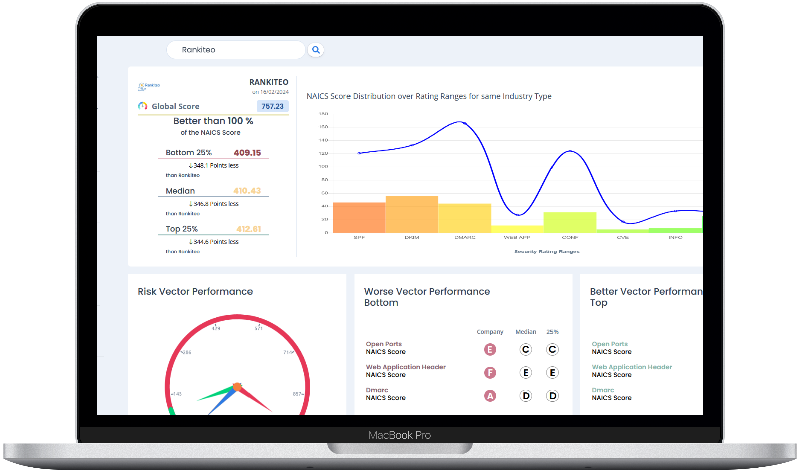
Explore insights on cybersecurity incidents, risk posture, and Rankiteo's assessments.
The official website of Department of Computer Science (D-INFK), ETH Zürich is https://inf.ethz.ch/.
According to Rankiteo, Department of Computer Science (D-INFK), ETH Zürich’s AI-generated cybersecurity score is 760, reflecting their Fair security posture.
According to Rankiteo, Department of Computer Science (D-INFK), ETH Zürich currently holds 0 security badges, indicating that no recognized compliance certifications are currently verified for the organization.
According to Rankiteo, Department of Computer Science (D-INFK), ETH Zürich is not certified under SOC 2 Type 1.
According to Rankiteo, Department of Computer Science (D-INFK), ETH Zürich does not hold a SOC 2 Type 2 certification.
According to Rankiteo, Department of Computer Science (D-INFK), ETH Zürich is not listed as GDPR compliant.
According to Rankiteo, Department of Computer Science (D-INFK), ETH Zürich does not currently maintain PCI DSS compliance.
According to Rankiteo, Department of Computer Science (D-INFK), ETH Zürich is not compliant with HIPAA regulations.
According to Rankiteo,Department of Computer Science (D-INFK), ETH Zürich is not certified under ISO 27001, indicating the absence of a formally recognized information security management framework.
Department of Computer Science (D-INFK), ETH Zürich operates primarily in the Hochschulen und Universitäten industry.
Department of Computer Science (D-INFK), ETH Zürich employs approximately 52 people worldwide.
Department of Computer Science (D-INFK), ETH Zürich presently has no subsidiaries across any sectors.
Department of Computer Science (D-INFK), ETH Zürich’s official LinkedIn profile has approximately 792,721 followers.
Department of Computer Science (D-INFK), ETH Zürich is classified under the NAICS code None, which corresponds to Others.
No, Department of Computer Science (D-INFK), ETH Zürich does not have a profile on Crunchbase.
Yes, Department of Computer Science (D-INFK), ETH Zürich maintains an official LinkedIn profile, which is actively utilized for branding and talent engagement, which can be accessed here: https://www.linkedin.com/company/csateth.
As of December 18, 2025, Rankiteo reports that Department of Computer Science (D-INFK), ETH Zürich has not experienced any cybersecurity incidents.
Department of Computer Science (D-INFK), ETH Zürich has an estimated 101 peer or competitor companies worldwide.
Total Incidents: According to Rankiteo, Department of Computer Science (D-INFK), ETH Zürich has faced 0 incidents in the past.
Incident Types: The types of cybersecurity incidents that have occurred include .
.png)
Zerobyte is a backup automation tool Zerobyte versions prior to 0.18.5 and 0.19.0 contain an authentication bypass vulnerability where authentication middleware is not properly applied to API endpoints. This results in certain API endpoints being accessible without valid session credentials. This is dangerous for those who have exposed Zerobyte to be used outside of their internal network. A fix has been applied in both version 0.19.0 and 0.18.5. If immediate upgrade is not possible, restrict network access to the Zerobyte instance to trusted networks only using firewall rules or network segmentation. This is only a temporary mitigation; upgrading is strongly recommended.
Open Source Point of Sale (opensourcepos) is a web based point of sale application written in PHP using CodeIgniter framework. Starting in version 3.4.0 and prior to version 3.4.2, a Cross-Site Request Forgery (CSRF) vulnerability exists in the application's filter configuration. The CSRF protection mechanism was **explicitly disabled**, allowing the application to process state-changing requests (POST) without verifying a valid CSRF token. An unauthenticated remote attacker can exploit this by hosting a malicious web page. If a logged-in administrator visits this page, their browser is forced to send unauthorized requests to the application. A successful exploit allows the attacker to silently create a new Administrator account with full privileges, leading to a complete takeover of the system and loss of confidentiality, integrity, and availability. The vulnerability has been patched in version 3.4.2. The fix re-enables the CSRF filter in `app/Config/Filters.php` and resolves associated AJAX race conditions by adjusting token regeneration settings. As a workaround, administrators can manually re-enable the CSRF filter in `app/Config/Filters.php` by uncommenting the protection line. However, this is not recommended without applying the full patch, as it may cause functionality breakage in the Sales module due to token synchronization issues.
Zed, a code editor, has an aribtrary code execution vulnerability in versions prior to 0.218.2-pre. The Zed IDE loads Model Context Protocol (MCP) configurations from the `settings.json` file located within a project’s `.zed` subdirectory. A malicious MCP configuration can contain arbitrary shell commands that run on the host system with the privileges of the user running the IDE. This can be triggered automatically without any user interaction besides opening the project in the IDE. Version 0.218.2-pre fixes the issue by implementing worktree trust mechanism. As a workaround, users should carefully review the contents of project settings files (`./zed/settings.json`) before opening new projects in Zed.
Zed, a code editor, has an aribtrary code execution vulnerability in versions prior to 0.218.2-pre. The Zed IDE loads Language Server Protocol (LSP) configurations from the `settings.json` file located within a project’s `.zed` subdirectory. A malicious LSP configuration can contain arbitrary shell commands that run on the host system with the privileges of the user running the IDE. This can be triggered when a user opens project file for which there is an LSP entry. A concerted effort by an attacker to seed a project settings file (`./zed/settings.json`) with malicious language server configurations could result in arbitrary code execution with the user's privileges if the user opens the project in Zed without reviewing the contents. Version 0.218.2-pre fixes the issue by implementing worktree trust mechanism. As a workaround, users should carefully review the contents of project settings files (`./zed/settings.json`) before opening new projects in Zed.
Storybook is a frontend workshop for building user interface components and pages in isolation. A vulnerability present starting in versions 7.0.0 and prior to versions 7.6.21, 8.6.15, 9.1.17, and 10.1.10 relates to Storybook’s handling of environment variables defined in a `.env` file, which could, in specific circumstances, lead to those variables being unexpectedly bundled into the artifacts created by the `storybook build` command. When a built Storybook is published to the web, the bundle’s source is viewable, thus potentially exposing those variables to anyone with access. For a project to potentially be vulnerable to this issue, it must build the Storybook (i.e. run `storybook build` directly or indirectly) in a directory that contains a `.env` file (including variants like `.env.local`) and publish the built Storybook to the web. Storybooks built without a `.env` file at build time are not affected, including common CI-based builds where secrets are provided via platform environment variables rather than `.env` files. Storybook runtime environments (i.e. `storybook dev`) are not affected. Deployed applications that share a repo with your Storybook are not affected. Users should upgrade their Storybook—on both their local machines and CI environment—to version .6.21, 8.6.15, 9.1.17, or 10.1.10 as soon as possible. Maintainers additionally recommend that users audit for any sensitive secrets provided via `.env` files and rotate those keys. Some projects may have been relying on the undocumented behavior at the heart of this issue and will need to change how they reference environment variables after this update. If a project can no longer read necessary environmental variable values, either prefix the variables with `STORYBOOK_` or use the `env` property in Storybook’s configuration to manually specify values. In either case, do not include sensitive secrets as they will be included in the built bundle.

Get company history

Every week, Rankiteo analyzes billions of signals to give organizations a sharper, faster view of emerging risks. With deeper, more actionable intelligence at their fingertips, security teams can outpace threat actors, respond instantly to Zero-Day attacks, and dramatically shrink their risk exposure window.
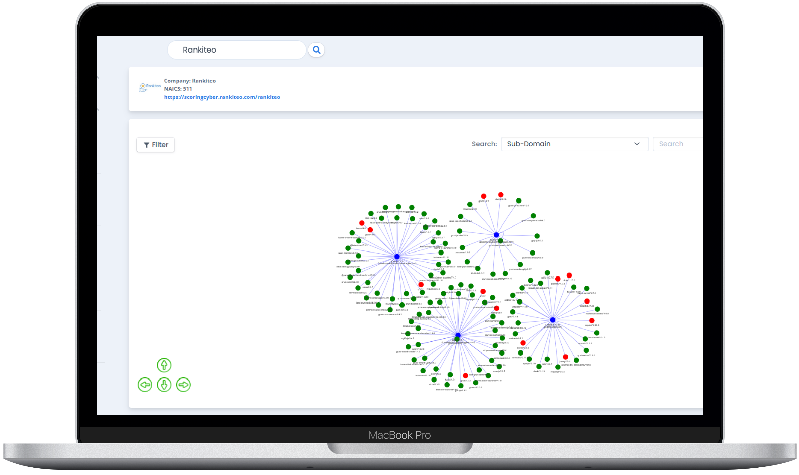
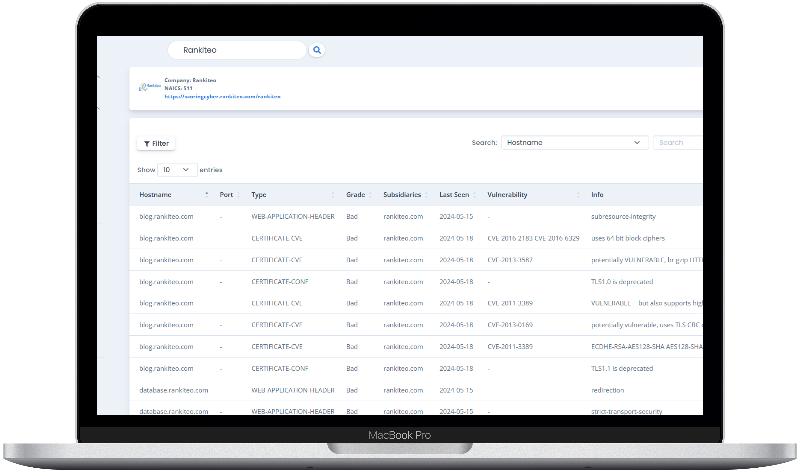
Identify exposed access points, detect misconfigured SSL certificates, and uncover vulnerabilities across the network infrastructure.
Gain visibility into the software components used within an organization to detect vulnerabilities, manage risk, and ensure supply chain security.
Monitor and manage all IT assets and their configurations to ensure accurate, real-time visibility across the company's technology environment.
Leverage real-time insights on active threats, malware campaigns, and emerging vulnerabilities to proactively defend against evolving cyberattacks.



 Rapid
Rapid