Company Details
goethe-universitat-frankfurt
5,207
120,464
None
uni-frankfurt.de
0
GOE_1801881
In-progress

Goethe-Universität Frankfurt Company CyberSecurity Posture
uni-frankfurt.deDie Goethe-Universität ist eine weltoffene Werkstatt der Zukunft mitten in Europa. Sie entstand 1914 als Gründung Frankfurter Bürger und knüpft seit 2008 als Stiftungsuniversität wieder an diese Tradition an: als autonome Bürger*innen-Universität eingebettet in die Stadtgesellschaft und mit einem hohen Maß an gesellschaftlicher Teilhabe und Förderung. Die Goethe-Universität gehört mit mehr als 40.000 Studierenden zu den größten und forschungsstärksten Universitäten Deutschlands und zu den größten Arbeitgebern in Frankfurt. Die Goethe-Universität ist eine international aufgestellte Volluniversität, die sich durch exzellente Forschungsschwerpunkte in sechs interdisziplinären, fachbereichsübergreifenden Profilbereichen ebenso auszeichnet wie durch die Vielfalt ihrer Fächer in Geistes-, Sozial-, Gesellschafts-, Natur- und Lebenswissenschaften und Medizin. Mit der TU Darmstadt und der Universität Mainz bildet sie das Bündnis Rhein-Main-Universitäten (RMU). Sie gehört den „German U15“ an, dem Zusammenschluss der 15 forschungsstärksten medizinführenden Universitäten Deutschlands, und bildet zusammen mit 15 außeruniversitären Forschungseinrichtungen im Rhein-Main-Gebiet das Wissenschaftsnetzwerk „Frankfurt Alliance“.
Company Details
goethe-universitat-frankfurt
5,207
120,464
None
uni-frankfurt.de
0
GOE_1801881
In-progress
Between 750 and 799

Goethe-Universität Frankfurt Global Score (TPRM)XXXX


No incidents recorded for Goethe-Universität Frankfurt in 2025.
Goethe-Universität Frankfurt cyber incidents detection timeline including parent company and subsidiaries

Die Goethe-Universität ist eine weltoffene Werkstatt der Zukunft mitten in Europa. Sie entstand 1914 als Gründung Frankfurter Bürger und knüpft seit 2008 als Stiftungsuniversität wieder an diese Tradition an: als autonome Bürger*innen-Universität eingebettet in die Stadtgesellschaft und mit einem hohen Maß an gesellschaftlicher Teilhabe und Förderung. Die Goethe-Universität gehört mit mehr als 40.000 Studierenden zu den größten und forschungsstärksten Universitäten Deutschlands und zu den größten Arbeitgebern in Frankfurt. Die Goethe-Universität ist eine international aufgestellte Volluniversität, die sich durch exzellente Forschungsschwerpunkte in sechs interdisziplinären, fachbereichsübergreifenden Profilbereichen ebenso auszeichnet wie durch die Vielfalt ihrer Fächer in Geistes-, Sozial-, Gesellschafts-, Natur- und Lebenswissenschaften und Medizin. Mit der TU Darmstadt und der Universität Mainz bildet sie das Bündnis Rhein-Main-Universitäten (RMU). Sie gehört den „German U15“ an, dem Zusammenschluss der 15 forschungsstärksten medizinführenden Universitäten Deutschlands, und bildet zusammen mit 15 außeruniversitären Forschungseinrichtungen im Rhein-Main-Gebiet das Wissenschaftsnetzwerk „Frankfurt Alliance“.


One of the largest universities in the United States, The Ohio State University is a leading research university and the model for Ohio's public higher education institutes. Founded in 1870 as a land-grant university, it consistently ranks as one of the top public universities in the United States.

Founded in 1861, the University of Washington is one of the oldest state-supported institutions of higher education on the West Coast and is one of the preeminent research universities in the world. Located minutes from downtown Seattle, the main UW campus provides gorgeous views of the Cascade and

For more than 20 years, we have remained committed to making a positive impact in the communities we serve, by providing accessible, high-quality undergraduate, graduate, and specialized degree programs. We know that when our students succeed, countries prosper, and societies benefit. We take very

Founded in 1898, Northeastern is a global research university with a distinctive, experience-driven approach to education and discovery. The university is a leader in experiential learning, powered by the world’s most far-reaching cooperative education program. We integrate classroom study with opp

Universidad colombiana pública, certificada y reacreditada de alta calidad. Fundada en 1943, hoy cuenta con 70 años de historia y con una oferta de pregrados, especializaciones, maestrías y doctorados desde sus facultades de Ciencias para la Salud; Ciencias Agropecuarias; Artes y Humanidades; Cie

The University of Southern California is a leading private research university located in Los Angeles, the capital of the Pacific Rim. This is the official LinkedIn presence for the University of Southern California. This account is managed and mediated by the staff of USC University Communications
.png)
Collaboration set within Goethe University's affiliation with the ATHENE National Research Center for Applied Cybersecurity seeks to develop...
A collaborative research team with USC ISI expertise finds that existing methods for selecting privacy enhancing technologies are inadequate...
Renowned TU computer scientist Iryna Gurevych has received the first ATHENE Distinguished Professorship. With this award, the National...
Kai Rannenberg, Professor for Mobile Business & Multilateral Security at Goethe University Frankfurt and an expert in business IT, is conducting research into...
In the SATURN project, physicians and computer scientists are seeking new ways to help patients with rare diseases.
A prominent German-Israeli cybersecurity expert has accused a television host of antisemitic behavior during a live broadcast on Hessischer Rundfunk (HR).
An international research team has uncovered a new mechanism crucial to the production of cellular proteins.
The Resource Public Key Infrastructure (RPKI) protocol has software vulnerabilities, inconsistent specifications, and operational challenges.
Despite White House encouragement to implement RPKI, the protocol is not yet stable or secure enough, according to a team of German researchers.

Explore insights on cybersecurity incidents, risk posture, and Rankiteo's assessments.
The official website of Goethe-Universität Frankfurt is http://www.uni-frankfurt.de.
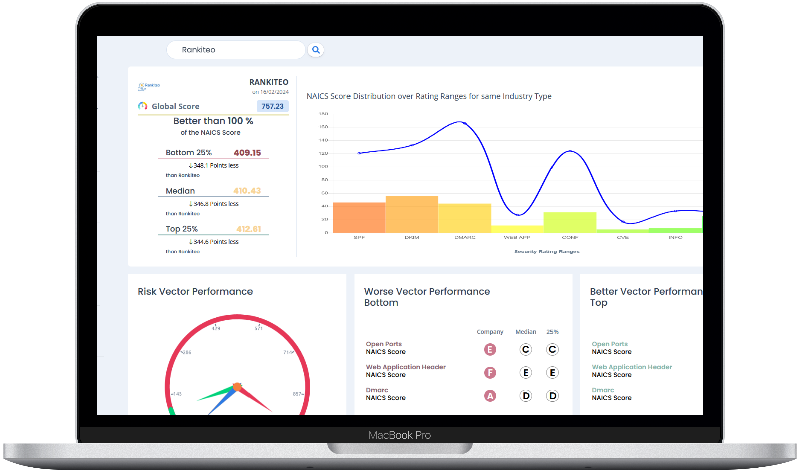
According to Rankiteo, Goethe-Universität Frankfurt’s AI-generated cybersecurity score is 771, reflecting their Fair security posture.
According to Rankiteo, Goethe-Universität Frankfurt currently holds 0 security badges, indicating that no recognized compliance certifications are currently verified for the organization.
According to Rankiteo, Goethe-Universität Frankfurt is not certified under SOC 2 Type 1.
According to Rankiteo, Goethe-Universität Frankfurt does not hold a SOC 2 Type 2 certification.
According to Rankiteo, Goethe-Universität Frankfurt is not listed as GDPR compliant.
According to Rankiteo, Goethe-Universität Frankfurt does not currently maintain PCI DSS compliance.
According to Rankiteo, Goethe-Universität Frankfurt is not compliant with HIPAA regulations.
According to Rankiteo,Goethe-Universität Frankfurt is not certified under ISO 27001, indicating the absence of a formally recognized information security management framework.
Goethe-Universität Frankfurt operates primarily in the Hochschulen und Universitäten industry.
Goethe-Universität Frankfurt employs approximately 5,207 people worldwide.
Goethe-Universität Frankfurt presently has no subsidiaries across any sectors.
Goethe-Universität Frankfurt’s official LinkedIn profile has approximately 120,464 followers.
No, Goethe-Universität Frankfurt does not have a profile on Crunchbase.
Yes, Goethe-Universität Frankfurt maintains an official LinkedIn profile, which is actively utilized for branding and talent engagement, which can be accessed here: https://www.linkedin.com/company/goethe-universitat-frankfurt.
As of December 18, 2025, Rankiteo reports that Goethe-Universität Frankfurt has not experienced any cybersecurity incidents.
Goethe-Universität Frankfurt has an estimated 101 peer or competitor companies worldwide.
Total Incidents: According to Rankiteo, Goethe-Universität Frankfurt has faced 0 incidents in the past.
Incident Types: The types of cybersecurity incidents that have occurred include .
.png)
Zerobyte is a backup automation tool Zerobyte versions prior to 0.18.5 and 0.19.0 contain an authentication bypass vulnerability where authentication middleware is not properly applied to API endpoints. This results in certain API endpoints being accessible without valid session credentials. This is dangerous for those who have exposed Zerobyte to be used outside of their internal network. A fix has been applied in both version 0.19.0 and 0.18.5. If immediate upgrade is not possible, restrict network access to the Zerobyte instance to trusted networks only using firewall rules or network segmentation. This is only a temporary mitigation; upgrading is strongly recommended.
Open Source Point of Sale (opensourcepos) is a web based point of sale application written in PHP using CodeIgniter framework. Starting in version 3.4.0 and prior to version 3.4.2, a Cross-Site Request Forgery (CSRF) vulnerability exists in the application's filter configuration. The CSRF protection mechanism was **explicitly disabled**, allowing the application to process state-changing requests (POST) without verifying a valid CSRF token. An unauthenticated remote attacker can exploit this by hosting a malicious web page. If a logged-in administrator visits this page, their browser is forced to send unauthorized requests to the application. A successful exploit allows the attacker to silently create a new Administrator account with full privileges, leading to a complete takeover of the system and loss of confidentiality, integrity, and availability. The vulnerability has been patched in version 3.4.2. The fix re-enables the CSRF filter in `app/Config/Filters.php` and resolves associated AJAX race conditions by adjusting token regeneration settings. As a workaround, administrators can manually re-enable the CSRF filter in `app/Config/Filters.php` by uncommenting the protection line. However, this is not recommended without applying the full patch, as it may cause functionality breakage in the Sales module due to token synchronization issues.
Zed, a code editor, has an aribtrary code execution vulnerability in versions prior to 0.218.2-pre. The Zed IDE loads Model Context Protocol (MCP) configurations from the `settings.json` file located within a project’s `.zed` subdirectory. A malicious MCP configuration can contain arbitrary shell commands that run on the host system with the privileges of the user running the IDE. This can be triggered automatically without any user interaction besides opening the project in the IDE. Version 0.218.2-pre fixes the issue by implementing worktree trust mechanism. As a workaround, users should carefully review the contents of project settings files (`./zed/settings.json`) before opening new projects in Zed.
Zed, a code editor, has an aribtrary code execution vulnerability in versions prior to 0.218.2-pre. The Zed IDE loads Language Server Protocol (LSP) configurations from the `settings.json` file located within a project’s `.zed` subdirectory. A malicious LSP configuration can contain arbitrary shell commands that run on the host system with the privileges of the user running the IDE. This can be triggered when a user opens project file for which there is an LSP entry. A concerted effort by an attacker to seed a project settings file (`./zed/settings.json`) with malicious language server configurations could result in arbitrary code execution with the user's privileges if the user opens the project in Zed without reviewing the contents. Version 0.218.2-pre fixes the issue by implementing worktree trust mechanism. As a workaround, users should carefully review the contents of project settings files (`./zed/settings.json`) before opening new projects in Zed.
Storybook is a frontend workshop for building user interface components and pages in isolation. A vulnerability present starting in versions 7.0.0 and prior to versions 7.6.21, 8.6.15, 9.1.17, and 10.1.10 relates to Storybook’s handling of environment variables defined in a `.env` file, which could, in specific circumstances, lead to those variables being unexpectedly bundled into the artifacts created by the `storybook build` command. When a built Storybook is published to the web, the bundle’s source is viewable, thus potentially exposing those variables to anyone with access. For a project to potentially be vulnerable to this issue, it must build the Storybook (i.e. run `storybook build` directly or indirectly) in a directory that contains a `.env` file (including variants like `.env.local`) and publish the built Storybook to the web. Storybooks built without a `.env` file at build time are not affected, including common CI-based builds where secrets are provided via platform environment variables rather than `.env` files. Storybook runtime environments (i.e. `storybook dev`) are not affected. Deployed applications that share a repo with your Storybook are not affected. Users should upgrade their Storybook—on both their local machines and CI environment—to version .6.21, 8.6.15, 9.1.17, or 10.1.10 as soon as possible. Maintainers additionally recommend that users audit for any sensitive secrets provided via `.env` files and rotate those keys. Some projects may have been relying on the undocumented behavior at the heart of this issue and will need to change how they reference environment variables after this update. If a project can no longer read necessary environmental variable values, either prefix the variables with `STORYBOOK_` or use the `env` property in Storybook’s configuration to manually specify values. In either case, do not include sensitive secrets as they will be included in the built bundle.

Get company history
Every week, Rankiteo analyzes billions of signals to give organizations a sharper, faster view of emerging risks. With deeper, more actionable intelligence at their fingertips, security teams can outpace threat actors, respond instantly to Zero-Day attacks, and dramatically shrink their risk exposure window.
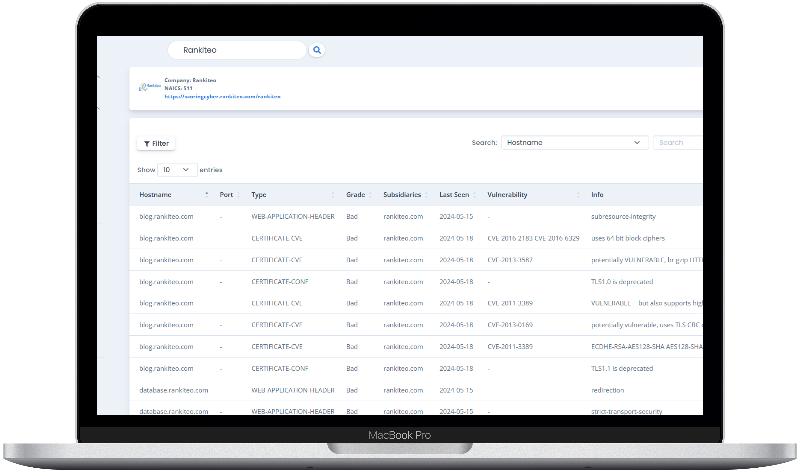
Identify exposed access points, detect misconfigured SSL certificates, and uncover vulnerabilities across the network infrastructure.
Gain visibility into the software components used within an organization to detect vulnerabilities, manage risk, and ensure supply chain security.
Monitor and manage all IT assets and their configurations to ensure accurate, real-time visibility across the company's technology environment.
Leverage real-time insights on active threats, malware campaigns, and emerging vulnerabilities to proactively defend against evolving cyberattacks.