Company Details
university-of-augsburg
1,827
45,656
None
uni-augsburg.de
0
UNI_4889433
In-progress

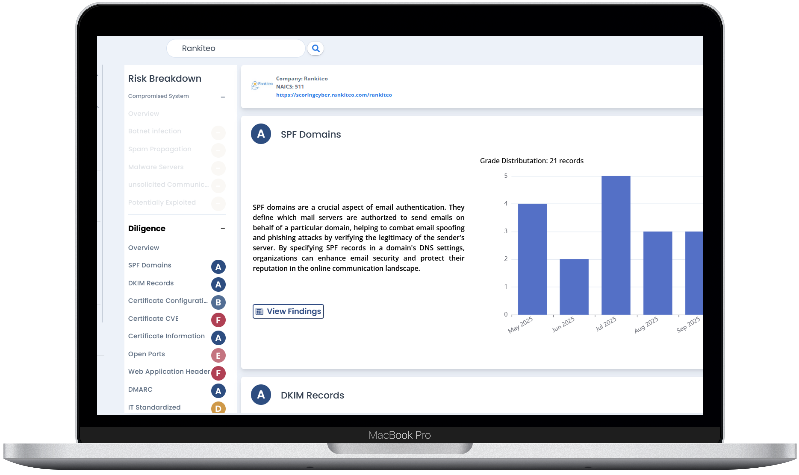
Universität Augsburg Company CyberSecurity Posture
uni-augsburg.de1970 gegründet, zählt die Universität Augsburg zu den noch jüngeren, modernen Universitäten Bayerns. Sie wächst nach wie vor, bleibt aber mit derzeit 20.000 Studierenden in ihrer Größe überschaubar. Auf ihre acht Fakultäten verteilt sich ein breites Spektrum von rund 90 Studiengängen in den Geistes- und Sozialwissenschaften, den Natur- und Technikwissenschaften, den Rechts- und Wirtschaftswissenschaften, der Theologie und der Medizin. Die Universität Augsburg gehört zu den angenehmsten Orten, an denen man in Deutschland studieren kann. Südlich des historischen Stadtzentrums liegt der moderne und vielseitige grüne Campus, der sämtliche Gebäude in einer großen Parklandschaft mit viel Wasser und zahlreichen Skulpturen versammelt. Durchweg hervorragende Bedingungen ermöglichen es, in sinnvoller Zeit ein Fachstudium erfolgreich abzuschließen – konzentriert, effektiv und dennoch eingebettet in einen breiten, von Interdisziplinarität und Austausch geprägten anregenden geistig-kulturellen Hintergrund. Mit ihren bedarfsgerechten und teils einzigartigen Studienangeboten zieht die Universität Augsburg weit über ihr unmittelbares Einzugsgebiet hinaus Studierende aus ganz Deutschland und aus der ganzen Welt an. Gut 10% aller Augsburger Studentinnen und Studenten kommen aus dem Ausland. Nicht minder als Gastwissenschaftlerinnen und –wissenschaftler erfahren sie hier eine Betreuung und Begleitung, für deren besondere Qualität die Universität Augsburg bereits mehrfach ausgezeichnet worden ist.
Company Details
university-of-augsburg
1,827
45,656
None
uni-augsburg.de
0
UNI_4889433
In-progress
Between 750 and 799

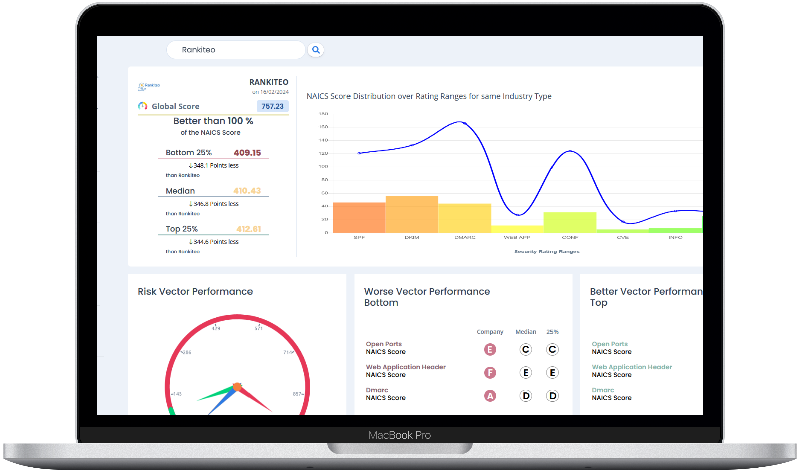
Universität Augsburg Global Score (TPRM)XXXX


No incidents recorded for Universität Augsburg in 2025.
Universität Augsburg cyber incidents detection timeline including parent company and subsidiaries

1970 gegründet, zählt die Universität Augsburg zu den noch jüngeren, modernen Universitäten Bayerns. Sie wächst nach wie vor, bleibt aber mit derzeit 20.000 Studierenden in ihrer Größe überschaubar. Auf ihre acht Fakultäten verteilt sich ein breites Spektrum von rund 90 Studiengängen in den Geistes- und Sozialwissenschaften, den Natur- und Technikwissenschaften, den Rechts- und Wirtschaftswissenschaften, der Theologie und der Medizin. Die Universität Augsburg gehört zu den angenehmsten Orten, an denen man in Deutschland studieren kann. Südlich des historischen Stadtzentrums liegt der moderne und vielseitige grüne Campus, der sämtliche Gebäude in einer großen Parklandschaft mit viel Wasser und zahlreichen Skulpturen versammelt. Durchweg hervorragende Bedingungen ermöglichen es, in sinnvoller Zeit ein Fachstudium erfolgreich abzuschließen – konzentriert, effektiv und dennoch eingebettet in einen breiten, von Interdisziplinarität und Austausch geprägten anregenden geistig-kulturellen Hintergrund. Mit ihren bedarfsgerechten und teils einzigartigen Studienangeboten zieht die Universität Augsburg weit über ihr unmittelbares Einzugsgebiet hinaus Studierende aus ganz Deutschland und aus der ganzen Welt an. Gut 10% aller Augsburger Studentinnen und Studenten kommen aus dem Ausland. Nicht minder als Gastwissenschaftlerinnen und –wissenschaftler erfahren sie hier eine Betreuung und Begleitung, für deren besondere Qualität die Universität Augsburg bereits mehrfach ausgezeichnet worden ist.


The University of Connecticut (UConn), a Wall Street Journal top 10 public university, is home to more than 32,000 students, 1,500 faculty, 255,000 proud alumni, and a handsome husky named Jonathan. The University has fourteen schools and colleges: Agriculture and Natural Resources, Business, Denta

The University of Illinois Urbana-Champaign is dedicated to building upon its tradition of excellence in education, research, public engagement and economic development. More than 3,000 faculty members discover and create new knowledge. Their work is an economic engine for the state and is recognize

For more than 250 years, Columbia has been a leader in higher education in the nation and around the world. At the core of our wide range of academic inquiry is the commitment to attract and engage the best minds in pursuit of greater human understanding, pioneering new discoveries and service to so

Northwestern is one of the nation’s premier research universities, combining innovative teaching and pioneering research in a highly collaborative, multidisciplinary, and diverse environment. Northwestern provides both students and faculty exceptional opportunities for intellectual, personal, and pr

The University of Nebraska-Lincoln is the state’s flagship university and the intellectual center of the state of Nebraska. Like the university’s founders in 1869, students and faculty at Nebraska look challenges and opportunities in the eye, using fresh thinking and creativity to forge new paths.

The University of Alberta is one of Canada’s top teaching and research universities, with an international reputation for excellence across the humanities, sciences, creative arts, business, engineering, and health sciences. Home to more than 39,000 students and 15,000 faculty and staff, the univers
.png)
In 2025, Minneapolis emerges as a leading tech education hub with top colleges like the University of Minnesota - Twin Cities offering cutting-edge programs.
Monash University, Indonesia has a special visit for around 3 months from Quirin Ball, who recently graduated from the geography program in...
Prof. Dr. Michael Schmidl is co-head of the German Information Technology Group and is based in Baker McKenzie's Munich office.

Explore insights on cybersecurity incidents, risk posture, and Rankiteo's assessments.
The official website of Universität Augsburg is http://www.uni-augsburg.de.
According to Rankiteo, Universität Augsburg’s AI-generated cybersecurity score is 763, reflecting their Fair security posture.
According to Rankiteo, Universität Augsburg currently holds 0 security badges, indicating that no recognized compliance certifications are currently verified for the organization.
According to Rankiteo, Universität Augsburg is not certified under SOC 2 Type 1.
According to Rankiteo, Universität Augsburg does not hold a SOC 2 Type 2 certification.
According to Rankiteo, Universität Augsburg is not listed as GDPR compliant.
According to Rankiteo, Universität Augsburg does not currently maintain PCI DSS compliance.
According to Rankiteo, Universität Augsburg is not compliant with HIPAA regulations.
According to Rankiteo,Universität Augsburg is not certified under ISO 27001, indicating the absence of a formally recognized information security management framework.
Universität Augsburg operates primarily in the Hochschulen und Universitäten industry.
Universität Augsburg employs approximately 1,827 people worldwide.
Universität Augsburg presently has no subsidiaries across any sectors.
Universität Augsburg’s official LinkedIn profile has approximately 45,656 followers.
No, Universität Augsburg does not have a profile on Crunchbase.
Yes, Universität Augsburg maintains an official LinkedIn profile, which is actively utilized for branding and talent engagement, which can be accessed here: https://www.linkedin.com/company/university-of-augsburg.
As of December 18, 2025, Rankiteo reports that Universität Augsburg has not experienced any cybersecurity incidents.
Universität Augsburg has an estimated 101 peer or competitor companies worldwide.
Total Incidents: According to Rankiteo, Universität Augsburg has faced 0 incidents in the past.
Incident Types: The types of cybersecurity incidents that have occurred include .
.png)
Zerobyte is a backup automation tool Zerobyte versions prior to 0.18.5 and 0.19.0 contain an authentication bypass vulnerability where authentication middleware is not properly applied to API endpoints. This results in certain API endpoints being accessible without valid session credentials. This is dangerous for those who have exposed Zerobyte to be used outside of their internal network. A fix has been applied in both version 0.19.0 and 0.18.5. If immediate upgrade is not possible, restrict network access to the Zerobyte instance to trusted networks only using firewall rules or network segmentation. This is only a temporary mitigation; upgrading is strongly recommended.
Open Source Point of Sale (opensourcepos) is a web based point of sale application written in PHP using CodeIgniter framework. Starting in version 3.4.0 and prior to version 3.4.2, a Cross-Site Request Forgery (CSRF) vulnerability exists in the application's filter configuration. The CSRF protection mechanism was **explicitly disabled**, allowing the application to process state-changing requests (POST) without verifying a valid CSRF token. An unauthenticated remote attacker can exploit this by hosting a malicious web page. If a logged-in administrator visits this page, their browser is forced to send unauthorized requests to the application. A successful exploit allows the attacker to silently create a new Administrator account with full privileges, leading to a complete takeover of the system and loss of confidentiality, integrity, and availability. The vulnerability has been patched in version 3.4.2. The fix re-enables the CSRF filter in `app/Config/Filters.php` and resolves associated AJAX race conditions by adjusting token regeneration settings. As a workaround, administrators can manually re-enable the CSRF filter in `app/Config/Filters.php` by uncommenting the protection line. However, this is not recommended without applying the full patch, as it may cause functionality breakage in the Sales module due to token synchronization issues.
Zed, a code editor, has an aribtrary code execution vulnerability in versions prior to 0.218.2-pre. The Zed IDE loads Model Context Protocol (MCP) configurations from the `settings.json` file located within a project’s `.zed` subdirectory. A malicious MCP configuration can contain arbitrary shell commands that run on the host system with the privileges of the user running the IDE. This can be triggered automatically without any user interaction besides opening the project in the IDE. Version 0.218.2-pre fixes the issue by implementing worktree trust mechanism. As a workaround, users should carefully review the contents of project settings files (`./zed/settings.json`) before opening new projects in Zed.
Zed, a code editor, has an aribtrary code execution vulnerability in versions prior to 0.218.2-pre. The Zed IDE loads Language Server Protocol (LSP) configurations from the `settings.json` file located within a project’s `.zed` subdirectory. A malicious LSP configuration can contain arbitrary shell commands that run on the host system with the privileges of the user running the IDE. This can be triggered when a user opens project file for which there is an LSP entry. A concerted effort by an attacker to seed a project settings file (`./zed/settings.json`) with malicious language server configurations could result in arbitrary code execution with the user's privileges if the user opens the project in Zed without reviewing the contents. Version 0.218.2-pre fixes the issue by implementing worktree trust mechanism. As a workaround, users should carefully review the contents of project settings files (`./zed/settings.json`) before opening new projects in Zed.
Storybook is a frontend workshop for building user interface components and pages in isolation. A vulnerability present starting in versions 7.0.0 and prior to versions 7.6.21, 8.6.15, 9.1.17, and 10.1.10 relates to Storybook’s handling of environment variables defined in a `.env` file, which could, in specific circumstances, lead to those variables being unexpectedly bundled into the artifacts created by the `storybook build` command. When a built Storybook is published to the web, the bundle’s source is viewable, thus potentially exposing those variables to anyone with access. For a project to potentially be vulnerable to this issue, it must build the Storybook (i.e. run `storybook build` directly or indirectly) in a directory that contains a `.env` file (including variants like `.env.local`) and publish the built Storybook to the web. Storybooks built without a `.env` file at build time are not affected, including common CI-based builds where secrets are provided via platform environment variables rather than `.env` files. Storybook runtime environments (i.e. `storybook dev`) are not affected. Deployed applications that share a repo with your Storybook are not affected. Users should upgrade their Storybook—on both their local machines and CI environment—to version .6.21, 8.6.15, 9.1.17, or 10.1.10 as soon as possible. Maintainers additionally recommend that users audit for any sensitive secrets provided via `.env` files and rotate those keys. Some projects may have been relying on the undocumented behavior at the heart of this issue and will need to change how they reference environment variables after this update. If a project can no longer read necessary environmental variable values, either prefix the variables with `STORYBOOK_` or use the `env` property in Storybook’s configuration to manually specify values. In either case, do not include sensitive secrets as they will be included in the built bundle.

Get company history
Every week, Rankiteo analyzes billions of signals to give organizations a sharper, faster view of emerging risks. With deeper, more actionable intelligence at their fingertips, security teams can outpace threat actors, respond instantly to Zero-Day attacks, and dramatically shrink their risk exposure window.
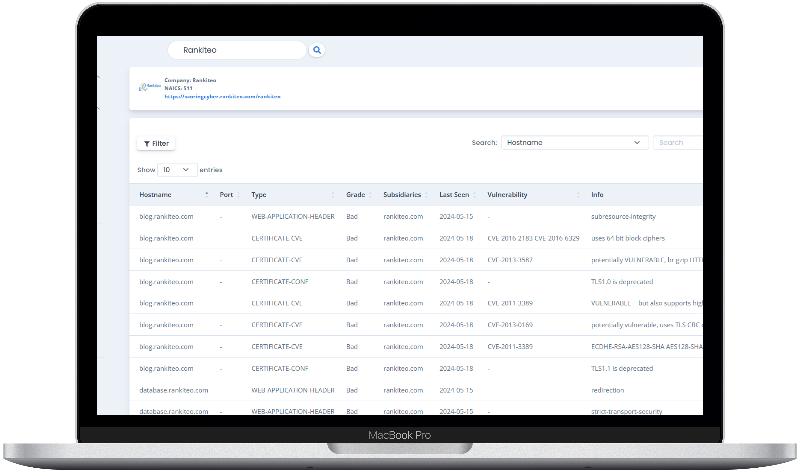
Identify exposed access points, detect misconfigured SSL certificates, and uncover vulnerabilities across the network infrastructure.
Gain visibility into the software components used within an organization to detect vulnerabilities, manage risk, and ensure supply chain security.
Monitor and manage all IT assets and their configurations to ensure accurate, real-time visibility across the company's technology environment.
Leverage real-time insights on active threats, malware campaigns, and emerging vulnerabilities to proactively defend against evolving cyberattacks.