






HMA
Company Details
Linkedin ID:
the-heckscher-museum-of-art
Website:
Employees number:
44
Number of followers:
400
NAICS:
712
Industry Type:
Homepage:
heckscher.org
IP Addresses:
0
Company ID:
THE_2242619
Scan Status:
In-progress

The Heckscher Museum of Art Company CyberSecurity Posture
heckscher.org


At The Heckscher Museum of Art, we believe that experiencing art broadens our understanding of the past, fosters community connections to our present, and creates diverse possibilities for our future. The Heckscher Museum maintains a Collection that includes more than 2,300 works from the sixteenth to the twenty-first century, including European and American painting, sculpture, works on paper, and photography. The Museum was founded in 1920 by Anna and August Heckscher, who donated the Museum building and 185 works of art to the Town of Huntington. Mr. and Mrs. Heckscher envisioned Heckscher Park and the Museum as the center of the community’s cultural, recreational, and social life. Inspired by that vision, the Museum has championed the value of publicly accessible art and arts education for everyone.
Company Details
the-heckscher-museum-of-art
44
400
712
heckscher.org
0
THE_2242619
In-progress
 HMA Risk Score (AI oriented)
Between 750 and 799
 HMA Global Score (TPRM)
XXXX


No incidents recorded for The Heckscher Museum of Art in 2026.
No incidents recorded for The Heckscher Museum of Art in 2026.
No incidents recorded for The Heckscher Museum of Art in 2026.
HMA cyber incidents detection timeline including parent company and subsidiaries

At The Heckscher Museum of Art, we believe that experiencing art broadens our understanding of the past, fosters community connections to our present, and creates diverse possibilities for our future. The Heckscher Museum maintains a Collection that includes more than 2,300 works from the sixteenth to the twenty-first century, including European and American painting, sculpture, works on paper, and photography. The Museum was founded in 1920 by Anna and August Heckscher, who donated the Museum building and 185 works of art to the Town of Huntington. Mr. and Mrs. Heckscher envisioned Heckscher Park and the Museum as the center of the community’s cultural, recreational, and social life. Inspired by that vision, the Museum has championed the value of publicly accessible art and arts education for everyone.


The McLean County Museum of History traces its roots back to 1892, the year the McLean County Historical Society was founded. It is a nationally accredited award winning museum with five permanent exhibit galleries and two rotating galleries. This educational institution is dedicated to telling the
WAG-Qaumajuq has grown into one of the country’s leading visual art museums with an international reputation! Founded in 1912, the WAG is one of Canada’s first civic art galleries, housed in an iconic modernist building in the heart of downtown Winnipeg. Opened in 2021, Qaumajuq is a contemporary ar

The Center for Italian Modern Art (CIMA) is a 501c3 public nonprofit exhibition and research center established in 2013 in New York City to promote public appreciation and advance the study of modern and contemporary Italian art in the United States and internationally. Each academic year CIMA pres

The Oakland Museum of California (OMCA) tells the many stories that comprise California, creating the space and context for greater connection, trust, and understanding between people. Through its inclusive exhibitions, public programs, educational initiatives, and cultural events, OMCA brings Cali

Commissioned on Sept. 10, 1945, the USS Midway was built in only 17 months and served in the U.S. Navy from 1945-1992, becoming the longest-serving aircraft carrier in the 20th century. On April 11, 1992, Midway was decommissioned in San Diego and was transferred to the Navy’s inactive ship fleet in

Vulcan is the world's largest cast iron statue! Made of 100,000 pounds of iron and 56 feet tall, he stands at the top of Red Mountain overlooking the city of Birmingham. But, Vulcan is more than a statue. Vulcan Park and Museum features spectacular views of Birmingham, a history museum that examines

Experience real ranches, real stories and real heritage through the National Ranching Heritage Center. Roam more than 19 acres at "the Ranch" and discover over 200 years of ranching history in the NRHC historical park. Immerse yourself in the culture, values, and authenticity that define ranching

The Smithsonian Early Enrichment Center (SEEC) is a non-profit entity that serves as a model lab school with a museum-based curriculum. Children aged infant through kindergarten and their families receive all-day, part-time and community workshop instruction in on-site classrooms and the Smithsonian

The Golisano Children’s Museum of Naples believes it is a privilege to share life with a child, and is committed to nurturing bonds among families and generations. We celebrate the natural curiosity of children by offering an educational dynamic space that encourages exploration and discovery. This
.png)
Exposing the horrors of World War II, the Holocaust, and the U.S. dropping of atomic bombs on Hiroshima and Nagasaki, Grosz spares no teary,...

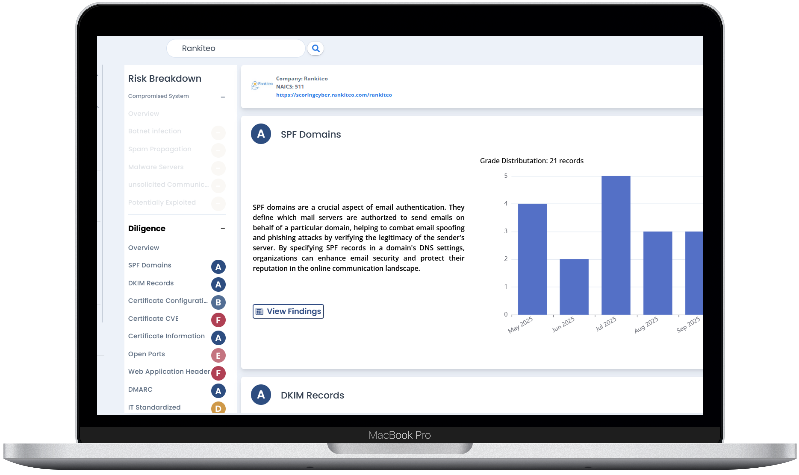
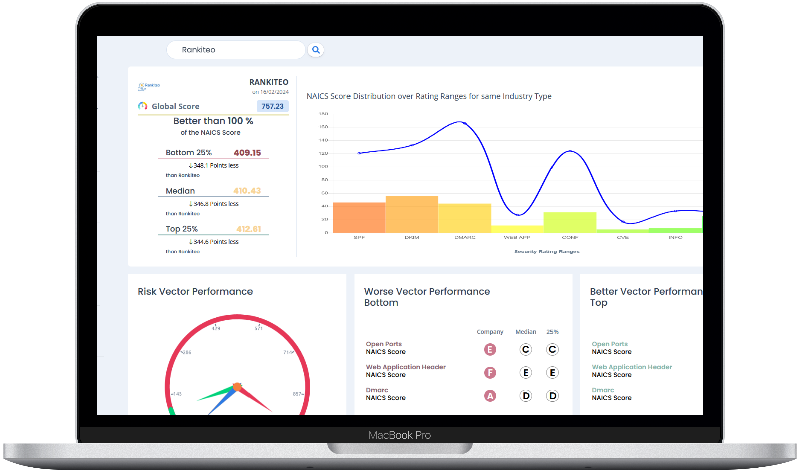
Explore insights on cybersecurity incidents, risk posture, and Rankiteo's assessments.
The official website of The Heckscher Museum of Art is http://www.heckscher.org.
According to Rankiteo, The Heckscher Museum of Art’s AI-generated cybersecurity score is 764, reflecting their Fair security posture.
According to Rankiteo, The Heckscher Museum of Art currently holds 0 security badges, indicating that no recognized compliance certifications are currently verified for the organization.
According to Rankiteo, The Heckscher Museum of Art has not been affected by any supply chain cyber incidents, and no incident IDs are currently listed for the organization.
According to Rankiteo, The Heckscher Museum of Art is not certified under SOC 2 Type 1.
According to Rankiteo, The Heckscher Museum of Art does not hold a SOC 2 Type 2 certification.
According to Rankiteo, The Heckscher Museum of Art is not listed as GDPR compliant.
According to Rankiteo, The Heckscher Museum of Art does not currently maintain PCI DSS compliance.
According to Rankiteo, The Heckscher Museum of Art is not compliant with HIPAA regulations.
According to Rankiteo,The Heckscher Museum of Art is not certified under ISO 27001, indicating the absence of a formally recognized information security management framework.
The Heckscher Museum of Art operates primarily in the Museums, Historical Sites, and Zoos industry.
The Heckscher Museum of Art employs approximately 44 people worldwide.
The Heckscher Museum of Art presently has no subsidiaries across any sectors.
The Heckscher Museum of Art’s official LinkedIn profile has approximately 400 followers.
No, The Heckscher Museum of Art does not have a profile on Crunchbase.
Yes, The Heckscher Museum of Art maintains an official LinkedIn profile, which is actively utilized for branding and talent engagement, which can be accessed here: https://www.linkedin.com/company/the-heckscher-museum-of-art.
As of January 23, 2026, Rankiteo reports that The Heckscher Museum of Art has not experienced any cybersecurity incidents.
The Heckscher Museum of Art has an estimated 2,178 peer or competitor companies worldwide.
Total Incidents: According to Rankiteo, The Heckscher Museum of Art has faced 0 incidents in the past.
Incident Types: The types of cybersecurity incidents that have occurred include .
.png)
Backstage is an open framework for building developer portals, and @backstage/backend-defaults provides the default implementations and setup for a standard Backstage backend app. Prior to versions 0.12.2, 0.13.2, 0.14.1, and 0.15.0, the `FetchUrlReader` component, used by the catalog and other plugins to fetch content from URLs, followed HTTP redirects automatically. This allowed an attacker who controls a host listed in `backend.reading.allow` to redirect requests to internal or sensitive URLs that are not on the allowlist, bypassing the URL allowlist security control. This is a Server-Side Request Forgery (SSRF) vulnerability that could allow access to internal resources, but it does not allow attackers to include additional request headers. This vulnerability is fixed in `@backstage/backend-defaults` version 0.12.2, 0.13.2, 0.14.1, and 0.15.0. Users should upgrade to this version or later. Some workarounds are available. Restrict `backend.reading.allow` to only trusted hosts that you control and that do not issue redirects, ensure allowed hosts do not have open redirect vulnerabilities, and/or use network-level controls to block access from Backstage to sensitive internal endpoints.
Backstage is an open framework for building developer portals, and @backstage/cli-common provides config loading functionality used by the backend and command line interface of Backstage. Prior to version 0.1.17, the `resolveSafeChildPath` utility function in `@backstage/backend-plugin-api`, which is used to prevent path traversal attacks, failed to properly validate symlink chains and dangling symlinks. An attacker could bypass the path validation via symlink chains (creating `link1 → link2 → /outside` where intermediate symlinks eventually resolve outside the allowed directory) and dangling symlinks (creating symlinks pointing to non-existent paths outside the base directory, which would later be created during file operations). This function is used by Scaffolder actions and other backend components to ensure file operations stay within designated directories. This vulnerability is fixed in `@backstage/backend-plugin-api` version 0.1.17. Users should upgrade to this version or later. Some workarounds are available. Run Backstage in a containerized environment with limited filesystem access and/or restrict template creation to trusted users.
Backstage is an open framework for building developer portals. Multiple Scaffolder actions and archive extraction utilities were vulnerable to symlink-based path traversal attacks. An attacker with access to create and execute Scaffolder templates could exploit symlinks to read arbitrary files via the `debug:log` action by creating a symlink pointing to sensitive files (e.g., `/etc/passwd`, configuration files, secrets); delete arbitrary files via the `fs:delete` action by creating symlinks pointing outside the workspace, and write files outside the workspace via archive extraction (tar/zip) containing malicious symlinks. This affects any Backstage deployment where users can create or execute Scaffolder templates. This vulnerability is fixed in `@backstage/backend-defaults` versions 0.12.2, 0.13.2, 0.14.1, and 0.15.0; `@backstage/plugin-scaffolder-backend` versions 2.2.2, 3.0.2, and 3.1.1; and `@backstage/plugin-scaffolder-node` versions 0.11.2 and 0.12.3. Users should upgrade to these versions or later. Some workarounds are available. Follow the recommendation in the Backstage Threat Model to limit access to creating and updating templates, restrict who can create and execute Scaffolder templates using the permissions framework, audit existing templates for symlink usage, and/or run Backstage in a containerized environment with limited filesystem access.
FastAPI Api Key provides a backend-agnostic library that provides an API key system. Version 1.1.0 has a timing side-channel vulnerability in verify_key(). The method applied a random delay only on verification failures, allowing an attacker to statistically distinguish valid from invalid API keys by measuring response latencies. With enough repeated requests, an adversary could infer whether a key_id corresponds to a valid key, potentially accelerating brute-force or enumeration attacks. All users relying on verify_key() for API key authentication prior to the fix are affected. Users should upgrade to version 1.1.0 to receive a patch. The patch applies a uniform random delay (min_delay to max_delay) to all responses regardless of outcome, eliminating the timing correlation. Some workarounds are available. Add an application-level fixed delay or random jitter to all authentication responses (success and failure) before the fix is applied and/or use rate limiting to reduce the feasibility of statistical timing attacks.
The Flux Operator is a Kubernetes CRD controller that manages the lifecycle of CNCF Flux CD and the ControlPlane enterprise distribution. Starting in version 0.36.0 and prior to version 0.40.0, a privilege escalation vulnerability exists in the Flux Operator Web UI authentication code that allows an attacker to bypass Kubernetes RBAC impersonation and execute API requests with the operator's service account privileges. In order to be vulnerable, cluster admins must configure the Flux Operator with an OIDC provider that issues tokens lacking the expected claims (e.g., `email`, `groups`), or configure custom CEL expressions that can evaluate to empty values. After OIDC token claims are processed through CEL expressions, there is no validation that the resulting `username` and `groups` values are non-empty. When both values are empty, the Kubernetes client-go library does not add impersonation headers to API requests, causing them to be executed with the flux-operator service account's credentials instead of the authenticated user's limited permissions. This can result in privilege escalation, data exposure, and/or information disclosure. Version 0.40.0 patches the issue.

Get company history

Every week, Rankiteo analyzes billions of signals to give organizations a sharper, faster view of emerging risks. With deeper, more actionable intelligence at their fingertips, security teams can outpace threat actors, respond instantly to Zero-Day attacks, and dramatically shrink their risk exposure window.
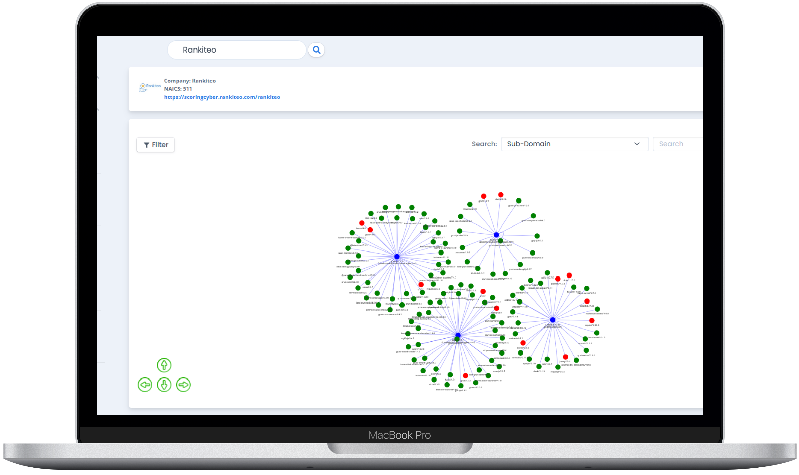
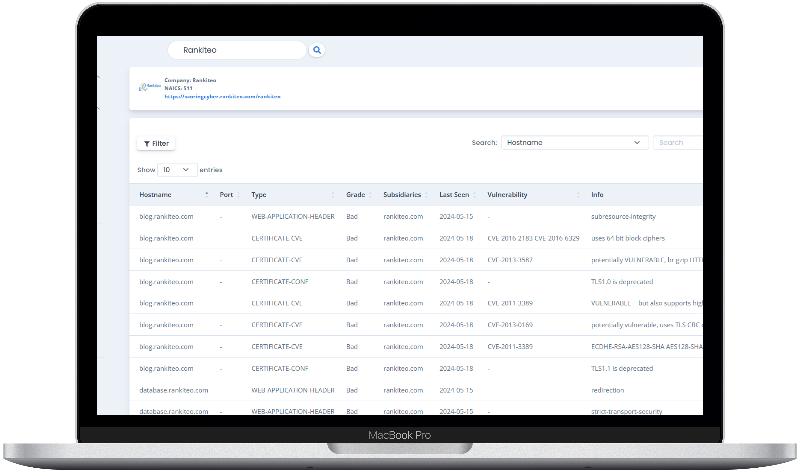
Identify exposed access points, detect misconfigured SSL certificates, and uncover vulnerabilities across the network infrastructure.
Gain visibility into the software components used within an organization to detect vulnerabilities, manage risk, and ensure supply chain security.
Monitor and manage all IT assets and their configurations to ensure accurate, real-time visibility across the company's technology environment.
Leverage real-time insights on active threats, malware campaigns, and emerging vulnerabilities to proactively defend against evolving cyberattacks.



 Rapid
Rapid