








Discovery Centre
Company Details
Linkedin ID:
the-discovery-centre
Website:
Employees number:
49
Number of followers:
1,921
NAICS:
712
Industry Type:
Homepage:
thediscoverycentre.ca
IP Addresses:
0
Company ID:
DIS_3177729
Scan Status:
In-progress


Discovery Centre Company CyberSecurity Posture
thediscoverycentre.ca


Discovery Centre is a non-profit, registered charitable organization that is passionate about its mission to bring STEAM (science, technology, engineering, arts and math) to life through fun, interactive learning experiences. From its beginnings as a travelling science show to its spectacular new home on the Halifax Waterfront, Discovery Centre has grown a lot over 30 years of operation. But through it all, Discovery Centre has stayed true to its vision: using its facility, people and passion to demonstrate how STEAM can empower our youth, grow Nova Scotia’s knowledge-based economy and inspire an innovative culture by showcasing our best and brightest.
Company Details
the-discovery-centre
49
1,921
712
thediscoverycentre.ca
0
DIS_3177729
In-progress
 Discovery Centre Risk Score (AI oriented)
Between 750 and 799
 Discovery Centre Global Score (TPRM)
XXXX


No incidents recorded for Discovery Centre in 2026.
No incidents recorded for Discovery Centre in 2026.
No incidents recorded for Discovery Centre in 2026.
Discovery Centre cyber incidents detection timeline including parent company and subsidiaries

Discovery Centre is a non-profit, registered charitable organization that is passionate about its mission to bring STEAM (science, technology, engineering, arts and math) to life through fun, interactive learning experiences. From its beginnings as a travelling science show to its spectacular new home on the Halifax Waterfront, Discovery Centre has grown a lot over 30 years of operation. But through it all, Discovery Centre has stayed true to its vision: using its facility, people and passion to demonstrate how STEAM can empower our youth, grow Nova Scotia’s knowledge-based economy and inspire an innovative culture by showcasing our best and brightest.


Established in 1885, the Crocker Art Museum was the first public art museum founded west of the Mississippi and is now one of the leading museums in California. Our mission is to bring people together and connect them in unexpected ways with art, ideas, each other, and the world around them.

Established in 1983, we are a registered charitable Trust. With a team of employees and volunteers, we work together to bring the legend to life and share the life story of Jaguar and its predecessor companies. Our purpose is to establish, maintain and promote for the benefit of the nation, the per

The Philadelphia Zoo’s 42-acre Victorian garden is home to more than 1,300 animals, many of them rare and endangered. The Zoo, fulfilling its mission of conservation, science, education and recreation, supports and engages in conservation efforts to protect endangered species around the world. Cheet

Welcome to Sulgrave Manor & Garden. Built by the ancestors of George Washington and saved from ruin by donors from both the UK and USA, Sulgrave Manor is the original home of the Special Relationship. Steeped in history with a legacy that unites nations, be inspired by our stories and consider why

The National Museums and Monuments of Zimbabwe (NMMZ ) is Zimbabwe's premier heritage organization established under an Act of Parliament; The National Museums and Monuments of Rhodesia Act (1972) which is now called the National Museums and Monuments Act (Chapter 25:11). NMMZ is a Parastatal, funde

Museum MORE is het grootste museum voor modern realisme. In het voormalig gemeentehuis in Gorssel zijn werken te zien van toonaangevende modern realistische topkunstenaars, zoals grootmeesters zoals Carel Willink, Pyke Koch, Jan Mankes, Charley Toorop, Wim Schuhmacher en Raoul Hynckes. Naast deze ei

Vår uppgift är att tillgängliggöra Stockholms och dess invånares berättelser. Berättelserna får oss att minnas vår stads historia. De ger oss också perspektiv på vår stad i vår egen tid. Och samtidigt som vi blickar bakåt skapar vi genom våra liv i staden framtidens berättelser om Stockholm. Vi gör

The National Museum of the Royal Navy, established in 2009, tells the story of the four fighting forces of the British Royal Navy, the Royal Marines, the Fleet Air Arm, the Submarine Service and the Surface Fleet. Ours is the epic story of the Royal Navy, its impact on Britain and the world from i

The Rubin is a global museum dedicated to presenting Himalayan art and its insights. Founded in 2004, the Rubin serves people internationally through exhibitions, participatory experiences, a dynamic digital platform, and partnerships. Inspired and informed by Himalayan art, the Rubin invites peop
.png)
Unauthorized access to a development system led to the exposure of historical personal records. Breach discovery and immediate response.
Los Angeles, California – December 05, 2025 – PRESSADVANTAGE –. VendRespect has launched a specialized business directory designed to transform how...
China's reach into critical infrastructure threatens to disrupt Europeans' daily commute. On November 19, The Wall Street Journal reported...
The Canadian Centre for Cyber Security issued an alert warning chief information security officers (CISOs) and decision-makers about...
Visible cyber fallout is everywhere. Impact to business operations (and therefore revenue) including halted production lines,...
A record 204 nationally significant cyber attacks were handled by GCHQ's National Cyber Security Centre in the year to September,...
People should plan for potential cyber-attacks by going back to pen and paper, according to the latest advice. The government has written to...
SecTor, Canada's largest cybersecurity conference, today announced the successful completion of the in-person component of SecTor 2025.
Top news: Cybersecurity Information Sharing Act expires; US Secret Service stops telecoms threat; Major cyber attack on European airports.

Explore insights on cybersecurity incidents, risk posture, and Rankiteo's assessments.
The official website of Discovery Centre is http://thediscoverycentre.ca/.
According to Rankiteo, Discovery Centre’s AI-generated cybersecurity score is 762, reflecting their Fair security posture.
According to Rankiteo, Discovery Centre currently holds 0 security badges, indicating that no recognized compliance certifications are currently verified for the organization.
According to Rankiteo, Discovery Centre has not been affected by any supply chain cyber incidents, and no incident IDs are currently listed for the organization.
According to Rankiteo, Discovery Centre is not certified under SOC 2 Type 1.
According to Rankiteo, Discovery Centre does not hold a SOC 2 Type 2 certification.
According to Rankiteo, Discovery Centre is not listed as GDPR compliant.
According to Rankiteo, Discovery Centre does not currently maintain PCI DSS compliance.
According to Rankiteo, Discovery Centre is not compliant with HIPAA regulations.
According to Rankiteo,Discovery Centre is not certified under ISO 27001, indicating the absence of a formally recognized information security management framework.
Discovery Centre operates primarily in the Museums, Historical Sites, and Zoos industry.
Discovery Centre employs approximately 49 people worldwide.
Discovery Centre presently has no subsidiaries across any sectors.
Discovery Centre’s official LinkedIn profile has approximately 1,921 followers.
Discovery Centre is classified under the NAICS code 712, which corresponds to Museums, Historical Sites, and Similar Institutions.
No, Discovery Centre does not have a profile on Crunchbase.
Yes, Discovery Centre maintains an official LinkedIn profile, which is actively utilized for branding and talent engagement, which can be accessed here: https://www.linkedin.com/company/the-discovery-centre.
As of January 23, 2026, Rankiteo reports that Discovery Centre has not experienced any cybersecurity incidents.
Discovery Centre has an estimated 2,178 peer or competitor companies worldwide.
Total Incidents: According to Rankiteo, Discovery Centre has faced 0 incidents in the past.
Incident Types: The types of cybersecurity incidents that have occurred include .
.png)
Backstage is an open framework for building developer portals, and @backstage/backend-defaults provides the default implementations and setup for a standard Backstage backend app. Prior to versions 0.12.2, 0.13.2, 0.14.1, and 0.15.0, the `FetchUrlReader` component, used by the catalog and other plugins to fetch content from URLs, followed HTTP redirects automatically. This allowed an attacker who controls a host listed in `backend.reading.allow` to redirect requests to internal or sensitive URLs that are not on the allowlist, bypassing the URL allowlist security control. This is a Server-Side Request Forgery (SSRF) vulnerability that could allow access to internal resources, but it does not allow attackers to include additional request headers. This vulnerability is fixed in `@backstage/backend-defaults` version 0.12.2, 0.13.2, 0.14.1, and 0.15.0. Users should upgrade to this version or later. Some workarounds are available. Restrict `backend.reading.allow` to only trusted hosts that you control and that do not issue redirects, ensure allowed hosts do not have open redirect vulnerabilities, and/or use network-level controls to block access from Backstage to sensitive internal endpoints.
Backstage is an open framework for building developer portals, and @backstage/cli-common provides config loading functionality used by the backend and command line interface of Backstage. Prior to version 0.1.17, the `resolveSafeChildPath` utility function in `@backstage/backend-plugin-api`, which is used to prevent path traversal attacks, failed to properly validate symlink chains and dangling symlinks. An attacker could bypass the path validation via symlink chains (creating `link1 → link2 → /outside` where intermediate symlinks eventually resolve outside the allowed directory) and dangling symlinks (creating symlinks pointing to non-existent paths outside the base directory, which would later be created during file operations). This function is used by Scaffolder actions and other backend components to ensure file operations stay within designated directories. This vulnerability is fixed in `@backstage/backend-plugin-api` version 0.1.17. Users should upgrade to this version or later. Some workarounds are available. Run Backstage in a containerized environment with limited filesystem access and/or restrict template creation to trusted users.
Backstage is an open framework for building developer portals. Multiple Scaffolder actions and archive extraction utilities were vulnerable to symlink-based path traversal attacks. An attacker with access to create and execute Scaffolder templates could exploit symlinks to read arbitrary files via the `debug:log` action by creating a symlink pointing to sensitive files (e.g., `/etc/passwd`, configuration files, secrets); delete arbitrary files via the `fs:delete` action by creating symlinks pointing outside the workspace, and write files outside the workspace via archive extraction (tar/zip) containing malicious symlinks. This affects any Backstage deployment where users can create or execute Scaffolder templates. This vulnerability is fixed in `@backstage/backend-defaults` versions 0.12.2, 0.13.2, 0.14.1, and 0.15.0; `@backstage/plugin-scaffolder-backend` versions 2.2.2, 3.0.2, and 3.1.1; and `@backstage/plugin-scaffolder-node` versions 0.11.2 and 0.12.3. Users should upgrade to these versions or later. Some workarounds are available. Follow the recommendation in the Backstage Threat Model to limit access to creating and updating templates, restrict who can create and execute Scaffolder templates using the permissions framework, audit existing templates for symlink usage, and/or run Backstage in a containerized environment with limited filesystem access.
FastAPI Api Key provides a backend-agnostic library that provides an API key system. Version 1.1.0 has a timing side-channel vulnerability in verify_key(). The method applied a random delay only on verification failures, allowing an attacker to statistically distinguish valid from invalid API keys by measuring response latencies. With enough repeated requests, an adversary could infer whether a key_id corresponds to a valid key, potentially accelerating brute-force or enumeration attacks. All users relying on verify_key() for API key authentication prior to the fix are affected. Users should upgrade to version 1.1.0 to receive a patch. The patch applies a uniform random delay (min_delay to max_delay) to all responses regardless of outcome, eliminating the timing correlation. Some workarounds are available. Add an application-level fixed delay or random jitter to all authentication responses (success and failure) before the fix is applied and/or use rate limiting to reduce the feasibility of statistical timing attacks.
The Flux Operator is a Kubernetes CRD controller that manages the lifecycle of CNCF Flux CD and the ControlPlane enterprise distribution. Starting in version 0.36.0 and prior to version 0.40.0, a privilege escalation vulnerability exists in the Flux Operator Web UI authentication code that allows an attacker to bypass Kubernetes RBAC impersonation and execute API requests with the operator's service account privileges. In order to be vulnerable, cluster admins must configure the Flux Operator with an OIDC provider that issues tokens lacking the expected claims (e.g., `email`, `groups`), or configure custom CEL expressions that can evaluate to empty values. After OIDC token claims are processed through CEL expressions, there is no validation that the resulting `username` and `groups` values are non-empty. When both values are empty, the Kubernetes client-go library does not add impersonation headers to API requests, causing them to be executed with the flux-operator service account's credentials instead of the authenticated user's limited permissions. This can result in privilege escalation, data exposure, and/or information disclosure. Version 0.40.0 patches the issue.

Get company history

Every week, Rankiteo analyzes billions of signals to give organizations a sharper, faster view of emerging risks. With deeper, more actionable intelligence at their fingertips, security teams can outpace threat actors, respond instantly to Zero-Day attacks, and dramatically shrink their risk exposure window.
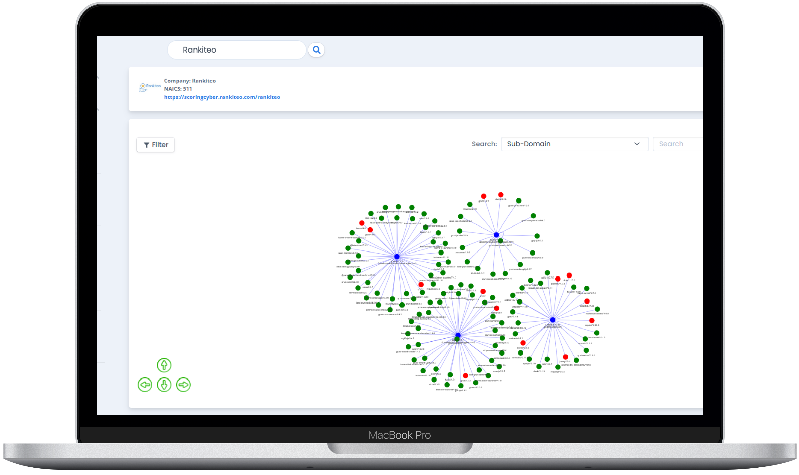
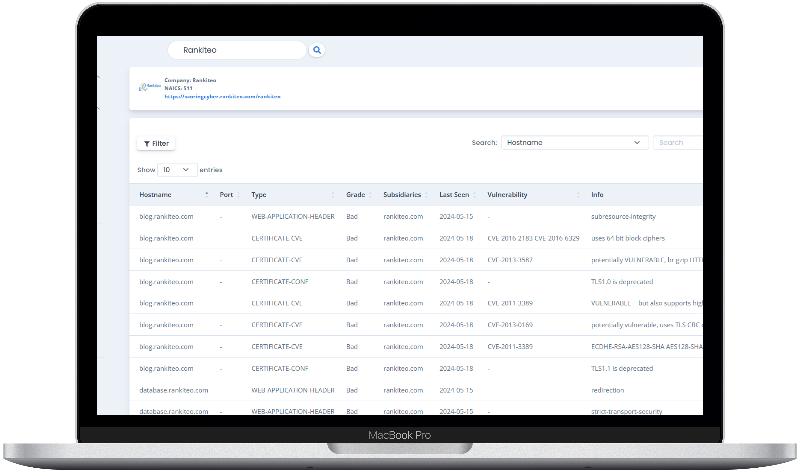
Identify exposed access points, detect misconfigured SSL certificates, and uncover vulnerabilities across the network infrastructure.
Gain visibility into the software components used within an organization to detect vulnerabilities, manage risk, and ensure supply chain security.
Monitor and manage all IT assets and their configurations to ensure accurate, real-time visibility across the company's technology environment.
Leverage real-time insights on active threats, malware campaigns, and emerging vulnerabilities to proactively defend against evolving cyberattacks.



 Rapid
Rapid