









Philadelphia Zoo
Company Details
Linkedin ID:
philadelphia-zoo
Website:
Employees number:
381
Number of followers:
9,542
NAICS:
712
Industry Type:
Homepage:
philadelphiazoo.org
IP Addresses:
0
Company ID:
PHI_7774240
Scan Status:
In-progress

Philadelphia Zoo Vendor Cyber Rating & Cyber Score
philadelphiazoo.orgThe Philadelphia Zoo’s 42-acre Victorian garden is home to more than 1,300 animals, many of them rare and endangered. The Zoo, fulfilling its mission of conservation, science, education and recreation, supports and engages in conservation efforts to protect endangered species around the world. Cheetahs, hippos, giraffes and much more make the Zoo Philadelphia's leading family attraction with over 1.2 million visitors last year.
Company Details
philadelphia-zoo
381
9,542
712
philadelphiazoo.org
0
PHI_7774240
In-progress
 Philadelphia Zoo Risk Score (AI oriented)
Between 750 and 799
 Philadelphia Zoo Global Score (TPRM)
XXXX


No incidents recorded for Philadelphia Zoo in 2026.
No incidents recorded for Philadelphia Zoo in 2026.
No incidents recorded for Philadelphia Zoo in 2026.
Philadelphia Zoo cyber incidents detection timeline including parent company and subsidiaries

The Philadelphia Zoo’s 42-acre Victorian garden is home to more than 1,300 animals, many of them rare and endangered. The Zoo, fulfilling its mission of conservation, science, education and recreation, supports and engages in conservation efforts to protect endangered species around the world. Cheetahs, hippos, giraffes and much more make the Zoo Philadelphia's leading family attraction with over 1.2 million visitors last year.


Madison County Historical Society, is a 501 (c) 3 non-profit educational institution chartered by the New York State Board of Regents on March 29, 1900. The Madison County Historical Society’s mission is to preserve, collect, promote, and exhibit the history of Madison County and its fifteen towns a
💎 Welcome to the world of jewelry! 🎓 Courses, talks, exhibitions and books 📍 4 permanent campuses: Paris, Hong Kong, Shanghai and Dubai Open to all, L’ÉCOLE’s mission is to share jewelry culture with the widest possible audience. Founded in 2012 with the support of Van Cleef & Arpels, L’ÉCOLE, Scho

Founded in 1974 in an old munitions plant, Torpedo Factory Art Center is home to the nation’s largest number of publicly accessible working artist studios under one roof. The City of Alexandria manages the Art Center as part of the Office of the Arts’ family of programs and facilities. Just south of
Introducing Denver Zoo Conservation Alliance. New Name. Eternal Mission. For 128 years, Denver Zoo Conservation Alliance has connected people with wildlife. From our early years with just a few Colorado species to the 2,500+ animals thriving in our care today, we have cultivated a welcoming gate

Minnesota Children’s Museum is dedicated to sparking children’s learning through play. Our vision: “Kids play more. Adults do, too. All families thrive in a happier, healthier and more innovative community through the radiant power of play.” The museum, which celebrated its 40th anniversary in 202

The Milwaukee County Historical Society was founded in 1935 to collect, preserve, and make available materials relating to the history of the Milwaukee community. Through a broad range of activities, the Historical Society seeks to recognize and preserve our local history. In promoting a greater app

Glenstone is an art museum located on nearly 300 acres of rolling hills and unspoiled woodland in Potomac, Maryland. Guided by the personal vision of its founders, Glenstone exhibits post-World War II artworks that trace the greatest historical shifts in the way we experience and understand art of t

Cranbrook Institute of Science is a science and natural history museum that strives to nurture curiosity, advance scientific literacy, and encourage advocacy for our natural and cultural worlds. As a premier resource for science and natural history, the Institute of Science consistently delivers an

The Royal Compound in Belgrade consists of the Royal Palace (1924-29) and the White Palace (1934-36), built with the private funds of His Majesty King Alexander I. Currently, the Royal Palace is the home of His Royal Highness Crown Prince Alexander II, grandson of the King who built it, his wife Pr
.png)
Zoo officials are eager to get a new experimental vaccine for some of the high-risk primates there.
A baby Francois' Leaf Monkey was born at the Philadelphia Zoo. Web Editor : Sydney Franklin. Posted 2021-01-18T16:39:52-0500 - Updated 2021-01-18T16:39:52-...
Zoo-goers experienced a new catwalk at the Philadelphia Zoo, unveiled Wednesday. The passageway allows lions and tigers to roam outside...
When a full-grown Amur tiger peers down on people just a few feet below, it's a new experience for cats and humans alike.

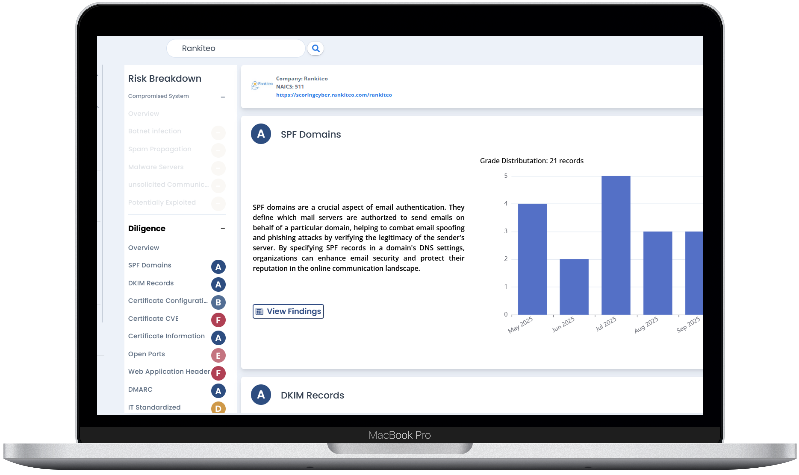
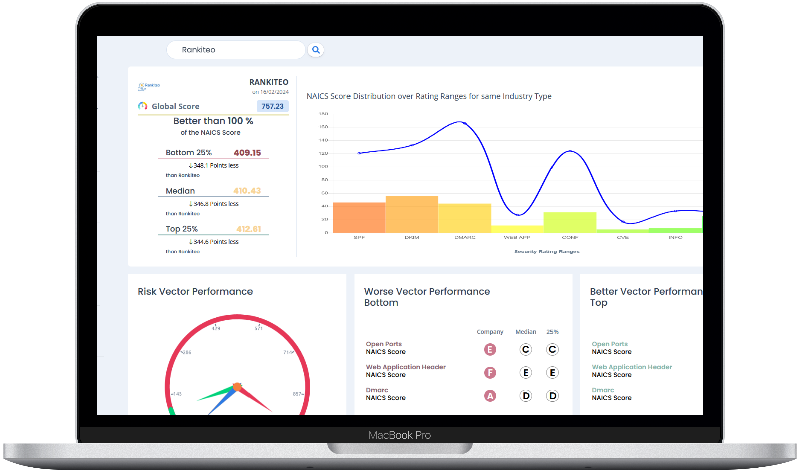
Explore insights on cybersecurity incidents, risk posture, and Rankiteo's assessments.
The official website of Philadelphia Zoo is http://www.philadelphiazoo.org.
According to Rankiteo, Philadelphia Zoo’s AI-generated cybersecurity score is 765, reflecting their Fair security posture.
According to Rankiteo, Philadelphia Zoo currently holds 0 security badges, indicating that no recognized compliance certifications are currently verified for the organization.
According to Rankiteo, Philadelphia Zoo has not been affected by any supply chain cyber incidents, and no incident IDs are currently listed for the organization.
According to Rankiteo, Philadelphia Zoo is not certified under SOC 2 Type 1.
According to Rankiteo, Philadelphia Zoo does not hold a SOC 2 Type 2 certification.
According to Rankiteo, Philadelphia Zoo is not listed as GDPR compliant.
According to Rankiteo, Philadelphia Zoo does not currently maintain PCI DSS compliance.
According to Rankiteo, Philadelphia Zoo is not compliant with HIPAA regulations.
According to Rankiteo,Philadelphia Zoo is not certified under ISO 27001, indicating the absence of a formally recognized information security management framework.
Philadelphia Zoo operates primarily in the Museums, Historical Sites, and Zoos industry.
Philadelphia Zoo employs approximately 381 people worldwide.
Philadelphia Zoo presently has no subsidiaries across any sectors.
Philadelphia Zoo’s official LinkedIn profile has approximately 9,542 followers.
Philadelphia Zoo is classified under the NAICS code 712, which corresponds to Museums, Historical Sites, and Similar Institutions.
No, Philadelphia Zoo does not have a profile on Crunchbase.
Yes, Philadelphia Zoo maintains an official LinkedIn profile, which is actively utilized for branding and talent engagement, which can be accessed here: https://www.linkedin.com/company/philadelphia-zoo.
As of April 04, 2026, Rankiteo reports that Philadelphia Zoo has not experienced any cybersecurity incidents.
Philadelphia Zoo has an estimated 2,193 peer or competitor companies worldwide.
Total Incidents: According to Rankiteo, Philadelphia Zoo has faced 0 incidents in the past.
Incident Types: The types of cybersecurity incidents that have occurred include .
.png)
Hirschmann EagleSDV version 05.4.01 prior to 05.4.02 contains a denial-of-service vulnerability that causes the device to crash during session establishment when using TLS 1.0 or TLS 1.1. Attackers can trigger a crash by initiating TLS connections with these protocol versions to disrupt service availability.
The stored API keys in temporary browser client is not marked as protected allowing for JavScript console or other errors to allow for extraction of the encryption credentials.
XSS vulnerability in cveInterface.js allows for inject HTML to be passed to display, as cveInterface trusts input from CVE API services
Multiple reflected cross-site scripting (XSS) vulnerabilities in the login.php endpoint of Interzen Consulting S.r.l ZenShare Suite v17.0 allows attackers to execute arbitrary Javascript in the context of the user's browser via a crafted URL injected into the codice_azienda and red_url parameters.
A reflected cross-site scripting (XSS) vulnerability in the login_newpwd.php endpoint of Interzen Consulting S.r.l ZenShare Suite v17.0 allows attackers to execute arbitrary Javascript in the context of the user's browser via a crafted URL injected into the codice_azienda parameter.

Get company history

Every week, Rankiteo analyzes billions of signals to give organizations a sharper, faster view of emerging risks. With deeper, more actionable intelligence at their fingertips, security teams can outpace threat actors, respond instantly to Zero-Day attacks, and dramatically shrink their risk exposure window.
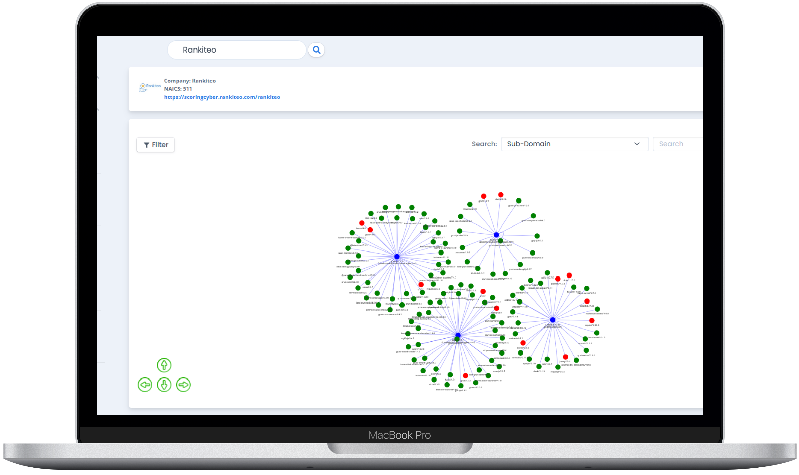
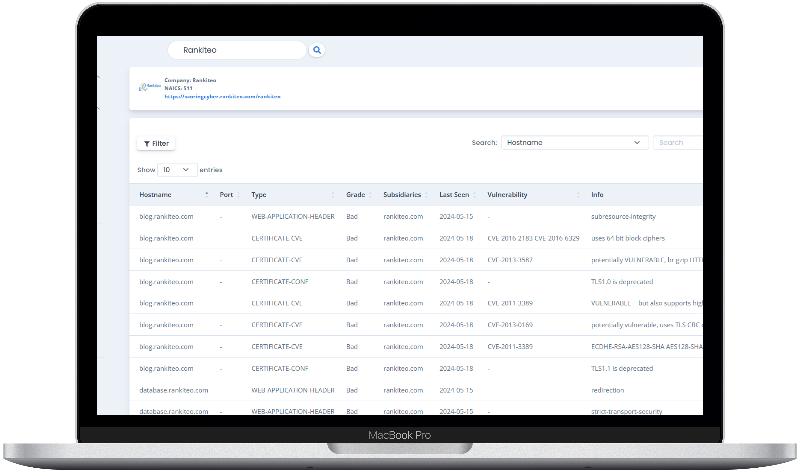
Identify exposed access points, detect misconfigured SSL certificates, and uncover vulnerabilities across the network infrastructure.
Gain visibility into the software components used within an organization to detect vulnerabilities, manage risk, and ensure supply chain security.
Monitor and manage all IT assets and their configurations to ensure accurate, real-time visibility across the company's technology environment.
Leverage real-time insights on active threats, malware campaigns, and emerging vulnerabilities to proactively defend against evolving cyberattacks.



 Rapid
Rapid