





AF
Company Details
Linkedin ID:
the-archives-of-falconry
Website:
Employees number:
6
Number of followers:
59
NAICS:
712
Industry Type:
Homepage:
falconry.org
IP Addresses:
0
Company ID:
THE_3676475
Scan Status:
In-progress

The Archives of Falconry Company CyberSecurity Posture
falconry.org


The Archives of Falconry was founded in 1986 by several visionary falconers who were also leaders of The Peregrine Fund. We have since grown into a world-renowned repository of falconry material culture and historical records. The Archives collects and preserves falconry heritage and the legacy of notable falconers, including their correspondence, memorabilia, art, crafts, and life stories. The Archives also interprets significant events in falconry history and celebrates the role of falconers in the birth of raptor conservation. We are a destination for falconers, sportsmen and women, scholars, journalists, and other interested public - to visit, support, learn, and explore this 4500-year-old connection between humans and birds of prey.
Company Details
the-archives-of-falconry
6
59
712
falconry.org
0
THE_3676475
In-progress
 AF Risk Score (AI oriented)
Between 750 and 799
 AF Global Score (TPRM)
XXXX


No incidents recorded for The Archives of Falconry in 2026.
No incidents recorded for The Archives of Falconry in 2026.
No incidents recorded for The Archives of Falconry in 2026.
AF cyber incidents detection timeline including parent company and subsidiaries

The Archives of Falconry was founded in 1986 by several visionary falconers who were also leaders of The Peregrine Fund. We have since grown into a world-renowned repository of falconry material culture and historical records. The Archives collects and preserves falconry heritage and the legacy of notable falconers, including their correspondence, memorabilia, art, crafts, and life stories. The Archives also interprets significant events in falconry history and celebrates the role of falconers in the birth of raptor conservation. We are a destination for falconers, sportsmen and women, scholars, journalists, and other interested public - to visit, support, learn, and explore this 4500-year-old connection between humans and birds of prey.


The New England Air Museum is a private, non-profit educational institution proud which restores and displays the region’s largest collection of historically significant aircraft and aviation memorabilia. The museum sees 50,000 visitors each year, and educational programs serve 5,000 students annual

CCA is a not-for-profit, multi-purpose, centre for contemporary art and culture located in the city centre of Glasgow. We curate thought-provoking, often experimental work and provide a platform for a collaborative, civic-led programme, all of which serves as a catalyst for new ways of thinking and

The Rice Northwest Museum of Rocks and Minerals houses a world-class collection recognized as the finest in the Pacific Northwest and one of the best in the nation. Located just west of Portland, Oregon, in Hillsboro, the Museum showcases not only fine rocks and minerals, but also fossils, meteorite
LAUNCH Waterloo is a social enterprise with a bold vision: to inspire kids to be creative, ethical, critical thinkers that embrace their own curiosity and imagination. How will we do that? By making STEAM a new sport! We are transforming traditional STEAM programming from one-day or one-week touch

The primary mission of the John F. Kennedy Library Foundation is to support the work of the John F. Kennedy Presidential Library and Museum whose core function is to collect, preserve, and make available for research the documents, audiovisual material and memorabilia of President Kennedy, his famil

Founded in 1875 by artists and for artists, the Art Students League of New York has been instrumental in shaping America's legacy in the fine arts. Many renowned artists have honed their skills at the League, which is dedicated to sustaining the great tradition of training artists. Today, more than
The Australian Institute of Aboriginal and Torres Strait Islander Studies (AIATSIS) is Australia’s only national institution exclusively dedicated to the rich history, culture, and heritage of Aboriginal and Torres Strait Islander peoples. We are a globally respected research, archival, and publish

Founded in 1838 and now a National Historic Landmark, Green-Wood was one of the first rural cemeteries in America. By the early 1860s, it had earned an international reputation for its magnificent beauty and became the prestigious place to be buried, attracting 500,000 visitors a year, second only t

The mission of the Children's Museum of Manhattan (CMOM) is to inspire children and families to learn about themselves and our culturally diverse world through a unique environment of interactive exhibitions and programs. Last year, CMOM served more than 350,000 people, which included 65,000 childr
.png)
OpenAI is releasing new Codex features that hit the "High" cybersecurity risk level in its own framework, meaning the model can now remove...
The National Health Service in England will reach out directly to suppliers to ensure they implement proactive and robust cybersecurity risk...
Operational tech security startups are drumming up interest again as cyberattacks pick up. Why it matters: They appeal to both tech...
On 20 and 21 January 2026, the European Commission presented its proposals for a Cybersecurity Act 2 (CSA2) and a Digital Networks Act (DNA)...
CertiK co-founder Ronghui Gu said the cybersecurity firm is exploring paths to go public in an interview this week in Davos, Switzerland.
ReliaQuest has shared an update. The company announced an upcoming webinar focused on modern detection strategies for cybersecurity operations.
Global Legal Insights' tenth edition of “Fund Finance” features a chapter titled, “Data Privacy and Cybersecurity Considerations for Private...
Fortinet, Palo Alto Networks, CrowdStrike, Globant, and SentinelOne are the five Cybersecurity stocks to watch today, according to...
As businesses continue their digital transformation journeys, they are exposed to an ever-expanding attack surface.

Explore insights on cybersecurity incidents, risk posture, and Rankiteo's assessments.
The official website of The Archives of Falconry is https://falconry.org.
According to Rankiteo, The Archives of Falconry’s AI-generated cybersecurity score is 764, reflecting their Fair security posture.
According to Rankiteo, The Archives of Falconry currently holds 0 security badges, indicating that no recognized compliance certifications are currently verified for the organization.
According to Rankiteo, The Archives of Falconry has not been affected by any supply chain cyber incidents, and no incident IDs are currently listed for the organization.
According to Rankiteo, The Archives of Falconry is not certified under SOC 2 Type 1.
According to Rankiteo, The Archives of Falconry does not hold a SOC 2 Type 2 certification.
According to Rankiteo, The Archives of Falconry is not listed as GDPR compliant.
According to Rankiteo, The Archives of Falconry does not currently maintain PCI DSS compliance.
According to Rankiteo, The Archives of Falconry is not compliant with HIPAA regulations.
According to Rankiteo,The Archives of Falconry is not certified under ISO 27001, indicating the absence of a formally recognized information security management framework.
The Archives of Falconry operates primarily in the Museums, Historical Sites, and Zoos industry.
The Archives of Falconry employs approximately 6 people worldwide.
The Archives of Falconry presently has no subsidiaries across any sectors.
The Archives of Falconry’s official LinkedIn profile has approximately 59 followers.
The Archives of Falconry is classified under the NAICS code 712, which corresponds to Museums, Historical Sites, and Similar Institutions.
No, The Archives of Falconry does not have a profile on Crunchbase.
Yes, The Archives of Falconry maintains an official LinkedIn profile, which is actively utilized for branding and talent engagement, which can be accessed here: https://www.linkedin.com/company/the-archives-of-falconry.
As of January 23, 2026, Rankiteo reports that The Archives of Falconry has not experienced any cybersecurity incidents.
The Archives of Falconry has an estimated 2,181 peer or competitor companies worldwide.
Total Incidents: According to Rankiteo, The Archives of Falconry has faced 0 incidents in the past.
Incident Types: The types of cybersecurity incidents that have occurred include .
.png)
Improper validation of specified type of input in M365 Copilot allows an unauthorized attacker to disclose information over a network.
Improper access control in Azure Front Door (AFD) allows an unauthorized attacker to elevate privileges over a network.
Azure Entra ID Elevation of Privilege Vulnerability
Moonraker is a Python web server providing API access to Klipper 3D printing firmware. In versions 0.9.3 and below, instances configured with the "ldap" component enabled are vulnerable to LDAP search filter injection techniques via the login endpoint. The 401 error response message can be used to determine whether or not a search was successful, allowing for brute force methods to discover LDAP entries on the server such as user IDs and user attributes. This issue has been fixed in version 0.10.0.
Runtipi is a Docker-based, personal homeserver orchestrator that facilitates multiple services on a single server. Versions 3.7.0 and above allow an authenticated user to execute arbitrary system commands on the host server by injecting shell metacharacters into backup filenames. The BackupManager fails to sanitize the filenames of uploaded backups. The system persists user-uploaded files directly to the host filesystem using the raw originalname provided in the request. This allows an attacker to stage a file containing shell metacharacters (e.g., $(id).tar.gz) at a predictable path, which is later referenced during the restore process. The successful storage of the file is what allows the subsequent restore command to reference and execute it. This issue has been fixed in version 4.7.0.

Get company history

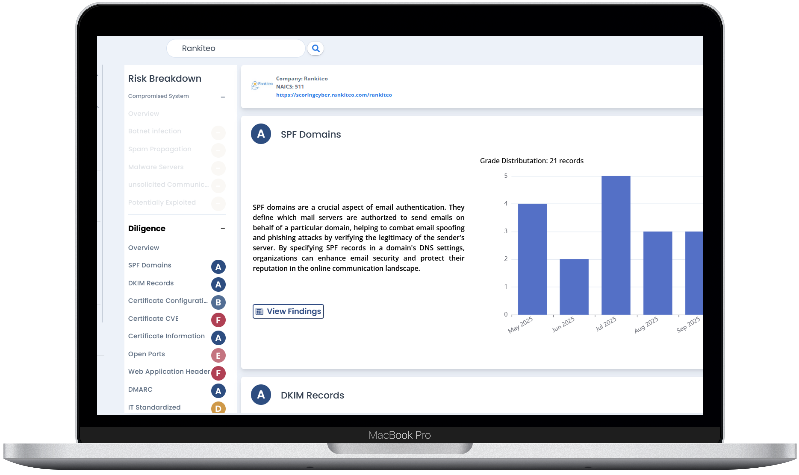
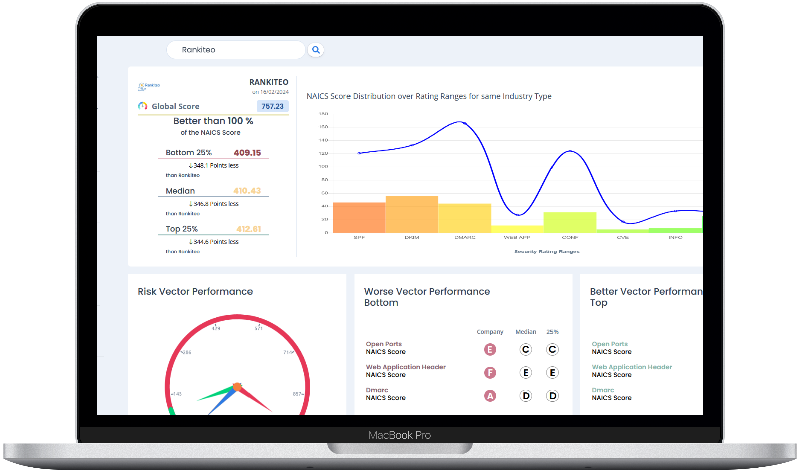
Every week, Rankiteo analyzes billions of signals to give organizations a sharper, faster view of emerging risks. With deeper, more actionable intelligence at their fingertips, security teams can outpace threat actors, respond instantly to Zero-Day attacks, and dramatically shrink their risk exposure window.
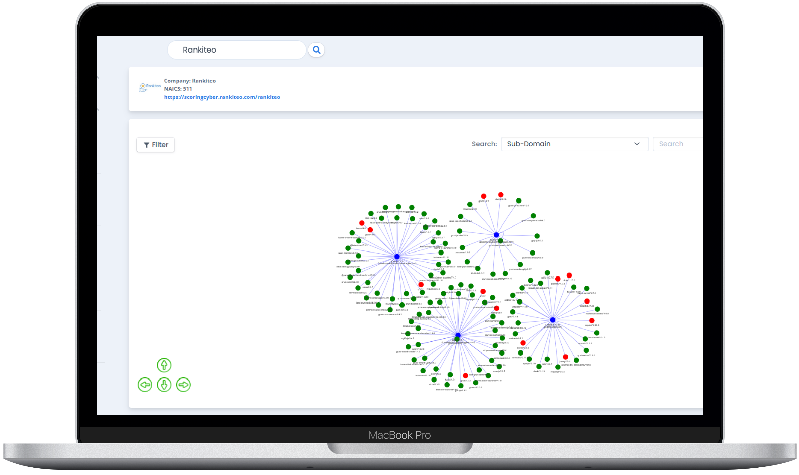
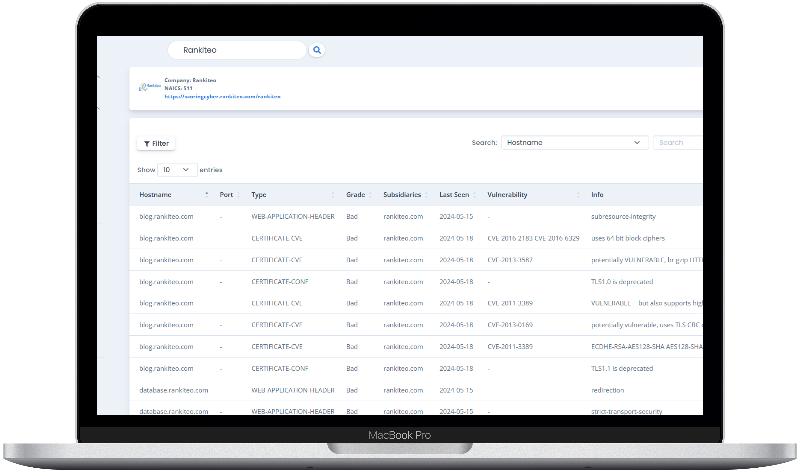
Identify exposed access points, detect misconfigured SSL certificates, and uncover vulnerabilities across the network infrastructure.
Gain visibility into the software components used within an organization to detect vulnerabilities, manage risk, and ensure supply chain security.
Monitor and manage all IT assets and their configurations to ensure accurate, real-time visibility across the company's technology environment.
Leverage real-time insights on active threats, malware campaigns, and emerging vulnerabilities to proactively defend against evolving cyberattacks.




 Rapid
Rapid