







SCHS
Company Details
Linkedin ID:
sublette-county-historical-society
Employees number:
1
Number of followers:
14
NAICS:
712
Industry Type:
Homepage:
museumofthemountainman.com
IP Addresses:
0
Company ID:
SUB_1006466
Scan Status:
In-progress


Sublette County Historical Society Company CyberSecurity Posture
museumofthemountainman.com


As the oldest Historical Society in the State of Wyoming, the Sublette County Historical Society was originally established in 1935 for the preservation of historic sites of the fur trade and rendezvous, marking of settler graves and trails and to collect all records, documents and items pertaining to the historical background of Sublette County. Today’s SCHS is the parent organization for the Museum of the Mountain Man, a facility that presents a visual and interpretive experience into the era of the mountain man, the Plains Indian, the Oregon Trail and the developments of this region. It sponsors programs, living history events and workshops for both children and adults to further explore Wyoming settlement history. Each year the Museum and Sublette County Historical Society produce the “Rocky Mountain Fur Trade Journal” and other publications that educate and preserve the record of historical events and people across the country. The success of the Sublette County Historical Society and the Museum of the Mountain Man depends upon those generous individuals and businesses who support our efforts with their donations and membership.
Company Details
sublette-county-historical-society
1
14
712
museumofthemountainman.com
0
SUB_1006466
In-progress
 SCHS Risk Score (AI oriented)
Between 750 and 799
 SCHS Global Score (TPRM)
XXXX


No incidents recorded for Sublette County Historical Society in 2026.
No incidents recorded for Sublette County Historical Society in 2026.
No incidents recorded for Sublette County Historical Society in 2026.
SCHS cyber incidents detection timeline including parent company and subsidiaries

As the oldest Historical Society in the State of Wyoming, the Sublette County Historical Society was originally established in 1935 for the preservation of historic sites of the fur trade and rendezvous, marking of settler graves and trails and to collect all records, documents and items pertaining to the historical background of Sublette County. Today’s SCHS is the parent organization for the Museum of the Mountain Man, a facility that presents a visual and interpretive experience into the era of the mountain man, the Plains Indian, the Oregon Trail and the developments of this region. It sponsors programs, living history events and workshops for both children and adults to further explore Wyoming settlement history. Each year the Museum and Sublette County Historical Society produce the “Rocky Mountain Fur Trade Journal” and other publications that educate and preserve the record of historical events and people across the country. The success of the Sublette County Historical Society and the Museum of the Mountain Man depends upon those generous individuals and businesses who support our efforts with their donations and membership.


Stiftelsen Oslo Museum er byens eget museum, og bidrar til kunnskap om og forankring i Oslo-samfunnet. Museet forvalter, formidler og forsker i Oslos historie, teaterhistorie og nyere innvandringshistorie. Museet har en aktiv formidlingsprofil og tilhold på flere steder i Oslo; Bymuseet og Teatermu

Franklin Community Council, Inc. is a non-profit organization dedicated to strengthening our community and surrounding areas both now and for future generations. Our mission is to improve the quality of life within the community of Franklin and surrounding areas. We serve as a catalyst for cha
The Delaware & Lehigh National Heritage Corridor is a 501(c)3 non-profit organization that preserves the historic pathway that carried coal and iron from Wilkes-Barre to Philadelphia. Today, the D&L Trail connects people to nature, culture, communities, recreation and our industrial heritage. The

Created in 1980, SFO Museum was the first cultural institution of its kind located in an international airport. An ever-changing schedule of exhibitions on a diverse range of subjects provides an educational and cultural experience for all visitors to the Airport. SFO Museum's mission is to deligh

The Kansas City Automotive Museum brings the rich automotive legacy of Greater Kansas City to life! From classic cars to interactive exhibits, we celebrate the region’s pivotal role in automotive and motorcycle manufacturing, racing, and culture. Our mission? To preserve history, spark passion, and

Since 1961, the American Folk Art Museum has shaped the understanding of art by the self-taught through its exhibitions, publications, and educational programs. As a center of scholarship, it showcases the creativity of individuals whose singular talents have been refined through personal experience
At The Heckscher Museum of Art, we believe that experiencing art broadens our understanding of the past, fosters community connections to our present, and creates diverse possibilities for our future. The Heckscher Museum maintains a Collection that includes more than 2,300 works from the sixteenth

On the banks of Cherry Creek, just four miles from downtown Denver, Four Mile Historic Park is a 12-acre oasis featuring Denver's oldest standing structure, pioneer exhibits, special events for all ages, and guided tours that transport visitors to Colorado's frontier past. Once a wayside inn and sta

Alle initiatieven hebben echter één en hetzelfde doel voor ogen: informeren en sensibiliseren betreffende het belang van wetenschap en technologie en de in-, uit- en doorstroom in exacte en toegepaste wetenschappen verhogen. Technopolis ontwikkelt daarom initiatieven onder het motto: 'Ik hoor
.png)
ADIB hosted the UAE Cybersecurity Innovation Challenge, naming Corgea, Nothreat, and DTEX Systems as winners in a push for AI-driven and...
On December 30, Peter Levine, a Software Analyst at Evercore ISI, appeared on a CNBC interview to discuss the cybersecurity playbook for...
The European Commission has unveiled a new cybersecurity package aimed at reinforcing the European Union's (EU) resilience against growing...
International Seaways recently highlighted its cybersecurity focus as Global CISO Amit Basu presented at the 8th Annual Global Cyber Future...
Agentic AI operations are moving into production as organizations focus on observability, human oversight, and control of autonomous...
USF to offer new degree in cybersecurity. As more tech companies call the Tampa Bay area home and bring along a workforce pipeline,...
Kelley Information Technology outlines key cybersecurity actions every SMB executive in Central Florida should take to mitigate risks and...
The European Commission presented a revision of the Cybersecurity Act that introduces a phase-out of "high-risk suppliers" from critical...
AI agents' autonomy and wide access to data also exposes them to a new type of cybersecurity attack. It is also an opportunity for...

Explore insights on cybersecurity incidents, risk posture, and Rankiteo's assessments.
The official website of Sublette County Historical Society is http://www.museumofthemountainman.com.
According to Rankiteo, Sublette County Historical Society’s AI-generated cybersecurity score is 765, reflecting their Fair security posture.
According to Rankiteo, Sublette County Historical Society currently holds 0 security badges, indicating that no recognized compliance certifications are currently verified for the organization.
According to Rankiteo, Sublette County Historical Society has not been affected by any supply chain cyber incidents, and no incident IDs are currently listed for the organization.
According to Rankiteo, Sublette County Historical Society is not certified under SOC 2 Type 1.
According to Rankiteo, Sublette County Historical Society does not hold a SOC 2 Type 2 certification.
According to Rankiteo, Sublette County Historical Society is not listed as GDPR compliant.
According to Rankiteo, Sublette County Historical Society does not currently maintain PCI DSS compliance.
According to Rankiteo, Sublette County Historical Society is not compliant with HIPAA regulations.
According to Rankiteo,Sublette County Historical Society is not certified under ISO 27001, indicating the absence of a formally recognized information security management framework.
Sublette County Historical Society operates primarily in the Museums, Historical Sites, and Zoos industry.
Sublette County Historical Society employs approximately 1 people worldwide.
Sublette County Historical Society presently has no subsidiaries across any sectors.
Sublette County Historical Society’s official LinkedIn profile has approximately 14 followers.
Sublette County Historical Society is classified under the NAICS code 712, which corresponds to Museums, Historical Sites, and Similar Institutions.
No, Sublette County Historical Society does not have a profile on Crunchbase.
Yes, Sublette County Historical Society maintains an official LinkedIn profile, which is actively utilized for branding and talent engagement, which can be accessed here: https://www.linkedin.com/company/sublette-county-historical-society.
As of January 23, 2026, Rankiteo reports that Sublette County Historical Society has not experienced any cybersecurity incidents.
Sublette County Historical Society has an estimated 2,178 peer or competitor companies worldwide.
Total Incidents: According to Rankiteo, Sublette County Historical Society has faced 0 incidents in the past.
Incident Types: The types of cybersecurity incidents that have occurred include .
.png)
Improper validation of specified type of input in M365 Copilot allows an unauthorized attacker to disclose information over a network.
Improper access control in Azure Front Door (AFD) allows an unauthorized attacker to elevate privileges over a network.
Azure Entra ID Elevation of Privilege Vulnerability
Moonraker is a Python web server providing API access to Klipper 3D printing firmware. In versions 0.9.3 and below, instances configured with the "ldap" component enabled are vulnerable to LDAP search filter injection techniques via the login endpoint. The 401 error response message can be used to determine whether or not a search was successful, allowing for brute force methods to discover LDAP entries on the server such as user IDs and user attributes. This issue has been fixed in version 0.10.0.
Runtipi is a Docker-based, personal homeserver orchestrator that facilitates multiple services on a single server. Versions 3.7.0 and above allow an authenticated user to execute arbitrary system commands on the host server by injecting shell metacharacters into backup filenames. The BackupManager fails to sanitize the filenames of uploaded backups. The system persists user-uploaded files directly to the host filesystem using the raw originalname provided in the request. This allows an attacker to stage a file containing shell metacharacters (e.g., $(id).tar.gz) at a predictable path, which is later referenced during the restore process. The successful storage of the file is what allows the subsequent restore command to reference and execute it. This issue has been fixed in version 4.7.0.

Get company history

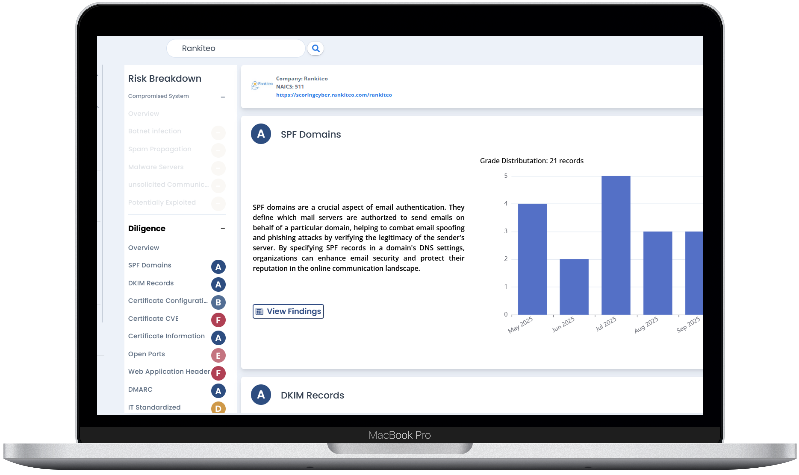
Every week, Rankiteo analyzes billions of signals to give organizations a sharper, faster view of emerging risks. With deeper, more actionable intelligence at their fingertips, security teams can outpace threat actors, respond instantly to Zero-Day attacks, and dramatically shrink their risk exposure window.
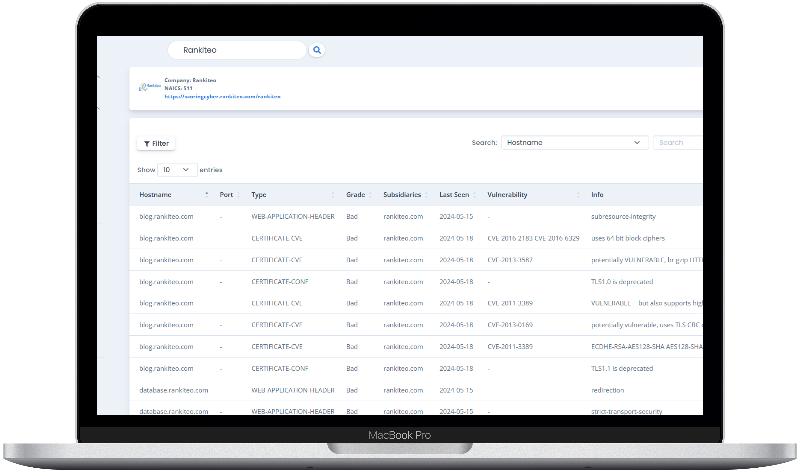
Identify exposed access points, detect misconfigured SSL certificates, and uncover vulnerabilities across the network infrastructure.
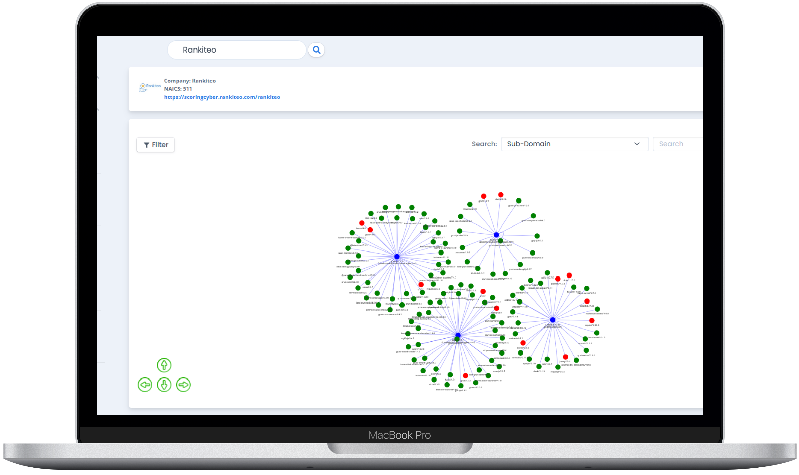
Gain visibility into the software components used within an organization to detect vulnerabilities, manage risk, and ensure supply chain security.
Monitor and manage all IT assets and their configurations to ensure accurate, real-time visibility across the company's technology environment.
Leverage real-time insights on active threats, malware campaigns, and emerging vulnerabilities to proactively defend against evolving cyberattacks.



 Rapid
Rapid