Company Details
smithsonian-institution-national-air-and-space-museum
331
7,557
712
si.edu
0
NAT_2525786
In-progress


National Air and Space Museum, Smithsonian Institution Company CyberSecurity Posture
si.eduThe Smithsonian's National Air and Space Museum maintains the world's largest and most significant collection of aviation and space artifacts, encompassing all aspects of human flight, as well as related works of art and archival materials. It operates two landmark facilities that, together, welcome more than eight million visitors a year, making it the most visited museum in the country. It also is home to the Center for Earth and Planetary Studies.
Company Details
smithsonian-institution-national-air-and-space-museum
331
7,557
712
si.edu
0
NAT_2525786
In-progress
Between 750 and 799

NASMSI Global Score (TPRM)XXXX


No incidents recorded for National Air and Space Museum, Smithsonian Institution in 2026.
NASMSI cyber incidents detection timeline including parent company and subsidiaries

The Smithsonian's National Air and Space Museum maintains the world's largest and most significant collection of aviation and space artifacts, encompassing all aspects of human flight, as well as related works of art and archival materials. It operates two landmark facilities that, together, welcome more than eight million visitors a year, making it the most visited museum in the country. It also is home to the Center for Earth and Planetary Studies.


Arts & Sciences, Innovation, Société Nous aidons les institutions culturelles, entreprises et collectivités à créer : - de nouveaux modèles culturels et organisationnels - de nouveaux leviers d’engagement de publics ciblés - de nouveaux programmes, espaces ou tiers-lieux - de nouveaux outils

Since its founding at the 1964-65 New York World’s Fair, the New York Hall of Science (NYSCI) has inspired millions of people—children, teachers, and families– by offering creative, participatory ways to learn and encouraging people to explore their curiosity and nurture their creativity. Located in

Royal Collection Trust is one of the five departments of the Royal Household. We care for the Royal Collection, one of the world's greatest art collections, and manage the public opening of the official residences of His Majesty The King – Buckingham Palace, Windsor Castle and the Palace of Holyrood

The Hoboken Museum documents Hoboken's physical and cultural heritage, which has local, regional, and national significance. By collecting, preserving, and interpreting artifacts and oral histories, the Museum serves the community of Hoboken and all those who enjoy its history and culture. We offer

Menokin is the 1769 home of Signer of the Declaration of Independence, Francis Lightfoot Lee and Rebecca Tayloe Lee. This former manor house remains one of Virginia’s best examples of original colonial architecture. Built near the Rappahannock River, the ruin is nestled among 500 nearly-untouched ac

Boise Art Museum is a 501(c)(3) non–profit, educational and charitable organization. The mission of the Museum is to create visual arts experiences, engage people, and inspire learning through exceptional exhibitions, collections, and educational opportunities. BAM is accredited by the American A

Architectural Masterpiece. Living History. A place for great adventure. Where Kansas City Connects. All of these phrases and more are regularly used to describe Union Station. Visitors of all ages, from all places and for all reasons tie Union Station to special and magical moments from their lives.

Located at 1200 Route 25A in Stony Brook, the Long Island Museum is a Smithsonian Affiliate dedicated to enhancing the lives of adults and children with an understanding of Long Island's rich history and diverse cultures. The museum is open Thursday through Saturday from 10 a.m. to 5 p.m. and Sunday

The West End Museum, Inc. is a neighborhood museum dedicated to the collection, preservation and interpretation of the history and culture of the West End of Boston. The Museum acknowledges its role as an educational institution and a trustee of significant material culture. The West End Museum f
.png)
The Office of Protection Services (OPS) is one of the largest units at the Smithsonian with over 850 employees. Our staff is dedicated to the mission of...
Texas senators John Cornyn and Ted Cruz have hit back at a Smithsonian memo on relocating Space Shuttle Discovery, claiming the institute's...
when women in boardrooms or at the helm of major institutions were a rarity. In assembling our biennial list of the Most Powerful Women in...
The fight over Space Shuttle Discovery pits Texas lawmakers against the Smithsonian, raising political, financial, and preservation battles.
In a muted observance of a significant historical event, the Enola Gay, the aircraft responsible for the atomic bombing of Hiroshima,...
The Smithsonian's National Air and Space Museum might inspire visitors to look to the skies, but many apparently walk away unimpressed.
As CEO of Google Public Sector (GPS), Ms. Karen Dahut helps U.S. state, local, and federal agencies, and educational institutions accelerate their digital...
The Smithsonian's National Air and Space Museum -- both the main branch in America's capital city of Washington, DC, and the Steven F.
An internship is still one of the best ways to land a full-time job. Practicum, field placement, internship—no matter what you call it, work-based learning...

Explore insights on cybersecurity incidents, risk posture, and Rankiteo's assessments.
The official website of National Air and Space Museum, Smithsonian Institution is https://airandspace.si.edu/.
According to Rankiteo, National Air and Space Museum, Smithsonian Institution’s AI-generated cybersecurity score is 765, reflecting their Fair security posture.
According to Rankiteo, National Air and Space Museum, Smithsonian Institution currently holds 0 security badges, indicating that no recognized compliance certifications are currently verified for the organization.
According to Rankiteo, National Air and Space Museum, Smithsonian Institution has not been affected by any supply chain cyber incidents, and no incident IDs are currently listed for the organization.
According to Rankiteo, National Air and Space Museum, Smithsonian Institution is not certified under SOC 2 Type 1.
According to Rankiteo, National Air and Space Museum, Smithsonian Institution does not hold a SOC 2 Type 2 certification.
According to Rankiteo, National Air and Space Museum, Smithsonian Institution is not listed as GDPR compliant.
According to Rankiteo, National Air and Space Museum, Smithsonian Institution does not currently maintain PCI DSS compliance.
According to Rankiteo, National Air and Space Museum, Smithsonian Institution is not compliant with HIPAA regulations.
According to Rankiteo,National Air and Space Museum, Smithsonian Institution is not certified under ISO 27001, indicating the absence of a formally recognized information security management framework.
National Air and Space Museum, Smithsonian Institution operates primarily in the Museums, Historical Sites, and Zoos industry.
National Air and Space Museum, Smithsonian Institution employs approximately 331 people worldwide.
National Air and Space Museum, Smithsonian Institution presently has no subsidiaries across any sectors.
National Air and Space Museum, Smithsonian Institution’s official LinkedIn profile has approximately 7,557 followers.
National Air and Space Museum, Smithsonian Institution is classified under the NAICS code 712, which corresponds to Museums, Historical Sites, and Similar Institutions.
No, National Air and Space Museum, Smithsonian Institution does not have a profile on Crunchbase.
Yes, National Air and Space Museum, Smithsonian Institution maintains an official LinkedIn profile, which is actively utilized for branding and talent engagement, which can be accessed here: https://www.linkedin.com/company/smithsonian-institution-national-air-and-space-museum.
As of January 22, 2026, Rankiteo reports that National Air and Space Museum, Smithsonian Institution has not experienced any cybersecurity incidents.
National Air and Space Museum, Smithsonian Institution has an estimated 2,178 peer or competitor companies worldwide.
Total Incidents: According to Rankiteo, National Air and Space Museum, Smithsonian Institution has faced 0 incidents in the past.
Incident Types: The types of cybersecurity incidents that have occurred include .
.png)
Backstage is an open framework for building developer portals, and @backstage/backend-defaults provides the default implementations and setup for a standard Backstage backend app. Prior to versions 0.12.2, 0.13.2, 0.14.1, and 0.15.0, the `FetchUrlReader` component, used by the catalog and other plugins to fetch content from URLs, followed HTTP redirects automatically. This allowed an attacker who controls a host listed in `backend.reading.allow` to redirect requests to internal or sensitive URLs that are not on the allowlist, bypassing the URL allowlist security control. This is a Server-Side Request Forgery (SSRF) vulnerability that could allow access to internal resources, but it does not allow attackers to include additional request headers. This vulnerability is fixed in `@backstage/backend-defaults` version 0.12.2, 0.13.2, 0.14.1, and 0.15.0. Users should upgrade to this version or later. Some workarounds are available. Restrict `backend.reading.allow` to only trusted hosts that you control and that do not issue redirects, ensure allowed hosts do not have open redirect vulnerabilities, and/or use network-level controls to block access from Backstage to sensitive internal endpoints.
Backstage is an open framework for building developer portals, and @backstage/cli-common provides config loading functionality used by the backend and command line interface of Backstage. Prior to version 0.1.17, the `resolveSafeChildPath` utility function in `@backstage/backend-plugin-api`, which is used to prevent path traversal attacks, failed to properly validate symlink chains and dangling symlinks. An attacker could bypass the path validation via symlink chains (creating `link1 → link2 → /outside` where intermediate symlinks eventually resolve outside the allowed directory) and dangling symlinks (creating symlinks pointing to non-existent paths outside the base directory, which would later be created during file operations). This function is used by Scaffolder actions and other backend components to ensure file operations stay within designated directories. This vulnerability is fixed in `@backstage/backend-plugin-api` version 0.1.17. Users should upgrade to this version or later. Some workarounds are available. Run Backstage in a containerized environment with limited filesystem access and/or restrict template creation to trusted users.
Backstage is an open framework for building developer portals. Multiple Scaffolder actions and archive extraction utilities were vulnerable to symlink-based path traversal attacks. An attacker with access to create and execute Scaffolder templates could exploit symlinks to read arbitrary files via the `debug:log` action by creating a symlink pointing to sensitive files (e.g., `/etc/passwd`, configuration files, secrets); delete arbitrary files via the `fs:delete` action by creating symlinks pointing outside the workspace, and write files outside the workspace via archive extraction (tar/zip) containing malicious symlinks. This affects any Backstage deployment where users can create or execute Scaffolder templates. This vulnerability is fixed in `@backstage/backend-defaults` versions 0.12.2, 0.13.2, 0.14.1, and 0.15.0; `@backstage/plugin-scaffolder-backend` versions 2.2.2, 3.0.2, and 3.1.1; and `@backstage/plugin-scaffolder-node` versions 0.11.2 and 0.12.3. Users should upgrade to these versions or later. Some workarounds are available. Follow the recommendation in the Backstage Threat Model to limit access to creating and updating templates, restrict who can create and execute Scaffolder templates using the permissions framework, audit existing templates for symlink usage, and/or run Backstage in a containerized environment with limited filesystem access.

FastAPI Api Key provides a backend-agnostic library that provides an API key system. Version 1.1.0 has a timing side-channel vulnerability in verify_key(). The method applied a random delay only on verification failures, allowing an attacker to statistically distinguish valid from invalid API keys by measuring response latencies. With enough repeated requests, an adversary could infer whether a key_id corresponds to a valid key, potentially accelerating brute-force or enumeration attacks. All users relying on verify_key() for API key authentication prior to the fix are affected. Users should upgrade to version 1.1.0 to receive a patch. The patch applies a uniform random delay (min_delay to max_delay) to all responses regardless of outcome, eliminating the timing correlation. Some workarounds are available. Add an application-level fixed delay or random jitter to all authentication responses (success and failure) before the fix is applied and/or use rate limiting to reduce the feasibility of statistical timing attacks.

The Flux Operator is a Kubernetes CRD controller that manages the lifecycle of CNCF Flux CD and the ControlPlane enterprise distribution. Starting in version 0.36.0 and prior to version 0.40.0, a privilege escalation vulnerability exists in the Flux Operator Web UI authentication code that allows an attacker to bypass Kubernetes RBAC impersonation and execute API requests with the operator's service account privileges. In order to be vulnerable, cluster admins must configure the Flux Operator with an OIDC provider that issues tokens lacking the expected claims (e.g., `email`, `groups`), or configure custom CEL expressions that can evaluate to empty values. After OIDC token claims are processed through CEL expressions, there is no validation that the resulting `username` and `groups` values are non-empty. When both values are empty, the Kubernetes client-go library does not add impersonation headers to API requests, causing them to be executed with the flux-operator service account's credentials instead of the authenticated user's limited permissions. This can result in privilege escalation, data exposure, and/or information disclosure. Version 0.40.0 patches the issue.

Get company history
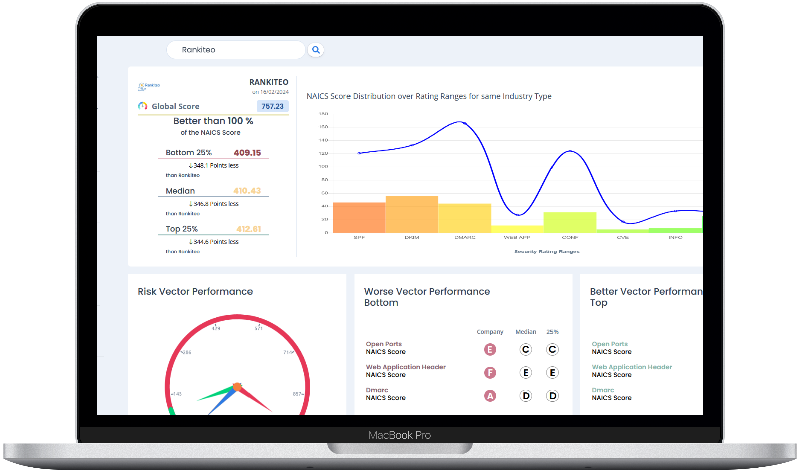
Every week, Rankiteo analyzes billions of signals to give organizations a sharper, faster view of emerging risks. With deeper, more actionable intelligence at their fingertips, security teams can outpace threat actors, respond instantly to Zero-Day attacks, and dramatically shrink their risk exposure window.

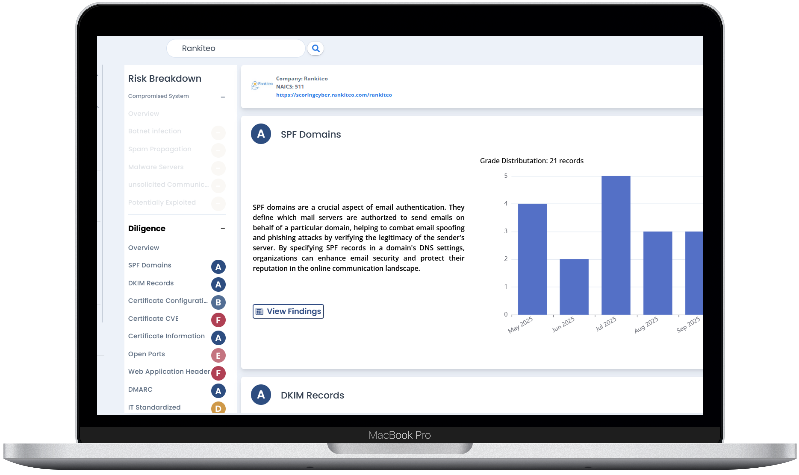
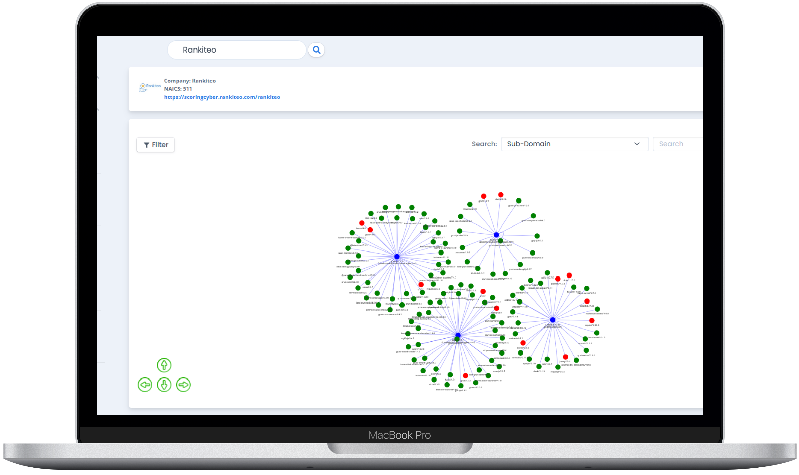
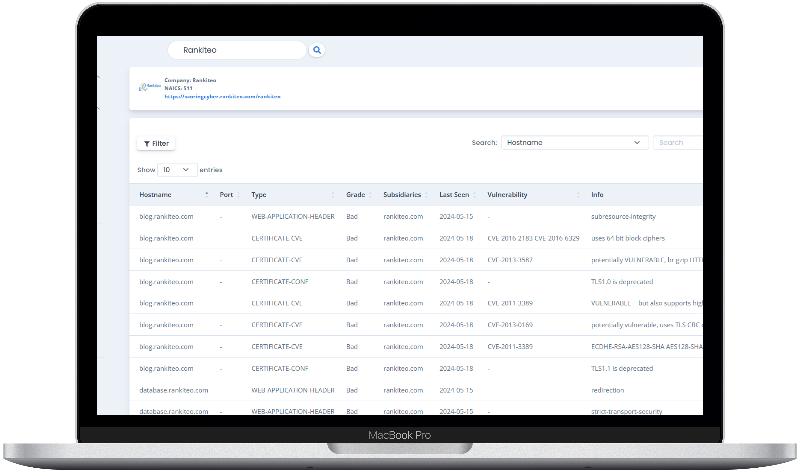
Identify exposed access points, detect misconfigured SSL certificates, and uncover vulnerabilities across the network infrastructure.
Gain visibility into the software components used within an organization to detect vulnerabilities, manage risk, and ensure supply chain security.
Monitor and manage all IT assets and their configurations to ensure accurate, real-time visibility across the company's technology environment.
Leverage real-time insights on active threats, malware campaigns, and emerging vulnerabilities to proactively defend against evolving cyberattacks.