






RAM
Company Details
Linkedin ID:
royal-armouries-museum
Employees number:
168
Number of followers:
4,326
NAICS:
712
Industry Type:
Homepage:
royalarmouries.org
IP Addresses:
0
Company ID:
ROY_2066914
Scan Status:
In-progress


Royal Armouries Museum Company CyberSecurity Posture
royalarmouries.org


The Royal Armouries is the United Kingdom’s national museum of arms and armour, and one of the most important museums of its type in the world. We have a long history, dating back to the Middle Ages. Our celebrated core collection originated in the nation’s working arsenal, which was assembled over many centuries at the Tower of London. The Royal Armouries are heir to one of the oldest deliberately created visitor attractions in the country. Objects were being arranged for display to visitors as early as Queen Elizabeth’s reign in the 16th century. Our collection of about 75,000 items – excluding approximately 2,700 loans to other bodies – is now displayed and housed in our historical home at the White Tower in the Tower of London but also at our purpose-built museum in Leeds, and at Fort Nelson near Portsmouth.
Company Details
royal-armouries-museum
168
4,326
712
royalarmouries.org
0
ROY_2066914
In-progress
 RAM Risk Score (AI oriented)
Between 750 and 799
 RAM Global Score (TPRM)
XXXX


No incidents recorded for Royal Armouries Museum in 2026.
No incidents recorded for Royal Armouries Museum in 2026.
No incidents recorded for Royal Armouries Museum in 2026.
RAM cyber incidents detection timeline including parent company and subsidiaries

The Royal Armouries is the United Kingdom’s national museum of arms and armour, and one of the most important museums of its type in the world. We have a long history, dating back to the Middle Ages. Our celebrated core collection originated in the nation’s working arsenal, which was assembled over many centuries at the Tower of London. The Royal Armouries are heir to one of the oldest deliberately created visitor attractions in the country. Objects were being arranged for display to visitors as early as Queen Elizabeth’s reign in the 16th century. Our collection of about 75,000 items – excluding approximately 2,700 loans to other bodies – is now displayed and housed in our historical home at the White Tower in the Tower of London but also at our purpose-built museum in Leeds, and at Fort Nelson near Portsmouth.


Enlightening, engaging and entertaining, Artis—Naples is the premier center for the performing and visual arts in Southwest Florida. Encompassing the Naples Philharmonic, Baker Museum and a multidisciplinary presenting program, Artis—Naples produces more than 300 concerts, stage shows, exhibitions a

The George Washington Foundation is a 501(c)(3) non-profit organization, headquartered in historic Fredericksburg, Virginia. The Foundation operates George Washington's Ferry Farm and Historic Kenmore, the home of Fielding Lewis and Betty Washington Lewis. The mission of The George Washington Fou

MISSION STATEMENT “To foster in its members and friends a deeper understanding of America’s diverse heritage, by promoting and preserving Serbian culture, scientific achievements, history, and traditions.” VISION The Serbian – American Museum – St. Sava (SAMS) strives to become a distin

Two Rivers Gallery proudly sits on the traditional, unceded territory of the Lheidli T’enneh. Operated by the Prince George Regional Art Gallery Association, the Gallery serves the Regional District of Fraser-Fort George, which includes the traditional territories of the McLeod Lake Indian Band, Lhe

Coral Springs Museum of Art is a museums and institutions company based out of 2855 Coral Springs Drive Suite A, Coral Springs, Florida, United States. What began late in 1996 as a City project to build a comprehensive recreation and community center, soon turned into The Coral Springs Center for th

Established in 1983, we are a registered charitable Trust. With a team of employees and volunteers, we work together to bring the legend to life and share the life story of Jaguar and its predecessor companies. Our purpose is to establish, maintain and promote for the benefit of the nation, the per

The Israel Museum, Jerusalem, is Israel’s foremost cultural institution and one of the world’s leading encyclopaedic museums. Founded in 1965, the Museum’s terraced 20-acre campus houses a wide-ranging collection of art and archaeology of world-class status. Its holdings include the world’s most c

The New Hampshire Historical Society collects, preserves, and interprets the materials of New Hampshire history in fulfillment of its mission "to educate a diverse public about the significance of New Hampshire’s past and its relationship to our lives today.” The Society's collections form the ba

Heartland Scenic Studio, Inc was founded as a theatrical lighting, scenery design and fabrication company in 1983. Over the past several decades, Heartland Scenic has established an exceptional reputation in lighting sales and fabricating high quality, cost effective museum exhibits, and for being c
.png)
ADIB hosted the UAE Cybersecurity Innovation Challenge, naming Corgea, Nothreat, and DTEX Systems as winners in a push for AI-driven and...
On December 30, Peter Levine, a Software Analyst at Evercore ISI, appeared on a CNBC interview to discuss the cybersecurity playbook for...
The European Commission has unveiled a new cybersecurity package aimed at reinforcing the European Union's (EU) resilience against growing...
International Seaways recently highlighted its cybersecurity focus as Global CISO Amit Basu presented at the 8th Annual Global Cyber Future...
Agentic AI operations are moving into production as organizations focus on observability, human oversight, and control of autonomous...
Kelley Information Technology outlines key cybersecurity actions every SMB executive in Central Florida should take to mitigate risks and...
The European Commission presented a revision of the Cybersecurity Act that introduces a phase-out of "high-risk suppliers" from critical...
James Yu, Palo Alto Networks' country manager in Taiwan, stated that while 2025 was predicted as the "disruptive year" for AI,...
AI agents' autonomy and wide access to data also exposes them to a new type of cybersecurity attack. It is also an opportunity for...

Explore insights on cybersecurity incidents, risk posture, and Rankiteo's assessments.
The official website of Royal Armouries Museum is http://www.royalarmouries.org/visit-us/leeds.
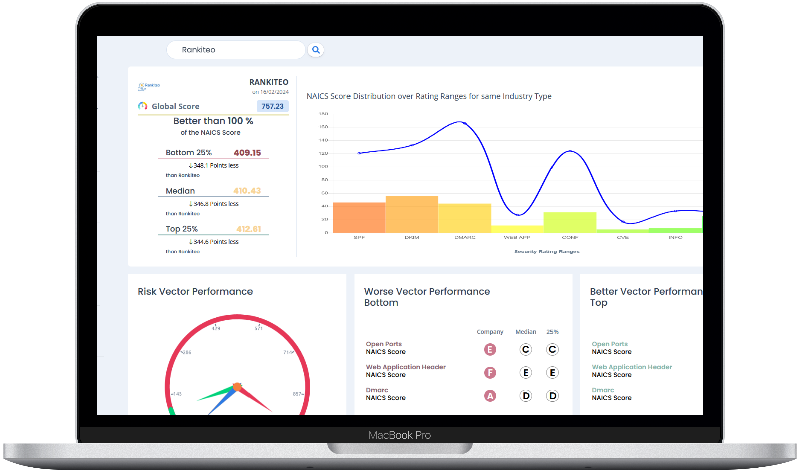
According to Rankiteo, Royal Armouries Museum’s AI-generated cybersecurity score is 764, reflecting their Fair security posture.
According to Rankiteo, Royal Armouries Museum currently holds 0 security badges, indicating that no recognized compliance certifications are currently verified for the organization.
According to Rankiteo, Royal Armouries Museum has not been affected by any supply chain cyber incidents, and no incident IDs are currently listed for the organization.
According to Rankiteo, Royal Armouries Museum is not certified under SOC 2 Type 1.
According to Rankiteo, Royal Armouries Museum does not hold a SOC 2 Type 2 certification.
According to Rankiteo, Royal Armouries Museum is not listed as GDPR compliant.
According to Rankiteo, Royal Armouries Museum does not currently maintain PCI DSS compliance.
According to Rankiteo, Royal Armouries Museum is not compliant with HIPAA regulations.
According to Rankiteo,Royal Armouries Museum is not certified under ISO 27001, indicating the absence of a formally recognized information security management framework.
Royal Armouries Museum operates primarily in the Museums, Historical Sites, and Zoos industry.
Royal Armouries Museum employs approximately 168 people worldwide.
Royal Armouries Museum presently has no subsidiaries across any sectors.
Royal Armouries Museum’s official LinkedIn profile has approximately 4,326 followers.
No, Royal Armouries Museum does not have a profile on Crunchbase.
Yes, Royal Armouries Museum maintains an official LinkedIn profile, which is actively utilized for branding and talent engagement, which can be accessed here: https://www.linkedin.com/company/royal-armouries-museum.
As of January 23, 2026, Rankiteo reports that Royal Armouries Museum has not experienced any cybersecurity incidents.
Royal Armouries Museum has an estimated 2,178 peer or competitor companies worldwide.
Total Incidents: According to Rankiteo, Royal Armouries Museum has faced 0 incidents in the past.
Incident Types: The types of cybersecurity incidents that have occurred include .
.png)
Improper validation of specified type of input in M365 Copilot allows an unauthorized attacker to disclose information over a network.
Improper access control in Azure Front Door (AFD) allows an unauthorized attacker to elevate privileges over a network.
Azure Entra ID Elevation of Privilege Vulnerability
Moonraker is a Python web server providing API access to Klipper 3D printing firmware. In versions 0.9.3 and below, instances configured with the "ldap" component enabled are vulnerable to LDAP search filter injection techniques via the login endpoint. The 401 error response message can be used to determine whether or not a search was successful, allowing for brute force methods to discover LDAP entries on the server such as user IDs and user attributes. This issue has been fixed in version 0.10.0.
Runtipi is a Docker-based, personal homeserver orchestrator that facilitates multiple services on a single server. Versions 3.7.0 and above allow an authenticated user to execute arbitrary system commands on the host server by injecting shell metacharacters into backup filenames. The BackupManager fails to sanitize the filenames of uploaded backups. The system persists user-uploaded files directly to the host filesystem using the raw originalname provided in the request. This allows an attacker to stage a file containing shell metacharacters (e.g., $(id).tar.gz) at a predictable path, which is later referenced during the restore process. The successful storage of the file is what allows the subsequent restore command to reference and execute it. This issue has been fixed in version 4.7.0.

Get company history

Every week, Rankiteo analyzes billions of signals to give organizations a sharper, faster view of emerging risks. With deeper, more actionable intelligence at their fingertips, security teams can outpace threat actors, respond instantly to Zero-Day attacks, and dramatically shrink their risk exposure window.
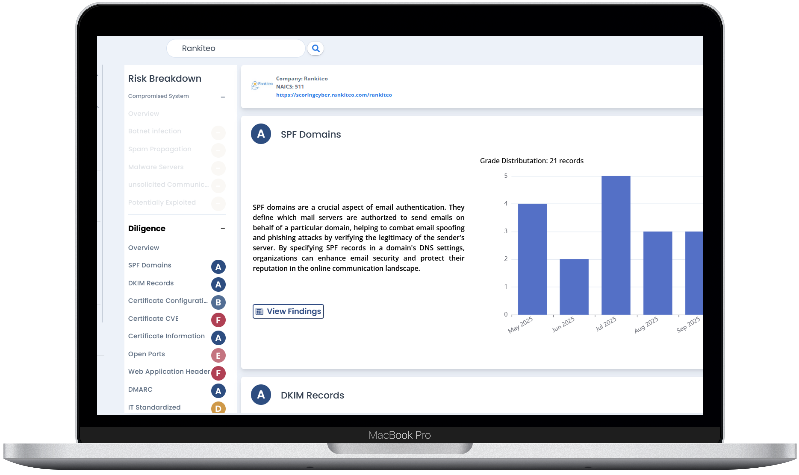
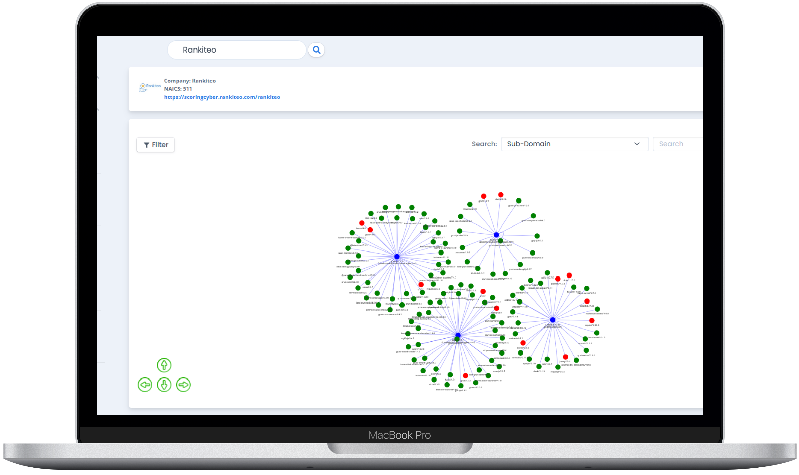
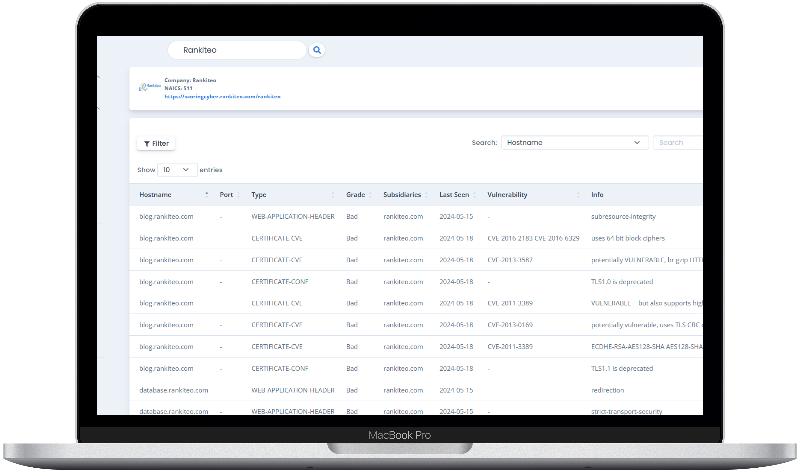
Identify exposed access points, detect misconfigured SSL certificates, and uncover vulnerabilities across the network infrastructure.
Gain visibility into the software components used within an organization to detect vulnerabilities, manage risk, and ensure supply chain security.
Monitor and manage all IT assets and their configurations to ensure accurate, real-time visibility across the company's technology environment.
Leverage real-time insights on active threats, malware campaigns, and emerging vulnerabilities to proactively defend against evolving cyberattacks.



 Rapid
Rapid