






Privatklinik Hohenegg
Company Details
Linkedin ID:
privatklinik-hohenegg
Website:
Employees number:
126
Number of followers:
2,456
NAICS:
62133
Industry Type:
Homepage:
hohenegg.ch
IP Addresses:
0
Company ID:
PRI_4460249
Scan Status:
In-progress


Privatklinik Hohenegg Company CyberSecurity Posture
hohenegg.ch


Die Privatklinik Hohenegg ist für erwachsene Patientinnen und Patienten da, die in einer psychischen Krise die bestmögliche fachliche Betreuung und eine auf ihre Persönlichkeit abgestimmte individuelle Behandlung benötigen. Die Klinik nimmt Personen mit Privat- und Halbprivatversicherung sowie Selbstzahler aus dem In- und deutschsprachigen Ausland auf. Sie ist unter anderem spezialisiert auf die Behandlung von Depressiven Erkrankungen, Burnout und Belastungskrisen, Angsterkrankungen, Alterspsychotherapie und Psychosomatische Erkrankungen. Die Verantwortung dafür liegt in den Händen von erfahrenen Fachärzten sowie qualifizierten Therapie- und Pflegefachpersonen. Die Hohenegg verfügt über 70 Betten und bietet eine Hotellerie mit erstklassigem Komfort in einer einzigartigen Atmosphäre, in der sich Patientinnen und Patienten aufgehoben fühlen. Als fachlich führend in Psychiatrie und Psychotherapie profiliert sich die Privatklinik Hohenegg mit herausragender Kompetenz in der Wiederherstellung und der Erhaltung der psychischen Gesundheit, mit ganzheitlichen Behandlungskonzepten und einer ästhetisch-harmonischen Infrastruktur. Unsere Werte «kompetent, exklusiv und authentisch» spiegeln das Ergebnis unseres Auftrages, dem wir seit über 100 Jahren verpflichtet sind: Menschen in seelischer Not eine gute, kompetente Behandlung zu bieten. Sie stehen für unsere humanistische, werteorientierte Tradition, in der wir die Beziehungen zu Patientinnen und Patienten, Mitarbeitenden und weiteren Anspruchsgruppen echt und glaubwürdig gestalten. Es ist unser Bestreben, erstklassige und persönlich erlebbare Qualität zu bieten. Als Mitglied von Swiss Leading Hospitals (SLH) und ausgezeichnet mit dem EFQM-Qualitätslabel verpflichten wir uns, anspruchsvolle und strenge Qualitätsstandards zu erfüllen. In den Patientenbefragungen der ANQ gehört die Privatklinik Hohenegg seit vielen Jahren in den Kategorien zur Symptom-Reduktion zu den Besten.
Company Details
privatklinik-hohenegg
126
2,456
62133
hohenegg.ch
0
PRI_4460249
In-progress
 Privatklinik Hohenegg Risk Score (AI oriented)
Between 750 and 799
 Privatklinik Hohenegg Global Score (TPRM)
XXXX


No incidents recorded for Privatklinik Hohenegg in 2026.
No incidents recorded for Privatklinik Hohenegg in 2026.
No incidents recorded for Privatklinik Hohenegg in 2026.
Privatklinik Hohenegg cyber incidents detection timeline including parent company and subsidiaries
Die Privatklinik Hohenegg ist für erwachsene Patientinnen und Patienten da, die in einer psychischen Krise die bestmögliche fachliche Betreuung und eine auf ihre Persönlichkeit abgestimmte individuelle Behandlung benötigen. Die Klinik nimmt Personen mit Privat- und Halbprivatversicherung sowie Selbstzahler aus dem In- und deutschsprachigen Ausland auf. Sie ist unter anderem spezialisiert auf die Behandlung von Depressiven Erkrankungen, Burnout und Belastungskrisen, Angsterkrankungen, Alterspsychotherapie und Psychosomatische Erkrankungen. Die Verantwortung dafür liegt in den Händen von erfahrenen Fachärzten sowie qualifizierten Therapie- und Pflegefachpersonen. Die Hohenegg verfügt über 70 Betten und bietet eine Hotellerie mit erstklassigem Komfort in einer einzigartigen Atmosphäre, in der sich Patientinnen und Patienten aufgehoben fühlen. Als fachlich führend in Psychiatrie und Psychotherapie profiliert sich die Privatklinik Hohenegg mit herausragender Kompetenz in der Wiederherstellung und der Erhaltung der psychischen Gesundheit, mit ganzheitlichen Behandlungskonzepten und einer ästhetisch-harmonischen Infrastruktur. Unsere Werte «kompetent, exklusiv und authentisch» spiegeln das Ergebnis unseres Auftrages, dem wir seit über 100 Jahren verpflichtet sind: Menschen in seelischer Not eine gute, kompetente Behandlung zu bieten. Sie stehen für unsere humanistische, werteorientierte Tradition, in der wir die Beziehungen zu Patientinnen und Patienten, Mitarbeitenden und weiteren Anspruchsgruppen echt und glaubwürdig gestalten. Es ist unser Bestreben, erstklassige und persönlich erlebbare Qualität zu bieten. Als Mitglied von Swiss Leading Hospitals (SLH) und ausgezeichnet mit dem EFQM-Qualitätslabel verpflichten wir uns, anspruchsvolle und strenge Qualitätsstandards zu erfüllen. In den Patientenbefragungen der ANQ gehört die Privatklinik Hohenegg seit vielen Jahren in den Kategorien zur Symptom-Reduktion zu den Besten.


Animal Assisted Therapy Programs of Colorado provides counseling and psychotherapy to clients of all ages with the assistance of our therapy animals. Linda Chassman and Ellen Winston founded AATPC in 2010 based on their belief in the powerful effect animals have in healing and facilitating change.

National Council for Mental Wellbeing is the unifying voice of America’s community mental health and addictions treatment organizations. Together with more than 3,300 member organizations, we serve more than 10 million adults and children living with mental illnesses and addictions. The organization

Walking into Gratitude Lodge for the first time feels like coming home. With founders & staff who have been in recovery themselves, our mission is to create a safe, comfortable space for successful recovery. Just a short distance from the glorious beaches and rolling hills of Newport Beach and Long

Challenge Behavioral Healthcare is an experienced and caring provider of mental health, substance abuse, and DUI treatment programs. Our system of care, which is well known for its compassionate and structured treatment, emphasizes the importance of caring for a person's concerns and needs in full.

Womencare Counseling & Training Center provides individual, group, couple and family counseling, as well as sponsoring educational and professional workshops. Within a relational model, Womencare supports adults, adolescents, couples, families, and communities in the face of trauma, loss, and life

The Center for Learning and Autism Support Services, Inc. (CLASS) proudly provides comprehensive, educational and behavioral programs to individuals diagnosed with Autism Spectrum Disorder (ASD) and other neurological and developmental delays. As a certified non-public agency, our goal is to util

The Healthy Teen Project provides Intensive Outpatient and Partial Hospitalization treatment programs for teenagers who struggle with eating disorders in the San Francisco Bay Area. Eating disorders create significant challenges for teens and their families in all aspects of their lives. Sometime
MIYA Creative Care improves wellness outcomes by successfully integrating creative arts therapies into your organization’s care model. We build long-lasting care partnerships with organizations throughout Ontario including senior living homes, hospices, mental health organizations, and education ce

Balance and Thrive is a premier Mental Health & Counseling and Psychoeducation Center established to provide services to support emotional balance and life fulfillment. Individuals and families can choose to utilize only one or more of the services we offer. We encourage people to improve the qualit
.png)
The European Commission's proposed revisions to the EU Cybersecurity Act are drawing increasingly polarised reactions, as digital rights...
Azerbaijani Foreign Minister Jeyhun Bayramov met with NATO Deputy Secretary General Radmila Šekerinska. During the meeting, the parties...
ReliaQuest has shared an update. The company announced that it is actively hiring across multiple roles, positioning itself as an AI-focused cybersecurity...
Azerbaijan and NATO have discussed expanding cooperation in cybersecurity and other security-related fields, as part of ongoing partnership...
Industrial AI and IT/OT convergence are forcing factories to abandon closed networks and adopt hybrid, zero trust cyber security...
The latest announcement is out from Insight Business Support Plc ( ($GB:KLSO) ). Kelso Group Holdings has provided an update on its...
On 10 December 2025, Vietnam's National Assembly passed the Cybersecurity Law (No. 116/2025/QH15) which will come into effect on 1 July 2026...
THE HACK: EU's Cybersecurity Act 2 draws China's ire. In today's edition: Showtime for Knafo report, MEPs stab Democracy Shield.
The European Commission's proposal to revise the EU Cybersecurity Act has drawn support from industry figures, who say the changes recognise...

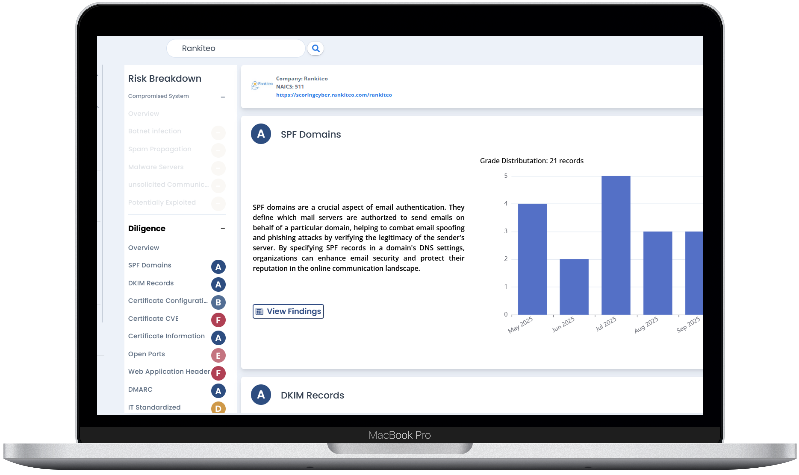
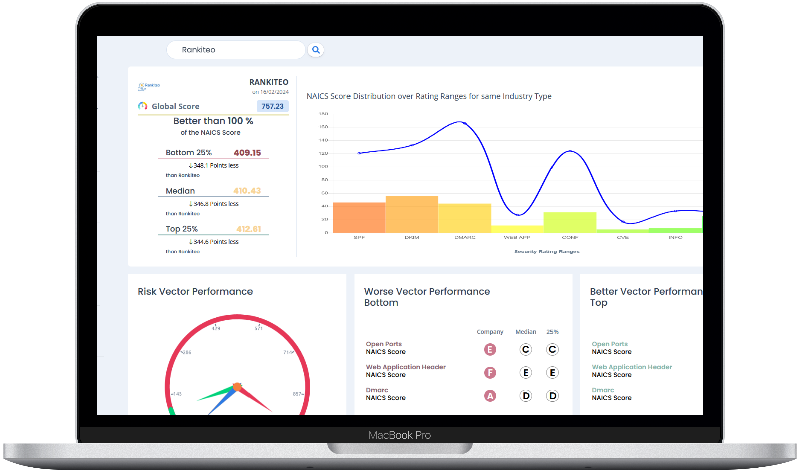
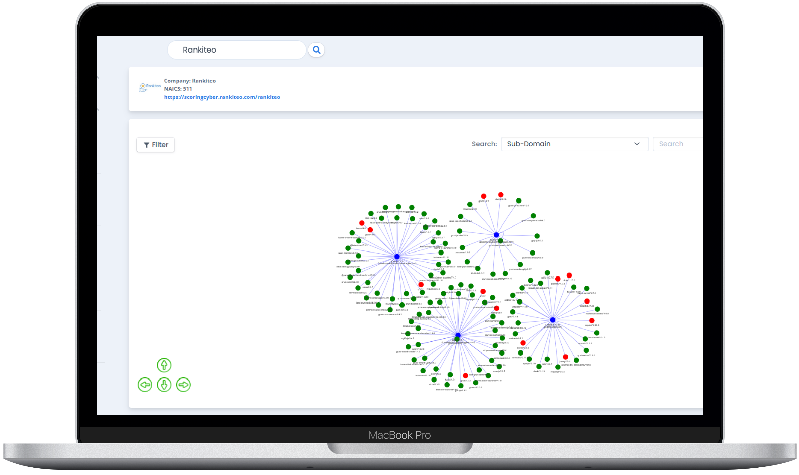
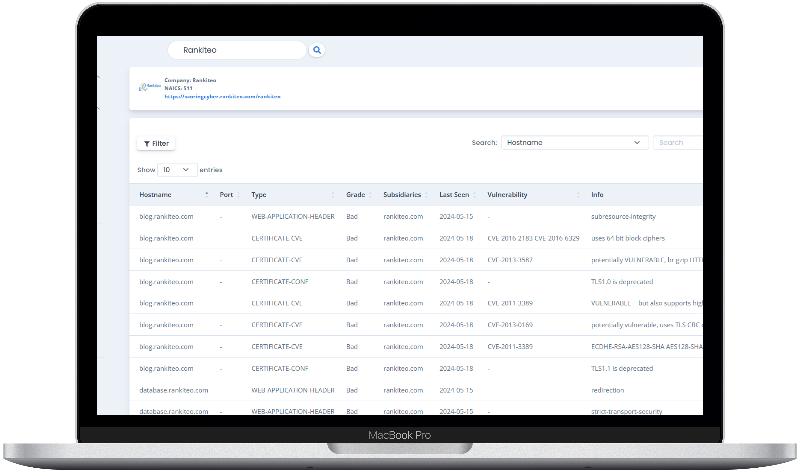
Explore insights on cybersecurity incidents, risk posture, and Rankiteo's assessments.
The official website of Privatklinik Hohenegg is http://www.hohenegg.ch.
According to Rankiteo, Privatklinik Hohenegg’s AI-generated cybersecurity score is 755, reflecting their Fair security posture.
According to Rankiteo, Privatklinik Hohenegg currently holds 0 security badges, indicating that no recognized compliance certifications are currently verified for the organization.
According to Rankiteo, Privatklinik Hohenegg has not been affected by any supply chain cyber incidents, and no incident IDs are currently listed for the organization.
According to Rankiteo, Privatklinik Hohenegg is not certified under SOC 2 Type 1.
According to Rankiteo, Privatklinik Hohenegg does not hold a SOC 2 Type 2 certification.
According to Rankiteo, Privatklinik Hohenegg is not listed as GDPR compliant.
According to Rankiteo, Privatklinik Hohenegg does not currently maintain PCI DSS compliance.
According to Rankiteo, Privatklinik Hohenegg is not compliant with HIPAA regulations.
According to Rankiteo,Privatklinik Hohenegg is not certified under ISO 27001, indicating the absence of a formally recognized information security management framework.
Privatklinik Hohenegg operates primarily in the Mental Health Care industry.
Privatklinik Hohenegg employs approximately 126 people worldwide.
Privatklinik Hohenegg presently has no subsidiaries across any sectors.
Privatklinik Hohenegg’s official LinkedIn profile has approximately 2,456 followers.
Privatklinik Hohenegg is classified under the NAICS code 62133, which corresponds to Offices of Mental Health Practitioners (except Physicians).
No, Privatklinik Hohenegg does not have a profile on Crunchbase.
Yes, Privatklinik Hohenegg maintains an official LinkedIn profile, which is actively utilized for branding and talent engagement, which can be accessed here: https://www.linkedin.com/company/privatklinik-hohenegg.
As of January 22, 2026, Rankiteo reports that Privatklinik Hohenegg has not experienced any cybersecurity incidents.
Privatklinik Hohenegg has an estimated 5,276 peer or competitor companies worldwide.
Total Incidents: According to Rankiteo, Privatklinik Hohenegg has faced 0 incidents in the past.
Incident Types: The types of cybersecurity incidents that have occurred include .
.png)
Backstage is an open framework for building developer portals, and @backstage/backend-defaults provides the default implementations and setup for a standard Backstage backend app. Prior to versions 0.12.2, 0.13.2, 0.14.1, and 0.15.0, the `FetchUrlReader` component, used by the catalog and other plugins to fetch content from URLs, followed HTTP redirects automatically. This allowed an attacker who controls a host listed in `backend.reading.allow` to redirect requests to internal or sensitive URLs that are not on the allowlist, bypassing the URL allowlist security control. This is a Server-Side Request Forgery (SSRF) vulnerability that could allow access to internal resources, but it does not allow attackers to include additional request headers. This vulnerability is fixed in `@backstage/backend-defaults` version 0.12.2, 0.13.2, 0.14.1, and 0.15.0. Users should upgrade to this version or later. Some workarounds are available. Restrict `backend.reading.allow` to only trusted hosts that you control and that do not issue redirects, ensure allowed hosts do not have open redirect vulnerabilities, and/or use network-level controls to block access from Backstage to sensitive internal endpoints.
Backstage is an open framework for building developer portals, and @backstage/cli-common provides config loading functionality used by the backend and command line interface of Backstage. Prior to version 0.1.17, the `resolveSafeChildPath` utility function in `@backstage/backend-plugin-api`, which is used to prevent path traversal attacks, failed to properly validate symlink chains and dangling symlinks. An attacker could bypass the path validation via symlink chains (creating `link1 → link2 → /outside` where intermediate symlinks eventually resolve outside the allowed directory) and dangling symlinks (creating symlinks pointing to non-existent paths outside the base directory, which would later be created during file operations). This function is used by Scaffolder actions and other backend components to ensure file operations stay within designated directories. This vulnerability is fixed in `@backstage/backend-plugin-api` version 0.1.17. Users should upgrade to this version or later. Some workarounds are available. Run Backstage in a containerized environment with limited filesystem access and/or restrict template creation to trusted users.
Backstage is an open framework for building developer portals. Multiple Scaffolder actions and archive extraction utilities were vulnerable to symlink-based path traversal attacks. An attacker with access to create and execute Scaffolder templates could exploit symlinks to read arbitrary files via the `debug:log` action by creating a symlink pointing to sensitive files (e.g., `/etc/passwd`, configuration files, secrets); delete arbitrary files via the `fs:delete` action by creating symlinks pointing outside the workspace, and write files outside the workspace via archive extraction (tar/zip) containing malicious symlinks. This affects any Backstage deployment where users can create or execute Scaffolder templates. This vulnerability is fixed in `@backstage/backend-defaults` versions 0.12.2, 0.13.2, 0.14.1, and 0.15.0; `@backstage/plugin-scaffolder-backend` versions 2.2.2, 3.0.2, and 3.1.1; and `@backstage/plugin-scaffolder-node` versions 0.11.2 and 0.12.3. Users should upgrade to these versions or later. Some workarounds are available. Follow the recommendation in the Backstage Threat Model to limit access to creating and updating templates, restrict who can create and execute Scaffolder templates using the permissions framework, audit existing templates for symlink usage, and/or run Backstage in a containerized environment with limited filesystem access.
FastAPI Api Key provides a backend-agnostic library that provides an API key system. Version 1.1.0 has a timing side-channel vulnerability in verify_key(). The method applied a random delay only on verification failures, allowing an attacker to statistically distinguish valid from invalid API keys by measuring response latencies. With enough repeated requests, an adversary could infer whether a key_id corresponds to a valid key, potentially accelerating brute-force or enumeration attacks. All users relying on verify_key() for API key authentication prior to the fix are affected. Users should upgrade to version 1.1.0 to receive a patch. The patch applies a uniform random delay (min_delay to max_delay) to all responses regardless of outcome, eliminating the timing correlation. Some workarounds are available. Add an application-level fixed delay or random jitter to all authentication responses (success and failure) before the fix is applied and/or use rate limiting to reduce the feasibility of statistical timing attacks.
The Flux Operator is a Kubernetes CRD controller that manages the lifecycle of CNCF Flux CD and the ControlPlane enterprise distribution. Starting in version 0.36.0 and prior to version 0.40.0, a privilege escalation vulnerability exists in the Flux Operator Web UI authentication code that allows an attacker to bypass Kubernetes RBAC impersonation and execute API requests with the operator's service account privileges. In order to be vulnerable, cluster admins must configure the Flux Operator with an OIDC provider that issues tokens lacking the expected claims (e.g., `email`, `groups`), or configure custom CEL expressions that can evaluate to empty values. After OIDC token claims are processed through CEL expressions, there is no validation that the resulting `username` and `groups` values are non-empty. When both values are empty, the Kubernetes client-go library does not add impersonation headers to API requests, causing them to be executed with the flux-operator service account's credentials instead of the authenticated user's limited permissions. This can result in privilege escalation, data exposure, and/or information disclosure. Version 0.40.0 patches the issue.

Get company history

Every week, Rankiteo analyzes billions of signals to give organizations a sharper, faster view of emerging risks. With deeper, more actionable intelligence at their fingertips, security teams can outpace threat actors, respond instantly to Zero-Day attacks, and dramatically shrink their risk exposure window.
Identify exposed access points, detect misconfigured SSL certificates, and uncover vulnerabilities across the network infrastructure.
Gain visibility into the software components used within an organization to detect vulnerabilities, manage risk, and ensure supply chain security.
Monitor and manage all IT assets and their configurations to ensure accurate, real-time visibility across the company's technology environment.
Leverage real-time insights on active threats, malware campaigns, and emerging vulnerabilities to proactively defend against evolving cyberattacks.



 Rapid
Rapid