





PEMS
Company Details
Linkedin ID:
princeton-einstein-museum-of-science
Website:
Employees number:
2
Number of followers:
122
NAICS:
712
Industry Type:
Homepage:
pems.com
IP Addresses:
0
Company ID:
PRI_1680305
Scan Status:
In-progress


Princeton Einstein Museum of Science Company CyberSecurity Posture
pems.com


Albert Einstein could have chosen to live nearly anywhere when he left Germany in 1933 but he selected Princeton, New Jersey as his new hometown. Now, more than 65 years after his death, it is time to immortalize his achievements with a museum in Princeton. Join us as we build the Princeton Einstein Museum of Science (PEMS), the only museum outside of Europe dedicated to his legacy. From a video immersion room explaining aspects of gravity, to fabulous, large-scale art interpreting Dr. Einstein’s discoveries, PEMS aims to be lively, fun, educational, and in the end, highly inspirational. Aimed at non-scientists, PEMS will inspire future physicists, mathematicians, and cosmologists by bringing the wonder of Dr. Einstein’s methods and discoveries to the world. Help us bring this exciting experience to life!
Company Details
princeton-einstein-museum-of-science
2
122
712
pems.com
0
PRI_1680305
In-progress
 PEMS Risk Score (AI oriented)
Between 750 and 799
 PEMS Global Score (TPRM)
XXXX


No incidents recorded for Princeton Einstein Museum of Science in 2026.
No incidents recorded for Princeton Einstein Museum of Science in 2026.
No incidents recorded for Princeton Einstein Museum of Science in 2026.
PEMS cyber incidents detection timeline including parent company and subsidiaries

Albert Einstein could have chosen to live nearly anywhere when he left Germany in 1933 but he selected Princeton, New Jersey as his new hometown. Now, more than 65 years after his death, it is time to immortalize his achievements with a museum in Princeton. Join us as we build the Princeton Einstein Museum of Science (PEMS), the only museum outside of Europe dedicated to his legacy. From a video immersion room explaining aspects of gravity, to fabulous, large-scale art interpreting Dr. Einstein’s discoveries, PEMS aims to be lively, fun, educational, and in the end, highly inspirational. Aimed at non-scientists, PEMS will inspire future physicists, mathematicians, and cosmologists by bringing the wonder of Dr. Einstein’s methods and discoveries to the world. Help us bring this exciting experience to life!


HONORING military veterans, PRESERVING aviation legacies, EXPERIENCING historical artifacts The Liberty Aviation Museum was established on December 7th 1991 with a handful of dedicated volunteers to showcase WW2 aircraft. In 1994 we put on a well received air show at the Erie-Ottawa Airport.

Situated on the Tasman Peninsula near Saltwater River, the Coal Mines Historic Site was Tasmania’s first operational mine. It also served as a place of punishment for the ‘worst class’ of convicts, as part of the system of convict discipline and punishment. During its busiest years almost 600 prison

LancasterHistory engages and educates the public about the people, places, and events that shaped Lancaster County within the broader context of the history of the Commonwealth of Pennsylvania and the United States of America. As custodians of a complex past, we collect, preserve, exhibit, and make

The National Cinema Museum in Turin is among the most important in the world for the richness of its heritage and the multiplicity of its scientific and popular activities. But what makes it truly unique is the peculiarity of its exhibition layout. The museum is housed inside the Mole Antonelliana,

Learn through play! Our mission is to inspire children of all ages to imagine, discover, and connect with their world to make a difference. Founded in 1978 as The Children's Museum of Utah, we have a thirty-year history of dedicated service to the families of Utah and the Intermountain West. Since

Eugene Science Center is a hands-on science museum located in Alton Baker Park, a 400 acre park located in the heart of Eugene, Oregon. It has one of the largest planetariums in the entire Pacific Northwest and specializes in inquiry-based interactive exhibits and educational programming. Eugene S

More than a museum – The Rockwell is a unique community center where people enjoy, connect, and reflect on the essence of the American experience, character and values through the eyes of American artists. The Rockwell Museum is the only Smithsonian Affiliate in Upstate New York. Housed in the bea

Clyde Peeling's Reptiland is an AZA accredited zoo specializing in reptiles and amphibians from around the world. Our mission is to educate the public on the less-loved members of the animal kingdom and the importance of wildlife conservation, in a fun and entertaining format. We do this through nat

About the Museum: The Museum is located on the sixth and seventh floors of an early 20th-century warehouse formerly known as the Texas School Book Depository. The permanent exhibit features films, photographs and artifacts that chronicle President Kennedy's life, death and legacy. Temporary exhibits
.png)
Dave Treat, Pearson's chief technology officer, highlighted the difficulty of ensuring AI agents are not easily fooled by tactics that trick...
AiStrike, a cybersecurity company focused on artificial intelligence-native cyber defense, has raised $7 million in seed funding to enhance...
Claroty Ltd., a startup that helps companies protect their industrial equipment from hackers, has secured $150 million in new funding.
Quantum computing poses risks, including the ability to break encryption. That's why Surfshark is preparing.
What does leadership look like when you don't have direct authority, only influence? Fernanda Silva shares how ambition, trust,...
PRNewswire/ -- A securities class action lawsuit, filed in the wake of an announcement by F5, Inc. (NASDAQ: FFIV) that it experienced a...
Europe depends on Chinese and American tech — and worries about the safety of its critical telecom and IT systems. A new cybersecurity...

Explore insights on cybersecurity incidents, risk posture, and Rankiteo's assessments.
The official website of Princeton Einstein Museum of Science is https://pems.com/.
According to Rankiteo, Princeton Einstein Museum of Science’s AI-generated cybersecurity score is 761, reflecting their Fair security posture.
According to Rankiteo, Princeton Einstein Museum of Science currently holds 0 security badges, indicating that no recognized compliance certifications are currently verified for the organization.
According to Rankiteo, Princeton Einstein Museum of Science has not been affected by any supply chain cyber incidents, and no incident IDs are currently listed for the organization.
According to Rankiteo, Princeton Einstein Museum of Science is not certified under SOC 2 Type 1.
According to Rankiteo, Princeton Einstein Museum of Science does not hold a SOC 2 Type 2 certification.
According to Rankiteo, Princeton Einstein Museum of Science is not listed as GDPR compliant.
According to Rankiteo, Princeton Einstein Museum of Science does not currently maintain PCI DSS compliance.
According to Rankiteo, Princeton Einstein Museum of Science is not compliant with HIPAA regulations.
According to Rankiteo,Princeton Einstein Museum of Science is not certified under ISO 27001, indicating the absence of a formally recognized information security management framework.
Princeton Einstein Museum of Science operates primarily in the Museums, Historical Sites, and Zoos industry.
Princeton Einstein Museum of Science employs approximately 2 people worldwide.
Princeton Einstein Museum of Science presently has no subsidiaries across any sectors.
Princeton Einstein Museum of Science’s official LinkedIn profile has approximately 122 followers.
Princeton Einstein Museum of Science is classified under the NAICS code 712, which corresponds to Museums, Historical Sites, and Similar Institutions.
No, Princeton Einstein Museum of Science does not have a profile on Crunchbase.
Yes, Princeton Einstein Museum of Science maintains an official LinkedIn profile, which is actively utilized for branding and talent engagement, which can be accessed here: https://www.linkedin.com/company/princeton-einstein-museum-of-science.
As of January 22, 2026, Rankiteo reports that Princeton Einstein Museum of Science has not experienced any cybersecurity incidents.
Princeton Einstein Museum of Science has an estimated 2,178 peer or competitor companies worldwide.
Total Incidents: According to Rankiteo, Princeton Einstein Museum of Science has faced 0 incidents in the past.
Incident Types: The types of cybersecurity incidents that have occurred include .
.png)
Backstage is an open framework for building developer portals, and @backstage/backend-defaults provides the default implementations and setup for a standard Backstage backend app. Prior to versions 0.12.2, 0.13.2, 0.14.1, and 0.15.0, the `FetchUrlReader` component, used by the catalog and other plugins to fetch content from URLs, followed HTTP redirects automatically. This allowed an attacker who controls a host listed in `backend.reading.allow` to redirect requests to internal or sensitive URLs that are not on the allowlist, bypassing the URL allowlist security control. This is a Server-Side Request Forgery (SSRF) vulnerability that could allow access to internal resources, but it does not allow attackers to include additional request headers. This vulnerability is fixed in `@backstage/backend-defaults` version 0.12.2, 0.13.2, 0.14.1, and 0.15.0. Users should upgrade to this version or later. Some workarounds are available. Restrict `backend.reading.allow` to only trusted hosts that you control and that do not issue redirects, ensure allowed hosts do not have open redirect vulnerabilities, and/or use network-level controls to block access from Backstage to sensitive internal endpoints.
Backstage is an open framework for building developer portals, and @backstage/cli-common provides config loading functionality used by the backend and command line interface of Backstage. Prior to version 0.1.17, the `resolveSafeChildPath` utility function in `@backstage/backend-plugin-api`, which is used to prevent path traversal attacks, failed to properly validate symlink chains and dangling symlinks. An attacker could bypass the path validation via symlink chains (creating `link1 → link2 → /outside` where intermediate symlinks eventually resolve outside the allowed directory) and dangling symlinks (creating symlinks pointing to non-existent paths outside the base directory, which would later be created during file operations). This function is used by Scaffolder actions and other backend components to ensure file operations stay within designated directories. This vulnerability is fixed in `@backstage/backend-plugin-api` version 0.1.17. Users should upgrade to this version or later. Some workarounds are available. Run Backstage in a containerized environment with limited filesystem access and/or restrict template creation to trusted users.
Backstage is an open framework for building developer portals. Multiple Scaffolder actions and archive extraction utilities were vulnerable to symlink-based path traversal attacks. An attacker with access to create and execute Scaffolder templates could exploit symlinks to read arbitrary files via the `debug:log` action by creating a symlink pointing to sensitive files (e.g., `/etc/passwd`, configuration files, secrets); delete arbitrary files via the `fs:delete` action by creating symlinks pointing outside the workspace, and write files outside the workspace via archive extraction (tar/zip) containing malicious symlinks. This affects any Backstage deployment where users can create or execute Scaffolder templates. This vulnerability is fixed in `@backstage/backend-defaults` versions 0.12.2, 0.13.2, 0.14.1, and 0.15.0; `@backstage/plugin-scaffolder-backend` versions 2.2.2, 3.0.2, and 3.1.1; and `@backstage/plugin-scaffolder-node` versions 0.11.2 and 0.12.3. Users should upgrade to these versions or later. Some workarounds are available. Follow the recommendation in the Backstage Threat Model to limit access to creating and updating templates, restrict who can create and execute Scaffolder templates using the permissions framework, audit existing templates for symlink usage, and/or run Backstage in a containerized environment with limited filesystem access.
FastAPI Api Key provides a backend-agnostic library that provides an API key system. Version 1.1.0 has a timing side-channel vulnerability in verify_key(). The method applied a random delay only on verification failures, allowing an attacker to statistically distinguish valid from invalid API keys by measuring response latencies. With enough repeated requests, an adversary could infer whether a key_id corresponds to a valid key, potentially accelerating brute-force or enumeration attacks. All users relying on verify_key() for API key authentication prior to the fix are affected. Users should upgrade to version 1.1.0 to receive a patch. The patch applies a uniform random delay (min_delay to max_delay) to all responses regardless of outcome, eliminating the timing correlation. Some workarounds are available. Add an application-level fixed delay or random jitter to all authentication responses (success and failure) before the fix is applied and/or use rate limiting to reduce the feasibility of statistical timing attacks.
The Flux Operator is a Kubernetes CRD controller that manages the lifecycle of CNCF Flux CD and the ControlPlane enterprise distribution. Starting in version 0.36.0 and prior to version 0.40.0, a privilege escalation vulnerability exists in the Flux Operator Web UI authentication code that allows an attacker to bypass Kubernetes RBAC impersonation and execute API requests with the operator's service account privileges. In order to be vulnerable, cluster admins must configure the Flux Operator with an OIDC provider that issues tokens lacking the expected claims (e.g., `email`, `groups`), or configure custom CEL expressions that can evaluate to empty values. After OIDC token claims are processed through CEL expressions, there is no validation that the resulting `username` and `groups` values are non-empty. When both values are empty, the Kubernetes client-go library does not add impersonation headers to API requests, causing them to be executed with the flux-operator service account's credentials instead of the authenticated user's limited permissions. This can result in privilege escalation, data exposure, and/or information disclosure. Version 0.40.0 patches the issue.

Get company history

Every week, Rankiteo analyzes billions of signals to give organizations a sharper, faster view of emerging risks. With deeper, more actionable intelligence at their fingertips, security teams can outpace threat actors, respond instantly to Zero-Day attacks, and dramatically shrink their risk exposure window.
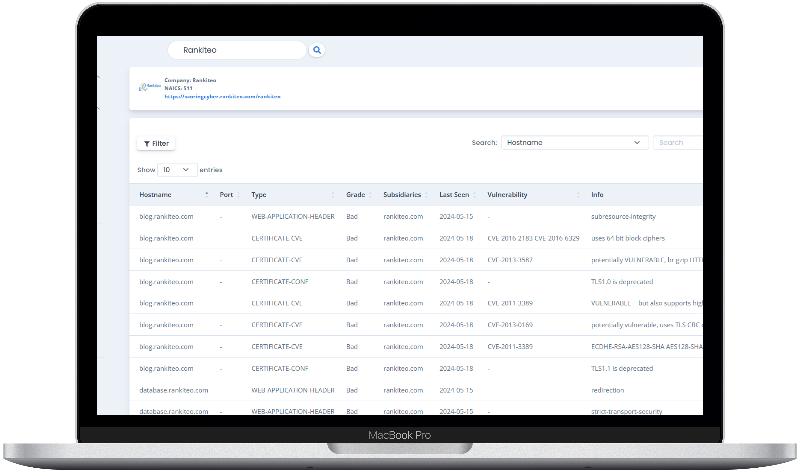
Identify exposed access points, detect misconfigured SSL certificates, and uncover vulnerabilities across the network infrastructure.
Gain visibility into the software components used within an organization to detect vulnerabilities, manage risk, and ensure supply chain security.
Monitor and manage all IT assets and their configurations to ensure accurate, real-time visibility across the company's technology environment.
Leverage real-time insights on active threats, malware campaigns, and emerging vulnerabilities to proactively defend against evolving cyberattacks.



 Rapid
Rapid