Company Details
preservation-virginia
81
1,810
712
preservationvirginia.org
0
PRE_9200378
In-progress


Preservation Virginia Company CyberSecurity Posture
preservationvirginia.orgSince 1889, Preservation Virginia has preserved historic places and raised awareness of the importance of perpetuating and revitalizing Virginia's cultural, architectural and historic heritage, thereby ensuring that historic places are integral parts of the lives of present and future generations. We currently own and operate six historic sites across the state, including: Historic Jamestowne, Patrick Henry's Scotchtown, Smith's Fort Plantation, Cape Henry Lighthouse, Bacon's Castle and the John Marshall House. Without our efforts to help others understand the importance of retaining important parts of our heritage, Virginia would have lost historic sites – and the stories that go with them – forever. It is more important, now than ever, to integrate history and its lessons into tomorrow's culture. Through our work, we strengthen communities, create connections for people and help sustain a strong economy. We will continue to foster the use of historic preservation tools and applications in order to develop and sustain vibrant communities.
Company Details
preservation-virginia
81
1,810
712
preservationvirginia.org
0
PRE_9200378
In-progress
Between 750 and 799

Preservation Virginia Global Score (TPRM)XXXX


No incidents recorded for Preservation Virginia in 2026.
Preservation Virginia cyber incidents detection timeline including parent company and subsidiaries

Since 1889, Preservation Virginia has preserved historic places and raised awareness of the importance of perpetuating and revitalizing Virginia's cultural, architectural and historic heritage, thereby ensuring that historic places are integral parts of the lives of present and future generations. We currently own and operate six historic sites across the state, including: Historic Jamestowne, Patrick Henry's Scotchtown, Smith's Fort Plantation, Cape Henry Lighthouse, Bacon's Castle and the John Marshall House. Without our efforts to help others understand the importance of retaining important parts of our heritage, Virginia would have lost historic sites – and the stories that go with them – forever. It is more important, now than ever, to integrate history and its lessons into tomorrow's culture. Through our work, we strengthen communities, create connections for people and help sustain a strong economy. We will continue to foster the use of historic preservation tools and applications in order to develop and sustain vibrant communities.


The Duluth Children’s Museum is a place where children begin their lifelong exploration of an ever-expanding world. The mission of the Duluth Children’s Museum is to engage children, their families, caregivers, classrooms, and community in interactive exhibits, educational programs, creative play,

Science Central is an all-ages, hands-on science center. Located inside a former power plant, Science Central’s brightly colored smokestacks have been a staple of Fort Wayne, Indiana’s skyline for over 25 years. Together, our employees work to advance our vision of being the premier gateway for info

Kuyumjian Consulting is a boutique research and evaluation consultancy that partners with museums and nonprofits in the cultural sector to help articulate, develop, and achieve impact. Led by Taline Kuyumjian, an emphasis is placed on empowering practitioners to think critically about the experienc

Chuck Jones Center for Creativity is a gymnasium for the creative brain. We teach our students, both young and young of heart, to nurture the creative genius that exists in all of us. We connect both left and ride sides of the brain in exercising creativity to solve problems, foster innovation, and

Our purpose is to tell the story of the Royal Air Force through its people and collections. - For our visitors, we make our collections and the RAF story relevant and stimulating - For current and former RAF personnel and their families, we preserve, honour and share the stories of their servi

Kaleideum is an interactive museum of arts, sciences, and exploration formed by the merger of The Children’s Museum of Winston-Salem and SciWorks in July 2016. The two museums merged into a single organization to reimagine learning and better meet the needs of our diverse community by providing more

A constituição do Instituto de Pesquisas Arqueológica e Etnográfica “Adam Orssich” (IPAE), começou a ser discutida em 2012, quando um grupo de arqueólogos e historiadores interessados em pesquisas, tanto na área de Arqueologia quanto de Etnografia, vislumbraram a ideia de se constituir uma instituiç

The American Museum of Science and Energy, AMSE, was opened in conjunction with the opening of the gates to Oak Ridge, the secret city that was built to enrich uranium for the bomb dropped on Hiroshima during WWII. The museum tells the history of Oak Ridge's role during the Manhattan Project.

Founded in 1899 as the world’s first children’s museum, Brooklyn Children’s Museum (BCM) is New York City’s largest cultural institution designed especially for families. Proudly based in Crown Heights, Brooklyn, BCM serves 300,000 children and caregivers annually with exhibits and programs grounded
.png)
The candidates vying to be the next Braddock District supervisor fielded questions during a candidate forum at North Springfield Elementary.
In the aftermath of a cyberattack, forensic investigations are often launched under intense pressure to identify what went wrong, why,...
GREENWIRE | West Virginia will fork over cash to keep its national parks open during a federal government shutdown that has coincided with...
The Honorable John Thune Majority Leader U.S. Senate 511 Dirksen Senate Office Building Washington, D.C. 20510. The Honorable Chuck Schumer
The Commonwealth Cyber Initiative brought together 50 researchers from across Virginia for an AI+ Cybersecurity Workshop at the University of Virginia last...
As cybersecurity threats expand globally, the Commonwealth Cyber Initiative and Virginia Tech are building the foundation for an...
We urge you to preserve the State and Local Cyber Security Grant Program (SLCGP) funding for cybersecurity improvements at $100 million for FY25.
The Cyber Statecraft Initiative's research into whether legal context can impact the supply of vulnerability research with detrimental effects for...
Other participants in the initiative are William & Mary, Hampton University, MI Technical Solutions and CivilianCyber.

Explore insights on cybersecurity incidents, risk posture, and Rankiteo's assessments.
The official website of Preservation Virginia is http://preservationvirginia.org/.
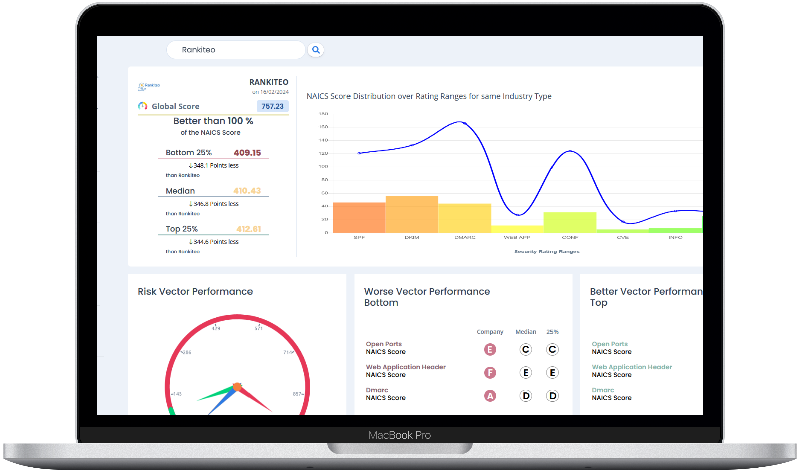
According to Rankiteo, Preservation Virginia’s AI-generated cybersecurity score is 763, reflecting their Fair security posture.
According to Rankiteo, Preservation Virginia currently holds 0 security badges, indicating that no recognized compliance certifications are currently verified for the organization.
According to Rankiteo, Preservation Virginia has not been affected by any supply chain cyber incidents, and no incident IDs are currently listed for the organization.
According to Rankiteo, Preservation Virginia is not certified under SOC 2 Type 1.
According to Rankiteo, Preservation Virginia does not hold a SOC 2 Type 2 certification.
According to Rankiteo, Preservation Virginia is not listed as GDPR compliant.
According to Rankiteo, Preservation Virginia does not currently maintain PCI DSS compliance.
According to Rankiteo, Preservation Virginia is not compliant with HIPAA regulations.
According to Rankiteo,Preservation Virginia is not certified under ISO 27001, indicating the absence of a formally recognized information security management framework.
Preservation Virginia operates primarily in the Museums, Historical Sites, and Zoos industry.
Preservation Virginia employs approximately 81 people worldwide.
Preservation Virginia presently has no subsidiaries across any sectors.
Preservation Virginia’s official LinkedIn profile has approximately 1,810 followers.
Preservation Virginia is classified under the NAICS code 712, which corresponds to Museums, Historical Sites, and Similar Institutions.
No, Preservation Virginia does not have a profile on Crunchbase.
Yes, Preservation Virginia maintains an official LinkedIn profile, which is actively utilized for branding and talent engagement, which can be accessed here: https://www.linkedin.com/company/preservation-virginia.
As of January 22, 2026, Rankiteo reports that Preservation Virginia has not experienced any cybersecurity incidents.
Preservation Virginia has an estimated 2,178 peer or competitor companies worldwide.
Total Incidents: According to Rankiteo, Preservation Virginia has faced 0 incidents in the past.
Incident Types: The types of cybersecurity incidents that have occurred include .
.png)
Backstage is an open framework for building developer portals, and @backstage/backend-defaults provides the default implementations and setup for a standard Backstage backend app. Prior to versions 0.12.2, 0.13.2, 0.14.1, and 0.15.0, the `FetchUrlReader` component, used by the catalog and other plugins to fetch content from URLs, followed HTTP redirects automatically. This allowed an attacker who controls a host listed in `backend.reading.allow` to redirect requests to internal or sensitive URLs that are not on the allowlist, bypassing the URL allowlist security control. This is a Server-Side Request Forgery (SSRF) vulnerability that could allow access to internal resources, but it does not allow attackers to include additional request headers. This vulnerability is fixed in `@backstage/backend-defaults` version 0.12.2, 0.13.2, 0.14.1, and 0.15.0. Users should upgrade to this version or later. Some workarounds are available. Restrict `backend.reading.allow` to only trusted hosts that you control and that do not issue redirects, ensure allowed hosts do not have open redirect vulnerabilities, and/or use network-level controls to block access from Backstage to sensitive internal endpoints.
Backstage is an open framework for building developer portals, and @backstage/cli-common provides config loading functionality used by the backend and command line interface of Backstage. Prior to version 0.1.17, the `resolveSafeChildPath` utility function in `@backstage/backend-plugin-api`, which is used to prevent path traversal attacks, failed to properly validate symlink chains and dangling symlinks. An attacker could bypass the path validation via symlink chains (creating `link1 → link2 → /outside` where intermediate symlinks eventually resolve outside the allowed directory) and dangling symlinks (creating symlinks pointing to non-existent paths outside the base directory, which would later be created during file operations). This function is used by Scaffolder actions and other backend components to ensure file operations stay within designated directories. This vulnerability is fixed in `@backstage/backend-plugin-api` version 0.1.17. Users should upgrade to this version or later. Some workarounds are available. Run Backstage in a containerized environment with limited filesystem access and/or restrict template creation to trusted users.


Backstage is an open framework for building developer portals. Multiple Scaffolder actions and archive extraction utilities were vulnerable to symlink-based path traversal attacks. An attacker with access to create and execute Scaffolder templates could exploit symlinks to read arbitrary files via the `debug:log` action by creating a symlink pointing to sensitive files (e.g., `/etc/passwd`, configuration files, secrets); delete arbitrary files via the `fs:delete` action by creating symlinks pointing outside the workspace, and write files outside the workspace via archive extraction (tar/zip) containing malicious symlinks. This affects any Backstage deployment where users can create or execute Scaffolder templates. This vulnerability is fixed in `@backstage/backend-defaults` versions 0.12.2, 0.13.2, 0.14.1, and 0.15.0; `@backstage/plugin-scaffolder-backend` versions 2.2.2, 3.0.2, and 3.1.1; and `@backstage/plugin-scaffolder-node` versions 0.11.2 and 0.12.3. Users should upgrade to these versions or later. Some workarounds are available. Follow the recommendation in the Backstage Threat Model to limit access to creating and updating templates, restrict who can create and execute Scaffolder templates using the permissions framework, audit existing templates for symlink usage, and/or run Backstage in a containerized environment with limited filesystem access.
FastAPI Api Key provides a backend-agnostic library that provides an API key system. Version 1.1.0 has a timing side-channel vulnerability in verify_key(). The method applied a random delay only on verification failures, allowing an attacker to statistically distinguish valid from invalid API keys by measuring response latencies. With enough repeated requests, an adversary could infer whether a key_id corresponds to a valid key, potentially accelerating brute-force or enumeration attacks. All users relying on verify_key() for API key authentication prior to the fix are affected. Users should upgrade to version 1.1.0 to receive a patch. The patch applies a uniform random delay (min_delay to max_delay) to all responses regardless of outcome, eliminating the timing correlation. Some workarounds are available. Add an application-level fixed delay or random jitter to all authentication responses (success and failure) before the fix is applied and/or use rate limiting to reduce the feasibility of statistical timing attacks.
The Flux Operator is a Kubernetes CRD controller that manages the lifecycle of CNCF Flux CD and the ControlPlane enterprise distribution. Starting in version 0.36.0 and prior to version 0.40.0, a privilege escalation vulnerability exists in the Flux Operator Web UI authentication code that allows an attacker to bypass Kubernetes RBAC impersonation and execute API requests with the operator's service account privileges. In order to be vulnerable, cluster admins must configure the Flux Operator with an OIDC provider that issues tokens lacking the expected claims (e.g., `email`, `groups`), or configure custom CEL expressions that can evaluate to empty values. After OIDC token claims are processed through CEL expressions, there is no validation that the resulting `username` and `groups` values are non-empty. When both values are empty, the Kubernetes client-go library does not add impersonation headers to API requests, causing them to be executed with the flux-operator service account's credentials instead of the authenticated user's limited permissions. This can result in privilege escalation, data exposure, and/or information disclosure. Version 0.40.0 patches the issue.

Get company history
Every week, Rankiteo analyzes billions of signals to give organizations a sharper, faster view of emerging risks. With deeper, more actionable intelligence at their fingertips, security teams can outpace threat actors, respond instantly to Zero-Day attacks, and dramatically shrink their risk exposure window.
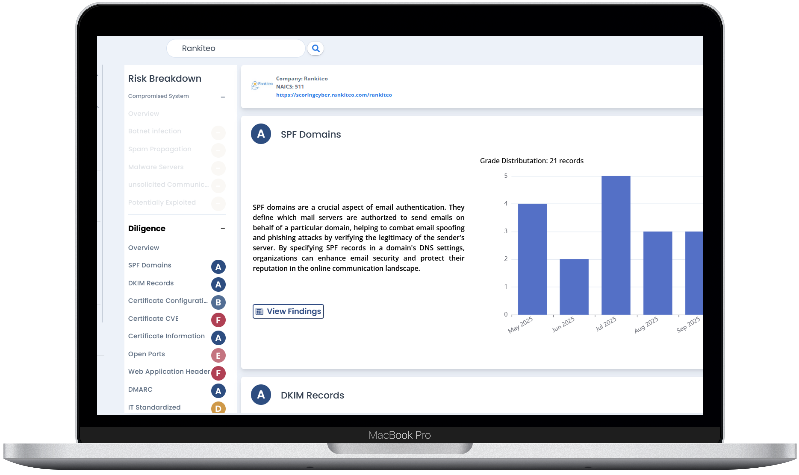
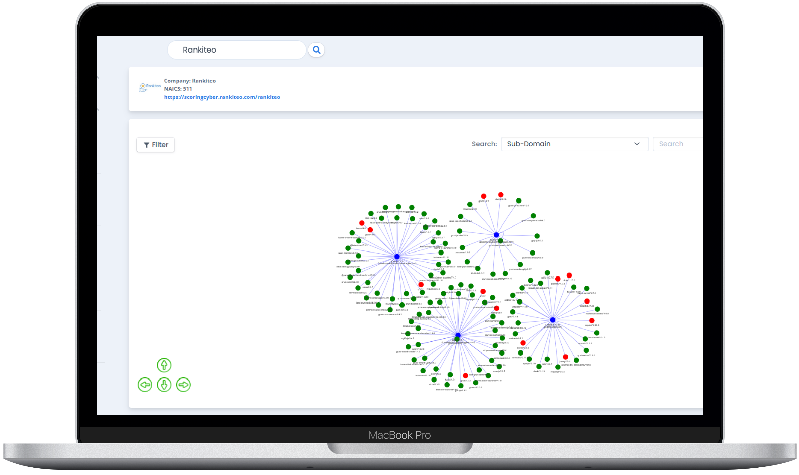
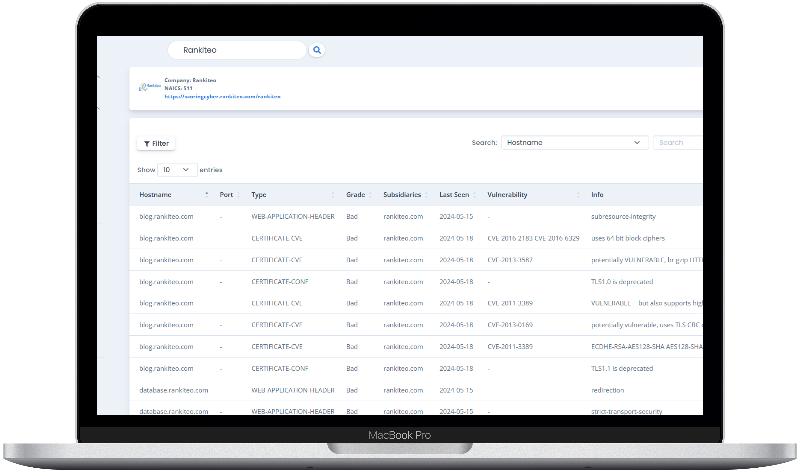
Identify exposed access points, detect misconfigured SSL certificates, and uncover vulnerabilities across the network infrastructure.
Gain visibility into the software components used within an organization to detect vulnerabilities, manage risk, and ensure supply chain security.
Monitor and manage all IT assets and their configurations to ensure accurate, real-time visibility across the company's technology environment.
Leverage real-time insights on active threats, malware campaigns, and emerging vulnerabilities to proactively defend against evolving cyberattacks.