






AMSE
Company Details
Linkedin ID:
american-museum-of-science-and-energy
Website:
Employees number:
21
Number of followers:
237
NAICS:
712
Industry Type:
Homepage:
amse.org
IP Addresses:
0
Company ID:
AME_1336071
Scan Status:
In-progress


American Museum of Science and Energy Company CyberSecurity Posture
amse.org


The American Museum of Science and Energy, AMSE, was opened in conjunction with the opening of the gates to Oak Ridge, the secret city that was built to enrich uranium for the bomb dropped on Hiroshima during WWII. The museum tells the history of Oak Ridge's role during the Manhattan Project.
Company Details
american-museum-of-science-and-energy
21
237
712
amse.org
0
AME_1336071
In-progress
 AMSE Risk Score (AI oriented)
Between 750 and 799
 AMSE Global Score (TPRM)
XXXX


No incidents recorded for American Museum of Science and Energy in 2026.
No incidents recorded for American Museum of Science and Energy in 2026.
No incidents recorded for American Museum of Science and Energy in 2026.
AMSE cyber incidents detection timeline including parent company and subsidiaries

The American Museum of Science and Energy, AMSE, was opened in conjunction with the opening of the gates to Oak Ridge, the secret city that was built to enrich uranium for the bomb dropped on Hiroshima during WWII. The museum tells the history of Oak Ridge's role during the Manhattan Project.


Service over self has been the foundation of the American spirit from the very beginning. In countless ways, large and small, that spirit of service is renewed and revealed every day wherever Americans commit themselves to help others. Now, perhaps more than ever, we need a place to tell the story

The Israel Museum, Jerusalem, is Israel’s foremost cultural institution and one of the world’s leading encyclopaedic museums. Founded in 1965, the Museum’s terraced 20-acre campus houses a wide-ranging collection of art and archaeology of world-class status. Its holdings include the world’s most c

Salisbury House & Gardens is a historic house museum located in Des Moines, Iowa featuring a 42-room estate surrounded by nine acres of beautiful gardens and serene woodlands. The exquisite Tudor estate was built from 1923-1928 by cosmetic magnate, Carl Weeks, and his wife Edith as their family hom

The Historical & Cultural Society of Clay County collects, preserves, and presents the history and culture of Clay County and the region. HCSCC also provides interpretation of the Hjemkomst Viking Ship, Hopperstad Stave Church Replica, and Red River Valley Exhibition and hosts traveling exhibits in

Es socia fundadora de K6 Gestión Cultural, desde 1989. A lo largo de su trayectoria profesional ha participado en numerosos proyectos relacionados con la creación/gestión de museos, realización de exposiciones, didáctica y comunicación museal. Además, ha tomado parte como museóloga en equipos plur

Boston Cyberarts, Inc. is a non-profit arts organization created to foster, develop and present a wide spectrum of media arts including electronic and digital experimental arts programming. We exhibit and promote the media and digital arts of Boston, New England and the world to audiences in the Ne

At 1220 Exhibits, we specialize in transforming creative visions into immersive, real-world experiences. Whether it’s a museum exhibit, branded environment, or interactive activation, we’re the trusted fabrication partner for designers, institutions, and agencies across the country. With over 50 ye

The Onassis Foundation USA, a non-profit organization established in 1999 and an affiliate of the parent Foundation in Greece, is committed to the promotion of Greek culture. By cooperating with educational and cultural institutions in Greece and throughout the Americas, the Onassis Foundation USA p

Leer op avontuurlijke wijze de geschiedenis van Amsterdam en de grachten kennen. Het Grachtenmuseum is gevestigd in een zeventiende-eeuws grachtenhuis aan de Herengracht, met klassieke stijlkamers, een vaste multimediale tour, een grachtentuin en wisselende tentoonstellingen. The museum is situate
.png)
When it comes to virtual safety, Scouting America leaders in Dayton and beyond want young people to be prepared.
Visitors to the former Oak Ridge Gaseous Diffusion Plant can view the footprint of what was once the world's largest building from a new...
CPS Energy declined to share details about its cybersecurity efforts, due to its critical and private nature.
The U.S. Department of Energy was created in 1977 by merging two agencies with different missions: the Atomic Energy Commission,...
The U.S. Department of Energy's mission is to ensure America's security and prosperity by addressing its energy, environmental, and nuclear challenges...
Amy Snyder Fitzgerald serves as a Senior Manager for the city of Oak Ridge, Tennessee. As the Government Affairs and Information Services Director,...
A museum in the facility tells the story of the BONUS as a combined effort of the US Atomic Energy Commission and Puerto Rico Water Resources Authority.
Explore exciting careers at Idaho National Laboratory and join a team dedicated to changing the world's energy future.
Dr. Clark is a foreign affairs officer in the Bureau of Counterterrorism (CT). Her portfolio includes international critical infrastructure...

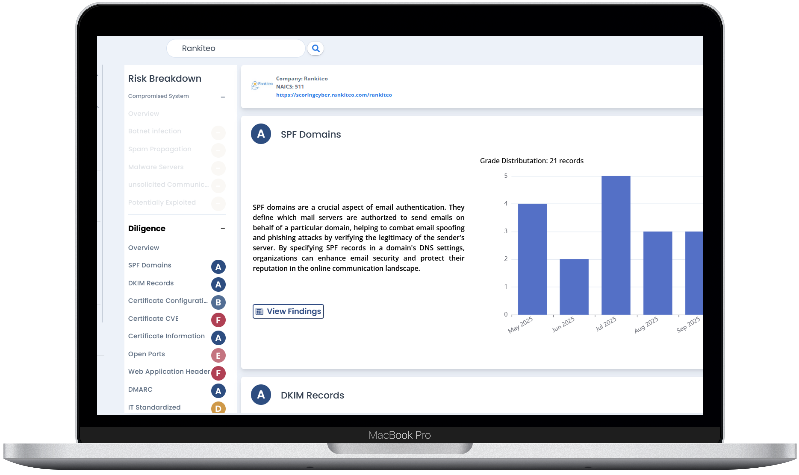
Explore insights on cybersecurity incidents, risk posture, and Rankiteo's assessments.
The official website of American Museum of Science and Energy is http://www.amse.org.
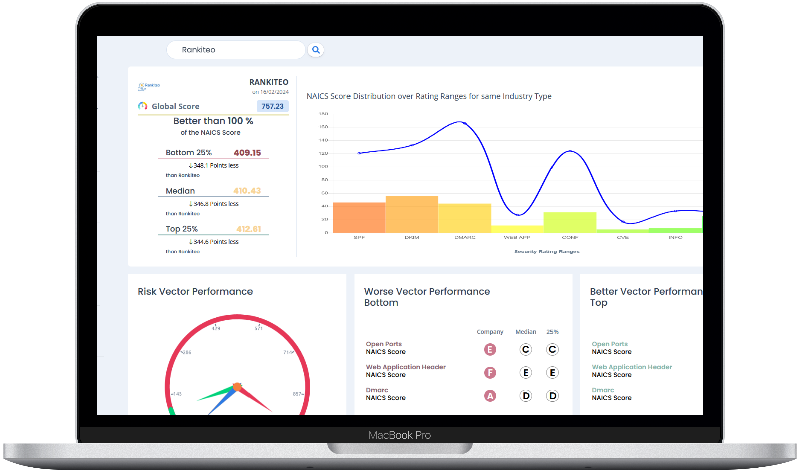
According to Rankiteo, American Museum of Science and Energy’s AI-generated cybersecurity score is 763, reflecting their Fair security posture.
According to Rankiteo, American Museum of Science and Energy currently holds 0 security badges, indicating that no recognized compliance certifications are currently verified for the organization.
According to Rankiteo, American Museum of Science and Energy has not been affected by any supply chain cyber incidents, and no incident IDs are currently listed for the organization.
According to Rankiteo, American Museum of Science and Energy is not certified under SOC 2 Type 1.
According to Rankiteo, American Museum of Science and Energy does not hold a SOC 2 Type 2 certification.
According to Rankiteo, American Museum of Science and Energy is not listed as GDPR compliant.
According to Rankiteo, American Museum of Science and Energy does not currently maintain PCI DSS compliance.
According to Rankiteo, American Museum of Science and Energy is not compliant with HIPAA regulations.
According to Rankiteo,American Museum of Science and Energy is not certified under ISO 27001, indicating the absence of a formally recognized information security management framework.
American Museum of Science and Energy operates primarily in the Museums, Historical Sites, and Zoos industry.
American Museum of Science and Energy employs approximately 21 people worldwide.
American Museum of Science and Energy presently has no subsidiaries across any sectors.
American Museum of Science and Energy’s official LinkedIn profile has approximately 237 followers.
No, American Museum of Science and Energy does not have a profile on Crunchbase.
Yes, American Museum of Science and Energy maintains an official LinkedIn profile, which is actively utilized for branding and talent engagement, which can be accessed here: https://www.linkedin.com/company/american-museum-of-science-and-energy.
As of January 22, 2026, Rankiteo reports that American Museum of Science and Energy has not experienced any cybersecurity incidents.
American Museum of Science and Energy has an estimated 2,178 peer or competitor companies worldwide.
Total Incidents: According to Rankiteo, American Museum of Science and Energy has faced 0 incidents in the past.
Incident Types: The types of cybersecurity incidents that have occurred include .
.png)
Backstage is an open framework for building developer portals, and @backstage/backend-defaults provides the default implementations and setup for a standard Backstage backend app. Prior to versions 0.12.2, 0.13.2, 0.14.1, and 0.15.0, the `FetchUrlReader` component, used by the catalog and other plugins to fetch content from URLs, followed HTTP redirects automatically. This allowed an attacker who controls a host listed in `backend.reading.allow` to redirect requests to internal or sensitive URLs that are not on the allowlist, bypassing the URL allowlist security control. This is a Server-Side Request Forgery (SSRF) vulnerability that could allow access to internal resources, but it does not allow attackers to include additional request headers. This vulnerability is fixed in `@backstage/backend-defaults` version 0.12.2, 0.13.2, 0.14.1, and 0.15.0. Users should upgrade to this version or later. Some workarounds are available. Restrict `backend.reading.allow` to only trusted hosts that you control and that do not issue redirects, ensure allowed hosts do not have open redirect vulnerabilities, and/or use network-level controls to block access from Backstage to sensitive internal endpoints.
Backstage is an open framework for building developer portals, and @backstage/cli-common provides config loading functionality used by the backend and command line interface of Backstage. Prior to version 0.1.17, the `resolveSafeChildPath` utility function in `@backstage/backend-plugin-api`, which is used to prevent path traversal attacks, failed to properly validate symlink chains and dangling symlinks. An attacker could bypass the path validation via symlink chains (creating `link1 → link2 → /outside` where intermediate symlinks eventually resolve outside the allowed directory) and dangling symlinks (creating symlinks pointing to non-existent paths outside the base directory, which would later be created during file operations). This function is used by Scaffolder actions and other backend components to ensure file operations stay within designated directories. This vulnerability is fixed in `@backstage/backend-plugin-api` version 0.1.17. Users should upgrade to this version or later. Some workarounds are available. Run Backstage in a containerized environment with limited filesystem access and/or restrict template creation to trusted users.
Backstage is an open framework for building developer portals. Multiple Scaffolder actions and archive extraction utilities were vulnerable to symlink-based path traversal attacks. An attacker with access to create and execute Scaffolder templates could exploit symlinks to read arbitrary files via the `debug:log` action by creating a symlink pointing to sensitive files (e.g., `/etc/passwd`, configuration files, secrets); delete arbitrary files via the `fs:delete` action by creating symlinks pointing outside the workspace, and write files outside the workspace via archive extraction (tar/zip) containing malicious symlinks. This affects any Backstage deployment where users can create or execute Scaffolder templates. This vulnerability is fixed in `@backstage/backend-defaults` versions 0.12.2, 0.13.2, 0.14.1, and 0.15.0; `@backstage/plugin-scaffolder-backend` versions 2.2.2, 3.0.2, and 3.1.1; and `@backstage/plugin-scaffolder-node` versions 0.11.2 and 0.12.3. Users should upgrade to these versions or later. Some workarounds are available. Follow the recommendation in the Backstage Threat Model to limit access to creating and updating templates, restrict who can create and execute Scaffolder templates using the permissions framework, audit existing templates for symlink usage, and/or run Backstage in a containerized environment with limited filesystem access.
FastAPI Api Key provides a backend-agnostic library that provides an API key system. Version 1.1.0 has a timing side-channel vulnerability in verify_key(). The method applied a random delay only on verification failures, allowing an attacker to statistically distinguish valid from invalid API keys by measuring response latencies. With enough repeated requests, an adversary could infer whether a key_id corresponds to a valid key, potentially accelerating brute-force or enumeration attacks. All users relying on verify_key() for API key authentication prior to the fix are affected. Users should upgrade to version 1.1.0 to receive a patch. The patch applies a uniform random delay (min_delay to max_delay) to all responses regardless of outcome, eliminating the timing correlation. Some workarounds are available. Add an application-level fixed delay or random jitter to all authentication responses (success and failure) before the fix is applied and/or use rate limiting to reduce the feasibility of statistical timing attacks.
The Flux Operator is a Kubernetes CRD controller that manages the lifecycle of CNCF Flux CD and the ControlPlane enterprise distribution. Starting in version 0.36.0 and prior to version 0.40.0, a privilege escalation vulnerability exists in the Flux Operator Web UI authentication code that allows an attacker to bypass Kubernetes RBAC impersonation and execute API requests with the operator's service account privileges. In order to be vulnerable, cluster admins must configure the Flux Operator with an OIDC provider that issues tokens lacking the expected claims (e.g., `email`, `groups`), or configure custom CEL expressions that can evaluate to empty values. After OIDC token claims are processed through CEL expressions, there is no validation that the resulting `username` and `groups` values are non-empty. When both values are empty, the Kubernetes client-go library does not add impersonation headers to API requests, causing them to be executed with the flux-operator service account's credentials instead of the authenticated user's limited permissions. This can result in privilege escalation, data exposure, and/or information disclosure. Version 0.40.0 patches the issue.

Get company history

Every week, Rankiteo analyzes billions of signals to give organizations a sharper, faster view of emerging risks. With deeper, more actionable intelligence at their fingertips, security teams can outpace threat actors, respond instantly to Zero-Day attacks, and dramatically shrink their risk exposure window.
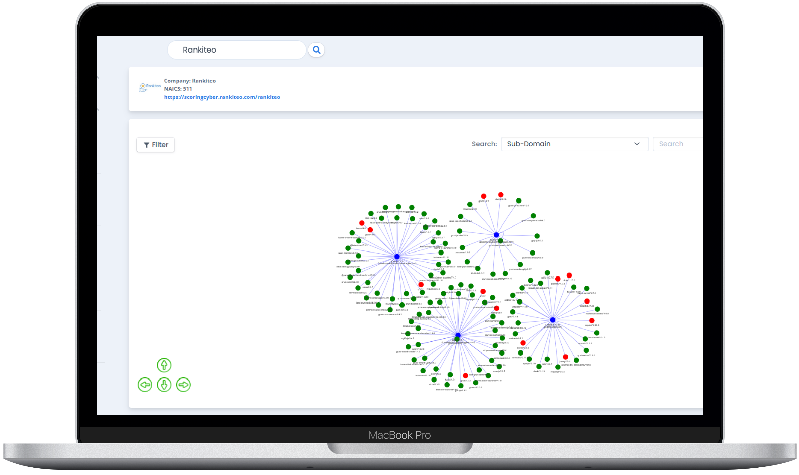
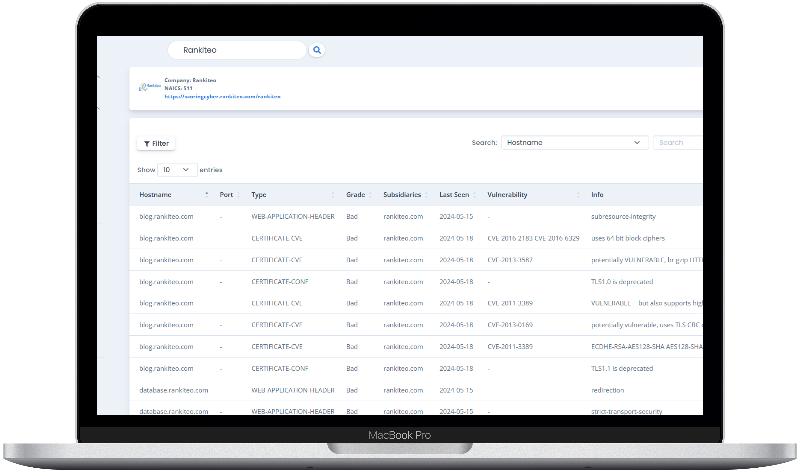
Identify exposed access points, detect misconfigured SSL certificates, and uncover vulnerabilities across the network infrastructure.
Gain visibility into the software components used within an organization to detect vulnerabilities, manage risk, and ensure supply chain security.
Monitor and manage all IT assets and their configurations to ensure accurate, real-time visibility across the company's technology environment.
Leverage real-time insights on active threats, malware campaigns, and emerging vulnerabilities to proactively defend against evolving cyberattacks.



 Rapid
Rapid