






MB
Company Details
Linkedin ID:
museum-of-the-bible
Website:
Employees number:
223
Number of followers:
8,246
NAICS:
712
Industry Type:
Homepage:
museumofthebible.org
IP Addresses:
0
Company ID:
MUS_3044222
Scan Status:
In-progress


Museum of the Bible Company CyberSecurity Posture
museumofthebible.org


Making its grand opening to the public in November 2017, Museum of the Bible’s 430,000-square-foot building is located just three blocks from the U.S. Capitol in Washington, D.C. Museum of the Bible aims to be among the most technologically advanced and engaging museums in the world. Showcasing rare and fascinating artifacts spanning 3,500 years of history, the museum offers visitors an immersive and personalized experience with the Bible, and its ongoing impact on the world around us.
Company Details
museum-of-the-bible
223
8,246
712
museumofthebible.org
0
MUS_3044222
In-progress
 MB Risk Score (AI oriented)
Between 750 and 799
 MB Global Score (TPRM)
XXXX


No incidents recorded for Museum of the Bible in 2026.
No incidents recorded for Museum of the Bible in 2026.
No incidents recorded for Museum of the Bible in 2026.
MB cyber incidents detection timeline including parent company and subsidiaries

Making its grand opening to the public in November 2017, Museum of the Bible’s 430,000-square-foot building is located just three blocks from the U.S. Capitol in Washington, D.C. Museum of the Bible aims to be among the most technologically advanced and engaging museums in the world. Showcasing rare and fascinating artifacts spanning 3,500 years of history, the museum offers visitors an immersive and personalized experience with the Bible, and its ongoing impact on the world around us.


The Museum of the American Revolution uncovers and shares compelling stories about the diverse people and complex events that sparked America’s ongoing experiment in liberty, equality, and self-government. Through the Museum’s unmatched collection, immersive galleries, powerful theater experiences,

Our mission is to inspire action on the climate crisis with programming across the arts and sciences that deepens understanding, builds connections, and advances just solutions. A growing majority of Americans worry about climate, but have remained silent and inactive. While the climate emergency

The Western Neighborhoods Project is a 501(c)3 California nonprofit organization, formed in 1999, that preserves and shares the history and culture of the neighborhoods in western San Francisco. We give history walks and talks, publish a quarterly member magazine, produce a weekly podcast, occasion

Het idee om het rijke maar bedreigde bezit van historische kerkgebouwen in de provincie Groningen in stand te houden, ontstond in 1969. Niet alleen het behoud van dit monumentale erfgoed, maar ook het wekken van belangstelling voor de rijke geschiedenis van de provincie Groningen en het Groninger la

Au cœur de la métropole bordelaise, Cap Sciences offre au public un lieu pour explorer les sciences et les techniques : expositions, animations, manifestations. En Aquitaine et au-delà, Cap Sciences propose un catalogue d'expositions itinérantes, d'ateliers découverte, de mallettes pédagogiques et d

Het Verzetsmuseum is gevestigd in gebouw Plancius, tegenover de hoofdingang van Artis. In de permanente expositie roept een decor van nagebouwde straten en wandvullende foto's de sfeer op van de oorlogsjaren. Authentieke voorwerpen, foto's, documenten, film- en geluidsfragmenten vertellen de geschie

The Museum of Life and Science is one of North Carolina’s top attractions. Situated on 84-acres, our interactive science park includes a science center, a butterfly conservatory which is one of the largest in the world and beautifully-landscaped outdoor exhibits which are safe havens for rescued bla

Our Brand: Ingenuity in manufacturing technology: Past, Present, Future Our Mission: To capture the imaginations of young and old with the spirit of innovation, problem solving and design as demonstrated through the dynamic story of the machines and the people who form the foundation and future o

Kaleideum is an interactive museum of arts, sciences, and exploration formed by the merger of The Children’s Museum of Winston-Salem and SciWorks in July 2016. The two museums merged into a single organization to reimagine learning and better meet the needs of our diverse community by providing more
.png)
Trump spoke at Washington's Museum of the Bible as his religious liberty commission helds a hearing on education.
It's Monday. Man, September is a spectacularly beautiful month. In today's issue: IN THE WHITE HOUSE The president had a lot to say at...
President Trump on Monday morning spoke to the White House Religious Liberty Commission at the Museum of the Bible in Washington, D.C. The...
Donald Trump came under fire after downplaying domestic violence during a speech at the Museum of the Bible in Washington, where he also...
President Trump will visit D.C.'s Museum of the Bible on Monday and deliver a speech underscoring the defense of religious liberty and...
The president of Hobby Lobby and chairman of the board for Museum of the Bible, Steve Green, gave an encouraging address to Regent students, faculty, and staff.
The Museum of the Bible will open a major exhibit on the Shroud of Turin on Saturday, but its top curator says the genuineness of the...
The Museum of the Bible adapted their access control system to suit the new restrictions caused by the COVID-19 pandemic, adopting a system...
The Museum of the Bible and its founder, Hobby Lobby president Steve Green, have weathered quite a bit of controversy since Green began...

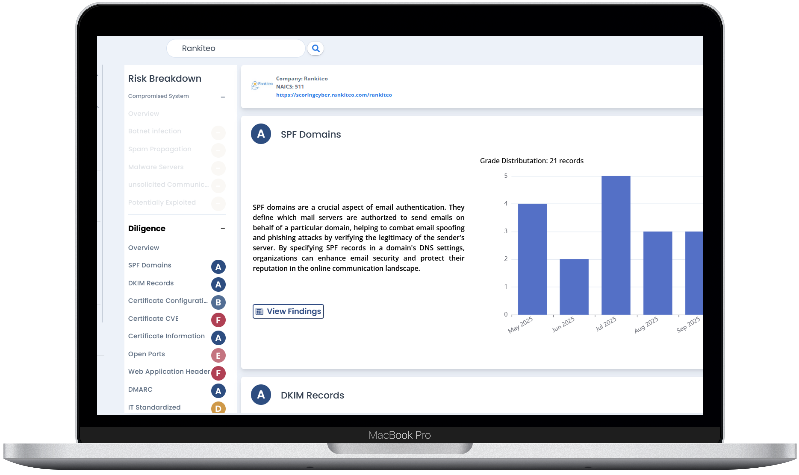
Explore insights on cybersecurity incidents, risk posture, and Rankiteo's assessments.
The official website of Museum of the Bible is http://www.museumofthebible.org.
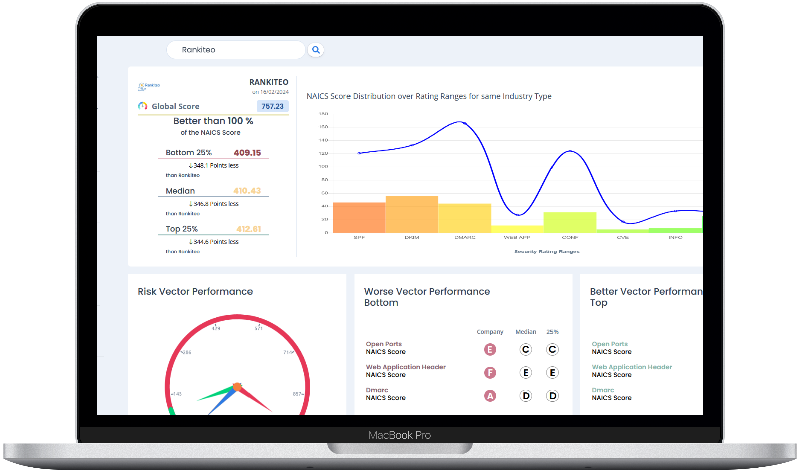
According to Rankiteo, Museum of the Bible’s AI-generated cybersecurity score is 764, reflecting their Fair security posture.
According to Rankiteo, Museum of the Bible currently holds 0 security badges, indicating that no recognized compliance certifications are currently verified for the organization.
According to Rankiteo, Museum of the Bible has not been affected by any supply chain cyber incidents, and no incident IDs are currently listed for the organization.
According to Rankiteo, Museum of the Bible is not certified under SOC 2 Type 1.
According to Rankiteo, Museum of the Bible does not hold a SOC 2 Type 2 certification.
According to Rankiteo, Museum of the Bible is not listed as GDPR compliant.
According to Rankiteo, Museum of the Bible does not currently maintain PCI DSS compliance.
According to Rankiteo, Museum of the Bible is not compliant with HIPAA regulations.
According to Rankiteo,Museum of the Bible is not certified under ISO 27001, indicating the absence of a formally recognized information security management framework.
Museum of the Bible operates primarily in the Museums, Historical Sites, and Zoos industry.
Museum of the Bible employs approximately 223 people worldwide.
Museum of the Bible presently has no subsidiaries across any sectors.
Museum of the Bible’s official LinkedIn profile has approximately 8,246 followers.
Museum of the Bible is classified under the NAICS code 712, which corresponds to Museums, Historical Sites, and Similar Institutions.
No, Museum of the Bible does not have a profile on Crunchbase.
Yes, Museum of the Bible maintains an official LinkedIn profile, which is actively utilized for branding and talent engagement, which can be accessed here: https://www.linkedin.com/company/museum-of-the-bible.
As of January 23, 2026, Rankiteo reports that Museum of the Bible has not experienced any cybersecurity incidents.
Museum of the Bible has an estimated 2,178 peer or competitor companies worldwide.
Total Incidents: According to Rankiteo, Museum of the Bible has faced 0 incidents in the past.
Incident Types: The types of cybersecurity incidents that have occurred include .
.png)
Backstage is an open framework for building developer portals, and @backstage/backend-defaults provides the default implementations and setup for a standard Backstage backend app. Prior to versions 0.12.2, 0.13.2, 0.14.1, and 0.15.0, the `FetchUrlReader` component, used by the catalog and other plugins to fetch content from URLs, followed HTTP redirects automatically. This allowed an attacker who controls a host listed in `backend.reading.allow` to redirect requests to internal or sensitive URLs that are not on the allowlist, bypassing the URL allowlist security control. This is a Server-Side Request Forgery (SSRF) vulnerability that could allow access to internal resources, but it does not allow attackers to include additional request headers. This vulnerability is fixed in `@backstage/backend-defaults` version 0.12.2, 0.13.2, 0.14.1, and 0.15.0. Users should upgrade to this version or later. Some workarounds are available. Restrict `backend.reading.allow` to only trusted hosts that you control and that do not issue redirects, ensure allowed hosts do not have open redirect vulnerabilities, and/or use network-level controls to block access from Backstage to sensitive internal endpoints.
Backstage is an open framework for building developer portals, and @backstage/cli-common provides config loading functionality used by the backend and command line interface of Backstage. Prior to version 0.1.17, the `resolveSafeChildPath` utility function in `@backstage/backend-plugin-api`, which is used to prevent path traversal attacks, failed to properly validate symlink chains and dangling symlinks. An attacker could bypass the path validation via symlink chains (creating `link1 → link2 → /outside` where intermediate symlinks eventually resolve outside the allowed directory) and dangling symlinks (creating symlinks pointing to non-existent paths outside the base directory, which would later be created during file operations). This function is used by Scaffolder actions and other backend components to ensure file operations stay within designated directories. This vulnerability is fixed in `@backstage/backend-plugin-api` version 0.1.17. Users should upgrade to this version or later. Some workarounds are available. Run Backstage in a containerized environment with limited filesystem access and/or restrict template creation to trusted users.
Backstage is an open framework for building developer portals. Multiple Scaffolder actions and archive extraction utilities were vulnerable to symlink-based path traversal attacks. An attacker with access to create and execute Scaffolder templates could exploit symlinks to read arbitrary files via the `debug:log` action by creating a symlink pointing to sensitive files (e.g., `/etc/passwd`, configuration files, secrets); delete arbitrary files via the `fs:delete` action by creating symlinks pointing outside the workspace, and write files outside the workspace via archive extraction (tar/zip) containing malicious symlinks. This affects any Backstage deployment where users can create or execute Scaffolder templates. This vulnerability is fixed in `@backstage/backend-defaults` versions 0.12.2, 0.13.2, 0.14.1, and 0.15.0; `@backstage/plugin-scaffolder-backend` versions 2.2.2, 3.0.2, and 3.1.1; and `@backstage/plugin-scaffolder-node` versions 0.11.2 and 0.12.3. Users should upgrade to these versions or later. Some workarounds are available. Follow the recommendation in the Backstage Threat Model to limit access to creating and updating templates, restrict who can create and execute Scaffolder templates using the permissions framework, audit existing templates for symlink usage, and/or run Backstage in a containerized environment with limited filesystem access.
FastAPI Api Key provides a backend-agnostic library that provides an API key system. Version 1.1.0 has a timing side-channel vulnerability in verify_key(). The method applied a random delay only on verification failures, allowing an attacker to statistically distinguish valid from invalid API keys by measuring response latencies. With enough repeated requests, an adversary could infer whether a key_id corresponds to a valid key, potentially accelerating brute-force or enumeration attacks. All users relying on verify_key() for API key authentication prior to the fix are affected. Users should upgrade to version 1.1.0 to receive a patch. The patch applies a uniform random delay (min_delay to max_delay) to all responses regardless of outcome, eliminating the timing correlation. Some workarounds are available. Add an application-level fixed delay or random jitter to all authentication responses (success and failure) before the fix is applied and/or use rate limiting to reduce the feasibility of statistical timing attacks.
The Flux Operator is a Kubernetes CRD controller that manages the lifecycle of CNCF Flux CD and the ControlPlane enterprise distribution. Starting in version 0.36.0 and prior to version 0.40.0, a privilege escalation vulnerability exists in the Flux Operator Web UI authentication code that allows an attacker to bypass Kubernetes RBAC impersonation and execute API requests with the operator's service account privileges. In order to be vulnerable, cluster admins must configure the Flux Operator with an OIDC provider that issues tokens lacking the expected claims (e.g., `email`, `groups`), or configure custom CEL expressions that can evaluate to empty values. After OIDC token claims are processed through CEL expressions, there is no validation that the resulting `username` and `groups` values are non-empty. When both values are empty, the Kubernetes client-go library does not add impersonation headers to API requests, causing them to be executed with the flux-operator service account's credentials instead of the authenticated user's limited permissions. This can result in privilege escalation, data exposure, and/or information disclosure. Version 0.40.0 patches the issue.

Get company history

Every week, Rankiteo analyzes billions of signals to give organizations a sharper, faster view of emerging risks. With deeper, more actionable intelligence at their fingertips, security teams can outpace threat actors, respond instantly to Zero-Day attacks, and dramatically shrink their risk exposure window.
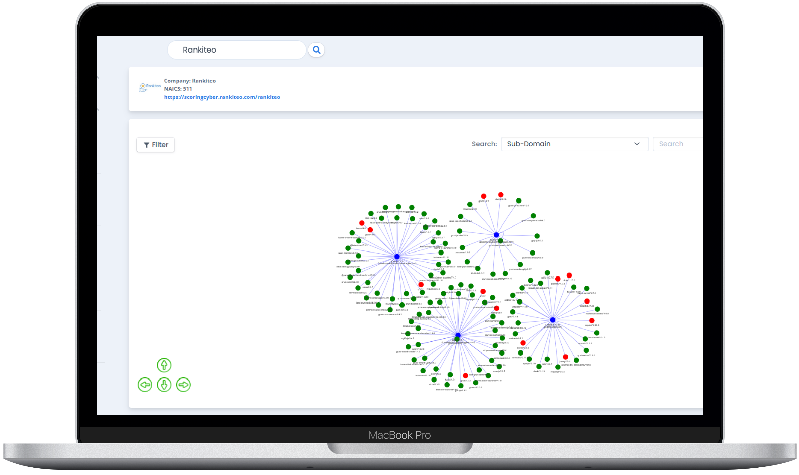
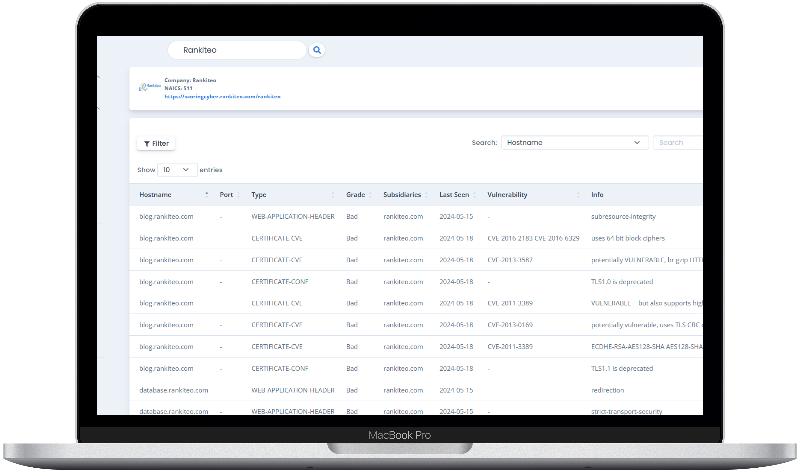
Identify exposed access points, detect misconfigured SSL certificates, and uncover vulnerabilities across the network infrastructure.
Gain visibility into the software components used within an organization to detect vulnerabilities, manage risk, and ensure supply chain security.
Monitor and manage all IT assets and their configurations to ensure accurate, real-time visibility across the company's technology environment.
Leverage real-time insights on active threats, malware campaigns, and emerging vulnerabilities to proactively defend against evolving cyberattacks.



 Rapid
Rapid