






CBH
Company Details
Linkedin ID:
dekalb-community-service-board
Website:
Employees number:
312
Number of followers:
1,539
NAICS:
62133
Industry Type:
Homepage:
claratel.org
IP Addresses:
0
Company ID:
CLA_6995031
Scan Status:
In-progress

Claratel Behavioral Health Company CyberSecurity Posture
claratel.org


Claratel Behavioral Health is an innovative, community-based behavioral health and developmental disabilities services organization located in Atlanta, Georgia. We offer a full range of mental health services, developmental disabilities programs, and substance use disorder services to underserved individuals serving over 10,000 clients annually. As a public, not-for-profit organization, the Claratel Behavioral Health operates more than 20 locations in DeKalb County with an annual budget of $31M and a diverse workforce of 500+ direct-care and support staff. Our staff of physicians, nurses, clinicians and support personnel is dedicated to helping our clients and their families recover from these debilitating disabilities and resume productive lives. We strive to provide the highest quality, evidence-based services in the least restrictive settings and we envision a community in which disabilities no longer limit potential. Claratel Behavioral Health is accredited by the Commission on Accreditation of Rehabilitation Facilities (CARF).
Company Details
dekalb-community-service-board
312
1,539
62133
claratel.org
0
CLA_6995031
In-progress
 CBH Risk Score (AI oriented)
Between 750 and 799
 CBH Global Score (TPRM)
XXXX


No incidents recorded for Claratel Behavioral Health in 2026.
No incidents recorded for Claratel Behavioral Health in 2026.
No incidents recorded for Claratel Behavioral Health in 2026.
CBH cyber incidents detection timeline including parent company and subsidiaries
Claratel Behavioral Health is an innovative, community-based behavioral health and developmental disabilities services organization located in Atlanta, Georgia. We offer a full range of mental health services, developmental disabilities programs, and substance use disorder services to underserved individuals serving over 10,000 clients annually. As a public, not-for-profit organization, the Claratel Behavioral Health operates more than 20 locations in DeKalb County with an annual budget of $31M and a diverse workforce of 500+ direct-care and support staff. Our staff of physicians, nurses, clinicians and support personnel is dedicated to helping our clients and their families recover from these debilitating disabilities and resume productive lives. We strive to provide the highest quality, evidence-based services in the least restrictive settings and we envision a community in which disabilities no longer limit potential. Claratel Behavioral Health is accredited by the Commission on Accreditation of Rehabilitation Facilities (CARF).

BH Link is a behavioral health facility designed to provide immediate assistance to a person in crisis by providing innovative crisis intervention services, and connecting people to ongoing treatment and care. Services are provided by our professional team of registered nurses, counselors, psychia

Great Life Mentoring provides volunteer-based mentoring for children from low-resource families receiving outpatient mental health care. The program aims to provide stability and reduce isolation for the children through engagement in positive community activities with the one- to-one support and co

Call: 630-409-9700 Naperville Clinical Services provides a comprehensive array of services that address a wide variety of needs. Conveniently located next to Neuqua Valley High School on 95th Street in Naperville, we offer day, evening and weekend appointments. Working together, the team at Naper

Yellowstone Boys and Girls Ranch (YBGR) has been preparing youth for life since 1957. Today, we serve nearly 4,000 children annually, providing a seamless continuum of mental health care. Our services span: - Community-based programming across Montana - Therapeutic group home support in Billings,
Founded in 1955 and located on a 30-acre campus in Sellersville, Pennsylvania, Penn Foundation is a not-for-profit organization providing innovative services that address the mental health, substance use, and intellectual disability needs of our community. Through a broad range of diverse programs

River Crest is a modern 80-bed acute care hospital, specializing in the treatment of mental health and substance abuse issues that can afflict persons of all ages, from children and adolescents to adults. Our continuum of care includes evaluation, crisis stabilization, treatment, education, preventi

Threshold is a private, non-profit organization providing a comprehensive array of Employment and Training, Behavioral Health, and Community Support Services for persons experiencing mental, physical, developmental, and emotional challenges. Incorporated in 1965, Threshold began by providing comm
Genesee Lake School is a nationally recognized school dedicated to improving the lives of children, adolescents, and young adults with developmental disabilities, mental health disorders, neurological disorders, or emotional disturbances. In addition, we offer specialized programs for students with

Samen Wij zijn er voor mensen. Wij staan voor gelijkwaardigheid. Je kunt op ons vertrouwen en we zijn transparant over onze aanpak. Wat iemand zelf wil of aangeeft, staat voorop in de begeleiding. Wij luisteren goed en zijn toegewijd. Samen stellen we doelen. Samen proberen we die te bereiken. Keten
.png)
Andover – U.S. Senator Roger Marshall, M.D. (R-Kansas), Kansas Community Colleges, and the Kansas National Guard will sign a proclamation...
Dave Treat, Pearson's chief technology officer, highlighted the difficulty of ensuring AI agents are not easily fooled by tactics that trick...
AiStrike, a cybersecurity company focused on artificial intelligence-native cyber defense, has raised $7 million in seed funding to enhance...
The HELP Committee advanced a bipartisan bill to enhance cybersecurity for rural hospitals, led by S.
Claroty Ltd., a startup that helps companies protect their industrial equipment from hackers, has secured $150 million in new funding.
Quantum computing poses risks, including the ability to break encryption. That's why Surfshark is preparing.
What does leadership look like when you don't have direct authority, only influence? Fernanda Silva shares how ambition, trust,...
PRNewswire/ -- A securities class action lawsuit, filed in the wake of an announcement by F5, Inc. (NASDAQ: FFIV) that it experienced a...

Explore insights on cybersecurity incidents, risk posture, and Rankiteo's assessments.
The official website of Claratel Behavioral Health is http://www.claratel.org.
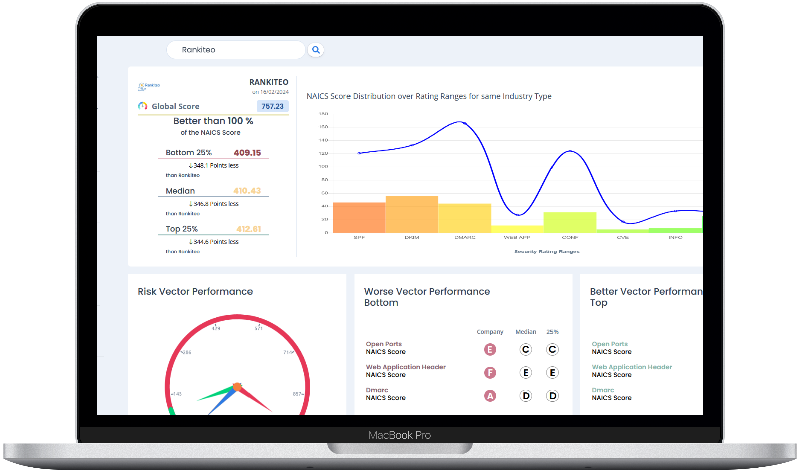
According to Rankiteo, Claratel Behavioral Health’s AI-generated cybersecurity score is 757, reflecting their Fair security posture.
According to Rankiteo, Claratel Behavioral Health currently holds 0 security badges, indicating that no recognized compliance certifications are currently verified for the organization.
According to Rankiteo, Claratel Behavioral Health has not been affected by any supply chain cyber incidents, and no incident IDs are currently listed for the organization.
According to Rankiteo, Claratel Behavioral Health is not certified under SOC 2 Type 1.
According to Rankiteo, Claratel Behavioral Health does not hold a SOC 2 Type 2 certification.
According to Rankiteo, Claratel Behavioral Health is not listed as GDPR compliant.
According to Rankiteo, Claratel Behavioral Health does not currently maintain PCI DSS compliance.
According to Rankiteo, Claratel Behavioral Health is not compliant with HIPAA regulations.
According to Rankiteo,Claratel Behavioral Health is not certified under ISO 27001, indicating the absence of a formally recognized information security management framework.
Claratel Behavioral Health operates primarily in the Mental Health Care industry.
Claratel Behavioral Health employs approximately 312 people worldwide.
Claratel Behavioral Health presently has no subsidiaries across any sectors.
Claratel Behavioral Health’s official LinkedIn profile has approximately 1,539 followers.
Claratel Behavioral Health is classified under the NAICS code 62133, which corresponds to Offices of Mental Health Practitioners (except Physicians).
No, Claratel Behavioral Health does not have a profile on Crunchbase.
Yes, Claratel Behavioral Health maintains an official LinkedIn profile, which is actively utilized for branding and talent engagement, which can be accessed here: https://www.linkedin.com/company/dekalb-community-service-board.
As of January 23, 2026, Rankiteo reports that Claratel Behavioral Health has not experienced any cybersecurity incidents.
Claratel Behavioral Health has an estimated 5,281 peer or competitor companies worldwide.
Total Incidents: According to Rankiteo, Claratel Behavioral Health has faced 0 incidents in the past.
Incident Types: The types of cybersecurity incidents that have occurred include .
.png)
Backstage is an open framework for building developer portals, and @backstage/backend-defaults provides the default implementations and setup for a standard Backstage backend app. Prior to versions 0.12.2, 0.13.2, 0.14.1, and 0.15.0, the `FetchUrlReader` component, used by the catalog and other plugins to fetch content from URLs, followed HTTP redirects automatically. This allowed an attacker who controls a host listed in `backend.reading.allow` to redirect requests to internal or sensitive URLs that are not on the allowlist, bypassing the URL allowlist security control. This is a Server-Side Request Forgery (SSRF) vulnerability that could allow access to internal resources, but it does not allow attackers to include additional request headers. This vulnerability is fixed in `@backstage/backend-defaults` version 0.12.2, 0.13.2, 0.14.1, and 0.15.0. Users should upgrade to this version or later. Some workarounds are available. Restrict `backend.reading.allow` to only trusted hosts that you control and that do not issue redirects, ensure allowed hosts do not have open redirect vulnerabilities, and/or use network-level controls to block access from Backstage to sensitive internal endpoints.
Backstage is an open framework for building developer portals, and @backstage/cli-common provides config loading functionality used by the backend and command line interface of Backstage. Prior to version 0.1.17, the `resolveSafeChildPath` utility function in `@backstage/backend-plugin-api`, which is used to prevent path traversal attacks, failed to properly validate symlink chains and dangling symlinks. An attacker could bypass the path validation via symlink chains (creating `link1 → link2 → /outside` where intermediate symlinks eventually resolve outside the allowed directory) and dangling symlinks (creating symlinks pointing to non-existent paths outside the base directory, which would later be created during file operations). This function is used by Scaffolder actions and other backend components to ensure file operations stay within designated directories. This vulnerability is fixed in `@backstage/backend-plugin-api` version 0.1.17. Users should upgrade to this version or later. Some workarounds are available. Run Backstage in a containerized environment with limited filesystem access and/or restrict template creation to trusted users.
Backstage is an open framework for building developer portals. Multiple Scaffolder actions and archive extraction utilities were vulnerable to symlink-based path traversal attacks. An attacker with access to create and execute Scaffolder templates could exploit symlinks to read arbitrary files via the `debug:log` action by creating a symlink pointing to sensitive files (e.g., `/etc/passwd`, configuration files, secrets); delete arbitrary files via the `fs:delete` action by creating symlinks pointing outside the workspace, and write files outside the workspace via archive extraction (tar/zip) containing malicious symlinks. This affects any Backstage deployment where users can create or execute Scaffolder templates. This vulnerability is fixed in `@backstage/backend-defaults` versions 0.12.2, 0.13.2, 0.14.1, and 0.15.0; `@backstage/plugin-scaffolder-backend` versions 2.2.2, 3.0.2, and 3.1.1; and `@backstage/plugin-scaffolder-node` versions 0.11.2 and 0.12.3. Users should upgrade to these versions or later. Some workarounds are available. Follow the recommendation in the Backstage Threat Model to limit access to creating and updating templates, restrict who can create and execute Scaffolder templates using the permissions framework, audit existing templates for symlink usage, and/or run Backstage in a containerized environment with limited filesystem access.
FastAPI Api Key provides a backend-agnostic library that provides an API key system. Version 1.1.0 has a timing side-channel vulnerability in verify_key(). The method applied a random delay only on verification failures, allowing an attacker to statistically distinguish valid from invalid API keys by measuring response latencies. With enough repeated requests, an adversary could infer whether a key_id corresponds to a valid key, potentially accelerating brute-force or enumeration attacks. All users relying on verify_key() for API key authentication prior to the fix are affected. Users should upgrade to version 1.1.0 to receive a patch. The patch applies a uniform random delay (min_delay to max_delay) to all responses regardless of outcome, eliminating the timing correlation. Some workarounds are available. Add an application-level fixed delay or random jitter to all authentication responses (success and failure) before the fix is applied and/or use rate limiting to reduce the feasibility of statistical timing attacks.
The Flux Operator is a Kubernetes CRD controller that manages the lifecycle of CNCF Flux CD and the ControlPlane enterprise distribution. Starting in version 0.36.0 and prior to version 0.40.0, a privilege escalation vulnerability exists in the Flux Operator Web UI authentication code that allows an attacker to bypass Kubernetes RBAC impersonation and execute API requests with the operator's service account privileges. In order to be vulnerable, cluster admins must configure the Flux Operator with an OIDC provider that issues tokens lacking the expected claims (e.g., `email`, `groups`), or configure custom CEL expressions that can evaluate to empty values. After OIDC token claims are processed through CEL expressions, there is no validation that the resulting `username` and `groups` values are non-empty. When both values are empty, the Kubernetes client-go library does not add impersonation headers to API requests, causing them to be executed with the flux-operator service account's credentials instead of the authenticated user's limited permissions. This can result in privilege escalation, data exposure, and/or information disclosure. Version 0.40.0 patches the issue.

Get company history

Every week, Rankiteo analyzes billions of signals to give organizations a sharper, faster view of emerging risks. With deeper, more actionable intelligence at their fingertips, security teams can outpace threat actors, respond instantly to Zero-Day attacks, and dramatically shrink their risk exposure window.
Identify exposed access points, detect misconfigured SSL certificates, and uncover vulnerabilities across the network infrastructure.
Gain visibility into the software components used within an organization to detect vulnerabilities, manage risk, and ensure supply chain security.
Monitor and manage all IT assets and their configurations to ensure accurate, real-time visibility across the company's technology environment.
Leverage real-time insights on active threats, malware campaigns, and emerging vulnerabilities to proactively defend against evolving cyberattacks.



 Rapid
Rapid