





CSGEF
Company Details
Linkedin ID:
csgef
Website:
Employees number:
6
Number of followers:
1,193
NAICS:
54172
Industry Type:
Homepage:
csgef.org
IP Addresses:
0
Company ID:
CEN_9060049
Scan Status:
In-progress
Centre for the Study of Global Economic Future (CSGEF) Company CyberSecurity Posture
csgef.org


The Center for the Study of Global Economic Futures (CSGEF) was established in Dubai, UAE in 2021, is a multidisciplinary policy research organization to scrutinize the socioeconomic and systemic forces that bear upon the future of the worldwide financial system. The aim is to offer an extraordinary methodical prospect on the socioeconomic and systemic forces that sustains the future of the global economy. We aspire to become an essential keystone for global policy makers who are interested in evaluating strategic economic reforms at work of the domestic structures of production, competition, dialogical interaction, coordination and integration with the global economy. We strive for sustainably secure, peaceful and prosperous global economic future by imparting production of quality research and anticipating, disseminating and educating by way of public policy recommendations, establishing partnerships with policy makers, research institute academic and the media, global discussion forums, and forefront scenario analysis. We have developed several research programs mentioned below: - The Future of Money, Currency Program (FMC) - Future of Economic Anthropology Program (FEA) - Future AI & Digital Economy Program (FAIDE) - Future of Global Supply Chain & Trade Program (GSC&T) - The Future of Finance Banking & Monetary Policy Program (FBM) - Future of Global Economic Security Program (GES) - The Future of Global Economic Governance Program GEG) - Program of The Future of Energy (PFE) - The Future of Knowledge & Innovation Program (KIP) - The Future of Economic Powers & Geoeconomics Program - Global, Regional and National Development Planes (GRAND) The goal is to become a knowledge reference for policy makers, conduct research that address the driving forces shaping the outlook of the international economy in the coming decades.
Company Details
csgef
6
1,193
54172
csgef.org
0
CEN_9060049
In-progress
 CSGEF Risk Score (AI oriented)
Between 700 and 749
 CSGEF Global Score (TPRM)
XXXX


No incidents recorded for Centre for the Study of Global Economic Future (CSGEF) in 2025.
No incidents recorded for Centre for the Study of Global Economic Future (CSGEF) in 2025.
No incidents recorded for Centre for the Study of Global Economic Future (CSGEF) in 2025.
CSGEF cyber incidents detection timeline including parent company and subsidiaries
The Center for the Study of Global Economic Futures (CSGEF) was established in Dubai, UAE in 2021, is a multidisciplinary policy research organization to scrutinize the socioeconomic and systemic forces that bear upon the future of the worldwide financial system. The aim is to offer an extraordinary methodical prospect on the socioeconomic and systemic forces that sustains the future of the global economy. We aspire to become an essential keystone for global policy makers who are interested in evaluating strategic economic reforms at work of the domestic structures of production, competition, dialogical interaction, coordination and integration with the global economy. We strive for sustainably secure, peaceful and prosperous global economic future by imparting production of quality research and anticipating, disseminating and educating by way of public policy recommendations, establishing partnerships with policy makers, research institute academic and the media, global discussion forums, and forefront scenario analysis. We have developed several research programs mentioned below: - The Future of Money, Currency Program (FMC) - Future of Economic Anthropology Program (FEA) - Future AI & Digital Economy Program (FAIDE) - Future of Global Supply Chain & Trade Program (GSC&T) - The Future of Finance Banking & Monetary Policy Program (FBM) - Future of Global Economic Security Program (GES) - The Future of Global Economic Governance Program GEG) - Program of The Future of Energy (PFE) - The Future of Knowledge & Innovation Program (KIP) - The Future of Economic Powers & Geoeconomics Program - Global, Regional and National Development Planes (GRAND) The goal is to become a knowledge reference for policy makers, conduct research that address the driving forces shaping the outlook of the international economy in the coming decades.


The mission of Discovery Institute is to advance a culture of purpose, creativity and innovation. The Institute is a non-profit, non-partisan organization focused on research, education, and public policy. It has a special concern for the role that science and technology play in our culture and how

The Macdonald-Laurier Institute exists to make poor public policy unacceptable in Ottawa. Since 2010, MLI has provided leading commentary, insightful analysis and high-level research on subjects that range from the ongoing debate about the sustainability of health care to Aboriginal involvement in t
Openly Disruptive is a public think tank. We engage the people creating tomorrow with public events, innovative content, open innovation platforms and private consulting. We believe solutions to our biggest challenges and opportunities come from collaboration around open technology, lean and agi

AidData is a leading research lab at William & Mary helping decision makers to understand the impacts of foreign policies and overseas investments. We prioritize working in areas where our expertise can have an outsized impact: data-poor environments where there is an unmet need for better evidence

Policymaking should be driven by those with the most at stake in our policy decisions. Next100 is trying to make that happen. Next100 is a startup think tank created for—and by—the next generation of policy leaders. We envision a future in which the policy space is inclusive of and driven by a diver

Pew Research Center is a nonpartisan fact tank that informs the public about the issues, attitudes and trends shaping the world. It conducts public opinion polling, demographic research, media content analysis and other empirical social science research. Pew Research does not take policy positions.
.png)
Franchise restaurants may have started with humble origins – a cash register, a fryer, and a hot grill – but today they are fast-moving...
Italian cybersecurity startup Exein SpA said Thursday that it has raised €100 million ($117 million) from a consortium including J.P. Morgan...
The DP World Tour has announced a multi-year partnership extension with Fortinet, a global cybersecurity leader driving the convergence of...
The future of cybersecurity means defending everywhere. Securing IoT, cloud, and remote work requires a unified edge-to-cloud strategy.
Crypto scams keep rising despite stronger blockchains. Kerberus Cyber CTO Danor Cohen explains why users cannot protect themselves alone.
A ransomware gang has been observed exploiting the critical React2Shell vulnerability (CVE-2025-55182) to gain initial access and deploy...
Exein secured new funding to scale embedded, firmware-level cybersecurity for connected devices, supporting product development,...
Graylog, a provider of SIEM and log management solutions designed to support lean security and IT teams, has appointed Jorda (Jody) Cire as...
On October 1, the 2015 Cybersecurity Information Sharing Act (CISA 2015) silently lapsed at the beginning of the government shutdown.

Explore insights on cybersecurity incidents, risk posture, and Rankiteo's assessments.
The official website of Centre for the Study of Global Economic Future (CSGEF) is https://csgef.org/.
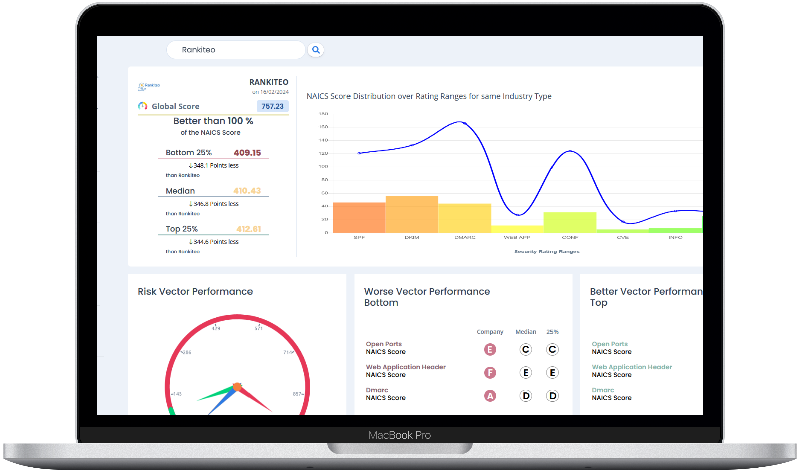
According to Rankiteo, Centre for the Study of Global Economic Future (CSGEF)’s AI-generated cybersecurity score is 748, reflecting their Moderate security posture.
According to Rankiteo, Centre for the Study of Global Economic Future (CSGEF) currently holds 0 security badges, indicating that no recognized compliance certifications are currently verified for the organization.
According to Rankiteo, Centre for the Study of Global Economic Future (CSGEF) is not certified under SOC 2 Type 1.
According to Rankiteo, Centre for the Study of Global Economic Future (CSGEF) does not hold a SOC 2 Type 2 certification.
According to Rankiteo, Centre for the Study of Global Economic Future (CSGEF) is not listed as GDPR compliant.
According to Rankiteo, Centre for the Study of Global Economic Future (CSGEF) does not currently maintain PCI DSS compliance.
According to Rankiteo, Centre for the Study of Global Economic Future (CSGEF) is not compliant with HIPAA regulations.
According to Rankiteo,Centre for the Study of Global Economic Future (CSGEF) is not certified under ISO 27001, indicating the absence of a formally recognized information security management framework.
Centre for the Study of Global Economic Future (CSGEF) operates primarily in the Think Tanks industry.
Centre for the Study of Global Economic Future (CSGEF) employs approximately 6 people worldwide.
Centre for the Study of Global Economic Future (CSGEF) presently has no subsidiaries across any sectors.
Centre for the Study of Global Economic Future (CSGEF)’s official LinkedIn profile has approximately 1,193 followers.
Centre for the Study of Global Economic Future (CSGEF) is classified under the NAICS code 54172, which corresponds to Research and Development in the Social Sciences and Humanities.
No, Centre for the Study of Global Economic Future (CSGEF) does not have a profile on Crunchbase.
Yes, Centre for the Study of Global Economic Future (CSGEF) maintains an official LinkedIn profile, which is actively utilized for branding and talent engagement, which can be accessed here: https://www.linkedin.com/company/csgef.
As of December 18, 2025, Rankiteo reports that Centre for the Study of Global Economic Future (CSGEF) has not experienced any cybersecurity incidents.
Centre for the Study of Global Economic Future (CSGEF) has an estimated 867 peer or competitor companies worldwide.
Total Incidents: According to Rankiteo, Centre for the Study of Global Economic Future (CSGEF) has faced 0 incidents in the past.
Incident Types: The types of cybersecurity incidents that have occurred include .
.png)
Zerobyte is a backup automation tool Zerobyte versions prior to 0.18.5 and 0.19.0 contain an authentication bypass vulnerability where authentication middleware is not properly applied to API endpoints. This results in certain API endpoints being accessible without valid session credentials. This is dangerous for those who have exposed Zerobyte to be used outside of their internal network. A fix has been applied in both version 0.19.0 and 0.18.5. If immediate upgrade is not possible, restrict network access to the Zerobyte instance to trusted networks only using firewall rules or network segmentation. This is only a temporary mitigation; upgrading is strongly recommended.
Open Source Point of Sale (opensourcepos) is a web based point of sale application written in PHP using CodeIgniter framework. Starting in version 3.4.0 and prior to version 3.4.2, a Cross-Site Request Forgery (CSRF) vulnerability exists in the application's filter configuration. The CSRF protection mechanism was **explicitly disabled**, allowing the application to process state-changing requests (POST) without verifying a valid CSRF token. An unauthenticated remote attacker can exploit this by hosting a malicious web page. If a logged-in administrator visits this page, their browser is forced to send unauthorized requests to the application. A successful exploit allows the attacker to silently create a new Administrator account with full privileges, leading to a complete takeover of the system and loss of confidentiality, integrity, and availability. The vulnerability has been patched in version 3.4.2. The fix re-enables the CSRF filter in `app/Config/Filters.php` and resolves associated AJAX race conditions by adjusting token regeneration settings. As a workaround, administrators can manually re-enable the CSRF filter in `app/Config/Filters.php` by uncommenting the protection line. However, this is not recommended without applying the full patch, as it may cause functionality breakage in the Sales module due to token synchronization issues.
Zed, a code editor, has an aribtrary code execution vulnerability in versions prior to 0.218.2-pre. The Zed IDE loads Model Context Protocol (MCP) configurations from the `settings.json` file located within a project’s `.zed` subdirectory. A malicious MCP configuration can contain arbitrary shell commands that run on the host system with the privileges of the user running the IDE. This can be triggered automatically without any user interaction besides opening the project in the IDE. Version 0.218.2-pre fixes the issue by implementing worktree trust mechanism. As a workaround, users should carefully review the contents of project settings files (`./zed/settings.json`) before opening new projects in Zed.
Zed, a code editor, has an aribtrary code execution vulnerability in versions prior to 0.218.2-pre. The Zed IDE loads Language Server Protocol (LSP) configurations from the `settings.json` file located within a project’s `.zed` subdirectory. A malicious LSP configuration can contain arbitrary shell commands that run on the host system with the privileges of the user running the IDE. This can be triggered when a user opens project file for which there is an LSP entry. A concerted effort by an attacker to seed a project settings file (`./zed/settings.json`) with malicious language server configurations could result in arbitrary code execution with the user's privileges if the user opens the project in Zed without reviewing the contents. Version 0.218.2-pre fixes the issue by implementing worktree trust mechanism. As a workaround, users should carefully review the contents of project settings files (`./zed/settings.json`) before opening new projects in Zed.
Storybook is a frontend workshop for building user interface components and pages in isolation. A vulnerability present starting in versions 7.0.0 and prior to versions 7.6.21, 8.6.15, 9.1.17, and 10.1.10 relates to Storybook’s handling of environment variables defined in a `.env` file, which could, in specific circumstances, lead to those variables being unexpectedly bundled into the artifacts created by the `storybook build` command. When a built Storybook is published to the web, the bundle’s source is viewable, thus potentially exposing those variables to anyone with access. For a project to potentially be vulnerable to this issue, it must build the Storybook (i.e. run `storybook build` directly or indirectly) in a directory that contains a `.env` file (including variants like `.env.local`) and publish the built Storybook to the web. Storybooks built without a `.env` file at build time are not affected, including common CI-based builds where secrets are provided via platform environment variables rather than `.env` files. Storybook runtime environments (i.e. `storybook dev`) are not affected. Deployed applications that share a repo with your Storybook are not affected. Users should upgrade their Storybook—on both their local machines and CI environment—to version .6.21, 8.6.15, 9.1.17, or 10.1.10 as soon as possible. Maintainers additionally recommend that users audit for any sensitive secrets provided via `.env` files and rotate those keys. Some projects may have been relying on the undocumented behavior at the heart of this issue and will need to change how they reference environment variables after this update. If a project can no longer read necessary environmental variable values, either prefix the variables with `STORYBOOK_` or use the `env` property in Storybook’s configuration to manually specify values. In either case, do not include sensitive secrets as they will be included in the built bundle.

Get company history

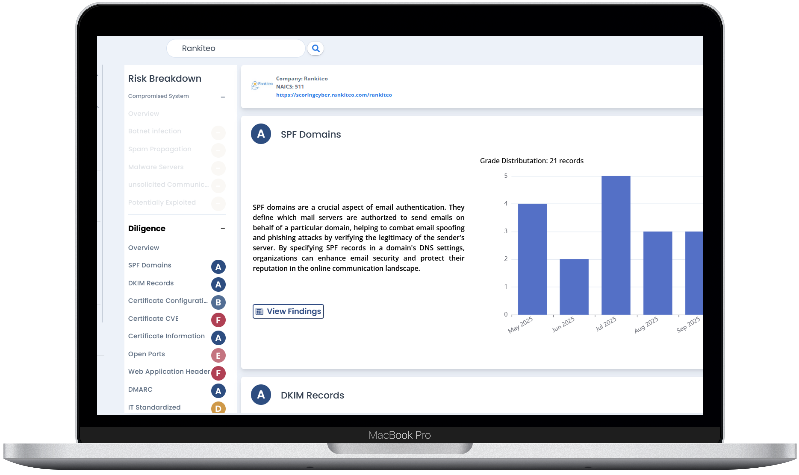
Every week, Rankiteo analyzes billions of signals to give organizations a sharper, faster view of emerging risks. With deeper, more actionable intelligence at their fingertips, security teams can outpace threat actors, respond instantly to Zero-Day attacks, and dramatically shrink their risk exposure window.
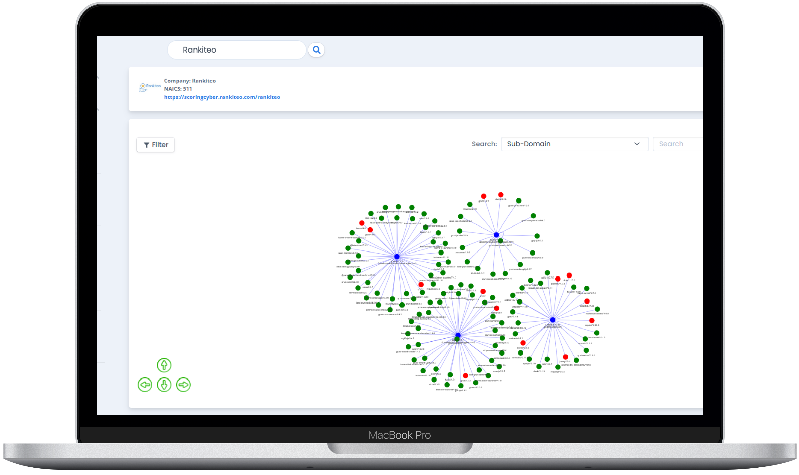
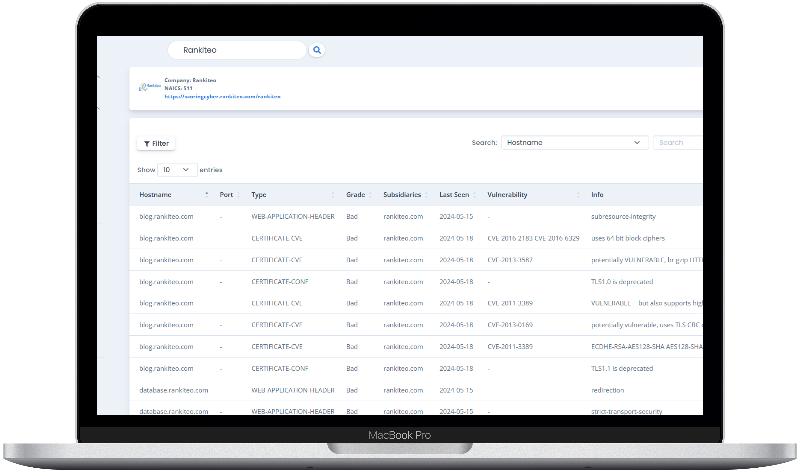
Identify exposed access points, detect misconfigured SSL certificates, and uncover vulnerabilities across the network infrastructure.
Gain visibility into the software components used within an organization to detect vulnerabilities, manage risk, and ensure supply chain security.
Monitor and manage all IT assets and their configurations to ensure accurate, real-time visibility across the company's technology environment.
Leverage real-time insights on active threats, malware campaigns, and emerging vulnerabilities to proactively defend against evolving cyberattacks.



 Rapid
Rapid