






ICL
Company Details
Linkedin ID:
centre-for-life
Website:
Employees number:
74
Number of followers:
3,749
NAICS:
712
Industry Type:
Homepage:
life.org.uk
IP Addresses:
0
Company ID:
INT_1415237
Scan Status:
In-progress


International Centre for Life Company CyberSecurity Posture
life.org.uk


The International Centre for Life (or ‘Life’ as we’re known) was founded in 2000, a pioneering science village in the heart of Newcastle upon Tyne. We are proudly independent, entrepreneurial and quirky – and we are always interested in hearing from people with the talent, drive and skills to help us continue to make a difference. Our purpose is to inspire everyone to explore and enjoy science, and to provide a world-class science hub where life enhancing engagement, research and patient treatment can thrive. Life Science Centre, which opened in May 2000, is the science centre for the North, with the North’s biggest Planetarium, too. Our varied and exciting engagement programme serves families, schools, adults, pre-schoolers and teenagers.
Company Details
centre-for-life
74
3,749
712
life.org.uk
0
INT_1415237
In-progress
 ICL Risk Score (AI oriented)
Between 750 and 799
 ICL Global Score (TPRM)
XXXX


No incidents recorded for International Centre for Life in 2026.
No incidents recorded for International Centre for Life in 2026.
No incidents recorded for International Centre for Life in 2026.
ICL cyber incidents detection timeline including parent company and subsidiaries

The International Centre for Life (or ‘Life’ as we’re known) was founded in 2000, a pioneering science village in the heart of Newcastle upon Tyne. We are proudly independent, entrepreneurial and quirky – and we are always interested in hearing from people with the talent, drive and skills to help us continue to make a difference. Our purpose is to inspire everyone to explore and enjoy science, and to provide a world-class science hub where life enhancing engagement, research and patient treatment can thrive. Life Science Centre, which opened in May 2000, is the science centre for the North, with the North’s biggest Planetarium, too. Our varied and exciting engagement programme serves families, schools, adults, pre-schoolers and teenagers.


Acting on the principle that learning is a joy, the Children’s Museum of Phoenix’s mission is to engage the minds, muscles and imaginations of children and the grown-ups who care about them. With hands-on, interactive exhibits designed for children ages birth to 10, the Museum focuses on learning th
A museum's name tells you a lot about what it treasures. You hear the name--art museum, history museum, automobile museum--and you immediately know what you'll find there: objects, rare and wonderful; encounters with the unusual; beauty for beauty's sake. The specifics differ, but in each case, the

The Print Center encourages the growth and understanding of photography and printmaking as vital contemporary arts through exhibitions, publications and educational programs. Founded in 1915 as one of the first venues in this country dedicated to the appreciation of prints, The Print Club supporte

Our company began with a simple objective: to preserve and promote access to history. As students and professionals, many encounters arose with collections that had sat neglected and suffered the unfortunate and irreversible effects of time; what could have once been prevented had become permanent.
Already recognized as a leader in inquiry-based learning, Kentucky Science Center is advancing a statewide science literacy campaign to encourage people of all ages to explore science in everyday life. Its flagship location on Louisville, KY’s historic Museum Row, welcomes visitors from across the g

American writing is distinctive, diverse, and comes in many forms from across the nation. As the only museum devoted to American writers and their works, the American Writers Museum connects visitors with their favorite authors and writings from more than five centuries while inspiring the discovery
Opened in March 1987, after the renovation of the Pythian Theater, The King Arts Complex is located on the near East side of Columbus, Ohio, in one of the oldest areas of African-American life in the city. With an additional renovation, Phase II opened in October 1989 creating a 60,000 square foot

Sealcentre Pieterburen is a science-based hospital and research centre for mainly Harbour and Grey seals. We believe in healthy seals, as bio-indicators for a healthy sea. We work as a learning community, in which volunteers, student, visitors, partners and the general public are all involved. Toget

Located on Olympia’s downtown waterfront, the Hands On Children’s Museum is the leading play-based early learning institution in the state. It is also the largest and most visited youth museum in the Pacific Northwest. The museum’s mission is to stimulate curiosity, creativity, and learning through
.png)
The alumni of the National Law School India University (NLSIU) belonging to the Cyber Law and Cyber Forensic programme will hold Cyber Vidhi...
In 2019, Gorden Cheng BS'03 presented a solo recital at UT Dallas where he played the same Steinway piano he practiced on while a student.
Today (Thursday), the National Cyber Security Centre (NCSC) – a part of GCHQ – has issued further advice to help network defenders mitigate...
The guidance includes specific examples for three critical infrastructure sectors that held workshops with CISA.
Russia has a complex system of cybersecurity agencies and laws which help to explain Russia's actions as a cyber actor.
Dr Patricia Esteve-Gonzalez from Oxford University's Global Cyber Security Capacity Centre (GCSCC), Department of Computer Science,...
Deloitte Canada has three fully-operational Cyber Intelligence Centres (CICs) in Montreal, Toronto and Calgary.
The cybersecurity landscape is becoming more complex. Yet through collaboration and innovation, cybersecurity can become a source of...
A Deloitte survey reveals that health care executives in six countries are prioritizing efficiency, productivity, and patient engagement in...

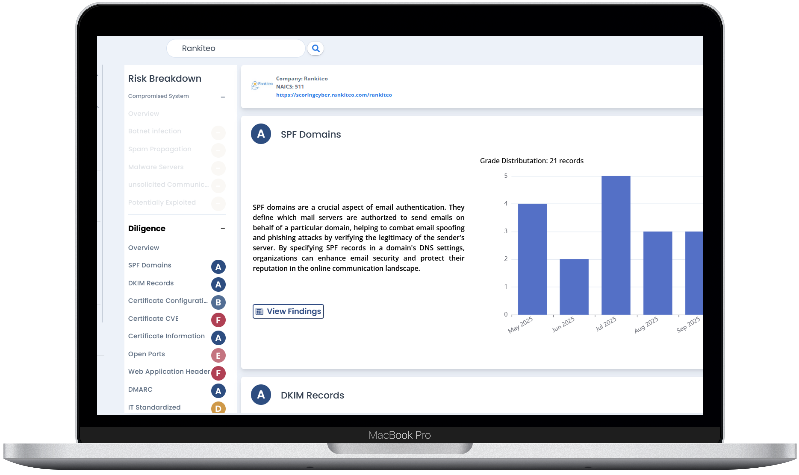
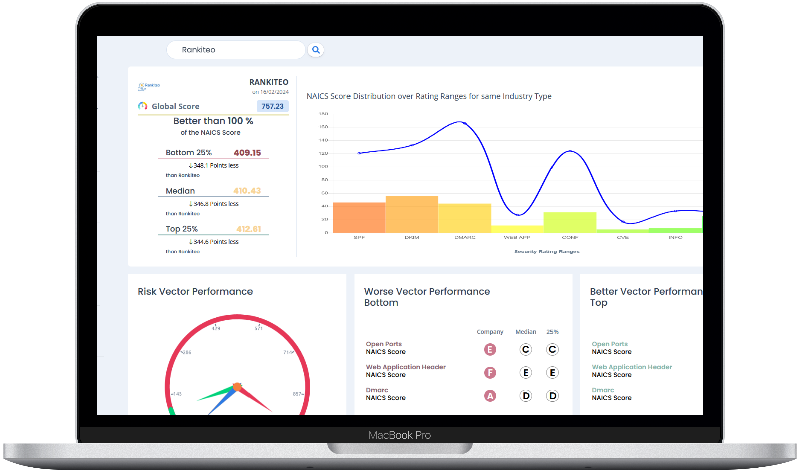
Explore insights on cybersecurity incidents, risk posture, and Rankiteo's assessments.
The official website of International Centre for Life is http://www.life.org.uk.
According to Rankiteo, International Centre for Life’s AI-generated cybersecurity score is 763, reflecting their Fair security posture.
According to Rankiteo, International Centre for Life currently holds 0 security badges, indicating that no recognized compliance certifications are currently verified for the organization.
According to Rankiteo, International Centre for Life has not been affected by any supply chain cyber incidents, and no incident IDs are currently listed for the organization.
According to Rankiteo, International Centre for Life is not certified under SOC 2 Type 1.
According to Rankiteo, International Centre for Life does not hold a SOC 2 Type 2 certification.
According to Rankiteo, International Centre for Life is not listed as GDPR compliant.
According to Rankiteo, International Centre for Life does not currently maintain PCI DSS compliance.
According to Rankiteo, International Centre for Life is not compliant with HIPAA regulations.
According to Rankiteo,International Centre for Life is not certified under ISO 27001, indicating the absence of a formally recognized information security management framework.
International Centre for Life operates primarily in the Museums, Historical Sites, and Zoos industry.
International Centre for Life employs approximately 74 people worldwide.
International Centre for Life presently has no subsidiaries across any sectors.
International Centre for Life’s official LinkedIn profile has approximately 3,749 followers.
No, International Centre for Life does not have a profile on Crunchbase.
Yes, International Centre for Life maintains an official LinkedIn profile, which is actively utilized for branding and talent engagement, which can be accessed here: https://www.linkedin.com/company/centre-for-life.
As of January 23, 2026, Rankiteo reports that International Centre for Life has not experienced any cybersecurity incidents.
International Centre for Life has an estimated 2,181 peer or competitor companies worldwide.
Total Incidents: According to Rankiteo, International Centre for Life has faced 0 incidents in the past.
Incident Types: The types of cybersecurity incidents that have occurred include .
.png)
Improper validation of specified type of input in M365 Copilot allows an unauthorized attacker to disclose information over a network.
Improper access control in Azure Front Door (AFD) allows an unauthorized attacker to elevate privileges over a network.
Azure Entra ID Elevation of Privilege Vulnerability
Moonraker is a Python web server providing API access to Klipper 3D printing firmware. In versions 0.9.3 and below, instances configured with the "ldap" component enabled are vulnerable to LDAP search filter injection techniques via the login endpoint. The 401 error response message can be used to determine whether or not a search was successful, allowing for brute force methods to discover LDAP entries on the server such as user IDs and user attributes. This issue has been fixed in version 0.10.0.
Runtipi is a Docker-based, personal homeserver orchestrator that facilitates multiple services on a single server. Versions 3.7.0 and above allow an authenticated user to execute arbitrary system commands on the host server by injecting shell metacharacters into backup filenames. The BackupManager fails to sanitize the filenames of uploaded backups. The system persists user-uploaded files directly to the host filesystem using the raw originalname provided in the request. This allows an attacker to stage a file containing shell metacharacters (e.g., $(id).tar.gz) at a predictable path, which is later referenced during the restore process. The successful storage of the file is what allows the subsequent restore command to reference and execute it. This issue has been fixed in version 4.7.0.

Get company history

Every week, Rankiteo analyzes billions of signals to give organizations a sharper, faster view of emerging risks. With deeper, more actionable intelligence at their fingertips, security teams can outpace threat actors, respond instantly to Zero-Day attacks, and dramatically shrink their risk exposure window.
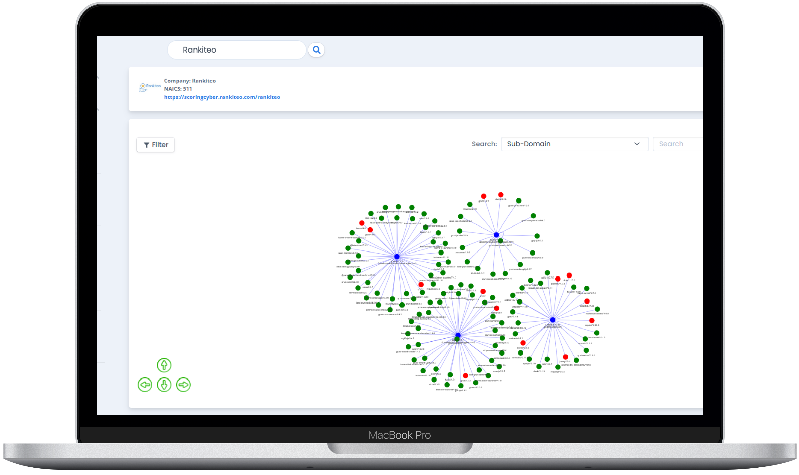
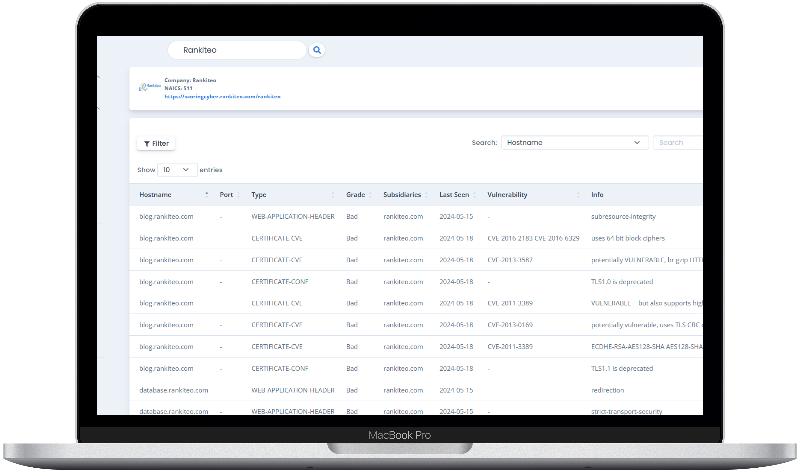
Identify exposed access points, detect misconfigured SSL certificates, and uncover vulnerabilities across the network infrastructure.
Gain visibility into the software components used within an organization to detect vulnerabilities, manage risk, and ensure supply chain security.
Monitor and manage all IT assets and their configurations to ensure accurate, real-time visibility across the company's technology environment.
Leverage real-time insights on active threats, malware campaigns, and emerging vulnerabilities to proactively defend against evolving cyberattacks.




 Rapid
Rapid