






ASC
Company Details
Linkedin ID:
arizona-science-center
Website:
Employees number:
152
Number of followers:
4,521
NAICS:
712
Industry Type:
Homepage:
azscience.org
IP Addresses:
0
Company ID:
ARI_9710526
Scan Status:
In-progress


Arizona Science Center Company CyberSecurity Posture
azscience.org


Arizona Science Center has a rich history of exploration, innovation and collaboration. Beginning as a community project of The Junior League of Phoenix in 1980, the Center has established itself as a major institution of learning for families, teachers and students and other guests. Over three decades, with substantial help from the citizens of Phoenix and years of focused content and program development, the Center has grown to serve over a half million guests annually, of which nearly 140,000 are school children. The continued growth of the Center and its close connection with the Arizona community provides a unique experience for everyone it reaches. Using an informal, hands-on approach to science exploration and inspiration the Center has more than 164,000 square-feet of space, of which 98,000 is dedicated to the exploration of our guests. Additional learning opportunities and services include outreach programs, focused field trips, camps, classes, to-the-moon and beyond presentation in the Dorrance Planetarium, immersive shows in the 5-story Irene P. Flinn Theater and featured exhibitions.
Company Details
arizona-science-center
152
4,521
712
azscience.org
0
ARI_9710526
In-progress
 ASC Risk Score (AI oriented)
Between 750 and 799
 ASC Global Score (TPRM)
XXXX


No incidents recorded for Arizona Science Center in 2026.
No incidents recorded for Arizona Science Center in 2026.
No incidents recorded for Arizona Science Center in 2026.
ASC cyber incidents detection timeline including parent company and subsidiaries

Arizona Science Center has a rich history of exploration, innovation and collaboration. Beginning as a community project of The Junior League of Phoenix in 1980, the Center has established itself as a major institution of learning for families, teachers and students and other guests. Over three decades, with substantial help from the citizens of Phoenix and years of focused content and program development, the Center has grown to serve over a half million guests annually, of which nearly 140,000 are school children. The continued growth of the Center and its close connection with the Arizona community provides a unique experience for everyone it reaches. Using an informal, hands-on approach to science exploration and inspiration the Center has more than 164,000 square-feet of space, of which 98,000 is dedicated to the exploration of our guests. Additional learning opportunities and services include outreach programs, focused field trips, camps, classes, to-the-moon and beyond presentation in the Dorrance Planetarium, immersive shows in the 5-story Irene P. Flinn Theater and featured exhibitions.

At Face to Face struggling families, individuals and the homeless are welcomed and treated with dignity and respect. Our goal is to meet basic human needs and reduce suffering; thereby assisting our guests to a better future. Face to Face offers a Dining Room, a nurse managed Health Center, a Lega

Our mission is to gather, preserve, and share the rich history of African American, Indigenous, and immigrant loggers in the Pacific Northwest. We utilize inclusive stories of multicultural logging communities to better connect the experiences of immigrants and migrants to a larger American narrativ
Mission Statement The Mattatuck Museum is a center of art and history, a gathering place that nurtures creativity and learning through transformative experiences to encourage a deeper understanding of ourselves and our heritage. Vision Statement The Mattatuck Museum will be known as a vibrant d

Hagley Museum is the former industrial site of the original black powder works of the DuPont Company, founded in Delaware in 1802 and powered by the natural resources that surrounded it. Today it is 235 acres of wooded rolling hills along the rushing Brandywine River dotted with hundreds of stone ru

Tacoma Historical Society is a volunteer-supported 501 (c) (3) charitable, nonprofit corporation, that is dedicated to the preservation, promotion and presentation of the history of the city of Tacoma, Washington and its people. Members of Tacoma Historical Society and its museum forge connections b

The National Cinema Museum in Turin is among the most important in the world for the richness of its heritage and the multiplicity of its scientific and popular activities. But what makes it truly unique is the peculiarity of its exhibition layout. The museum is housed inside the Mole Antonelliana,

Circa-1792 Blount Mansion was home to U. S. Constitution signer William Blount, appointed by President George Washington to govern the Southwest Territory, which Blount shepherded into admission to the union as our nation’s sixteenth state, Tennessee. In addition to a family home, this fine wood fra

Historic Rural Hill Inc. is a 501c-3 non-profit in Huntersville, NC that operates as a historic site, educational facility, 265 acre working farm, and event destination. Rural Hill annually hosts The Rural Hill Scottish Festival and Loch Norman Highland Games, Bark in the Park, The North Carolina Br

The New England Ski Museum is a member-supported 501(c)(3) nonprofit dedicated to the history of skiing and the 10th Mountain Division. Our mission: to collect, preserve, and share ski history—through equipment, art, and artifacts—for research, education, inspiration, and celebration. We operate t
.png)
TUCSON, Ariz. (KVOA) - Arizona Gov. Katie Hobbs is set to announce a new partnership between Pima Community College (PCC) and the Arizona...
Arizona's rise as a semiconductor powerhouse is being recognized by industry leaders, who will gather in Phoenix this week for SEMICON West,...
The U.S. National Institute of Standards and Technology (NIST) has awarded more than US$3 million to strengthen cybersecurity workforce...
Las Vegas in August is hot, loud and buzzing with neon. But inside the cavernous halls of a convention center, the real electricity came...
From studying cancer to tracking floods to improving cybersecurity in health care, three Arizona State University graduate students are...
The cybercrooks who haunt the digital shadows can use cryptocurrency to move fortunes under the radar, with no strings to hold them back.
What do pepperoni pizza, cat memes and an online dojo have in common?It turns out, these are all essential elements of a great cybersecurity...
Dr. Kamil Sarac (left) works with computer science graduate student Adithya Chintala at a meeting of students in the Computer Security Group...
The University of Arizona and the Consortium of Cybersecurity Clinics partnered with Chandler Unified School District on educational...

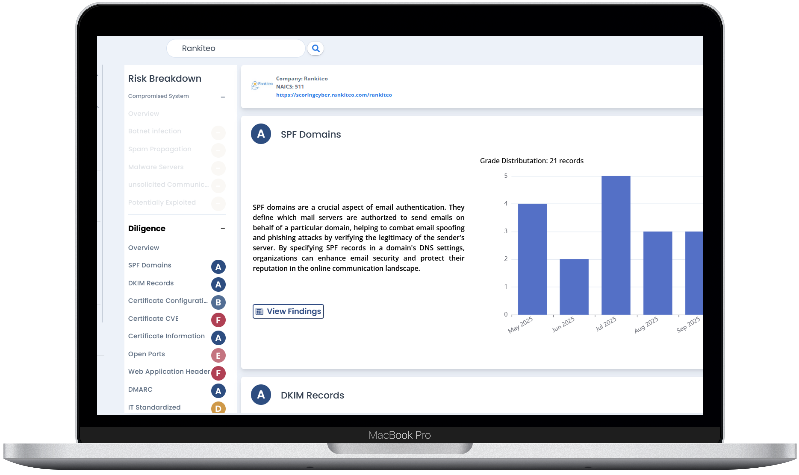
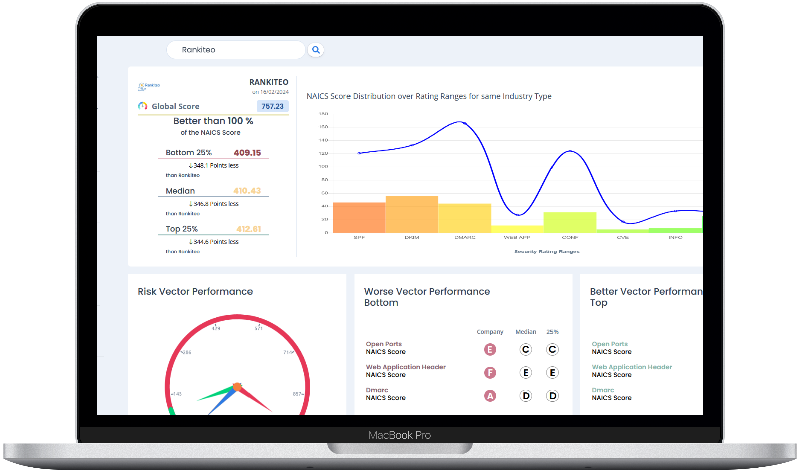
Explore insights on cybersecurity incidents, risk posture, and Rankiteo's assessments.
The official website of Arizona Science Center is http://www.azscience.org.
According to Rankiteo, Arizona Science Center’s AI-generated cybersecurity score is 764, reflecting their Fair security posture.
According to Rankiteo, Arizona Science Center currently holds 0 security badges, indicating that no recognized compliance certifications are currently verified for the organization.
According to Rankiteo, Arizona Science Center has not been affected by any supply chain cyber incidents, and no incident IDs are currently listed for the organization.
According to Rankiteo, Arizona Science Center is not certified under SOC 2 Type 1.
According to Rankiteo, Arizona Science Center does not hold a SOC 2 Type 2 certification.
According to Rankiteo, Arizona Science Center is not listed as GDPR compliant.
According to Rankiteo, Arizona Science Center does not currently maintain PCI DSS compliance.
According to Rankiteo, Arizona Science Center is not compliant with HIPAA regulations.
According to Rankiteo,Arizona Science Center is not certified under ISO 27001, indicating the absence of a formally recognized information security management framework.
Arizona Science Center operates primarily in the Museums, Historical Sites, and Zoos industry.
Arizona Science Center employs approximately 152 people worldwide.
Arizona Science Center presently has no subsidiaries across any sectors.
Arizona Science Center’s official LinkedIn profile has approximately 4,521 followers.
No, Arizona Science Center does not have a profile on Crunchbase.
Yes, Arizona Science Center maintains an official LinkedIn profile, which is actively utilized for branding and talent engagement, which can be accessed here: https://www.linkedin.com/company/arizona-science-center.
As of January 23, 2026, Rankiteo reports that Arizona Science Center has not experienced any cybersecurity incidents.
Arizona Science Center has an estimated 2,181 peer or competitor companies worldwide.
Total Incidents: According to Rankiteo, Arizona Science Center has faced 0 incidents in the past.
Incident Types: The types of cybersecurity incidents that have occurred include .
.png)
Improper validation of specified type of input in M365 Copilot allows an unauthorized attacker to disclose information over a network.
Improper access control in Azure Front Door (AFD) allows an unauthorized attacker to elevate privileges over a network.
Azure Entra ID Elevation of Privilege Vulnerability
Moonraker is a Python web server providing API access to Klipper 3D printing firmware. In versions 0.9.3 and below, instances configured with the "ldap" component enabled are vulnerable to LDAP search filter injection techniques via the login endpoint. The 401 error response message can be used to determine whether or not a search was successful, allowing for brute force methods to discover LDAP entries on the server such as user IDs and user attributes. This issue has been fixed in version 0.10.0.
Runtipi is a Docker-based, personal homeserver orchestrator that facilitates multiple services on a single server. Versions 3.7.0 and above allow an authenticated user to execute arbitrary system commands on the host server by injecting shell metacharacters into backup filenames. The BackupManager fails to sanitize the filenames of uploaded backups. The system persists user-uploaded files directly to the host filesystem using the raw originalname provided in the request. This allows an attacker to stage a file containing shell metacharacters (e.g., $(id).tar.gz) at a predictable path, which is later referenced during the restore process. The successful storage of the file is what allows the subsequent restore command to reference and execute it. This issue has been fixed in version 4.7.0.

Get company history

Every week, Rankiteo analyzes billions of signals to give organizations a sharper, faster view of emerging risks. With deeper, more actionable intelligence at their fingertips, security teams can outpace threat actors, respond instantly to Zero-Day attacks, and dramatically shrink their risk exposure window.
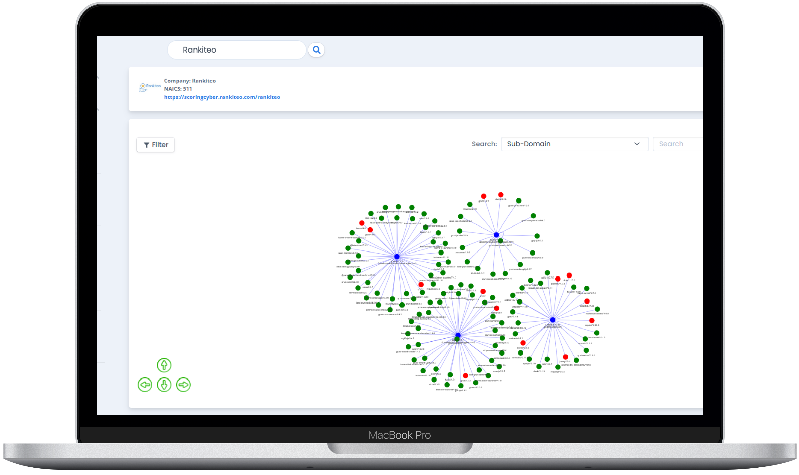
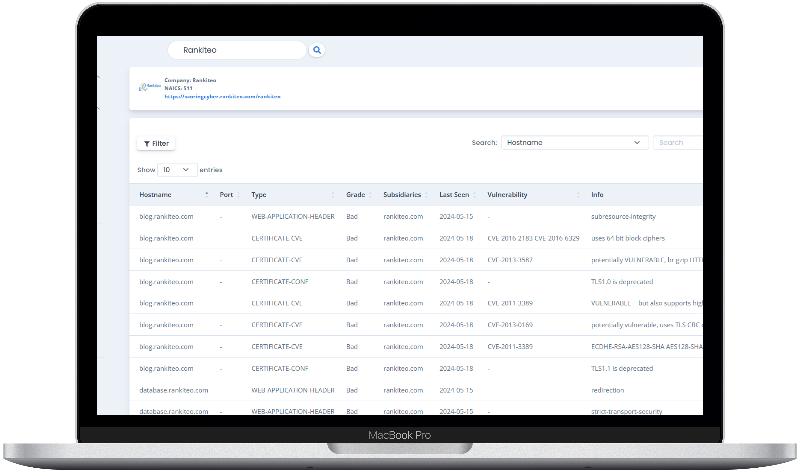
Identify exposed access points, detect misconfigured SSL certificates, and uncover vulnerabilities across the network infrastructure.
Gain visibility into the software components used within an organization to detect vulnerabilities, manage risk, and ensure supply chain security.
Monitor and manage all IT assets and their configurations to ensure accurate, real-time visibility across the company's technology environment.
Leverage real-time insights on active threats, malware campaigns, and emerging vulnerabilities to proactively defend against evolving cyberattacks.



 Rapid
Rapid