






WRDSB
Company Details
Linkedin ID:
waterloo-region-district-school-board
Website:
Employees number:
4,603
Number of followers:
11,383
NAICS:
6111
Industry Type:
Homepage:
wrdsb.ca
IP Addresses:
0
Company ID:
WAT_6465363
Scan Status:
In-progress

Waterloo Region District School Board Company CyberSecurity Posture
wrdsb.ca


Waterloo Region District School Board (WRDSB) serves approximately 65,000 students in 123 schools, as well as alternative and continuing education sites. WRDSB is committed to creating learning environments that support the achievement and well-being of all students through partnering with staff, parents, families, caregivers and communities to promote success in learning and life.
Company Details
waterloo-region-district-school-board
4,603
11,383
6111
wrdsb.ca
0
WAT_6465363
In-progress
 WRDSB Risk Score (AI oriented)
Between 750 and 799
 WRDSB Global Score (TPRM)
XXXX
Description: Waterloo Region's public school board confirmed employee information dating back to 1970 was accessed during a cyber breach. It included names, birthdates, banking information, and social insurance numbers of all current and past employees dating back to 1970. Payroll history of employees dating back to 2012 was also accessed. They have recovered the data, and received assurance that any data taken as part of the cyber intrusion has been deleted. An internal memo sent to WRDSB staff revealed that data had been stolen.


No incidents recorded for Waterloo Region District School Board in 2025.
No incidents recorded for Waterloo Region District School Board in 2025.
No incidents recorded for Waterloo Region District School Board in 2025.
WRDSB cyber incidents detection timeline including parent company and subsidiaries
Waterloo Region District School Board (WRDSB) serves approximately 65,000 students in 123 schools, as well as alternative and continuing education sites. WRDSB is committed to creating learning environments that support the achievement and well-being of all students through partnering with staff, parents, families, caregivers and communities to promote success in learning and life.


Hillsborough County Public Schools is the seventh largest school district in the nation, with more than 210,000 students. More than 50,000 students attend a school through one of the district’s many school choice programs. HCPS is the largest employer in Hillsborough County, with more than 24,000 e

Orange County Public Schools is recognized as one of the top urban school districts in the nation – the 8th largest school district in America (4th in Florida) with 210 traditional schools, approximately 206,000 students and over 24,000 employees. OCPS students enjoy equity and access to a wide v

New York City Public Schools (NYCPS) is the largest public school system in the United States, serving approximately 1.1 million students across more than 1,600 schools in all five boroughs. Our schools are powered by over 75,000 teachers and thousands of paraprofessionals, school counselors, social

The Peel District School Board serves more than 156,000 students in kindergarten to grade 12. Operating more than 257 schools in the municipalities of Brampton, Caledon and Mississauga, the Peel board is the largest employer in Peel. At the Peel board, we inspire success, confidence and hope in ea

Fairfax County Public Schools (FCPS), located in Northern Virginia, is the nation’s 9th largest public school system, serves a diverse population of more than 180,000 students in grades prekindergarten through 12. Fairfax County high schools are recognized annually by the Washington Post as being am

The Toronto District School Board (TDSB) is the largest and one of the most diverse school boards in Canada, and recognized by Forbes and Statista as one of Canada's Best Employers for Diversity for 2023. We serve more than 239,000 students in 582 schools throughout Toronto, and more than 100,000 li

The mission of Charlotte-Mecklenburg Schools is to create an innovative, inclusive, student-centered environment that supports the development of independent learners. The vision of Charlotte-Mecklenburg Schools is to lead the community in educational excellence, inspiring intellectual curiosity, c

Austin ISD is a diverse community of more than 10,000 employees, and we recognize that nothing is more essential to a great education system than innovative, talented, passionate educators. Whether you’re a recent graduate or an experienced professional seeking a new career opportunity, AISD has a

Prince George's County Public Schools (PGCPS), one of the nation's 25 largest school districts, has 200 schools and centers, more than 133,000 students and 22,000 employees. The school system serves a diverse student population from urban, suburban and rural communities located in the Washington, DC
.png)
One member of the long line of people looking to get into a Waterloo Catholic District School Board meeting to denounce trustee Conrad...
It has been more than three weeks since the Rainbow District School Board experienced a cyber incident which disrupted its operations.
By Matt Hutcheson. Posted Jan 28, 2025 05:50:32 AM. Last Updated Jan 28, 2025 11:18:38 AM. Back in 2022, the Waterloo Region District School Board (WRDSB)...
A broader understanding of the PowerSchool data breach is emerging, with some school boards revealing that student data dating back decades may be impacted.
Data from public school students dating as far back as 1985 appears to have been breached during a cybersecurity incident impacting schools in Toronto, Ontario.
Canada's largest school board says personal student information dating back to 1985 may have been breached during a recent cybersecurity attack.
School boards across Canada were victims of a cyber attack this week, through a software called PowerSchool.
The Catholic school board in the London area says the personal information of students and some staff has been exposed in a cyber attack.
School boards across Canada are grappling with the fallout from a significant cyberattack on PowerSchool, a widely used administration software platform.

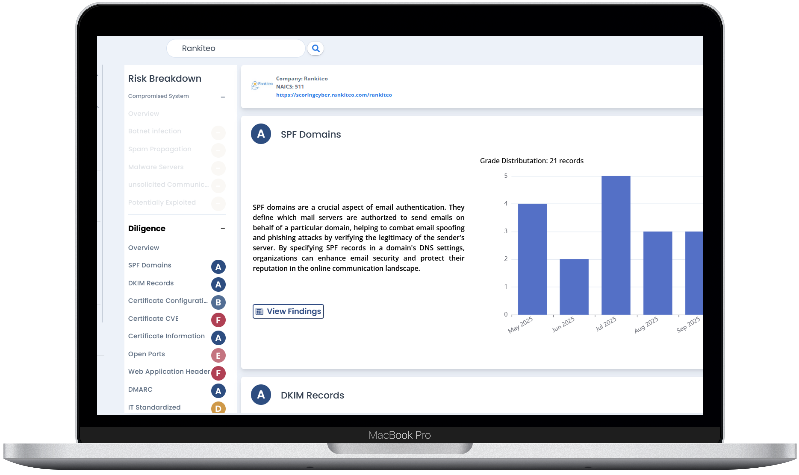
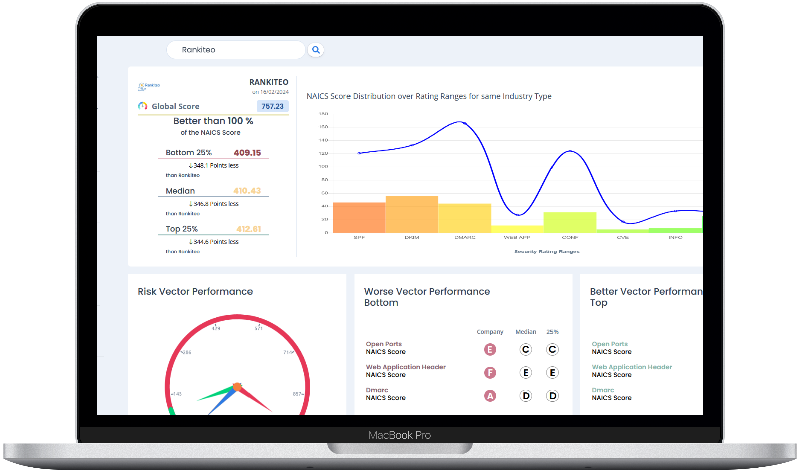
Explore insights on cybersecurity incidents, risk posture, and Rankiteo's assessments.
The official website of Waterloo Region District School Board is https://wrdsb.social/info.
According to Rankiteo, Waterloo Region District School Board’s AI-generated cybersecurity score is 780, reflecting their Fair security posture.
According to Rankiteo, Waterloo Region District School Board currently holds 0 security badges, indicating that no recognized compliance certifications are currently verified for the organization.
According to Rankiteo, Waterloo Region District School Board is not certified under SOC 2 Type 1.
According to Rankiteo, Waterloo Region District School Board does not hold a SOC 2 Type 2 certification.
According to Rankiteo, Waterloo Region District School Board is not listed as GDPR compliant.
According to Rankiteo, Waterloo Region District School Board does not currently maintain PCI DSS compliance.
According to Rankiteo, Waterloo Region District School Board is not compliant with HIPAA regulations.
According to Rankiteo,Waterloo Region District School Board is not certified under ISO 27001, indicating the absence of a formally recognized information security management framework.
Waterloo Region District School Board operates primarily in the Primary and Secondary Education industry.
Waterloo Region District School Board employs approximately 4,603 people worldwide.
Waterloo Region District School Board presently has no subsidiaries across any sectors.
Waterloo Region District School Board’s official LinkedIn profile has approximately 11,383 followers.
Waterloo Region District School Board is classified under the NAICS code 6111, which corresponds to Elementary and Secondary Schools.
No, Waterloo Region District School Board does not have a profile on Crunchbase.
Yes, Waterloo Region District School Board maintains an official LinkedIn profile, which is actively utilized for branding and talent engagement, which can be accessed here: https://www.linkedin.com/company/waterloo-region-district-school-board.
As of December 19, 2025, Rankiteo reports that Waterloo Region District School Board has experienced 1 cybersecurity incidents.
Waterloo Region District School Board has an estimated 7,973 peer or competitor companies worldwide.
Incident Types: The types of cybersecurity incidents that have occurred include Cyber Attack.
Detection and Response: The company detects and responds to cybersecurity incidents through an remediation measures with data recovery, remediation measures with assurance of data deletion, and communication strategy with internal memo to wrdsb staff..
Title: Waterloo Region Public School Board Data Breach
Description: Waterloo Region's public school board confirmed employee information dating back to 1970 was accessed during a cyber breach. It included names, birthdates, banking information, and social insurance numbers of all current and past employees dating back to 1970. Payroll history of employees dating back to 2012 was also accessed. They have recovered the data, and received assurance that any data taken as part of the cyber intrusion has been deleted.
Type: Data Breach
Common Attack Types: The most common types of attacks the company has faced is Cyber Attack.

Data Compromised: Employee names, Birthdates, Banking information, Social insurance numbers, Payroll history
Commonly Compromised Data Types: The types of data most commonly compromised in incidents are Employee Names, Birthdates, Banking Information, Social Insurance Numbers, Payroll History and .
Entity Name: Waterloo Region District School Board (WRDSB)
Entity Type: Educational Institution
Industry: Education
Location: Waterloo Region
Remediation Measures: Data recoveryAssurance of data deletion
Communication Strategy: Internal memo to WRDSB staff
Type of Data Compromised: Employee names, Birthdates, Banking information, Social insurance numbers, Payroll history
Sensitivity of Data: High
Prevention of Data Exfiltration: The company takes the following measures to prevent data exfiltration: Data recovery, Assurance of data deletion, .
Communication of Investigation Status: The company communicates the status of incident investigations to stakeholders through Internal Memo To Wrdsb Staff.
Most Significant Data Compromised: The most significant data compromised in an incident were Employee names, Birthdates, Banking information, Social insurance numbers, Payroll history and .
Most Sensitive Data Compromised: The most sensitive data compromised in a breach were Banking information, Payroll history, Social insurance numbers, Employee names and Birthdates.
.png)
Zerobyte is a backup automation tool Zerobyte versions prior to 0.18.5 and 0.19.0 contain an authentication bypass vulnerability where authentication middleware is not properly applied to API endpoints. This results in certain API endpoints being accessible without valid session credentials. This is dangerous for those who have exposed Zerobyte to be used outside of their internal network. A fix has been applied in both version 0.19.0 and 0.18.5. If immediate upgrade is not possible, restrict network access to the Zerobyte instance to trusted networks only using firewall rules or network segmentation. This is only a temporary mitigation; upgrading is strongly recommended.
Open Source Point of Sale (opensourcepos) is a web based point of sale application written in PHP using CodeIgniter framework. Starting in version 3.4.0 and prior to version 3.4.2, a Cross-Site Request Forgery (CSRF) vulnerability exists in the application's filter configuration. The CSRF protection mechanism was **explicitly disabled**, allowing the application to process state-changing requests (POST) without verifying a valid CSRF token. An unauthenticated remote attacker can exploit this by hosting a malicious web page. If a logged-in administrator visits this page, their browser is forced to send unauthorized requests to the application. A successful exploit allows the attacker to silently create a new Administrator account with full privileges, leading to a complete takeover of the system and loss of confidentiality, integrity, and availability. The vulnerability has been patched in version 3.4.2. The fix re-enables the CSRF filter in `app/Config/Filters.php` and resolves associated AJAX race conditions by adjusting token regeneration settings. As a workaround, administrators can manually re-enable the CSRF filter in `app/Config/Filters.php` by uncommenting the protection line. However, this is not recommended without applying the full patch, as it may cause functionality breakage in the Sales module due to token synchronization issues.
Zed, a code editor, has an aribtrary code execution vulnerability in versions prior to 0.218.2-pre. The Zed IDE loads Model Context Protocol (MCP) configurations from the `settings.json` file located within a project’s `.zed` subdirectory. A malicious MCP configuration can contain arbitrary shell commands that run on the host system with the privileges of the user running the IDE. This can be triggered automatically without any user interaction besides opening the project in the IDE. Version 0.218.2-pre fixes the issue by implementing worktree trust mechanism. As a workaround, users should carefully review the contents of project settings files (`./zed/settings.json`) before opening new projects in Zed.
Zed, a code editor, has an aribtrary code execution vulnerability in versions prior to 0.218.2-pre. The Zed IDE loads Language Server Protocol (LSP) configurations from the `settings.json` file located within a project’s `.zed` subdirectory. A malicious LSP configuration can contain arbitrary shell commands that run on the host system with the privileges of the user running the IDE. This can be triggered when a user opens project file for which there is an LSP entry. A concerted effort by an attacker to seed a project settings file (`./zed/settings.json`) with malicious language server configurations could result in arbitrary code execution with the user's privileges if the user opens the project in Zed without reviewing the contents. Version 0.218.2-pre fixes the issue by implementing worktree trust mechanism. As a workaround, users should carefully review the contents of project settings files (`./zed/settings.json`) before opening new projects in Zed.
Storybook is a frontend workshop for building user interface components and pages in isolation. A vulnerability present starting in versions 7.0.0 and prior to versions 7.6.21, 8.6.15, 9.1.17, and 10.1.10 relates to Storybook’s handling of environment variables defined in a `.env` file, which could, in specific circumstances, lead to those variables being unexpectedly bundled into the artifacts created by the `storybook build` command. When a built Storybook is published to the web, the bundle’s source is viewable, thus potentially exposing those variables to anyone with access. For a project to potentially be vulnerable to this issue, it must build the Storybook (i.e. run `storybook build` directly or indirectly) in a directory that contains a `.env` file (including variants like `.env.local`) and publish the built Storybook to the web. Storybooks built without a `.env` file at build time are not affected, including common CI-based builds where secrets are provided via platform environment variables rather than `.env` files. Storybook runtime environments (i.e. `storybook dev`) are not affected. Deployed applications that share a repo with your Storybook are not affected. Users should upgrade their Storybook—on both their local machines and CI environment—to version .6.21, 8.6.15, 9.1.17, or 10.1.10 as soon as possible. Maintainers additionally recommend that users audit for any sensitive secrets provided via `.env` files and rotate those keys. Some projects may have been relying on the undocumented behavior at the heart of this issue and will need to change how they reference environment variables after this update. If a project can no longer read necessary environmental variable values, either prefix the variables with `STORYBOOK_` or use the `env` property in Storybook’s configuration to manually specify values. In either case, do not include sensitive secrets as they will be included in the built bundle.

Get company history

Every week, Rankiteo analyzes billions of signals to give organizations a sharper, faster view of emerging risks. With deeper, more actionable intelligence at their fingertips, security teams can outpace threat actors, respond instantly to Zero-Day attacks, and dramatically shrink their risk exposure window.
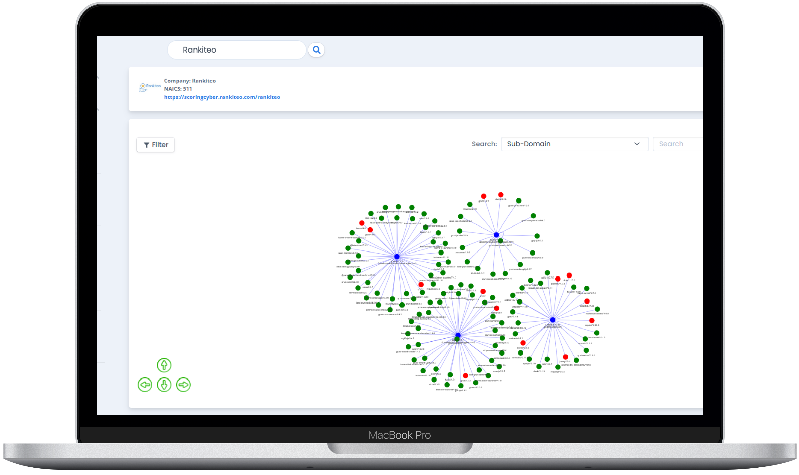
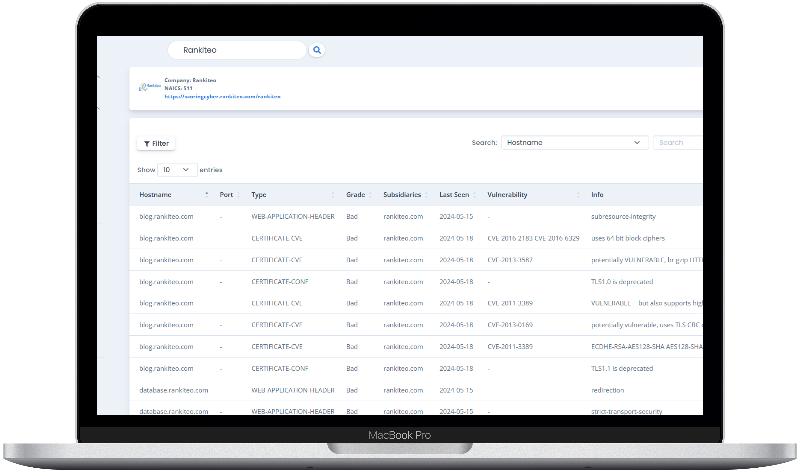
Identify exposed access points, detect misconfigured SSL certificates, and uncover vulnerabilities across the network infrastructure.
Gain visibility into the software components used within an organization to detect vulnerabilities, manage risk, and ensure supply chain security.
Monitor and manage all IT assets and their configurations to ensure accurate, real-time visibility across the company's technology environment.
Leverage real-time insights on active threats, malware campaigns, and emerging vulnerabilities to proactively defend against evolving cyberattacks.





 Rapid
Rapid