


Unitree Robotics A.I CyberSecurity Scoring
Unitree Robotics
Company Information
Website:https://www.unitree.com/en/
Employees number:54
Number of followers:83,358
NAICS:33325
Industry Type:Automation Machinery Manufacturing
Homepage:unitree.com
Unitree Robotics Risk Score (AI oriented)
Between 750 and 799
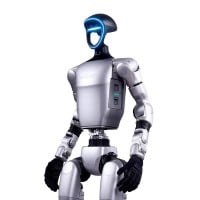
Unitree RoboticsAutomation Machinery Manufacturing
Updated:
01/04/2026
01/04/2026
750/1000
Fair
Baa
Unitree Robotics Global Score (TPRM)
xxxx
Unitree RoboticsAutomation Machinery Manufacturing
Score locked
Unitree RoboticsFair
Current Score
750Baa (FAIR)
01000
1 incidents
0 avg impact
Incident timeline with MITRE ATT&CK tactics, techniques, and mitigations.
JUNE 2026
750
MAY 2026
750
APRIL 2026
750
MARCH 2026
745
Vulnerability
01 Mar 2026 • Unitree Robotics
Unitree: Data security is the foundation of trust in physical AI
Critical Security Flaws in Robotics Highlight Risks of AI-Driven Industrial Systems
750
CRITICAL-5
UNI1773498423
Critical Security Flaws in Robotics Highlight Risks of AI-Driven Industrial Systems
Recent reports have exposed significant cybersecurity vulnerabilities in consumer and industrial robotics, underscoring the urgent need for robust security frameworks as AI-powered machines move from labs into real-world environments. A software engineer accidentally discovered flaws in consumer robot vacuums, gaining unauthorized access to cameras and microphones raising serious privacy concerns. However, the stakes are far higher in industrial settings, where compromised robots in chemical plants or power grids could endanger critical infrastructure and human lives.
The shift toward autonomous industrial robots capable of tasks like inspection intelligence, asset monitoring, and anomaly detection demands more than just mobility. While simulations excel at training robots for basic movements (e.g., climbing stairs), they fall short in replicating complex, dynamic environments. Industrial robots must navigate unpredictable conditions such as extreme weather, shifting obstacles, and equipment failures requiring high-fidelity, real-world data. Yet, this data is often locked within secure industrial facilities, creating a barrier to scaling AI-driven robotics.
To address these challenges, the robotics industry is adopting hardened security principles:
1. Full-Stack Security Responsibility – Unlike consumer devices built on third-party hardware, industrial robotics must integrate hardware and software under a unified architecture. Recent vulnerabilities in low-cost platforms, such as hardcoded cryptographic keys in Unitree’s G1 humanoid and undocumented backdoors in the Go1 quadruped, demonstrate the risks of fragmented security. A "security-first" approach, with rigorous supplier vetting and end-to-end encryption, is essential to prevent breaches.
2. Isolation by Design – Traditional "air-gapping" (keeping systems offline) limits a robot’s ability to learn from fleet-wide data. Instead, a tiered architecture ensures privacy while enabling collective intelligence:
- Edge anonymization removes sensitive data (e.g., faces, voices) before transmission.
- Multi-tenant siloing keeps customer data logically separated with unique encryption keys.
- Federated intelligence allows anonymized insights to improve fleet performance without compromising individual sites.
3. Security as Culture – Compliance certifications, such as ANYbotics’ ISO 27001 achievement (the first for a legged robotics company), validate that security is embedded in processes and culture not just a checklist. With industrial risks ranging from refinery explosions to operational disruptions, a proactive security mindset is non-negotiable.
As AI-driven robotics advance, so do cyber threats. The industry is increasingly adopting AI-powered security to detect and neutralize vulnerabilities in real time, ensuring autonomous systems remain resilient against evolving attack vectors. The goal is "hardened autonomy" where robots operate independently while maintaining uncompromised decision-making, enabling industrial operators to prevent failures, enhance safety, and reduce human exposure to hazardous environments.
The future of robotics hinges on trust: secure data loops, verifiable insights, and architectures that prioritize integrity from sensor to cloud. Without these safeguards, the promise of AI-driven industrial automation risks being undermined by preventable cyber threats.
INCIDENT DETAILS -
TYPE
IMPACT
DATA BREACH
REFERENCES
FEBRUARY 2026
745
JANUARY 2026
745
DECEMBER 2025
745
NOVEMBER 2025
745
OCTOBER 2025
745
SEPTEMBER 2025
745
AUGUST 2025
745
JULY 2025
745
Frequently Asked Questions
?
What is the current A.I Rankiteo Cyber Score for Unitree Robotics ??
What was Unitree Robotics's A.I Rankiteo Cyber Score in May 2026 ??
What was Unitree Robotics's A.I Rankiteo Cyber Score in April 2026 ??
What was Unitree Robotics's A.I Rankiteo Cyber Score in March 2026 ??
What was Unitree Robotics's A.I Rankiteo Cyber Score in February 2026 ??
What was Unitree Robotics's A.I Rankiteo Cyber Score in January 2026 ??
What was Unitree Robotics's A.I Rankiteo Cyber Score in December 2025 ??
What was Unitree Robotics's A.I Rankiteo Cyber Score in November 2025 ??
What was Unitree Robotics's A.I Rankiteo Cyber Score in October 2025 ??
What was Unitree Robotics's A.I Rankiteo Cyber Score in September 2025 ??
What was Unitree Robotics's A.I Rankiteo Cyber Score in August 2025 ??
What was Unitree Robotics's A.I Rankiteo Cyber Score in July 2025 ??
What is the average per-incident point impact on Unitree Robotics's A.I Rankiteo Cyber Score over the past 12 months ??
Where can I access detailed records of all cyber incidents associated with Unitree Robotics ??
Where can I find a summary of the A.I Rankiteo Risk Scoring methodology ??
Where can I view Unitree Robotics's profile page on Rankiteo ??
How accurate is the A.I Rankiteo Risk Scoring methodology ?