Company Details
the-renaissance-society-at-the-university-of-chicago
17
235
712
renaissancesociety.org
0
THE_7840061
In-progress

The Renaissance Society at The University of Chicago Company CyberSecurity Posture
renaissancesociety.orgFounded in 1915, the "Ren" is a non-collecting museum of contemporary art that renowned program of international exhibitions and new music. The Renaissance Society is at its core a space of possibility. For artists, we offer an unfettered platform for bold experimentation. Our work with artists frequently results in newly commissioned art, and these presentations in our gallery at the University of Chicago spur further scholarly and creative reflections in our publications and public programs. For visitors, we offer intimate opportunities to engage deeply with art and artists who provide critical responses to our present moment. All exhibitions and events are free to attend. Visitors to the Ren find a uniquely intimate platform for encountering artistic expressions that give form to, challenge, and complicate currents in contemporary thought. Events—including artist talks, lectures, screenings, concerts, readings, and more—offer further opportunities for discovery and discussion. We maintain robust archives, which can be accessed by all visitors, art historians, students, and other institutions by making an appointment.
Company Details
the-renaissance-society-at-the-university-of-chicago
17
235
712
renaissancesociety.org
0
THE_7840061
In-progress
Between 750 and 799

RSUC Global Score (TPRM)XXXX


No incidents recorded for The Renaissance Society at The University of Chicago in 2025.
RSUC cyber incidents detection timeline including parent company and subsidiaries

Founded in 1915, the "Ren" is a non-collecting museum of contemporary art that renowned program of international exhibitions and new music. The Renaissance Society is at its core a space of possibility. For artists, we offer an unfettered platform for bold experimentation. Our work with artists frequently results in newly commissioned art, and these presentations in our gallery at the University of Chicago spur further scholarly and creative reflections in our publications and public programs. For visitors, we offer intimate opportunities to engage deeply with art and artists who provide critical responses to our present moment. All exhibitions and events are free to attend. Visitors to the Ren find a uniquely intimate platform for encountering artistic expressions that give form to, challenge, and complicate currents in contemporary thought. Events—including artist talks, lectures, screenings, concerts, readings, and more—offer further opportunities for discovery and discussion. We maintain robust archives, which can be accessed by all visitors, art historians, students, and other institutions by making an appointment.


New Orleans Museum of Art (NOMA), New Orleans’ oldest fine arts institution, opened on December 16, 1911 with only 9 works of art. Today, the museum hosts an impressive permanent collection of almost 40,000 objects. The collection, noted for its extraordinary strengths in French and American art, ph

Founded in 1974, Charlotte's Harvey B. Gantt Center for African-American Arts + Culture exists to present, preserve and celebrate the art, history, and culture of African-Americans and people of African descent through dance, music, visual and literary arts, film, educational programs, theatre produ

Laguna Art Museum is the museum of California art. It collects, cares for, and exhibits works of art that were created by California artists or represent the life and history of the state. Unlike any other museum in the state, it collects California art and only California art, and ranges across all

Founded in 1995, Greene Naftali was among the first contemporary art galleries in New York's Chelsea neighborhood. With artists exhibiting worldwide in museums and arts institutions, the gallery has a diverse and influential roster of artists demonstrating a strong conceptual foundation and dedicati

Te Papa is New Zealand’s national museum, renowned for being bicultural, scholarly, innovative, and fun. Our success is built on our relationships with and ability to represent our community. Our collections span five areas: Art, History, Pacific, Māori, and Natural Environment. Our exhibitions a

The Oregon Zoo connects communities to the wonder of wildlife to create a better future for all. We are a hub for science, conservation, education and animal well-being delivering the highest quality of care to 165 species and subspecies. Community supported since 1888, we are part of Metro, great
.png)
This selection of books offers a way to be transported by visual art in the palm of your hand. Curated by the TIME photo department.

Explore insights on cybersecurity incidents, risk posture, and Rankiteo's assessments.
The official website of The Renaissance Society at The University of Chicago is http://www.renaissancesociety.org.
According to Rankiteo, The Renaissance Society at The University of Chicago’s AI-generated cybersecurity score is 763, reflecting their Fair security posture.
According to Rankiteo, The Renaissance Society at The University of Chicago currently holds 0 security badges, indicating that no recognized compliance certifications are currently verified for the organization.
According to Rankiteo, The Renaissance Society at The University of Chicago is not certified under SOC 2 Type 1.
According to Rankiteo, The Renaissance Society at The University of Chicago does not hold a SOC 2 Type 2 certification.
According to Rankiteo, The Renaissance Society at The University of Chicago is not listed as GDPR compliant.
According to Rankiteo, The Renaissance Society at The University of Chicago does not currently maintain PCI DSS compliance.
According to Rankiteo, The Renaissance Society at The University of Chicago is not compliant with HIPAA regulations.
According to Rankiteo,The Renaissance Society at The University of Chicago is not certified under ISO 27001, indicating the absence of a formally recognized information security management framework.
The Renaissance Society at The University of Chicago operates primarily in the Museums, Historical Sites, and Zoos industry.
The Renaissance Society at The University of Chicago employs approximately 17 people worldwide.
The Renaissance Society at The University of Chicago presently has no subsidiaries across any sectors.
The Renaissance Society at The University of Chicago’s official LinkedIn profile has approximately 235 followers.
No, The Renaissance Society at The University of Chicago does not have a profile on Crunchbase.
Yes, The Renaissance Society at The University of Chicago maintains an official LinkedIn profile, which is actively utilized for branding and talent engagement, which can be accessed here: https://www.linkedin.com/company/the-renaissance-society-at-the-university-of-chicago.
As of December 03, 2025, Rankiteo reports that The Renaissance Society at The University of Chicago has not experienced any cybersecurity incidents.
The Renaissance Society at The University of Chicago has an estimated 2,134 peer or competitor companies worldwide.
Total Incidents: According to Rankiteo, The Renaissance Society at The University of Chicago has faced 0 incidents in the past.
Incident Types: The types of cybersecurity incidents that have occurred include .
.png)
vLLM is an inference and serving engine for large language models (LLMs). Prior to 0.11.1, vllm has a critical remote code execution vector in a config class named Nemotron_Nano_VL_Config. When vllm loads a model config that contains an auto_map entry, the config class resolves that mapping with get_class_from_dynamic_module(...) and immediately instantiates the returned class. This fetches and executes Python from the remote repository referenced in the auto_map string. Crucially, this happens even when the caller explicitly sets trust_remote_code=False in vllm.transformers_utils.config.get_config. In practice, an attacker can publish a benign-looking frontend repo whose config.json points via auto_map to a separate malicious backend repo; loading the frontend will silently run the backend’s code on the victim host. This vulnerability is fixed in 0.11.1.
fastify-reply-from is a Fastify plugin to forward the current HTTP request to another server. Prior to 12.5.0, by crafting a malicious URL, an attacker could access routes that are not allowed, even though the reply.from is defined for specific routes in @fastify/reply-from. This vulnerability is fixed in 12.5.0.
Angular is a development platform for building mobile and desktop web applications using TypeScript/JavaScript and other languages. Prior to 21.0.2, 20.3.15, and 19.2.17, A Stored Cross-Site Scripting (XSS) vulnerability has been identified in the Angular Template Compiler. It occurs because the compiler's internal security schema is incomplete, allowing attackers to bypass Angular's built-in security sanitization. Specifically, the schema fails to classify certain URL-holding attributes (e.g., those that could contain javascript: URLs) as requiring strict URL security, enabling the injection of malicious scripts. This vulnerability is fixed in 21.0.2, 20.3.15, and 19.2.17.
Gin-vue-admin is a backstage management system based on vue and gin. In 2.8.6 and earlier, attackers can delete any file on the server at will, causing damage or unavailability of server resources. Attackers can control the 'FileMd5' parameter to delete any file and folder.
Portkey.ai Gateway is a blazing fast AI Gateway with integrated guardrails. Prior to 1.14.0, the gateway determined the destination baseURL by prioritizing the value in the x-portkey-custom-host request header. The proxy route then appends the client-specified path to perform an external fetch. This can be maliciously used by users for SSRF attacks. This vulnerability is fixed in 1.14.0.

Get company history
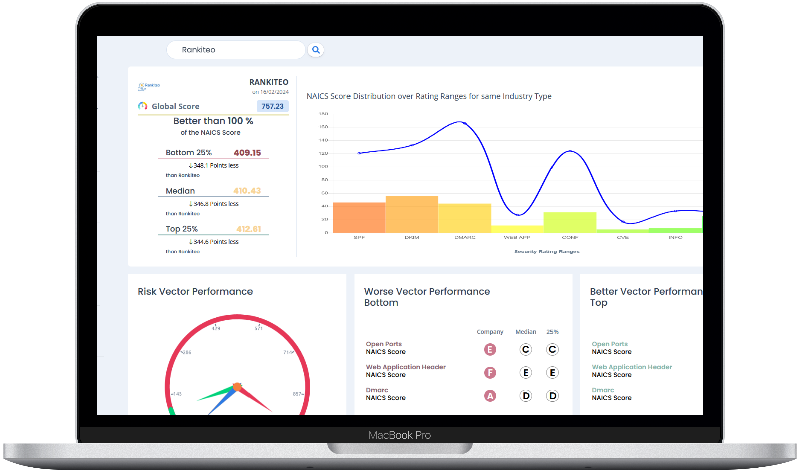
Every week, Rankiteo analyzes billions of signals to give organizations a sharper, faster view of emerging risks. With deeper, more actionable intelligence at their fingertips, security teams can outpace threat actors, respond instantly to Zero-Day attacks, and dramatically shrink their risk exposure window.
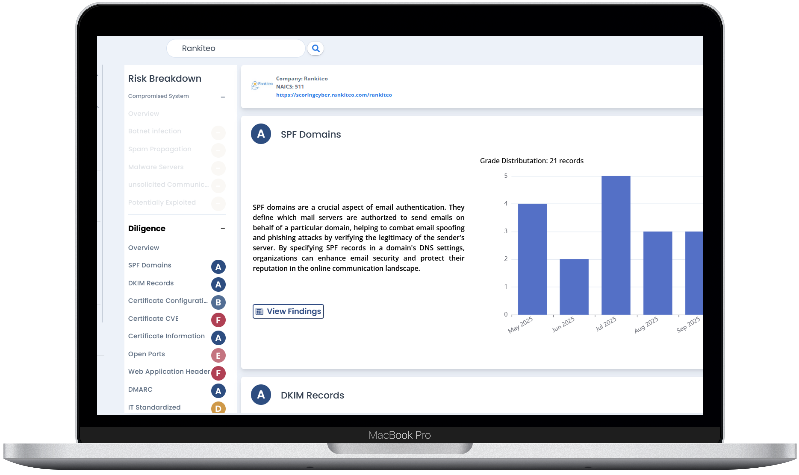
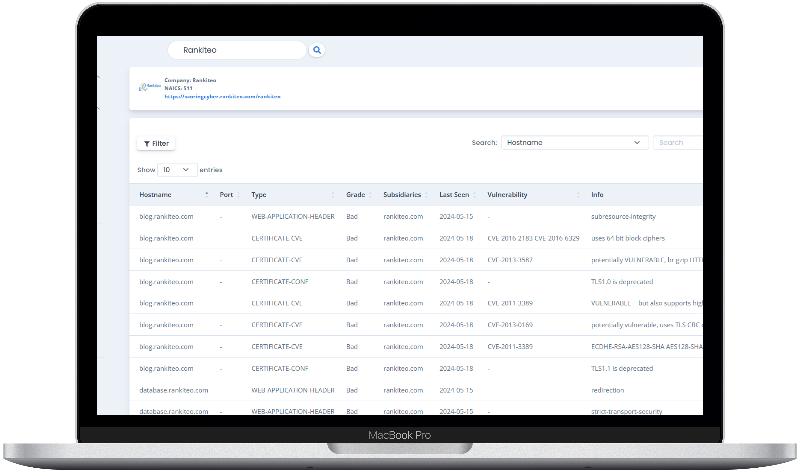
Identify exposed access points, detect misconfigured SSL certificates, and uncover vulnerabilities across the network infrastructure.
Gain visibility into the software components used within an organization to detect vulnerabilities, manage risk, and ensure supply chain security.
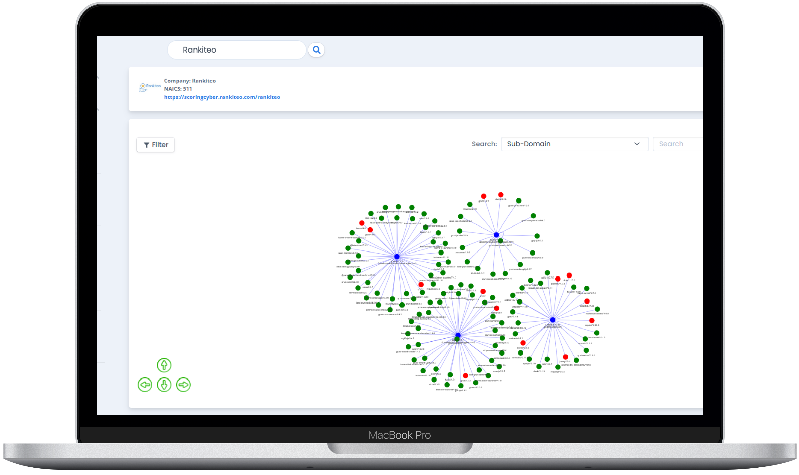
Monitor and manage all IT assets and their configurations to ensure accurate, real-time visibility across the company's technology environment.

Leverage real-time insights on active threats, malware campaigns, and emerging vulnerabilities to proactively defend against evolving cyberattacks.