






The Dorm
Company Details
Linkedin ID:
the-dorm
Website:
Employees number:
61
Number of followers:
3,663
NAICS:
62133
Industry Type:
Homepage:
thedorm.com
IP Addresses:
0
Company ID:
THE_3137093
Scan Status:
In-progress


The Dorm Company CyberSecurity Posture
thedorm.com


The Dorm is a leading young adult mental health treatment program. Since 2009, our IOP and PHP programs* have helped young adults build lives of independence and purpose in the vibrant cities of New York City and Washington, D.C. We provide evidence-based therapies, life-skills coaching, and community support to help clients build independence. Our expert clinicians design personalized treatment plans for trauma, eating disorders, substance use, psychotic disorders, or for young adults who feel “stuck.” Services meet clients at home, on campus, or in the community, with flexible options including group therapy and one-to-one counseling. *In New York State, The Dorm operates as a Group Practice.
Company Details
the-dorm
61
3,663
62133
thedorm.com
0
THE_3137093
In-progress
 The Dorm Risk Score (AI oriented)
Between 750 and 799
 The Dorm Global Score (TPRM)
XXXX


No incidents recorded for The Dorm in 2026.
No incidents recorded for The Dorm in 2026.
No incidents recorded for The Dorm in 2026.
The Dorm cyber incidents detection timeline including parent company and subsidiaries

The Dorm is a leading young adult mental health treatment program. Since 2009, our IOP and PHP programs* have helped young adults build lives of independence and purpose in the vibrant cities of New York City and Washington, D.C. We provide evidence-based therapies, life-skills coaching, and community support to help clients build independence. Our expert clinicians design personalized treatment plans for trauma, eating disorders, substance use, psychotic disorders, or for young adults who feel “stuck.” Services meet clients at home, on campus, or in the community, with flexible options including group therapy and one-to-one counseling. *In New York State, The Dorm operates as a Group Practice.

Psocratic’s mission is to humanize some of the most dehumanized systems in the world – starting with boots-on-the-ground employees and people in corrections facilities. Corrections: The fact of the matter is that 61% of all prisoners suffer from some level of Trauma. We know that PTSD severity is p

Journeys Counseling Ministry started from the genuine need to assist churches and ministries with professional counseling. Growing out of the heart and passion of Rev. Randy Powell and Dr. Tim Moyers, the ministry was birthed as an idea back in 1991 and eventually incorporated in 1996 as a nonpr

The STARR Coalition was formed to create meaningful change by increasing COMMUNICATION, PARTNERSHIPS, and GOODWILL among stakeholders in the areas of mental health clinical research, advocacy, and treatment with emphasis on community and advocacy engagement, stigma reduction, and ensuring that resea

At Inspira Health, we are dedicated to advancing behavioral health and promoting independence for individuals with autism and other developmental disorders. We specialize in Applied Behavior Analysis (ABA) therapy, delivering personalized treatment plans that empower individuals to thrive in their d

The National Institute for the Psychotherapies is a not-for-profit academic institution that provides expert graduate and post-graduate training to mental health professionals, and high quality, low cost therapy to individuals, families, couples and children. Located in the Flatiron District in New

The MINDS Foundation has a persistent commitment to taking a grassroots approach to eliminating stigma and providing educational, financial, medical, and moral support for patients suffering from mental illness in developing countries. The MINDS Foundation was founded and incorporated in the summ

"We are committed to the ministry of reconciling, restoring, and equipping the saints for the work of the ministry through a tri-fold effort of prevention, training, and care. We consecrate ourselves to a ministry distinguished by integrity, excellence, and accountability." Since 1983 Turning Po

Victory Bay is a behavioral health treatment center in New Jersey that offers effective outpatient treatment for substance abuse, mental health, adolescent mental health, and eating disorders. Our environment is welcoming and safe so people can recover and heal from trauma. We maintain small caselo

Established in 1950, the Mental Health Association of Monmouth County is an affiliate of the national nonprofit Mental Health America. Our professional staff has been on the forefront of creating a meaningful system of mental health care that strategically focuses on eliminating social barriers and
.png)
Microsoft President Brad Smith leads some of the tech giant's work in areas ranging from artificial intelligence to cybersecurity to...
New York is borrowing $300 million to pay for IT and cybersecurity upgrades at hospitals around the state, with the bulk going to health...
The money is coming from the Statewide Health Care Facility Transformation Program IV and V.
Angelin Benny was at a friend's birthday party when she slipped down the stairs and hurt her back. The steps were steep and slippery.
Auditor General Karen Hogan speaks with reporters on Parliament Hill following the tabling of six new performance audits in the House of...
Looking to tackle both a statewide housing crisis and advance cybersecurity education, MassBay Community College and the Division of Capital...
The 12-story Summit House, which will include food and retail options, will create a vibrant campus community in the heart of downtown.
In this interview with TheCSRUniverse, Seemanta Patnaik, Co-founder and Chief Technology Officer, and Karmendra Kohli, Chief Executive Officer...
Academic freedom must not be the collateral damage of security policies. Learn how to protect digital campuses without building high walls.

Explore insights on cybersecurity incidents, risk posture, and Rankiteo's assessments.
The official website of The Dorm is https://thedorm.com/.
According to Rankiteo, The Dorm’s AI-generated cybersecurity score is 754, reflecting their Fair security posture.
According to Rankiteo, The Dorm currently holds 0 security badges, indicating that no recognized compliance certifications are currently verified for the organization.
According to Rankiteo, The Dorm has not been affected by any supply chain cyber incidents, and no incident IDs are currently listed for the organization.
According to Rankiteo, The Dorm is not certified under SOC 2 Type 1.
According to Rankiteo, The Dorm does not hold a SOC 2 Type 2 certification.
According to Rankiteo, The Dorm is not listed as GDPR compliant.
According to Rankiteo, The Dorm does not currently maintain PCI DSS compliance.
According to Rankiteo, The Dorm is not compliant with HIPAA regulations.
According to Rankiteo,The Dorm is not certified under ISO 27001, indicating the absence of a formally recognized information security management framework.
The Dorm operates primarily in the Mental Health Care industry.
The Dorm employs approximately 61 people worldwide.
The Dorm presently has no subsidiaries across any sectors.
The Dorm’s official LinkedIn profile has approximately 3,663 followers.
The Dorm is classified under the NAICS code 62133, which corresponds to Offices of Mental Health Practitioners (except Physicians).
No, The Dorm does not have a profile on Crunchbase.
Yes, The Dorm maintains an official LinkedIn profile, which is actively utilized for branding and talent engagement, which can be accessed here: https://www.linkedin.com/company/the-dorm.
As of January 22, 2026, Rankiteo reports that The Dorm has not experienced any cybersecurity incidents.
The Dorm has an estimated 5,277 peer or competitor companies worldwide.
Total Incidents: According to Rankiteo, The Dorm has faced 0 incidents in the past.
Incident Types: The types of cybersecurity incidents that have occurred include .
.png)
Backstage is an open framework for building developer portals, and @backstage/backend-defaults provides the default implementations and setup for a standard Backstage backend app. Prior to versions 0.12.2, 0.13.2, 0.14.1, and 0.15.0, the `FetchUrlReader` component, used by the catalog and other plugins to fetch content from URLs, followed HTTP redirects automatically. This allowed an attacker who controls a host listed in `backend.reading.allow` to redirect requests to internal or sensitive URLs that are not on the allowlist, bypassing the URL allowlist security control. This is a Server-Side Request Forgery (SSRF) vulnerability that could allow access to internal resources, but it does not allow attackers to include additional request headers. This vulnerability is fixed in `@backstage/backend-defaults` version 0.12.2, 0.13.2, 0.14.1, and 0.15.0. Users should upgrade to this version or later. Some workarounds are available. Restrict `backend.reading.allow` to only trusted hosts that you control and that do not issue redirects, ensure allowed hosts do not have open redirect vulnerabilities, and/or use network-level controls to block access from Backstage to sensitive internal endpoints.
Backstage is an open framework for building developer portals, and @backstage/cli-common provides config loading functionality used by the backend and command line interface of Backstage. Prior to version 0.1.17, the `resolveSafeChildPath` utility function in `@backstage/backend-plugin-api`, which is used to prevent path traversal attacks, failed to properly validate symlink chains and dangling symlinks. An attacker could bypass the path validation via symlink chains (creating `link1 → link2 → /outside` where intermediate symlinks eventually resolve outside the allowed directory) and dangling symlinks (creating symlinks pointing to non-existent paths outside the base directory, which would later be created during file operations). This function is used by Scaffolder actions and other backend components to ensure file operations stay within designated directories. This vulnerability is fixed in `@backstage/backend-plugin-api` version 0.1.17. Users should upgrade to this version or later. Some workarounds are available. Run Backstage in a containerized environment with limited filesystem access and/or restrict template creation to trusted users.
Backstage is an open framework for building developer portals. Multiple Scaffolder actions and archive extraction utilities were vulnerable to symlink-based path traversal attacks. An attacker with access to create and execute Scaffolder templates could exploit symlinks to read arbitrary files via the `debug:log` action by creating a symlink pointing to sensitive files (e.g., `/etc/passwd`, configuration files, secrets); delete arbitrary files via the `fs:delete` action by creating symlinks pointing outside the workspace, and write files outside the workspace via archive extraction (tar/zip) containing malicious symlinks. This affects any Backstage deployment where users can create or execute Scaffolder templates. This vulnerability is fixed in `@backstage/backend-defaults` versions 0.12.2, 0.13.2, 0.14.1, and 0.15.0; `@backstage/plugin-scaffolder-backend` versions 2.2.2, 3.0.2, and 3.1.1; and `@backstage/plugin-scaffolder-node` versions 0.11.2 and 0.12.3. Users should upgrade to these versions or later. Some workarounds are available. Follow the recommendation in the Backstage Threat Model to limit access to creating and updating templates, restrict who can create and execute Scaffolder templates using the permissions framework, audit existing templates for symlink usage, and/or run Backstage in a containerized environment with limited filesystem access.
FastAPI Api Key provides a backend-agnostic library that provides an API key system. Version 1.1.0 has a timing side-channel vulnerability in verify_key(). The method applied a random delay only on verification failures, allowing an attacker to statistically distinguish valid from invalid API keys by measuring response latencies. With enough repeated requests, an adversary could infer whether a key_id corresponds to a valid key, potentially accelerating brute-force or enumeration attacks. All users relying on verify_key() for API key authentication prior to the fix are affected. Users should upgrade to version 1.1.0 to receive a patch. The patch applies a uniform random delay (min_delay to max_delay) to all responses regardless of outcome, eliminating the timing correlation. Some workarounds are available. Add an application-level fixed delay or random jitter to all authentication responses (success and failure) before the fix is applied and/or use rate limiting to reduce the feasibility of statistical timing attacks.
The Flux Operator is a Kubernetes CRD controller that manages the lifecycle of CNCF Flux CD and the ControlPlane enterprise distribution. Starting in version 0.36.0 and prior to version 0.40.0, a privilege escalation vulnerability exists in the Flux Operator Web UI authentication code that allows an attacker to bypass Kubernetes RBAC impersonation and execute API requests with the operator's service account privileges. In order to be vulnerable, cluster admins must configure the Flux Operator with an OIDC provider that issues tokens lacking the expected claims (e.g., `email`, `groups`), or configure custom CEL expressions that can evaluate to empty values. After OIDC token claims are processed through CEL expressions, there is no validation that the resulting `username` and `groups` values are non-empty. When both values are empty, the Kubernetes client-go library does not add impersonation headers to API requests, causing them to be executed with the flux-operator service account's credentials instead of the authenticated user's limited permissions. This can result in privilege escalation, data exposure, and/or information disclosure. Version 0.40.0 patches the issue.

Get company history

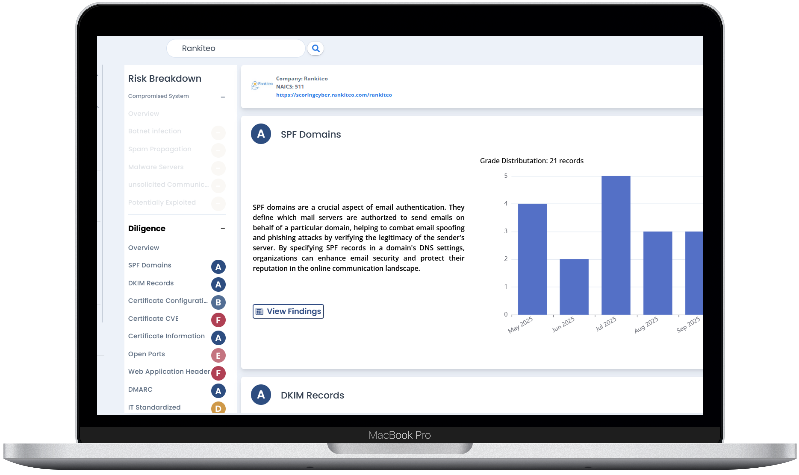
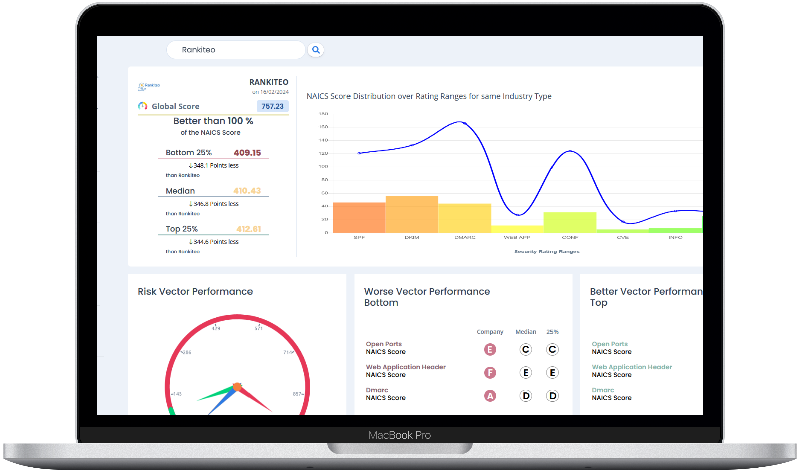
Every week, Rankiteo analyzes billions of signals to give organizations a sharper, faster view of emerging risks. With deeper, more actionable intelligence at their fingertips, security teams can outpace threat actors, respond instantly to Zero-Day attacks, and dramatically shrink their risk exposure window.
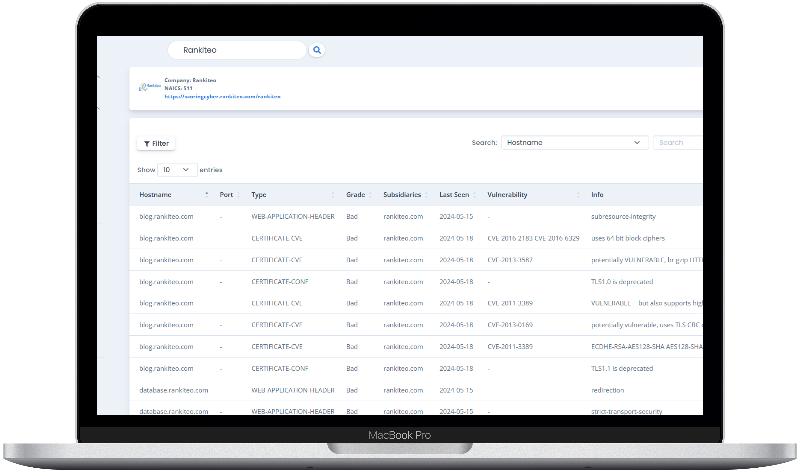
Identify exposed access points, detect misconfigured SSL certificates, and uncover vulnerabilities across the network infrastructure.
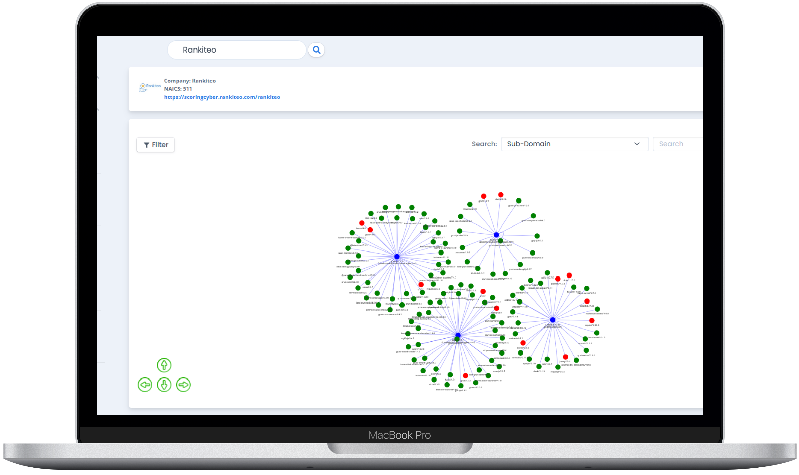
Gain visibility into the software components used within an organization to detect vulnerabilities, manage risk, and ensure supply chain security.
Monitor and manage all IT assets and their configurations to ensure accurate, real-time visibility across the company's technology environment.
Leverage real-time insights on active threats, malware campaigns, and emerging vulnerabilities to proactively defend against evolving cyberattacks.




 Rapid
Rapid