Badge
11,371 badges added since 01 January 2025
ISO 27001 Certificate
SOC 1 Type I Certificate
SOC 2 Type II Certificate
PCI DSS
HIPAA
RGPD
Internal validation & live display
Multiple badges & continuous verification
Faster underwriting decisions
ISOSOC2 Type 1SOC2 Type 2PCI DSSHIPAAGDPR

Founded on May 7th, 1986, the Swiss Institute was officially registered with the State and City of New York as an independent, not-for-profit organization on September 12th, 1986. The Swiss Center Foundation provided important support helping the Swiss Institute to start its program. In 1990, though the Swiss Institute is not affiliated with the Swiss government, the Swiss government agreed to give the Institute an annual contribution, in addition to the amount already awarded by Pro Helvetia, the Art Council of Switzerland. Both contributions were and continue to be approved by a committee of experts. Between June 30, 1992 and June 30 1995, corporate contributions more than doubled. In 1994, the Institute moved to a large loft in SoHo, in the center of the New York art scene, where there is an interested art audience. The loft's raw space was constructed to museum-standard specifications by architects Pagamenta & Torriani. The Swiss Institute has grown from a showcase of Swiss art and artists for a mostly Swiss audience, into an innovative international venue for art that provides a significant forum for cultural dialogue between Switzerland, Europe, and the United States. This unique angle fosters the interaction between the Swiss and the many other communities and nationalities found in New York City. The result is a distinctive view of art and a way of thinking which asks audiences to break with traditional assumptions about art and national stereotypes.

Swiss Institute A.I CyberSecurity Scoring

Swiss Institute

Company Details

Linkedin ID:

swiss-institute-contemporary-art-ny

Employees number:

31

Number of followers:

731

NAICS:

712

Industry Type:

Museums, Historical Sites, and Zoos

Homepage:

swissinstitute.net

IP Addresses:

0

Company ID:

SWI_2208764

Scan Status:

In-progress

AI scoreSwiss Institute Risk Score (AI oriented)

Between 750 and 799

https://images.rankiteo.com/companyimages/swiss-institute-contemporary-art-ny.jpeg
Swiss Institute Museums, Historical Sites, and Zoos
Updated:
  • Powered by our proprietary A.I cyber incident model
  • Insurance preferes TPRM score to calculate premium
globalscoreSwiss Institute Global Score (TPRM)

XXXX

https://images.rankiteo.com/companyimages/swiss-institute-contemporary-art-ny.jpeg
Swiss Institute Museums, Historical Sites, and Zoos
  • Instant access to detailed risk factors
  • Benchmark vs. industry & size peers
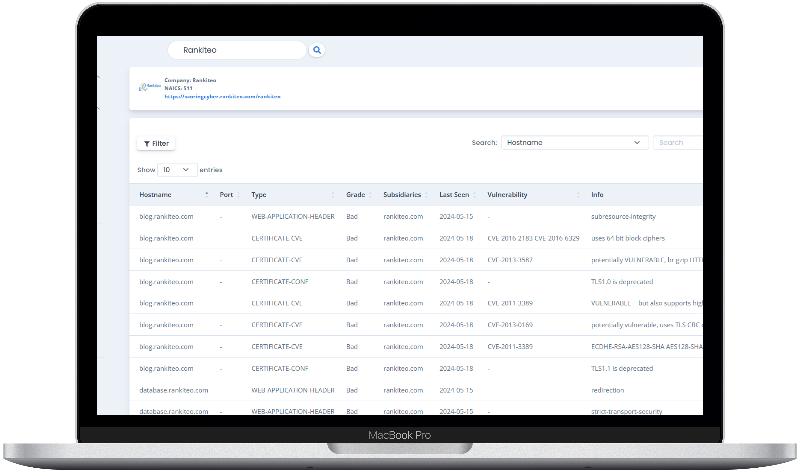
  • Vulnerabilities
  • Findings

Swiss Institute Company CyberSecurity News & History

Past Incidents
0
Attack Types
0
No data available
Ailogo

Swiss Institute Company Scoring based on AI Models

Cyber Incidents Likelihood 3 - 6 - 9 months

🔒
Incident Predictions locked
Access Monitoring Plan

A.I Risk Score Likelihood 3 - 6 - 9 months

🔒
A.I. Risk Score Predictions locked
Access Monitoring Plan
statics

Underwriter Stats for Swiss Institute

Incidents vs Museums, Historical Sites, and Zoos Industry Average (This Year)

No incidents recorded for Swiss Institute in 2026.

Incidents vs All-Companies Average (This Year)

No incidents recorded for Swiss Institute in 2026.

Incident Types Swiss Institute vs Museums, Historical Sites, and Zoos Industry Avg (This Year)

No incidents recorded for Swiss Institute in 2026.

Incident History — Swiss Institute (X = Date, Y = Severity)

Swiss Institute cyber incidents detection timeline including parent company and subsidiaries

Swiss Institute Company Subsidiaries

SubsidiaryImage

Founded on May 7th, 1986, the Swiss Institute was officially registered with the State and City of New York as an independent, not-for-profit organization on September 12th, 1986. The Swiss Center Foundation provided important support helping the Swiss Institute to start its program. In 1990, though the Swiss Institute is not affiliated with the Swiss government, the Swiss government agreed to give the Institute an annual contribution, in addition to the amount already awarded by Pro Helvetia, the Art Council of Switzerland. Both contributions were and continue to be approved by a committee of experts. Between June 30, 1992 and June 30 1995, corporate contributions more than doubled. In 1994, the Institute moved to a large loft in SoHo, in the center of the New York art scene, where there is an interested art audience. The loft's raw space was constructed to museum-standard specifications by architects Pagamenta & Torriani. The Swiss Institute has grown from a showcase of Swiss art and artists for a mostly Swiss audience, into an innovative international venue for art that provides a significant forum for cultural dialogue between Switzerland, Europe, and the United States. This unique angle fosters the interaction between the Swiss and the many other communities and nationalities found in New York City. The result is a distinctive view of art and a way of thinking which asks audiences to break with traditional assumptions about art and national stereotypes.

Loading...
similarCompanies

Swiss Institute Similar Companies

Science and Industry Museum

The Science and Industry Museum in Manchester is devoted to inspiring our visitors through ideas that change the world, from the Industrial Revolution to today and beyond. It’s a story that we’re uniquely placed to tell—on the site of the oldest surviving passenger railway station, in the heart of

The Children's Museum

The Children’s Museum in West Hartford and Roaring Brook Nature Center in Canton are Connecticut’s premiere destinations for exploration and education. The Children's Museum Wildlife Sanctuary is home to more than 100 live rescued animals. Travelers Science Dome is CT's largest digital full dome pla

Smart Museum of Art, The University of Chicago

The Smart Museum of Art at the University of Chicago is a site for rigorous inquiry and exchange that encourages the examination of complex issues through the lens of art objects and artistic practice. Through strong community and scholarly partnerships, the Museum incorporates diverse ideas, identi

Frontier Texas

Located in historic downtown Abilene, Frontier Texas is a western heritage center that brings the Old West to life with the help of state-of-the-art technology and great true stories. This award winning facility was created to serve as the anchor for the city's and region's tourism development effor
American Swedish Historical Museum

The American Swedish Historical Museum was founded in Philadelphia in 1926 to celebrate Swedish culture and contributions in the United States. The building includes 12 galleries covering history, art, science, literature and design from the Viking age to contemporary Swedish society. The museum als

San Francisco Zoo & Gardens

The mission of the San Francisco Zoo is to connect all people with wildlife, inspire caring for nature, and advance conservation action. Nestled against the Pacific Ocean, the SF Zoo is an urban oasis. It is home to more than 1,000 exotic, endangered, and rescued animals representing nearly 250 spec

TALAS is a company committed to serving the fields of art, particularly art conservation, restoration and bookbinding. We continually strive to use our knowledge, innovation, and resources to provide the highest quality supplies and services to our customers. We believe our success is measured by

The Brenton Arboretum

The Brenton Arboretum was established by Sue and J.C. (Buz) Brenton and their children because of their love of trees, the importance of trees to our world, and their desire to preserve a beautiful and important natural area. The first trees were planted in the 140-acre Arboretum during the spring o

Saunders Finger Lakes Museum

Nestled in the heart of it all on the north end of Keuka Lake, the Saunders Finger Lakes Museum stirs the imagination, educates the mind, and inspires visitors of all ages. Our goal is to bring the unique cultural heritage and natural history of the Finger Lakes directly to you. Let us show you why

newsone

Swiss Institute CyberSecurity News

January 21, 2026 02:47 PM
SwissCyber Initiative

The SwissCyber Initiative strengthens Switzerland's digital resilience by providing a comprehensive, evidence-based overview of the national...

December 29, 2025 10:13 PM
An ITAR-ly Critical Reminder of Cybersecurity Requirements: DOJ Settles with Swiss Automation, Inc.

Earlier this month, the Department of Justice (DOJ) announced that Swiss Automation Inc., an Illinois-based precision machining company,...

December 06, 2025 08:00 AM
Illinois-based Swiss Automation Settles Cybersecurity Negligence Claims for $421,234 with Justice Department

Swiss Automation Inc. settled for $421234 over claims it didn't meet cybersecurity standards for DoD part blueprints.

November 06, 2025 08:00 AM
D-Orbit and mhackeroni conduct in-orbit cybersecurity competition

SAN FRANCISCO – Italian space logistics company D-Orbit announced the conclusion Nov. 6 of CTRL+Space, Europe's first in-orbit...

October 13, 2025 07:00 AM
Pilot project for testing security vulnerabilities in open source software

13.10.2025 - The National Cyber Security Centre (NCSC) and the National Test Institute for Cybersecurity (NTC) have conducted a pilot...

September 03, 2025 07:00 AM
Shifting cyber insurance growth into the next gear

Despite a fast-evolving cyber threat landscape, the cyber insurance growth story has continued to slow, with Swiss Re's latest data showing...

August 29, 2025 07:00 AM
Protecting Healthcare in a Digital Age: Cybersecurity Seminar - Sweden | The Netherlands and Sweden

In an era where digital innovation is transforming healthcare, cybersecurity has never been more crucial. On Thursday 23 October, Swedish...

August 06, 2025 07:00 AM
$450,000 grant will send Washington State University Everett students to Sweden

The three-year initiative will send 21 students from across WSU campuses to research cybersecurity and artificial intelligence.

August 06, 2025 07:00 AM
Cybersecurity and International Trade

A policy primer on the main types of cybersecurity measures and their trade implications, with a focus on key considerations for...

faq

Frequently Asked Questions

Explore insights on cybersecurity incidents, risk posture, and Rankiteo's assessments.

Swiss Institute CyberSecurity History Information

Official Website of Swiss Institute

The official website of Swiss Institute is http://www.swissinstitute.net.

Swiss Institute’s AI-Generated Cybersecurity Score

According to Rankiteo, Swiss Institute’s AI-generated cybersecurity score is 762, reflecting their Fair security posture.

How many security badges does Swiss Institute’ have ?

According to Rankiteo, Swiss Institute currently holds 0 security badges, indicating that no recognized compliance certifications are currently verified for the organization.

Has Swiss Institute been affected by any supply chain cyber incidents ?

According to Rankiteo, Swiss Institute has not been affected by any supply chain cyber incidents, and no incident IDs are currently listed for the organization.

Does Swiss Institute have SOC 2 Type 1 certification ?

According to Rankiteo, Swiss Institute is not certified under SOC 2 Type 1.

Does Swiss Institute have SOC 2 Type 2 certification ?

According to Rankiteo, Swiss Institute does not hold a SOC 2 Type 2 certification.

Does Swiss Institute comply with GDPR ?

According to Rankiteo, Swiss Institute is not listed as GDPR compliant.

Does Swiss Institute have PCI DSS certification ?

According to Rankiteo, Swiss Institute does not currently maintain PCI DSS compliance.

Does Swiss Institute comply with HIPAA ?

According to Rankiteo, Swiss Institute is not compliant with HIPAA regulations.

Does Swiss Institute have ISO 27001 certification ?

According to Rankiteo,Swiss Institute is not certified under ISO 27001, indicating the absence of a formally recognized information security management framework.

Industry Classification of Swiss Institute

Swiss Institute operates primarily in the Museums, Historical Sites, and Zoos industry.

Number of Employees at Swiss Institute

Swiss Institute employs approximately 31 people worldwide.

Subsidiaries Owned by Swiss Institute

Swiss Institute presently has no subsidiaries across any sectors.

Swiss Institute’s LinkedIn Followers

Swiss Institute’s official LinkedIn profile has approximately 731 followers.

NAICS Classification of Swiss Institute

Swiss Institute is classified under the NAICS code 712, which corresponds to Museums, Historical Sites, and Similar Institutions.

Swiss Institute’s Presence on Crunchbase

No, Swiss Institute does not have a profile on Crunchbase.

Swiss Institute’s Presence on LinkedIn

Yes, Swiss Institute maintains an official LinkedIn profile, which is actively utilized for branding and talent engagement, which can be accessed here: https://www.linkedin.com/company/swiss-institute-contemporary-art-ny.

Cybersecurity Incidents Involving Swiss Institute

As of January 23, 2026, Rankiteo reports that Swiss Institute has not experienced any cybersecurity incidents.

Number of Peer and Competitor Companies

Swiss Institute has an estimated 2,178 peer or competitor companies worldwide.

Swiss Institute CyberSecurity History Information

How many cyber incidents has Swiss Institute faced ?

Total Incidents: According to Rankiteo, Swiss Institute has faced 0 incidents in the past.

What types of cybersecurity incidents have occurred at Swiss Institute ?

Incident Types: The types of cybersecurity incidents that have occurred include .

Incident Details

What are the most common types of attacks the company has faced ?

Additional Questions

cve

Latest Global CVEs (Not Company-Specific)

Description

Backstage is an open framework for building developer portals, and @backstage/backend-defaults provides the default implementations and setup for a standard Backstage backend app. Prior to versions 0.12.2, 0.13.2, 0.14.1, and 0.15.0, the `FetchUrlReader` component, used by the catalog and other plugins to fetch content from URLs, followed HTTP redirects automatically. This allowed an attacker who controls a host listed in `backend.reading.allow` to redirect requests to internal or sensitive URLs that are not on the allowlist, bypassing the URL allowlist security control. This is a Server-Side Request Forgery (SSRF) vulnerability that could allow access to internal resources, but it does not allow attackers to include additional request headers. This vulnerability is fixed in `@backstage/backend-defaults` version 0.12.2, 0.13.2, 0.14.1, and 0.15.0. Users should upgrade to this version or later. Some workarounds are available. Restrict `backend.reading.allow` to only trusted hosts that you control and that do not issue redirects, ensure allowed hosts do not have open redirect vulnerabilities, and/or use network-level controls to block access from Backstage to sensitive internal endpoints.

Risk Information
cvss3
Base: 3.5
Severity: HIGH
CVSS:3.1/AV:N/AC:H/PR:L/UI:N/S:C/C:L/I:N/A:N
Description

Backstage is an open framework for building developer portals, and @backstage/cli-common provides config loading functionality used by the backend and command line interface of Backstage. Prior to version 0.1.17, the `resolveSafeChildPath` utility function in `@backstage/backend-plugin-api`, which is used to prevent path traversal attacks, failed to properly validate symlink chains and dangling symlinks. An attacker could bypass the path validation via symlink chains (creating `link1 → link2 → /outside` where intermediate symlinks eventually resolve outside the allowed directory) and dangling symlinks (creating symlinks pointing to non-existent paths outside the base directory, which would later be created during file operations). This function is used by Scaffolder actions and other backend components to ensure file operations stay within designated directories. This vulnerability is fixed in `@backstage/backend-plugin-api` version 0.1.17. Users should upgrade to this version or later. Some workarounds are available. Run Backstage in a containerized environment with limited filesystem access and/or restrict template creation to trusted users.

Risk Information
cvss3
Base: 6.3
Severity: HIGH
CVSS:3.1/AV:N/AC:H/PR:L/UI:N/S:C/C:H/I:N/A:N
Description

Backstage is an open framework for building developer portals. Multiple Scaffolder actions and archive extraction utilities were vulnerable to symlink-based path traversal attacks. An attacker with access to create and execute Scaffolder templates could exploit symlinks to read arbitrary files via the `debug:log` action by creating a symlink pointing to sensitive files (e.g., `/etc/passwd`, configuration files, secrets); delete arbitrary files via the `fs:delete` action by creating symlinks pointing outside the workspace, and write files outside the workspace via archive extraction (tar/zip) containing malicious symlinks. This affects any Backstage deployment where users can create or execute Scaffolder templates. This vulnerability is fixed in `@backstage/backend-defaults` versions 0.12.2, 0.13.2, 0.14.1, and 0.15.0; `@backstage/plugin-scaffolder-backend` versions 2.2.2, 3.0.2, and 3.1.1; and `@backstage/plugin-scaffolder-node` versions 0.11.2 and 0.12.3. Users should upgrade to these versions or later. Some workarounds are available. Follow the recommendation in the Backstage Threat Model to limit access to creating and updating templates, restrict who can create and execute Scaffolder templates using the permissions framework, audit existing templates for symlink usage, and/or run Backstage in a containerized environment with limited filesystem access.

Risk Information
cvss3
Base: 7.1
Severity: HIGH
CVSS:3.1/AV:N/AC:H/PR:L/UI:N/S:C/C:H/I:N/A:L
Description

FastAPI Api Key provides a backend-agnostic library that provides an API key system. Version 1.1.0 has a timing side-channel vulnerability in verify_key(). The method applied a random delay only on verification failures, allowing an attacker to statistically distinguish valid from invalid API keys by measuring response latencies. With enough repeated requests, an adversary could infer whether a key_id corresponds to a valid key, potentially accelerating brute-force or enumeration attacks. All users relying on verify_key() for API key authentication prior to the fix are affected. Users should upgrade to version 1.1.0 to receive a patch. The patch applies a uniform random delay (min_delay to max_delay) to all responses regardless of outcome, eliminating the timing correlation. Some workarounds are available. Add an application-level fixed delay or random jitter to all authentication responses (success and failure) before the fix is applied and/or use rate limiting to reduce the feasibility of statistical timing attacks.

Risk Information
cvss3
Base: 3.7
Severity: HIGH
CVSS:3.1/AV:N/AC:H/PR:N/UI:N/S:U/C:L/I:N/A:N
Description

The Flux Operator is a Kubernetes CRD controller that manages the lifecycle of CNCF Flux CD and the ControlPlane enterprise distribution. Starting in version 0.36.0 and prior to version 0.40.0, a privilege escalation vulnerability exists in the Flux Operator Web UI authentication code that allows an attacker to bypass Kubernetes RBAC impersonation and execute API requests with the operator's service account privileges. In order to be vulnerable, cluster admins must configure the Flux Operator with an OIDC provider that issues tokens lacking the expected claims (e.g., `email`, `groups`), or configure custom CEL expressions that can evaluate to empty values. After OIDC token claims are processed through CEL expressions, there is no validation that the resulting `username` and `groups` values are non-empty. When both values are empty, the Kubernetes client-go library does not add impersonation headers to API requests, causing them to be executed with the flux-operator service account's credentials instead of the authenticated user's limited permissions. This can result in privilege escalation, data exposure, and/or information disclosure. Version 0.40.0 patches the issue.

Risk Information
cvss3
Base: 5.3
Severity: HIGH
CVSS:3.1/AV:N/AC:H/PR:L/UI:N/S:U/C:H/I:N/A:N

Access Data Using Our API

SubsidiaryImage

Get company history

curl -i -X GET 'https://api.rankiteo.com/underwriter-getcompany-history?linkedin_id=swiss-institute-contemporary-art-ny' -H 'apikey: YOUR_API_KEY_HERE'

What Do We Measure ?

revertimgrevertimgrevertimgrevertimg
Incident
revertimgrevertimgrevertimgrevertimg
Finding
revertimgrevertimgrevertimgrevertimg
Grade
revertimgrevertimgrevertimgrevertimg
Digital Assets

Every week, Rankiteo analyzes billions of signals to give organizations a sharper, faster view of emerging risks. With deeper, more actionable intelligence at their fingertips, security teams can outpace threat actors, respond instantly to Zero-Day attacks, and dramatically shrink their risk exposure window.

These are some of the factors we use to calculate the overall score:

Network Security

Identify exposed access points, detect misconfigured SSL certificates, and uncover vulnerabilities across the network infrastructure.

SBOM (Software Bill of Materials)

Gain visibility into the software components used within an organization to detect vulnerabilities, manage risk, and ensure supply chain security.

CMDB (Configuration Management Database)

Monitor and manage all IT assets and their configurations to ensure accurate, real-time visibility across the company's technology environment.

Threat Intelligence

Leverage real-time insights on active threats, malware campaigns, and emerging vulnerabilities to proactively defend against evolving cyberattacks.

Top LeftTop RightBottom LeftBottom Right
Rankiteo is a unified scoring and risk platform that analyzes billions of signals weekly to help organizations gain faster, more actionable insights into emerging threats. Empowering teams to outpace adversaries and reduce exposure.
Users Love Us Badge