






SPD
Company Details
Linkedin ID:
seattle-police-department
Employees number:
419
Number of followers:
2,378
NAICS:
92
Industry Type:
Homepage:
seattle.gov
IP Addresses:
0
Company ID:
SEA_1337898
Scan Status:
In-progress


Seattle Police Department Company CyberSecurity Posture
seattle.gov


The Seattle Police Department is a large metropolitan public safety agency in Washington state with nearly 1,100 sworn officers. We receive over 800,000 911 calls annually in a city of 84 square miles. We have more specialty units than any other department in the state, including: traffic, harbor, mounted patrol, major crimes, property crimes, crisis response, SWAT, arson and bombs, K9, collaborative (community) policing, forensics, training and community response. On a daily basis, our officers are asked to do a little bit of everything - from investigating and solving crimes; to patrolling our waterways, parks and city streets; to keeping everyone safe during sporting events and parades; to connecting our city's most vulnerable residents with much-needed services. The mission of the Seattle Police Department is to prevent crime, enforce the law, and support quality public safety by delivering respectful, professional and dependable police services. View the City’s policies at seattle.gov/digital.
Company Details
seattle-police-department
419
2,378
92
seattle.gov
0
SEA_1337898
In-progress
 SPD Risk Score (AI oriented)
Between 750 and 799
 SPD Global Score (TPRM)
XXXX
Description: The Washington State Office of the Attorney General reported a data breach involving the Seattle Police Officers’ Guild on April 26, 2021. The breach, which was discovered on March 30, 2021, resulted from a cyberattack targeting Microsoft Exchange email servers, exposing personal information of 1,297 Washington residents.


No incidents recorded for Seattle Police Department in 2026.
No incidents recorded for Seattle Police Department in 2026.
No incidents recorded for Seattle Police Department in 2026.
SPD cyber incidents detection timeline including parent company and subsidiaries

The Seattle Police Department is a large metropolitan public safety agency in Washington state with nearly 1,100 sworn officers. We receive over 800,000 911 calls annually in a city of 84 square miles. We have more specialty units than any other department in the state, including: traffic, harbor, mounted patrol, major crimes, property crimes, crisis response, SWAT, arson and bombs, K9, collaborative (community) policing, forensics, training and community response. On a daily basis, our officers are asked to do a little bit of everything - from investigating and solving crimes; to patrolling our waterways, parks and city streets; to keeping everyone safe during sporting events and parades; to connecting our city's most vulnerable residents with much-needed services. The mission of the Seattle Police Department is to prevent crime, enforce the law, and support quality public safety by delivering respectful, professional and dependable police services. View the City’s policies at seattle.gov/digital.


The Brazilian Institute of Geography and Statistics or IBGE (Portuguese: Instituto Brasileiro de Geografia e Estatística), is the agency responsible for statistical, geographic, cartographic, geodetic and environmental information in Brazil. The IBGE performs a national census every ten years, and t

For more information about GAO, please visit www.gao.gov. General Information The U.S. Government Accountability Office (GAO) is an independent, nonpartisan agency that works for Congress. Often called the "congressional watchdog," GAO investigates how the federal government spends taxpayer dolla

O Instituto Nacional do Seguro Social (INSS) é uma autarquia do Governo Federal do Brasil que recebe as contribuições para a manutenção do Regime Geral da Previdência Social, sendo responsável pelo pagamento da aposentadoria, pensão por morte, auxílio-doença, auxílio-acidente, entre outros benefício

INSTITUTO DE SEGURIDAD Y SERVICIOS SOCIALES DE LOS TRABAJADORES DEL ESTADO. ES UN ORGANISMOS PÚBLICO QUE OTORGA SERVICIOS DE SALUD, PENSIONES, VIVIENDA, PRÉSTAMOS, ESTANCIAS INFANTILES, TURISMO, CULTURA, RECREACION, DEPORTE; CUYOS AFILIADOS SON TRABAJADORES DE DEPENDENCIAS GUBERNAMENTALES, CON DERE

With a workforce of 30,000 people, and opportunities in 1,000 different job categories, the City of Philadelphia is one of the largest employers in Southeastern Pennsylvania. As an employer, we operate through the guiding principles of service, integrity, respect, accountability, collaboration, dive

Victorian local government jobs offer opportunities for people with diverse skills. The sector delivers more than 100 services and employs staff in the areas of health and community care, corporate and business support, engineering, planning and community development, and environment and emergency m

Central Denmark Region is one of five regions in Denmark. Denmark is organised at three political and administrative levels: the national (government), the regional (5 regions) and the municipal level (98 municipalities). Each region is led by a Regional Council, consisting of 41 politicians ele

Travailler dans la fonction publique du Québec, c'est plus qu'une carrière! Réparti(e)s dans une vingtaine de ministères et une soixantaine d'organismes à travers le Québec, tous les gestes posés par les employé(e)s de la fonction publique façonnent l’avenir de la société et contribuent à améliorer

Working for Amsterdam means working for the most beautiful city in the world. Think of its rich history, the role Amsterdam plays internationally, and events such as Sail, Gay Pride and King’s Day. Of course everybody wants to visit Amsterdam, or work or live here. As you can probably imagine, work
.png)
(SEATTLE) — Police in Seattle have arrested a 21-year-old man armed with a shotgun, pistol, and carrying multiple rounds of ammunition near...
Police arrested a 21-year-old man who was allegedly armed with a shotgun, handgun and ammunition near the Space Needle during Seattle's New...
A 34-year-old man was arrested in the Lake City neighborhood after officers caught him in the middle of a burglary, according to the Seattle...
The Seattle Police Department (SPD) says officers shot and killed a man who was waving a handgun in the Rainier Valley neighborhood of South...
Seattle police have four teens in custody and are looking for two other suspects after the occupants of a stolen car opened fire on officers...
Three teen girls and a 16-year-old boy were arrested on Saturday night after leading police on a chase and allegedly shooting at officers in...
The King County Sheriff's Office and Washington State Patrol are investigating a deadly shooting in south Seattle involving an armed man and...
King County Independent Force Investigations Team (IFIT) is investigating a deadly shooting involving an armed man and Seattle police...
Seattle police are investigating a deadly crash near the Ship Canal Bridge Tuesday morning. Seattle Fire Department and Seattle Police...

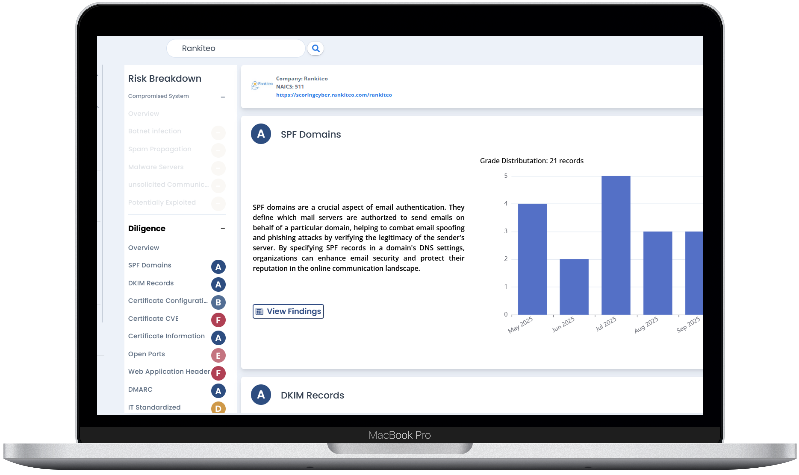
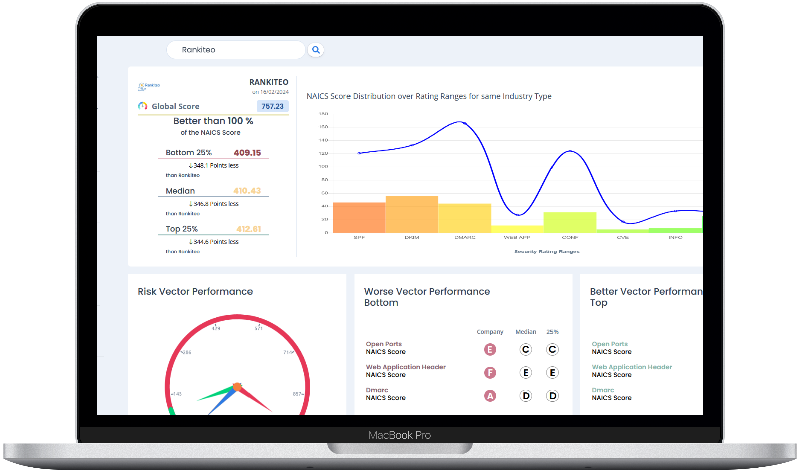
Explore insights on cybersecurity incidents, risk posture, and Rankiteo's assessments.
The official website of Seattle Police Department is https://www.seattle.gov/police/police-jobs.
According to Rankiteo, Seattle Police Department’s AI-generated cybersecurity score is 753, reflecting their Fair security posture.
According to Rankiteo, Seattle Police Department currently holds 0 security badges, indicating that no recognized compliance certifications are currently verified for the organization.
According to Rankiteo, Seattle Police Department has not been affected by any supply chain cyber incidents, and no incident IDs are currently listed for the organization.
According to Rankiteo, Seattle Police Department is not certified under SOC 2 Type 1.
According to Rankiteo, Seattle Police Department does not hold a SOC 2 Type 2 certification.
According to Rankiteo, Seattle Police Department is not listed as GDPR compliant.
According to Rankiteo, Seattle Police Department does not currently maintain PCI DSS compliance.
According to Rankiteo, Seattle Police Department is not compliant with HIPAA regulations.
According to Rankiteo,Seattle Police Department is not certified under ISO 27001, indicating the absence of a formally recognized information security management framework.
Seattle Police Department operates primarily in the Government Administration industry.
Seattle Police Department employs approximately 419 people worldwide.
Seattle Police Department presently has no subsidiaries across any sectors.
Seattle Police Department’s official LinkedIn profile has approximately 2,378 followers.
Seattle Police Department is classified under the NAICS code 92, which corresponds to Public Administration.
No, Seattle Police Department does not have a profile on Crunchbase.
Yes, Seattle Police Department maintains an official LinkedIn profile, which is actively utilized for branding and talent engagement, which can be accessed here: https://www.linkedin.com/company/seattle-police-department.
As of January 23, 2026, Rankiteo reports that Seattle Police Department has experienced 1 cybersecurity incidents.
Seattle Police Department has an estimated 11,877 peer or competitor companies worldwide.
Incident Types: The types of cybersecurity incidents that have occurred include Cyber Attack.
Title: Seattle Police Officers’ Guild Data Breach
Description: A data breach involving the Seattle Police Officers’ Guild was reported by the Washington State Office of the Attorney General on April 26, 2021. The breach, discovered on March 30, 2021, resulted from a cyberattack targeting Microsoft Exchange email servers, exposing personal information of 1,297 Washington residents.
Date Detected: 2021-03-30
Date Publicly Disclosed: 2021-04-26
Type: Data Breach
Attack Vector: Cyberattack on Microsoft Exchange email servers
Vulnerability Exploited: Microsoft Exchange email servers
Common Attack Types: The most common types of attacks the company has faced is Cyber Attack.

Data Compromised: Personal information of 1,297 Washington residents
Systems Affected: Microsoft Exchange email servers
Commonly Compromised Data Types: The types of data most commonly compromised in incidents are Personal information.
Entity Name: Seattle Police Officers’ Guild
Entity Type: Organization
Industry: Law Enforcement
Location: Seattle, Washington
Customers Affected: 1,297 Washington residents
Type of Data Compromised: Personal information
Number of Records Exposed: 1,297
Source: Washington State Office of the Attorney General
Additional Resources: Stakeholders can find additional resources on cybersecurity best practices at and Source: Washington State Office of the Attorney General.
Most Recent Incident Detected: The most recent incident detected was on 2021-03-30.
Most Recent Incident Publicly Disclosed: The most recent incident publicly disclosed was on 2021-04-26.
Most Significant Data Compromised: The most significant data compromised in an incident were Personal information of 1 and297 Washington residents.
Most Sensitive Data Compromised: The most sensitive data compromised in a breach were Personal information of 1 and297 Washington residents.
Number of Records Exposed in Most Significant Breach: The number of records exposed in the most significant breach was 1.3K.
Most Recent Source: The most recent source of information about an incident is Washington State Office of the Attorney General.
.png)
Backstage is an open framework for building developer portals, and @backstage/backend-defaults provides the default implementations and setup for a standard Backstage backend app. Prior to versions 0.12.2, 0.13.2, 0.14.1, and 0.15.0, the `FetchUrlReader` component, used by the catalog and other plugins to fetch content from URLs, followed HTTP redirects automatically. This allowed an attacker who controls a host listed in `backend.reading.allow` to redirect requests to internal or sensitive URLs that are not on the allowlist, bypassing the URL allowlist security control. This is a Server-Side Request Forgery (SSRF) vulnerability that could allow access to internal resources, but it does not allow attackers to include additional request headers. This vulnerability is fixed in `@backstage/backend-defaults` version 0.12.2, 0.13.2, 0.14.1, and 0.15.0. Users should upgrade to this version or later. Some workarounds are available. Restrict `backend.reading.allow` to only trusted hosts that you control and that do not issue redirects, ensure allowed hosts do not have open redirect vulnerabilities, and/or use network-level controls to block access from Backstage to sensitive internal endpoints.
Backstage is an open framework for building developer portals, and @backstage/cli-common provides config loading functionality used by the backend and command line interface of Backstage. Prior to version 0.1.17, the `resolveSafeChildPath` utility function in `@backstage/backend-plugin-api`, which is used to prevent path traversal attacks, failed to properly validate symlink chains and dangling symlinks. An attacker could bypass the path validation via symlink chains (creating `link1 → link2 → /outside` where intermediate symlinks eventually resolve outside the allowed directory) and dangling symlinks (creating symlinks pointing to non-existent paths outside the base directory, which would later be created during file operations). This function is used by Scaffolder actions and other backend components to ensure file operations stay within designated directories. This vulnerability is fixed in `@backstage/backend-plugin-api` version 0.1.17. Users should upgrade to this version or later. Some workarounds are available. Run Backstage in a containerized environment with limited filesystem access and/or restrict template creation to trusted users.
Backstage is an open framework for building developer portals. Multiple Scaffolder actions and archive extraction utilities were vulnerable to symlink-based path traversal attacks. An attacker with access to create and execute Scaffolder templates could exploit symlinks to read arbitrary files via the `debug:log` action by creating a symlink pointing to sensitive files (e.g., `/etc/passwd`, configuration files, secrets); delete arbitrary files via the `fs:delete` action by creating symlinks pointing outside the workspace, and write files outside the workspace via archive extraction (tar/zip) containing malicious symlinks. This affects any Backstage deployment where users can create or execute Scaffolder templates. This vulnerability is fixed in `@backstage/backend-defaults` versions 0.12.2, 0.13.2, 0.14.1, and 0.15.0; `@backstage/plugin-scaffolder-backend` versions 2.2.2, 3.0.2, and 3.1.1; and `@backstage/plugin-scaffolder-node` versions 0.11.2 and 0.12.3. Users should upgrade to these versions or later. Some workarounds are available. Follow the recommendation in the Backstage Threat Model to limit access to creating and updating templates, restrict who can create and execute Scaffolder templates using the permissions framework, audit existing templates for symlink usage, and/or run Backstage in a containerized environment with limited filesystem access.
FastAPI Api Key provides a backend-agnostic library that provides an API key system. Version 1.1.0 has a timing side-channel vulnerability in verify_key(). The method applied a random delay only on verification failures, allowing an attacker to statistically distinguish valid from invalid API keys by measuring response latencies. With enough repeated requests, an adversary could infer whether a key_id corresponds to a valid key, potentially accelerating brute-force or enumeration attacks. All users relying on verify_key() for API key authentication prior to the fix are affected. Users should upgrade to version 1.1.0 to receive a patch. The patch applies a uniform random delay (min_delay to max_delay) to all responses regardless of outcome, eliminating the timing correlation. Some workarounds are available. Add an application-level fixed delay or random jitter to all authentication responses (success and failure) before the fix is applied and/or use rate limiting to reduce the feasibility of statistical timing attacks.
The Flux Operator is a Kubernetes CRD controller that manages the lifecycle of CNCF Flux CD and the ControlPlane enterprise distribution. Starting in version 0.36.0 and prior to version 0.40.0, a privilege escalation vulnerability exists in the Flux Operator Web UI authentication code that allows an attacker to bypass Kubernetes RBAC impersonation and execute API requests with the operator's service account privileges. In order to be vulnerable, cluster admins must configure the Flux Operator with an OIDC provider that issues tokens lacking the expected claims (e.g., `email`, `groups`), or configure custom CEL expressions that can evaluate to empty values. After OIDC token claims are processed through CEL expressions, there is no validation that the resulting `username` and `groups` values are non-empty. When both values are empty, the Kubernetes client-go library does not add impersonation headers to API requests, causing them to be executed with the flux-operator service account's credentials instead of the authenticated user's limited permissions. This can result in privilege escalation, data exposure, and/or information disclosure. Version 0.40.0 patches the issue.

Get company history

Every week, Rankiteo analyzes billions of signals to give organizations a sharper, faster view of emerging risks. With deeper, more actionable intelligence at their fingertips, security teams can outpace threat actors, respond instantly to Zero-Day attacks, and dramatically shrink their risk exposure window.
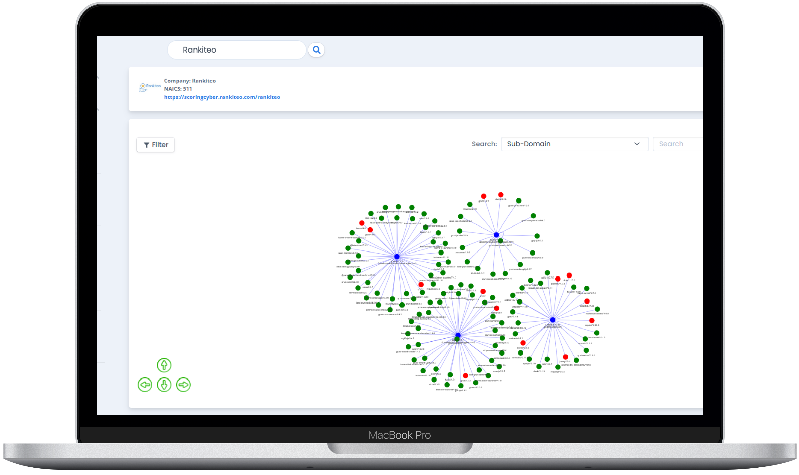
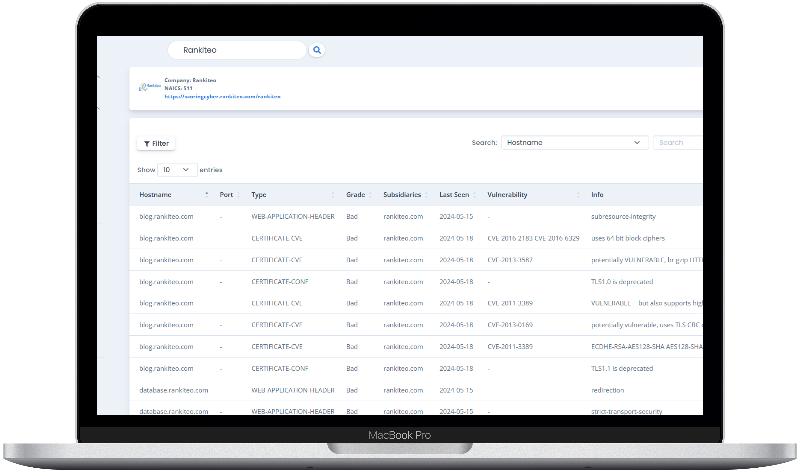
Identify exposed access points, detect misconfigured SSL certificates, and uncover vulnerabilities across the network infrastructure.
Gain visibility into the software components used within an organization to detect vulnerabilities, manage risk, and ensure supply chain security.
Monitor and manage all IT assets and their configurations to ensure accurate, real-time visibility across the company's technology environment.
Leverage real-time insights on active threats, malware campaigns, and emerging vulnerabilities to proactively defend against evolving cyberattacks.





 Rapid
Rapid