











RSS
Company Details
Linkedin ID:
royal-society-of-sculptors
Website:
Employees number:
34
Number of followers:
2,000
NAICS:
712
Industry Type:
Homepage:
sculptors.org.uk
IP Addresses:
0
Company ID:
ROY_2989097
Scan Status:
In-progress


Royal Society of Sculptors Vendor Cyber Rating & Cyber Score
sculptors.org.ukThe Royal Society of Sculptors is an artist led, membership organisation. We support and connect sculptors throughout their careers and lead the conversation about sculpture today through exhibitions and events for all. The Society was created more than 100 years ago to champion contemporary sculpture and the artists who create it. Today we welcome everyone interested in exploring this art form and its many possibilities. We are based in London’s South Kensington, a few minutes’ walk from its great museums, in a beautiful listed building called Dora House. Come and join in the conversation, through exhibitions, artists’ talks and creative workshops . We invite you to view the world from a different perspective, to dig deep into the practice of individual sculptors and to challenge the way you think. The Society provides a supportive membership community to sculptors throughout their careers, offering access to expert advice, training, bursaries, residencies and awards. Dora House is also available to hire for events, from drinks receptions and small conferences to creative workshops and training sessions.
Company Details
royal-society-of-sculptors
34
2,000
712
sculptors.org.uk
0
ROY_2989097
In-progress
 RSS Risk Score (AI oriented)
Between 750 and 799
 RSS Global Score (TPRM)
XXXX


No incidents recorded for Royal Society of Sculptors in 2026.
No incidents recorded for Royal Society of Sculptors in 2026.
No incidents recorded for Royal Society of Sculptors in 2026.
RSS cyber incidents detection timeline including parent company and subsidiaries

The Royal Society of Sculptors is an artist led, membership organisation. We support and connect sculptors throughout their careers and lead the conversation about sculpture today through exhibitions and events for all. The Society was created more than 100 years ago to champion contemporary sculpture and the artists who create it. Today we welcome everyone interested in exploring this art form and its many possibilities. We are based in London’s South Kensington, a few minutes’ walk from its great museums, in a beautiful listed building called Dora House. Come and join in the conversation, through exhibitions, artists’ talks and creative workshops . We invite you to view the world from a different perspective, to dig deep into the practice of individual sculptors and to challenge the way you think. The Society provides a supportive membership community to sculptors throughout their careers, offering access to expert advice, training, bursaries, residencies and awards. Dora House is also available to hire for events, from drinks receptions and small conferences to creative workshops and training sessions.


Established in 1885, the Crocker Art Museum was the first public art museum founded west of the Mississippi and is now one of the leading museums in California. Our mission is to bring people together and connect them in unexpected ways with art, ideas, each other, and the world around them.

The Edward M. Kennedy Institute for the United States Senate is dedicated to educating the public about the important role of the Senate in our government, encouraging participatory democracy, invigorating civil discourse, and inspiring the next generation of citizens and leaders to engage in the ci

The non-profit National Comedy Center is the United States' official cultural institution, state-of-the-art museum and immersive visitor experience dedicated to presenting the vital story of comedy and preserving its heritage for future generations. USA Today named the National Comedy Center the “Be

The Connecticut Museum of Culture and History is the go-to-destination for those who want to gain a deeper understanding of Connecticut’s culture and history. Here you will learn more about the critical role Connecticut continues to play in American history — and about the many cultures living in th

Restoration in progress! We're open for tours, programs, observing nights (spring, summer, fall), and an array of diverse speakers. Tickets and program info is on our website. Rising from the shoreline of Geneva Lake, Henry Ives Cobb's architectural masterpiece and the Olmsted Brothers' 50-acre slic

The Middletown Arts Center is an award=winning 23,000 square foot facility dedicated to the arts. Operated by the non-profit, 501c3 organization, the Middletown Township Cultural & Arts Council, it offers year-round arts programming for the community including an extensive arts education program, p

The mission of the Irish Cultural Center is to celebrate and promote Irish and Celtic Heritage and its influence on and partnership with other cultures. The goal of the McClelland Library is to make accessible a comprehensive collection of materials on Ireland and the Irish diaspora on the role of

JOUW EVENT op dé DROOMLOCATIE Een evenement dat meteen verrast en verwondert... en later nog lekker lang nasmaakt? Dat vereist een unieke locatie waarmee je indruk maakt. Kortom: een locatie zoals Hangar 58 (gloednieuwe multifunctionele infrastructuur) in de Oude Stad in Bokrijk! Het hele ja

Officially recognized by Guinness World Records in 2014, Rancho Obi-Wan is a private nonprofit museum housing the world’s largest collection of Star Wars memorabilia. Rancho Obi-Wan's mission is to inspire kids and the kid in all of us. Has Star Wars transformed your life? You can spark imagina
.png)
AI cybersecurity keynote speaker, IT defense and artificial intelligence thought leader, celebrity influencer and consulting expert Scott...
Recently approved legislation in West Virginia grants the state's chief information security officer greater authority to implement...
The fall of health tech company Theranos exposed how hype can outpace reality. In cybersecurity, similar pressures are emerging as vendors...
The national Small Business Development Center is taking a program that was started in Delaware and offering it through its full 1200-center...
City leaders ultimately rejected a National Guard cybersecurity partnership as concerns mounted over data access and federal involvement.
AI attack trends reshape cybersecurity as RSAC highlights autonomous threats, agentic defense and quantum risks as enterprises build new...
Harvard is monitoring an ongoing cybersecurity threat involving individuals impersonating University information technology staff to gain...
Three-year coordinated collaboration aims to automate incident detection, response, certification, and secure updates.
The new Exam Guidance for Artificial Intelligence maps AI concepts across more than 50 core cybersecurity exam domains.

Explore insights on cybersecurity incidents, risk posture, and Rankiteo's assessments.
The official website of Royal Society of Sculptors is http://www.sculptors.org.uk/.
According to Rankiteo, Royal Society of Sculptors’s AI-generated cybersecurity score is 762, reflecting their Fair security posture.
According to Rankiteo, Royal Society of Sculptors currently holds 0 security badges, indicating that no recognized compliance certifications are currently verified for the organization.
According to Rankiteo, Royal Society of Sculptors has not been affected by any supply chain cyber incidents, and no incident IDs are currently listed for the organization.
According to Rankiteo, Royal Society of Sculptors is not certified under SOC 2 Type 1.
According to Rankiteo, Royal Society of Sculptors does not hold a SOC 2 Type 2 certification.
According to Rankiteo, Royal Society of Sculptors is not listed as GDPR compliant.
According to Rankiteo, Royal Society of Sculptors does not currently maintain PCI DSS compliance.
According to Rankiteo, Royal Society of Sculptors is not compliant with HIPAA regulations.
According to Rankiteo,Royal Society of Sculptors is not certified under ISO 27001, indicating the absence of a formally recognized information security management framework.
Royal Society of Sculptors operates primarily in the Museums, Historical Sites, and Zoos industry.
Royal Society of Sculptors employs approximately 34 people worldwide.
Royal Society of Sculptors presently has no subsidiaries across any sectors.
Royal Society of Sculptors’s official LinkedIn profile has approximately 2,000 followers.
Royal Society of Sculptors is classified under the NAICS code 712, which corresponds to Museums, Historical Sites, and Similar Institutions.
No, Royal Society of Sculptors does not have a profile on Crunchbase.
Yes, Royal Society of Sculptors maintains an official LinkedIn profile, which is actively utilized for branding and talent engagement, which can be accessed here: https://www.linkedin.com/company/royal-society-of-sculptors.
As of April 03, 2026, Rankiteo reports that Royal Society of Sculptors has not experienced any cybersecurity incidents.
Royal Society of Sculptors has an estimated 2,193 peer or competitor companies worldwide.
Total Incidents: According to Rankiteo, Royal Society of Sculptors has faced 0 incidents in the past.
Incident Types: The types of cybersecurity incidents that have occurred include .
.png)
Hirschmann EagleSDV version 05.4.01 prior to 05.4.02 contains a denial-of-service vulnerability that causes the device to crash during session establishment when using TLS 1.0 or TLS 1.1. Attackers can trigger a crash by initiating TLS connections with these protocol versions to disrupt service availability.
The stored API keys in temporary browser client is not marked as protected allowing for JavScript console or other errors to allow for extraction of the encryption credentials.
XSS vulnerability in cveInterface.js allows for inject HTML to be passed to display, as cveInterface trusts input from CVE API services
Multiple reflected cross-site scripting (XSS) vulnerabilities in the login.php endpoint of Interzen Consulting S.r.l ZenShare Suite v17.0 allows attackers to execute arbitrary Javascript in the context of the user's browser via a crafted URL injected into the codice_azienda and red_url parameters.
A reflected cross-site scripting (XSS) vulnerability in the login_newpwd.php endpoint of Interzen Consulting S.r.l ZenShare Suite v17.0 allows attackers to execute arbitrary Javascript in the context of the user's browser via a crafted URL injected into the codice_azienda parameter.

Get company history

Every week, Rankiteo analyzes billions of signals to give organizations a sharper, faster view of emerging risks. With deeper, more actionable intelligence at their fingertips, security teams can outpace threat actors, respond instantly to Zero-Day attacks, and dramatically shrink their risk exposure window.
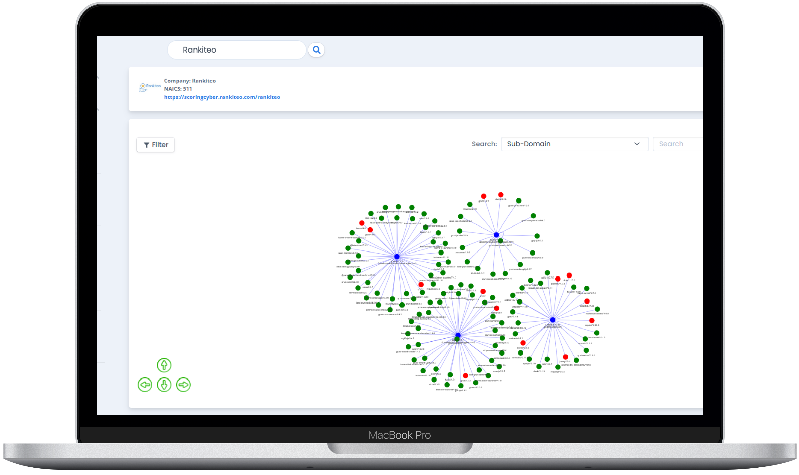
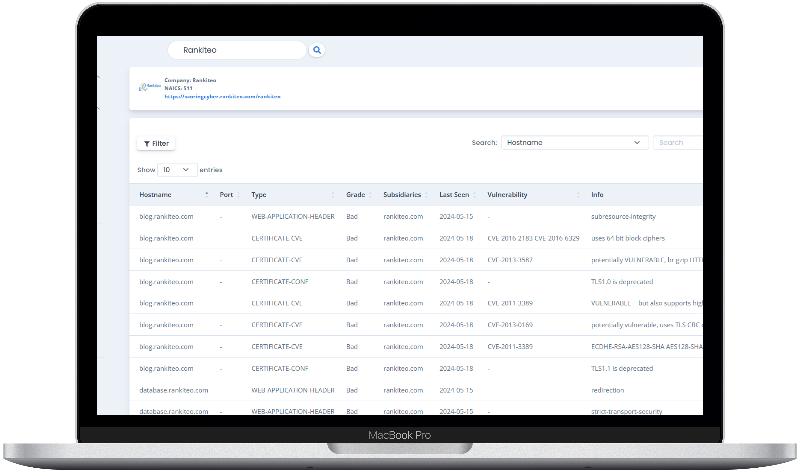
Identify exposed access points, detect misconfigured SSL certificates, and uncover vulnerabilities across the network infrastructure.
Gain visibility into the software components used within an organization to detect vulnerabilities, manage risk, and ensure supply chain security.
Monitor and manage all IT assets and their configurations to ensure accurate, real-time visibility across the company's technology environment.
Leverage real-time insights on active threats, malware campaigns, and emerging vulnerabilities to proactively defend against evolving cyberattacks.



 Rapid
Rapid