






MAU
Company Details
Linkedin ID:
moa-ubc
Website:
Employees number:
65
Number of followers:
2,467
NAICS:
712
Industry Type:
Homepage:
ubc.ca
IP Addresses:
0
Company ID:
MUS_9592580
Scan Status:
In-progress


Museum of Anthropology at UBC Company CyberSecurity Posture
ubc.ca


The Museum of Anthropology was established in 1949 as a department within the Faculty of Arts at the University of British Columbia. In 1976, it moved to its current home, an award-winning concrete and glass structure designed by Canadian architect Arthur Erickson. The building houses the Museum as well as the Laboratory of Archaeology, its laboratories and storage facilities. Since its inception, MOA has been committed to promoting awareness and understanding of culturally diverse ways of knowing the world through challenging and innovative programs and partnerships with Indigenous, local and global communities. MOA has been at the forefront of bringing Indigenous art into the mainstream by collecting and curating traditional and contemporary Indigenous art in a way that respects the artists and the cultures from which this work comes. MOA’s exhibitions and programs emphasize artistic diversity and the links between art, community and the contemporary social and political context in which youth, artists and communities are communicating their cultural traditions. MOA is also one of Canada’s largest teaching museums with faculty and staff teaching courses in museum studies, museum education, and conservation as well as Indigenous and world art. MOA houses nearly 50,000 works from almost every part of the world. MOA is known for its sizable Northwest Coast collections, including the finest collection of works by Bill Reid. Nearly half the collection is composed of works from Asia and Oceania while other significant holdings represent the Arctic, Latin America and Europe. MOA’s collection of world textiles is the largest in Western Canada, while the European ceramics collection is one of the two finest in the country. Additionally, MOA’s archives house the Museum’s institutional records and extensive holdings from anthropologists, linguists, missionaries and other travellers.
Company Details
moa-ubc
65
2,467
712
ubc.ca
0
MUS_9592580
In-progress
 MAU Risk Score (AI oriented)
Between 750 and 799
 MAU Global Score (TPRM)
XXXX


No incidents recorded for Museum of Anthropology at UBC in 2026.
No incidents recorded for Museum of Anthropology at UBC in 2026.
No incidents recorded for Museum of Anthropology at UBC in 2026.
MAU cyber incidents detection timeline including parent company and subsidiaries

The Museum of Anthropology was established in 1949 as a department within the Faculty of Arts at the University of British Columbia. In 1976, it moved to its current home, an award-winning concrete and glass structure designed by Canadian architect Arthur Erickson. The building houses the Museum as well as the Laboratory of Archaeology, its laboratories and storage facilities. Since its inception, MOA has been committed to promoting awareness and understanding of culturally diverse ways of knowing the world through challenging and innovative programs and partnerships with Indigenous, local and global communities. MOA has been at the forefront of bringing Indigenous art into the mainstream by collecting and curating traditional and contemporary Indigenous art in a way that respects the artists and the cultures from which this work comes. MOA’s exhibitions and programs emphasize artistic diversity and the links between art, community and the contemporary social and political context in which youth, artists and communities are communicating their cultural traditions. MOA is also one of Canada’s largest teaching museums with faculty and staff teaching courses in museum studies, museum education, and conservation as well as Indigenous and world art. MOA houses nearly 50,000 works from almost every part of the world. MOA is known for its sizable Northwest Coast collections, including the finest collection of works by Bill Reid. Nearly half the collection is composed of works from Asia and Oceania while other significant holdings represent the Arctic, Latin America and Europe. MOA’s collection of world textiles is the largest in Western Canada, while the European ceramics collection is one of the two finest in the country. Additionally, MOA’s archives house the Museum’s institutional records and extensive holdings from anthropologists, linguists, missionaries and other travellers.


MAXXI, the National Museum of XXI Century Arts, is the first Italian national institution devoted to contemporary creativity and conceived as a broad cultural campus. Designed by Zaha Hadid Architects, MAXXI is managed by a Foundation constituted in the July of 2009 by the Ministry for Cultural Heri
ZooMontana is a zoological and botanical garden and educational facility dedicated to the conservation of wildlife throughout Montana and the 45th parallel of earth. ZooMontana cares for over 100 animals of 51 different species, including wolves, grizzly bear, otter, eagles, and lynx. Located in t

10-31 Incorporated was created in 1985 by Bill Stender when he saw the need for custom mounts that had the ability to hold priceless items without taking away from their uniqueness. Five years later, Bill created 10-31 Cabinetry after being asked by many to design and build custom cabinetry. Creati

Lakeland Arts has a unique role reflecting the creative inspiration that flows through the local landscape and its people. We are a charitable organisation and run four cultural destinations firmly embedded in the Lake District; Windermere Jetty Museum, Blackwell - the Arts and Crafts house, Abbot H

🏆#1 Ranked Car Collection in the world by the Classic Car Trust | 2019 International Historic Motoring Award Winner | 2011, 2013, 2014, 2017 Located in Philadelphia, PA, the Simeone Foundation Automotive Museum is one of the world’s greatest collections of racing sports cars. Through our theme, “

At the Glazer Children’s Museum, we create and foster engaging, impactful play experiences for children and families to learn and thrive. Play inspires imagination and discovery, forms new connections in the brain, and builds skills like resilience, collaboration, and creative problem-solving. Play

In November 1961, a small group of individuals intent on saving the Ainsley Hall House from demolition officially incorporated as the Historic Columbia. Over the next five decades the organization, which was founded on the premise of preservation and education, would take on the stewardship of seven

Michael Borthwick aims to become the leading provider of independent technology advice to the cultural sector globally. Michael has provided extensive consulting expertise to clients including the Australian Centre for the Moving Image in Melbourne. Michael developed of the Concept Design for the
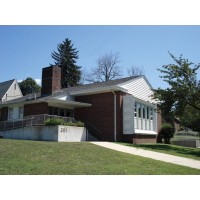
The mission of the Mahwah Museum is to preserve and present the history of the community and its connection to the region. Museum exhibits display information about the history of Mahwah and the surrounding community. Gallery talks are presented in the museum by volunteers who have researched and
.png)
Berlin promises to take down bad cyber actors and a new report prompts questions of whether police should carry Tasers to keep them from...
Disappearing topsoil is a big problem for land and bottom line. Expert advice for picking the best bull genetics. Keeping cattle right where...
Introduction. Many security leaders didn't authorize AI expansion. It happened around them. Someone plugged in a copilot in a SaaS tool or...
It's been a busy time for New Zealand's National Cyber Security Centre as it takes an unprecedentedly proactive posture to cyber threats.
Data deletion is a great way to reduce your digital footprint and lower the risk of cybercrime – here's a guide to deleting your data...
This post is also available in: עברית (Hebrew). Organizations are increasingly expected to share data across corporate boundaries, yet cybersecurity risks...
When cybercriminals are designing ways to deliver malware, hiding payloads within files remains one of the most common and, for them,...
IonQ, Inc. announced that national security leader Katie Arrington joined its executive team on January 19, 2026 as Chief Information...
The GSMA, on behalf of Europe's mobile operators, notes the European Commission's proposed revision of the Cybersecurity Act.

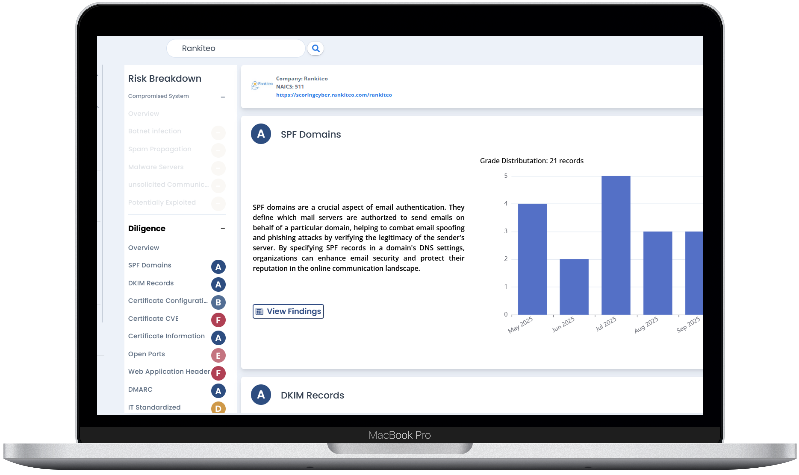
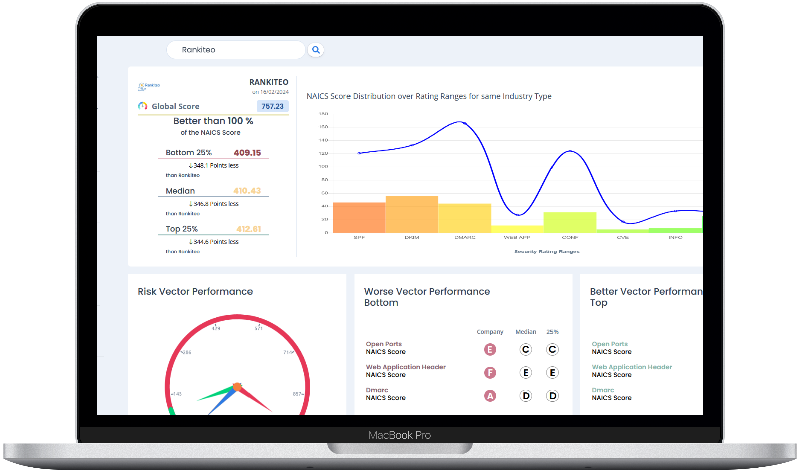
Explore insights on cybersecurity incidents, risk posture, and Rankiteo's assessments.
The official website of Museum of Anthropology at UBC is http://moa.ubc.ca.
According to Rankiteo, Museum of Anthropology at UBC’s AI-generated cybersecurity score is 763, reflecting their Fair security posture.
According to Rankiteo, Museum of Anthropology at UBC currently holds 0 security badges, indicating that no recognized compliance certifications are currently verified for the organization.
According to Rankiteo, Museum of Anthropology at UBC has not been affected by any supply chain cyber incidents, and no incident IDs are currently listed for the organization.
According to Rankiteo, Museum of Anthropology at UBC is not certified under SOC 2 Type 1.
According to Rankiteo, Museum of Anthropology at UBC does not hold a SOC 2 Type 2 certification.
According to Rankiteo, Museum of Anthropology at UBC is not listed as GDPR compliant.
According to Rankiteo, Museum of Anthropology at UBC does not currently maintain PCI DSS compliance.
According to Rankiteo, Museum of Anthropology at UBC is not compliant with HIPAA regulations.
According to Rankiteo,Museum of Anthropology at UBC is not certified under ISO 27001, indicating the absence of a formally recognized information security management framework.
Museum of Anthropology at UBC operates primarily in the Museums, Historical Sites, and Zoos industry.
Museum of Anthropology at UBC employs approximately 65 people worldwide.
Museum of Anthropology at UBC presently has no subsidiaries across any sectors.
Museum of Anthropology at UBC’s official LinkedIn profile has approximately 2,467 followers.
No, Museum of Anthropology at UBC does not have a profile on Crunchbase.
Yes, Museum of Anthropology at UBC maintains an official LinkedIn profile, which is actively utilized for branding and talent engagement, which can be accessed here: https://www.linkedin.com/company/moa-ubc.
As of January 24, 2026, Rankiteo reports that Museum of Anthropology at UBC has not experienced any cybersecurity incidents.
Museum of Anthropology at UBC has an estimated 2,179 peer or competitor companies worldwide.
Total Incidents: According to Rankiteo, Museum of Anthropology at UBC has faced 0 incidents in the past.
Incident Types: The types of cybersecurity incidents that have occurred include .
.png)
Typemill is a flat-file, Markdown-based CMS designed for informational documentation websites. A reflected Cross-Site Scripting (XSS) exists in the login error view template `login.twig` of versions 2.19.1 and below. The `username` value can be echoed back without proper contextual encoding when authentication fails. An attacker can execute script in the login page context. This issue has been fixed in version 2.19.2.
A DOM-based Cross-Site Scripting (XSS) vulnerability exists in the DomainCheckerApp class within domain/script.js of Sourcecodester Domain Availability Checker v1.0. The vulnerability occurs because the application improperly handles user-supplied data in the createResultElement method by using the unsafe innerHTML property to render domain search results.
A Remote Code Execution (RCE) vulnerability exists in Sourcecodester Modern Image Gallery App v1.0 within the gallery/upload.php component. The application fails to properly validate uploaded file contents. Additionally, the application preserves the user-supplied file extension during the save process. This allows an unauthenticated attacker to upload arbitrary PHP code by spoofing the MIME type as an image, leading to full system compromise.
A UNIX symbolic link following issue in the jailer component in Firecracker version v1.13.1 and earlier and 1.14.0 on Linux may allow a local host user with write access to the pre-created jailer directories to overwrite arbitrary host files via a symlink attack during the initialization copy at jailer startup, if the jailer is executed with root privileges. To mitigate this issue, users should upgrade to version v1.13.2 or 1.14.1 or above.
An information disclosure vulnerability exists in the /srvs/membersrv/getCashiers endpoint of the Aptsys gemscms backend platform thru 2025-05-28. This unauthenticated endpoint returns a list of cashier accounts, including names, email addresses, usernames, and passwords hashed using MD5. As MD5 is a broken cryptographic function, the hashes can be easily reversed using public tools, exposing user credentials in plaintext. This allows remote attackers to perform unauthorized logins and potentially gain access to sensitive POS operations or backend functions.

Get company history

Every week, Rankiteo analyzes billions of signals to give organizations a sharper, faster view of emerging risks. With deeper, more actionable intelligence at their fingertips, security teams can outpace threat actors, respond instantly to Zero-Day attacks, and dramatically shrink their risk exposure window.
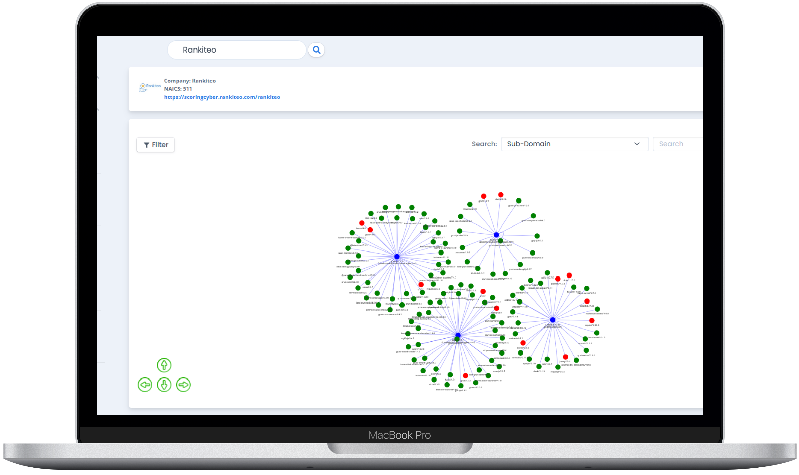
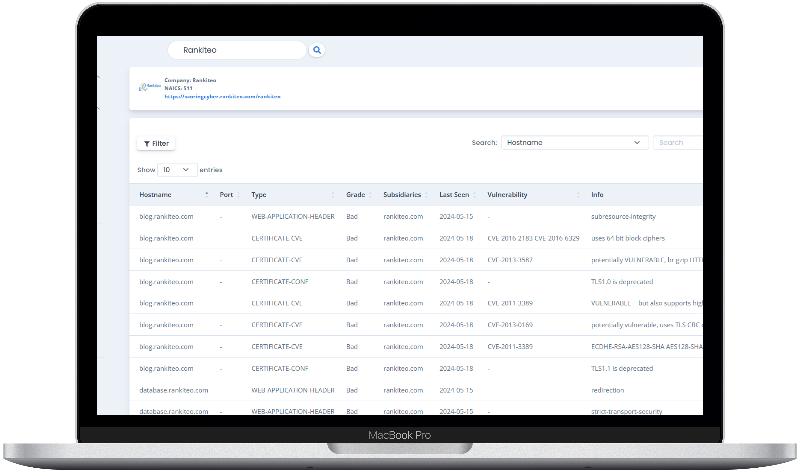
Identify exposed access points, detect misconfigured SSL certificates, and uncover vulnerabilities across the network infrastructure.
Gain visibility into the software components used within an organization to detect vulnerabilities, manage risk, and ensure supply chain security.
Monitor and manage all IT assets and their configurations to ensure accurate, real-time visibility across the company's technology environment.
Leverage real-time insights on active threats, malware campaigns, and emerging vulnerabilities to proactively defend against evolving cyberattacks.



 Rapid
Rapid