









MAM
Company Details
Linkedin ID:
missoula-art-museum
Employees number:
22
Number of followers:
268
NAICS:
712
Industry Type:
Homepage:
missoulaartmuseum.org
IP Addresses:
0
Company ID:
MIS_4646925
Scan Status:
In-progress

Missoula Art Museum Vendor Cyber Rating & Cyber Score
missoulaartmuseum.orgMission: MAM serves the public by engaging audiences and artists in the exploration of contemporary art relevant to the community, state and region. Founded in 1975 and accredited by the American Association of Museums since 1987, MAM has always been a flagship institution in culturally savvy Missoula, Montana. After a $5.3 million capital campaign and grand opening in September 2006, MAM offers a spectacular attraction in the heart of the historic downtown: a fully accessible, free, public museum that boasts six exhibition spaces, a library, education center, and an inviting information lounge. The successful building design has seamlessly fused the 100-year-old Carnegie Library building with a contemporary addition, creating the ideal environment for exhibiting, celebrating, and preserving MAM's growing contemporary art collection. MAM's exhibition program is a broad landscape that serves and represents diverse audiences and creative interests. Each year, 20 to 25 solo and group exhibitions rotate through six state-of-the-art galleries. MAM organizes and rents exhibits, develops programs through community partnerships, and welcomes the opportunity to review exhibition proposals. Admission is free every day, thanks to the generosity of MAM members and donors.
Company Details
missoula-art-museum
22
268
712
missoulaartmuseum.org
0
MIS_4646925
In-progress
 MAM Risk Score (AI oriented)
Between 750 and 799
 MAM Global Score (TPRM)
XXXX


No incidents recorded for Missoula Art Museum in 2026.
No incidents recorded for Missoula Art Museum in 2026.
No incidents recorded for Missoula Art Museum in 2026.
MAM cyber incidents detection timeline including parent company and subsidiaries

Mission: MAM serves the public by engaging audiences and artists in the exploration of contemporary art relevant to the community, state and region. Founded in 1975 and accredited by the American Association of Museums since 1987, MAM has always been a flagship institution in culturally savvy Missoula, Montana. After a $5.3 million capital campaign and grand opening in September 2006, MAM offers a spectacular attraction in the heart of the historic downtown: a fully accessible, free, public museum that boasts six exhibition spaces, a library, education center, and an inviting information lounge. The successful building design has seamlessly fused the 100-year-old Carnegie Library building with a contemporary addition, creating the ideal environment for exhibiting, celebrating, and preserving MAM's growing contemporary art collection. MAM's exhibition program is a broad landscape that serves and represents diverse audiences and creative interests. Each year, 20 to 25 solo and group exhibitions rotate through six state-of-the-art galleries. MAM organizes and rents exhibits, develops programs through community partnerships, and welcomes the opportunity to review exhibition proposals. Admission is free every day, thanks to the generosity of MAM members and donors.


Since its founding in 1936, the Institute of Contemporary Art/Boston has shared the pleasures of reflection, inspiration, imagination, and provocation that contemporary art offers with its audiences. A museum at the intersection of contemporary art and civic life, the ICA has advanced a bold vision

The Virginia Museum of History & Culture is owned and operated by the Virginia Historical Society — a private, non-profit organization established in 1831. The historical society is the oldest cultural organization in Virginia, and one of the oldest and most distinguished history organizations in th

Elmhurst Art Museum is both a destination for scholars and fans of the architecture of Mies van der Rohe, and a place where people from all backgrounds and walks of life learn to see and think differently through art and design. The Museum is located 25 minutes West of downtown Chicago by car or pub

The National Museum of Ireland is a leader in preserving and promoting Ireland’s heritage across the island and the world. We contribute to the collective memory and identity of all people with Irish connections, nationally and internationally, through our collections and programmes. We welcome over
Yelp Social Icon Facebook Social Icon YouTube Social Icon Instagram Social Icon Here at AFactory Studio, our sole purpose is to empower artists and non-artist in our thriving Art Center in Irving, Texas. We’ve got a history of commitment toward our students and our artists. While we’re dedicated
The Children's Museum of Richmond is a nonprofit organization with the mission to inspire growth in all children by engaging families in learning through play. Our Values: We value learning. •Children: We have respect for all children and their amazing abilities. We are passionate about the proce

Encounter superb works of modern and contemporary art at The Phillips Collection, an internationally recognized museum in Washington's vibrant Dupont Circle neighborhood. Paintings by Renoir and Rothko, Bonnard and O'Keeffe, van Gogh and Diebenkorn are among the many stunning impressionist and mo

Somerset House is a new kind of arts centre in the heart of London, designed for today’s audiences and creatives. Offering a diverse and dynamic public programme of contemporary arts and culture, we are also a home to a large community of creative businesses, artists and makers, including Somerset

At the Colorado Railroad Museum in Golden, we are "Still On Track" after two challenging years of the pandemic. For 2022, we're growing and expanding! Open Tuesday-Sunday and featuring more than 100 narrow and standard gauge steam and diesel locomotives, passenger cars, cabooses and even a G-scale g
.png)
The American Indian College Fund welcomes five members to its governing board of trustees for three-year terms. The three tribal college...

Explore insights on cybersecurity incidents, risk posture, and Rankiteo's assessments.
The official website of Missoula Art Museum is https://http://www.missoulaartmuseum.org.
According to Rankiteo, Missoula Art Museum’s AI-generated cybersecurity score is 763, reflecting their Fair security posture.
According to Rankiteo, Missoula Art Museum currently holds 0 security badges, indicating that no recognized compliance certifications are currently verified for the organization.
According to Rankiteo, Missoula Art Museum has not been affected by any supply chain cyber incidents, and no incident IDs are currently listed for the organization.
According to Rankiteo, Missoula Art Museum is not certified under SOC 2 Type 1.
According to Rankiteo, Missoula Art Museum does not hold a SOC 2 Type 2 certification.
According to Rankiteo, Missoula Art Museum is not listed as GDPR compliant.
According to Rankiteo, Missoula Art Museum does not currently maintain PCI DSS compliance.
According to Rankiteo, Missoula Art Museum is not compliant with HIPAA regulations.
According to Rankiteo,Missoula Art Museum is not certified under ISO 27001, indicating the absence of a formally recognized information security management framework.
Missoula Art Museum operates primarily in the Museums, Historical Sites, and Zoos industry.
Missoula Art Museum employs approximately 22 people worldwide.
Missoula Art Museum presently has no subsidiaries across any sectors.
Missoula Art Museum’s official LinkedIn profile has approximately 268 followers.
Missoula Art Museum is classified under the NAICS code 712, which corresponds to Museums, Historical Sites, and Similar Institutions.
No, Missoula Art Museum does not have a profile on Crunchbase.
Yes, Missoula Art Museum maintains an official LinkedIn profile, which is actively utilized for branding and talent engagement, which can be accessed here: https://www.linkedin.com/company/missoula-art-museum.
As of April 04, 2026, Rankiteo reports that Missoula Art Museum has not experienced any cybersecurity incidents.
Missoula Art Museum has an estimated 2,193 peer or competitor companies worldwide.
Total Incidents: According to Rankiteo, Missoula Art Museum has faced 0 incidents in the past.
Incident Types: The types of cybersecurity incidents that have occurred include .
.png)
Hirschmann EagleSDV version 05.4.01 prior to 05.4.02 contains a denial-of-service vulnerability that causes the device to crash during session establishment when using TLS 1.0 or TLS 1.1. Attackers can trigger a crash by initiating TLS connections with these protocol versions to disrupt service availability.
The stored API keys in temporary browser client is not marked as protected allowing for JavScript console or other errors to allow for extraction of the encryption credentials.
XSS vulnerability in cveInterface.js allows for inject HTML to be passed to display, as cveInterface trusts input from CVE API services
Multiple reflected cross-site scripting (XSS) vulnerabilities in the login.php endpoint of Interzen Consulting S.r.l ZenShare Suite v17.0 allows attackers to execute arbitrary Javascript in the context of the user's browser via a crafted URL injected into the codice_azienda and red_url parameters.
A reflected cross-site scripting (XSS) vulnerability in the login_newpwd.php endpoint of Interzen Consulting S.r.l ZenShare Suite v17.0 allows attackers to execute arbitrary Javascript in the context of the user's browser via a crafted URL injected into the codice_azienda parameter.

Get company history

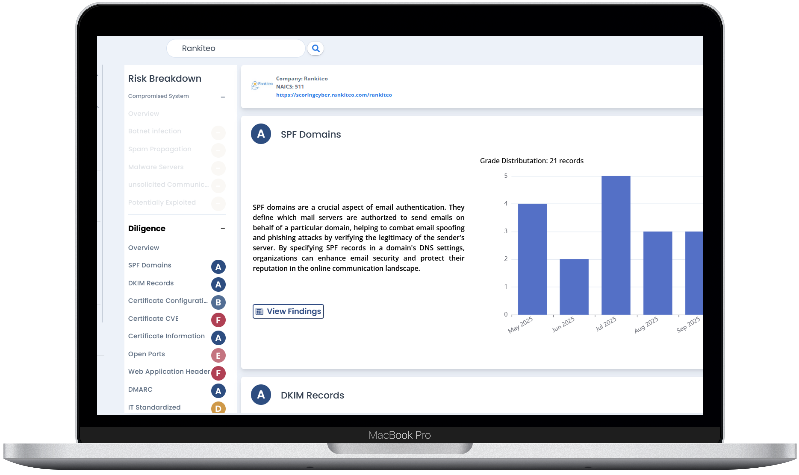
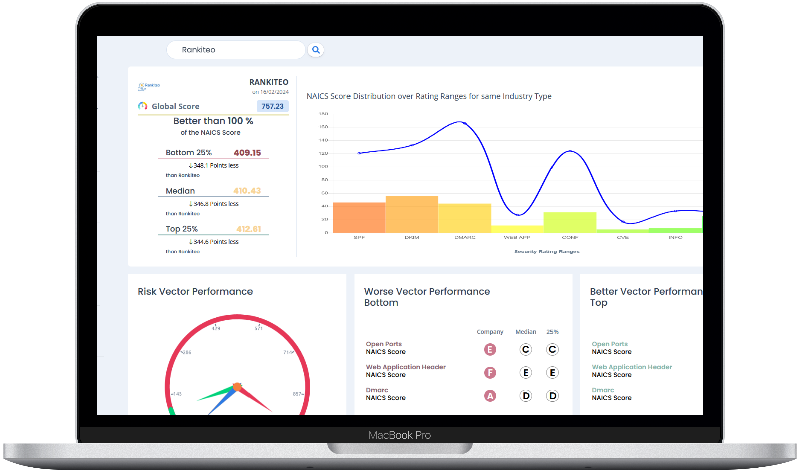
Every week, Rankiteo analyzes billions of signals to give organizations a sharper, faster view of emerging risks. With deeper, more actionable intelligence at their fingertips, security teams can outpace threat actors, respond instantly to Zero-Day attacks, and dramatically shrink their risk exposure window.
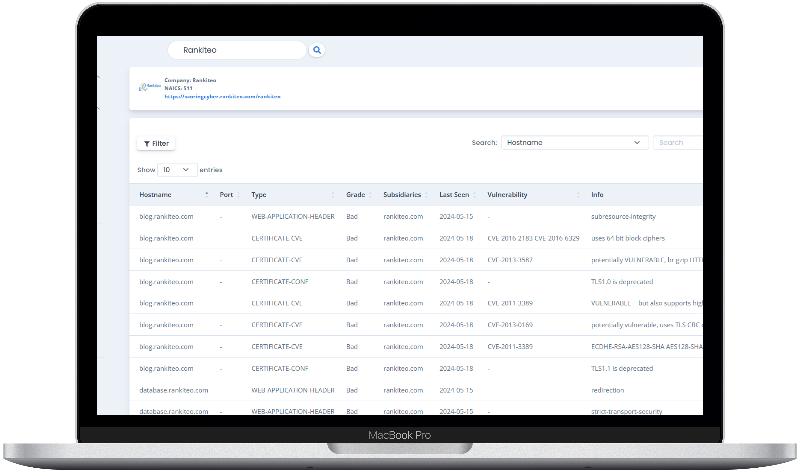
Identify exposed access points, detect misconfigured SSL certificates, and uncover vulnerabilities across the network infrastructure.
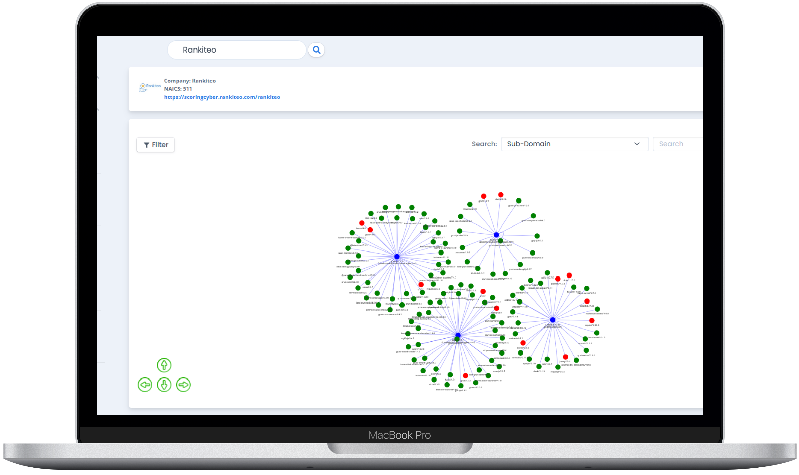
Gain visibility into the software components used within an organization to detect vulnerabilities, manage risk, and ensure supply chain security.
Monitor and manage all IT assets and their configurations to ensure accurate, real-time visibility across the company's technology environment.
Leverage real-time insights on active threats, malware campaigns, and emerging vulnerabilities to proactively defend against evolving cyberattacks.



 Rapid
Rapid