






LBCI
Company Details
Linkedin ID:
lifestream-behavioral-center-inc-
Website:
Employees number:
377
Number of followers:
1,483
NAICS:
62133
Industry Type:
Homepage:
lsbc.net
IP Addresses:
0
Company ID:
LIF_1661328
Scan Status:
In-progress


LifeStream Behavioral Center, Inc. Company CyberSecurity Posture
lsbc.net


LifeStream is a behavioral health and social services organization that provides high-quality treatment, education, care management, rehabilitation, child welfare, primary care and homeless services to children, adolescents, and adults. Located in Central Florida, LifeStream primarily serves the residents of Lake, Citrus and Sumter Counties, with additional programs located in Orange, Marion, Hernando and Hillsborough Counties. Beginning in 1969 as a component of Waterman Memorial Hospital in Eustis, LifeStream became an independent non-profit organization in 1971. Since then, LifeStream has grown to twenty-eight facilities and fifty-two programs to help those who suffer from mental illness and substance abuse achieve recovery and resiliency. Over the years LifeStream has helped hundreds of thousands of individuals across our community. In Fiscal Year 2019 alone, LifeStream provided services for 27,060 unduplicated clients. Total visits of 359,699. Yet with tens of thousands of individuals in need across our community going untreated each year, LifeSteam’s volunteers and staff remain committed to reaching out and empowering individuals to achieve recovery and resiliency in their own lives.
Company Details
lifestream-behavioral-center-inc-
377
1,483
62133
lsbc.net
0
LIF_1661328
In-progress
 LBCI Risk Score (AI oriented)
Between 750 and 799
 LBCI Global Score (TPRM)
XXXX


No incidents recorded for LifeStream Behavioral Center, Inc. in 2026.
No incidents recorded for LifeStream Behavioral Center, Inc. in 2026.
No incidents recorded for LifeStream Behavioral Center, Inc. in 2026.
LBCI cyber incidents detection timeline including parent company and subsidiaries

LifeStream is a behavioral health and social services organization that provides high-quality treatment, education, care management, rehabilitation, child welfare, primary care and homeless services to children, adolescents, and adults. Located in Central Florida, LifeStream primarily serves the residents of Lake, Citrus and Sumter Counties, with additional programs located in Orange, Marion, Hernando and Hillsborough Counties. Beginning in 1969 as a component of Waterman Memorial Hospital in Eustis, LifeStream became an independent non-profit organization in 1971. Since then, LifeStream has grown to twenty-eight facilities and fifty-two programs to help those who suffer from mental illness and substance abuse achieve recovery and resiliency. Over the years LifeStream has helped hundreds of thousands of individuals across our community. In Fiscal Year 2019 alone, LifeStream provided services for 27,060 unduplicated clients. Total visits of 359,699. Yet with tens of thousands of individuals in need across our community going untreated each year, LifeSteam’s volunteers and staff remain committed to reaching out and empowering individuals to achieve recovery and resiliency in their own lives.


Neuropath Behavioral Healthcare offers a comprehensive range of therapeutic support services for youth and adults who require treatment for mental disorders, developmental disabilities, and intellectual challenges. Our approach to behavioral health is strengths-based, culturally competent, and indiv

The Cleveland Center for Eating Disorders is an outpatient treatment center that provides clinically proven treatment for children, teens and adults suffering from an eating disorder. Our treatment focuses on both the illness and the individual using behavioral therapies, such as Dialectical and Cog

The Austen Riggs Center is known for its internationally-recognized tradition of providing intensive psychodynamic psychotherapy in a voluntary, open, and non-coercive community. Patients not helped in other settings can often benefit from deeper, more thorough psychodynamic evaluation and treatment

De Advieswinkel is een vrijwilligersorganisatie waar mensen met lichte psychische klachten terecht kunnen voor een gratis, anoniem en vrijblijvend advies van vergevorderde psychologiestudenten. De Advieswinkel verlaagt de drempel om psychologische hulp te zoeken, voorkomt dat psychische klachten ver

We provide one-on-one ABA treatment services to children who live in the Tri Cities as well as the west side of the Michigan, including Paw Paw and Wyoming. Our vision is to make a socially significant impact in the lives of families affected by autism. Our mission is to utilize the scientific prin

Our Mission: Our healing mission is to improve the lives of individuals struggling with mental illness or other mental health challenges by helping them work towards achieving their highest levels of functioning and fulfillment. CooperRiis is a place of peace, where our residents struggling with Bi

WELCOME TO SANCTUARY Sanctuary Counseling is an embracing space where all of our clients are valued and validated for their unique gifts and individual life stories. We partner with our clients, moving at each person's pace, holding true reverence and gratitude for the opportunity to share in each p

Antelope Recovery bridges the gap between therapy and daily life, offering intensive virtual outpatient care for teens who need more than a weekly therapy session. We harness the power of the virtual space, integrating healing into the fabric of your teen’s everyday life for lasting, transformative

Tanager is a private non-profit organization that provides focused programs and services supporting the well-being and resilience of children, young adults and families. Three primary focus areas in programming include prevention, treatment and outreach. The organization was founded in 1879 and has
.png)
2025 was a defining year for cybersecurity. The volume, diversity, and impact of cyber incidents continued to grow, but more importantly, clear patterns...
The latest findings from NordStellar show that the number of ransomware incidents in 2025 soared compared to 2024.
Learn how GitGuardian helps boards and CISOs align on cyber risk, operational resilience, and the rising impact of unmanaged workload...
The Asset Management and Visibility sector, long regarded as a relatively dormant corner of cybersecurity, has rapidly become one of the...
Cyber-Enabled Education Operations: Towards a Strategic Cybersecurity Curriculum for the Social Sciences. By Craig Douglas Albert and John...
What is FedRAMP? The Federal Risk and Authorization Management Program (FedRAMP) is a government-wide initiative established to standardize...
Q and A with Volker Rath, Field CTO, Cloudflare, on the rapid advance of quantum computing forcing organisations to rethink encryption...
Port Sudan – Sudanhorizon. The Ministry of Digital Transformation and Communications on Thursday announced the official launching of thre...
India News: With traditional security models unable to control AI-powered cyberattacks, 63SATS Cybertech, part of 63 moons technologies,...

Explore insights on cybersecurity incidents, risk posture, and Rankiteo's assessments.
The official website of LifeStream Behavioral Center, Inc. is http://www.lsbc.net.
According to Rankiteo, LifeStream Behavioral Center, Inc.’s AI-generated cybersecurity score is 758, reflecting their Fair security posture.
According to Rankiteo, LifeStream Behavioral Center, Inc. currently holds 0 security badges, indicating that no recognized compliance certifications are currently verified for the organization.
According to Rankiteo, LifeStream Behavioral Center, Inc. has not been affected by any supply chain cyber incidents, and no incident IDs are currently listed for the organization.
According to Rankiteo, LifeStream Behavioral Center, Inc. is not certified under SOC 2 Type 1.
According to Rankiteo, LifeStream Behavioral Center, Inc. does not hold a SOC 2 Type 2 certification.
According to Rankiteo, LifeStream Behavioral Center, Inc. is not listed as GDPR compliant.
According to Rankiteo, LifeStream Behavioral Center, Inc. does not currently maintain PCI DSS compliance.
According to Rankiteo, LifeStream Behavioral Center, Inc. is not compliant with HIPAA regulations.
According to Rankiteo,LifeStream Behavioral Center, Inc. is not certified under ISO 27001, indicating the absence of a formally recognized information security management framework.
LifeStream Behavioral Center, Inc. operates primarily in the Mental Health Care industry.
LifeStream Behavioral Center, Inc. employs approximately 377 people worldwide.
LifeStream Behavioral Center, Inc. presently has no subsidiaries across any sectors.
LifeStream Behavioral Center, Inc.’s official LinkedIn profile has approximately 1,483 followers.
LifeStream Behavioral Center, Inc. is classified under the NAICS code 62133, which corresponds to Offices of Mental Health Practitioners (except Physicians).
No, LifeStream Behavioral Center, Inc. does not have a profile on Crunchbase.
Yes, LifeStream Behavioral Center, Inc. maintains an official LinkedIn profile, which is actively utilized for branding and talent engagement, which can be accessed here: https://www.linkedin.com/company/lifestream-behavioral-center-inc-.
As of January 22, 2026, Rankiteo reports that LifeStream Behavioral Center, Inc. has not experienced any cybersecurity incidents.
LifeStream Behavioral Center, Inc. has an estimated 5,278 peer or competitor companies worldwide.
Total Incidents: According to Rankiteo, LifeStream Behavioral Center, Inc. has faced 0 incidents in the past.
Incident Types: The types of cybersecurity incidents that have occurred include .
.png)
Backstage is an open framework for building developer portals, and @backstage/backend-defaults provides the default implementations and setup for a standard Backstage backend app. Prior to versions 0.12.2, 0.13.2, 0.14.1, and 0.15.0, the `FetchUrlReader` component, used by the catalog and other plugins to fetch content from URLs, followed HTTP redirects automatically. This allowed an attacker who controls a host listed in `backend.reading.allow` to redirect requests to internal or sensitive URLs that are not on the allowlist, bypassing the URL allowlist security control. This is a Server-Side Request Forgery (SSRF) vulnerability that could allow access to internal resources, but it does not allow attackers to include additional request headers. This vulnerability is fixed in `@backstage/backend-defaults` version 0.12.2, 0.13.2, 0.14.1, and 0.15.0. Users should upgrade to this version or later. Some workarounds are available. Restrict `backend.reading.allow` to only trusted hosts that you control and that do not issue redirects, ensure allowed hosts do not have open redirect vulnerabilities, and/or use network-level controls to block access from Backstage to sensitive internal endpoints.
Backstage is an open framework for building developer portals, and @backstage/cli-common provides config loading functionality used by the backend and command line interface of Backstage. Prior to version 0.1.17, the `resolveSafeChildPath` utility function in `@backstage/backend-plugin-api`, which is used to prevent path traversal attacks, failed to properly validate symlink chains and dangling symlinks. An attacker could bypass the path validation via symlink chains (creating `link1 → link2 → /outside` where intermediate symlinks eventually resolve outside the allowed directory) and dangling symlinks (creating symlinks pointing to non-existent paths outside the base directory, which would later be created during file operations). This function is used by Scaffolder actions and other backend components to ensure file operations stay within designated directories. This vulnerability is fixed in `@backstage/backend-plugin-api` version 0.1.17. Users should upgrade to this version or later. Some workarounds are available. Run Backstage in a containerized environment with limited filesystem access and/or restrict template creation to trusted users.
Backstage is an open framework for building developer portals. Multiple Scaffolder actions and archive extraction utilities were vulnerable to symlink-based path traversal attacks. An attacker with access to create and execute Scaffolder templates could exploit symlinks to read arbitrary files via the `debug:log` action by creating a symlink pointing to sensitive files (e.g., `/etc/passwd`, configuration files, secrets); delete arbitrary files via the `fs:delete` action by creating symlinks pointing outside the workspace, and write files outside the workspace via archive extraction (tar/zip) containing malicious symlinks. This affects any Backstage deployment where users can create or execute Scaffolder templates. This vulnerability is fixed in `@backstage/backend-defaults` versions 0.12.2, 0.13.2, 0.14.1, and 0.15.0; `@backstage/plugin-scaffolder-backend` versions 2.2.2, 3.0.2, and 3.1.1; and `@backstage/plugin-scaffolder-node` versions 0.11.2 and 0.12.3. Users should upgrade to these versions or later. Some workarounds are available. Follow the recommendation in the Backstage Threat Model to limit access to creating and updating templates, restrict who can create and execute Scaffolder templates using the permissions framework, audit existing templates for symlink usage, and/or run Backstage in a containerized environment with limited filesystem access.
FastAPI Api Key provides a backend-agnostic library that provides an API key system. Version 1.1.0 has a timing side-channel vulnerability in verify_key(). The method applied a random delay only on verification failures, allowing an attacker to statistically distinguish valid from invalid API keys by measuring response latencies. With enough repeated requests, an adversary could infer whether a key_id corresponds to a valid key, potentially accelerating brute-force or enumeration attacks. All users relying on verify_key() for API key authentication prior to the fix are affected. Users should upgrade to version 1.1.0 to receive a patch. The patch applies a uniform random delay (min_delay to max_delay) to all responses regardless of outcome, eliminating the timing correlation. Some workarounds are available. Add an application-level fixed delay or random jitter to all authentication responses (success and failure) before the fix is applied and/or use rate limiting to reduce the feasibility of statistical timing attacks.
The Flux Operator is a Kubernetes CRD controller that manages the lifecycle of CNCF Flux CD and the ControlPlane enterprise distribution. Starting in version 0.36.0 and prior to version 0.40.0, a privilege escalation vulnerability exists in the Flux Operator Web UI authentication code that allows an attacker to bypass Kubernetes RBAC impersonation and execute API requests with the operator's service account privileges. In order to be vulnerable, cluster admins must configure the Flux Operator with an OIDC provider that issues tokens lacking the expected claims (e.g., `email`, `groups`), or configure custom CEL expressions that can evaluate to empty values. After OIDC token claims are processed through CEL expressions, there is no validation that the resulting `username` and `groups` values are non-empty. When both values are empty, the Kubernetes client-go library does not add impersonation headers to API requests, causing them to be executed with the flux-operator service account's credentials instead of the authenticated user's limited permissions. This can result in privilege escalation, data exposure, and/or information disclosure. Version 0.40.0 patches the issue.

Get company history

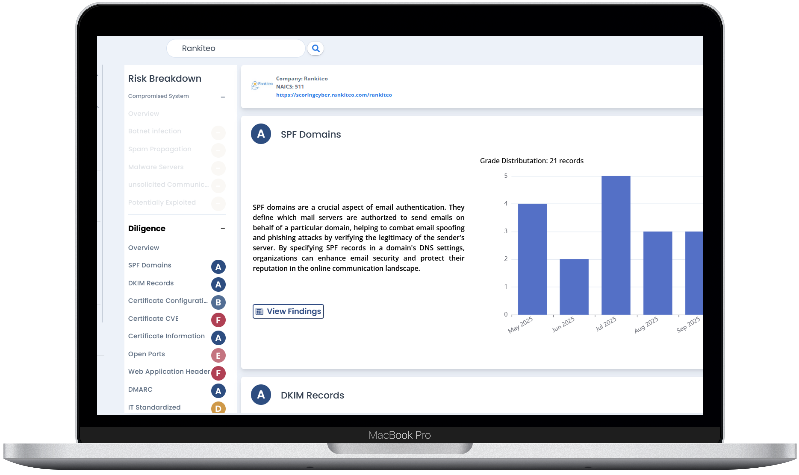
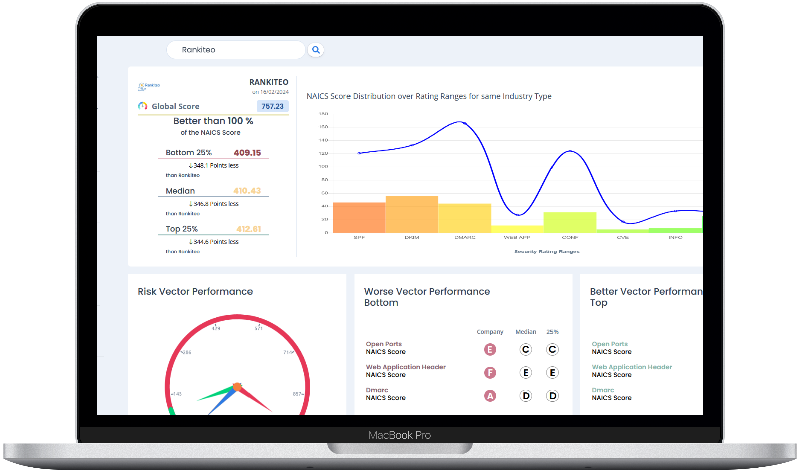
Every week, Rankiteo analyzes billions of signals to give organizations a sharper, faster view of emerging risks. With deeper, more actionable intelligence at their fingertips, security teams can outpace threat actors, respond instantly to Zero-Day attacks, and dramatically shrink their risk exposure window.
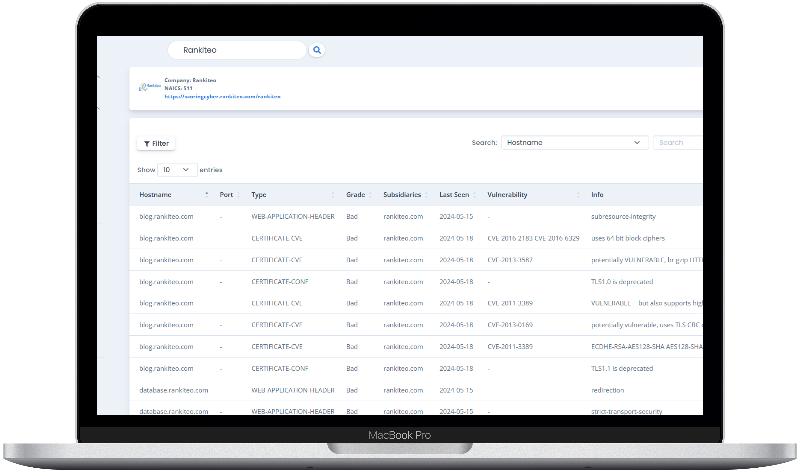
Identify exposed access points, detect misconfigured SSL certificates, and uncover vulnerabilities across the network infrastructure.
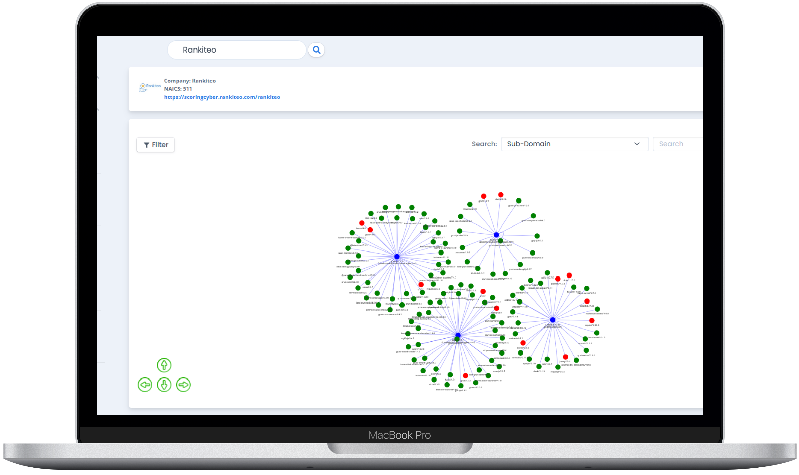
Gain visibility into the software components used within an organization to detect vulnerabilities, manage risk, and ensure supply chain security.
Monitor and manage all IT assets and their configurations to ensure accurate, real-time visibility across the company's technology environment.
Leverage real-time insights on active threats, malware campaigns, and emerging vulnerabilities to proactively defend against evolving cyberattacks.



 Rapid
Rapid