





Investools
Company Details
Linkedin ID:
investools
Website:
Employees number:
125
Number of followers:
2,313
NAICS:
None
Industry Type:
Homepage:
http://www.investools.com
IP Addresses:
0
Company ID:
INV_5115582
Scan Status:
In-progress

Investools Company CyberSecurity Posture
http://www.investools.com


For the last 25 years, we’ve helped more than half a million students take control of their finances with a unique combination of online courses, live workshops, trading tools and coaching resources. With Investools’ step-by-step process, you can pursue a comprehensive investing education at your own pace—and on your own terms.
Company Details
investools
125
2,313
None
http://www.investools.com
0
INV_5115582
In-progress
 Investools Risk Score (AI oriented)
Between 750 and 799
 Investools Global Score (TPRM)
XXXX
Description: The California Office of the Attorney General reported a data breach involving Charles Schwab & Co., Inc. on May 3, 2016. The breach involved unusual login activity starting on or after March 25, 2016, potentially exposing client names and account numbers, although it is unclear if any actual data was accessed. No specific number of affected individuals was provided.
Description: The Maine Office of the Attorney General reported that Charles Schwab & Co., Inc. experienced a data breach involving inadvertent disclosure of personal information from May 18, 2021, to December 16, 2021. Approximately 5,083 individuals were potentially affected, with 15 residents specifically noted. Identity theft protection services from IdentityForce were offered to those affected for 24 months.
Description: The Maine Office of the Attorney General disclosed a data breach at **Charles Schwab & Co., Inc.** on **June 8, 2023**, stemming from **insider wrongdoing** discovered on **April 19, 2023**. The incident compromised sensitive personal data, including **driver’s license numbers**, affecting **774 individuals**, of which **4 were Maine residents**. The breach involved unauthorized access or misuse of internal systems by an employee or trusted insider, leading to the exposure of personally identifiable information (PII). While the exact scope of the stolen data beyond driver’s license numbers remains undisclosed, such breaches typically heighten risks of **identity theft, financial fraud, or targeted phishing attacks** against victims. The company likely faced regulatory scrutiny, potential legal liabilities, and reputational damage due to the failure to prevent insider threats. Insider-driven breaches are particularly concerning as they exploit **legitimate access privileges**, bypassing traditional cybersecurity defenses. The incident underscores vulnerabilities in **internal controls, monitoring, and employee vetting processes**, which are critical for financial institutions handling high-value client data. No evidence suggests ransomware or external cyberattacks were involved, focusing the blame solely on **internal malfeasance**.
Description: The Washington State Office of the Attorney General reported a data breach involving Charles Schwab on October 1, 2015. The breach occurred on August 25, 2015, and affected 52 residents in Washington, with sensitive information including names, Social Security numbers, and full dates of birth being disclosed.
Description: Cybercriminal groups, leveraging advanced phishing kits from a China-based collective (e.g., 'Outsider'), targeted **Charles Schwab** customers to compromise brokerage accounts. The attackers exploited SMS-based multi-factor authentication (MFA) to gain unauthorized access, then used hijacked accounts to manipulate foreign stock prices via a **‘ramp-and-dump’ scheme**. By coordinating purchases of low-value stocks (e.g., Chinese IPOs or penny stocks) across multiple compromised accounts, they artificially inflated share prices before dumping holdings—leaving legitimate investors with worthless assets. The FBI and FINRA flagged this as a systemic threat, with victims facing **unrecoverable financial losses** due to the collapse of manipulated stocks. Schwab acknowledged the risk but noted industry-wide vulnerabilities in SMS-based verification. The attack also exposed weaknesses in brokerage MFA systems, where phished one-time codes enabled persistent account takeovers. While Schwab implemented mitigations (e.g., client advisories), the fraudsters’ use of **pre-positioned trades** and **cross-border coordination** (via Chinese exchanges) minimized traceability, amplifying reputational and financial harm.
Description: On August 8, 2023, the California Office of the Attorney General reported a data breach involving TD Ameritrade, Inc. The breach occurred between May 28, 2023, and May 30, 2023, affecting personal information, including names and Social Security numbers of individuals, although the specific number of affected individuals is unknown.


No incidents recorded for Investools in 2025.
No incidents recorded for Investools in 2025.
No incidents recorded for Investools in 2025.
Investools cyber incidents detection timeline including parent company and subsidiaries

For the last 25 years, we’ve helped more than half a million students take control of their finances with a unique combination of online courses, live workshops, trading tools and coaching resources. With Investools’ step-by-step process, you can pursue a comprehensive investing education at your own pace—and on your own terms.

Opening up a world of opportunity for our customers, investors, ourselves and the planet. We're a financial services organisation that serves more than 40 million customers, ranging from individual savers and investors to some of the world’s biggest companies and governments. Our network covers 58
Founded in 2006, CreditEase is a Beijing-based world-leading FinTech conglomerate in China. It specializes in inclusive finance and wealth management with a dominant position in credit technology, wealth management technology, insurance technology, etc. Main business sectors of CreditEase include Yi
S&P Global provides governments, businesses, and individuals with market data, expertise, and technology solutions for confident decision-making. Our services span from global energy solutions to sustainable finance solutions. From helping our customers perform investment analysis to guiding them th

Paytm started the Digital Revolution in India. And we went on to become India’s leading Payments App. Today, more than 20 Million merchants & businesses are powered by Paytm to Accept Payments digitally. This is because more than 300 million Indians use Paytm to Pay at their stores. And that’s not
Block is one company built from many blocks, all united by the same purpose of economic empowerment. The blocks that form our foundational teams — People, Finance, Counsel, Hardware, Information Security, Platform Infrastructure Engineering, and more — provide support and guidance at the corporate l
We aspire to be the world’s most exceptional financial institution, united by our shared values of partnership, client service, integrity, and excellence. Operating at the center of capital markets, we act as one firm, mobilizing our people, capital, and ideas to deliver superior results across ou
.png)
The U.S. Cybersecurity and Infrastructure Security Agency (CISA) on Friday formally added a critical security flaw impacting React Server...
The 2025 Central Dakota Ag Day will feature a lineup of speakers that include a keynote presenter who will address how farmers and ranchers...
Iran and Russia have signed a new cooperation agreement on artificial intelligence and cybersecurity, Iranian state media reported,...
UWF's evolution from a regional player to a national leader in cybersecurity reflects Florida's commitment to building an AI-integrated...
AI is evolving at a rapid pace, and the uptake of Generative AI (GenAI) is revolutionising the way humans interact and leverage this...
Authorities cite fraud, cybersecurity risks, and potential disinformation as reasons for one-year ban.
Quantum Computing (QUBT) is back on traders radar after a swing to third quarter profit, its first U.S. quantum cybersecurity sale to a top...
Kiteworks Data Forms Report Uncovers Critical Security Gaps as 44% Suffered Data Breaches Through Form Submissions and 85% Demand Data...
Cybersecurity Insider Newsletter from December 5, 2025.

Explore insights on cybersecurity incidents, risk posture, and Rankiteo's assessments.
The official website of Investools is http://www.investools.com.
According to Rankiteo, Investools’s AI-generated cybersecurity score is 755, reflecting their Fair security posture.
According to Rankiteo, Investools currently holds 0 security badges, indicating that no recognized compliance certifications are currently verified for the organization.
According to Rankiteo, Investools is not certified under SOC 2 Type 1.
According to Rankiteo, Investools does not hold a SOC 2 Type 2 certification.
According to Rankiteo, Investools is not listed as GDPR compliant.
According to Rankiteo, Investools does not currently maintain PCI DSS compliance.
According to Rankiteo, Investools is not compliant with HIPAA regulations.
According to Rankiteo,Investools is not certified under ISO 27001, indicating the absence of a formally recognized information security management framework.
Investools operates primarily in the E-learning industry.
Investools employs approximately 125 people worldwide.
Investools presently has no subsidiaries across any sectors.
Investools’s official LinkedIn profile has approximately 2,313 followers.
Investools is classified under the NAICS code None, which corresponds to Others.
No, Investools does not have a profile on Crunchbase.
Yes, Investools maintains an official LinkedIn profile, which is actively utilized for branding and talent engagement, which can be accessed here: https://www.linkedin.com/company/investools.
As of December 06, 2025, Rankiteo reports that Investools has experienced 6 cybersecurity incidents.
Investools has an estimated 699 peer or competitor companies worldwide.
Incident Types: The types of cybersecurity incidents that have occurred include Cyber Attack and Breach.
Total Financial Loss: The total financial loss from these incidents is estimated to be $0.
Detection and Response: The company detects and responds to cybersecurity incidents through an third party assistance with identityforce, and incident response plan activated with yes (finra advisory, fbi victim outreach), and third party assistance with secalliance (csis security group) - research/tracking, third party assistance with krebsonsecurity - public disclosure, and law enforcement notified with yes (fbi seeking victim information as of feb 2025), and containment measures with brokerages monitoring for suspicious trading patterns (e.g., schwab), containment measures with enhanced mfa requirements for mobile wallet onboarding, containment measures with client advisories on emerging fraud trends, and remediation measures with schwab: multi-layered fraud mitigation (e.g., disrupting sms-based verification exploits), remediation measures with fidelity/vanguard: push for u2f/physical security key adoption, remediation measures with industry-wide coordination on phishing kit takedowns, and communication strategy with finra advisory on ramp-and-dump risks, communication strategy with schwab client communications (feb 2025), communication strategy with media outreach (e.g., krebsonsecurity, secalliance), and enhanced monitoring with yes (brokerages tracking coordinated trading), and communication strategy with public disclosure via maine attorney general’s office..
Title: Charles Schwab Data Breach
Description: The Washington State Office of the Attorney General reported a data breach involving Charles Schwab on October 1, 2015. The breach occurred on August 25, 2015, and affected 52 residents in Washington, with sensitive information including names, Social Security numbers, and full dates of birth being disclosed.
Date Detected: 2015-08-25
Date Publicly Disclosed: 2015-10-01
Type: Data Breach
Title: Charles Schwab & Co., Inc. Data Breach
Description: The California Office of the Attorney General reported a data breach involving Charles Schwab & Co., Inc. on May 3, 2016. The breach involved unusual login activity starting on or after March 25, 2016, potentially exposing client names and account numbers, although it is unclear if any actual data was accessed. No specific number of affected individuals was provided.
Date Detected: 2016-03-25
Date Publicly Disclosed: 2016-05-03
Type: Data Breach
Attack Vector: Unusual Login Activity
Title: TD Ameritrade Data Breach
Description: A data breach involving TD Ameritrade, Inc. was reported by the California Office of the Attorney General on August 8, 2023. The breach occurred between May 28, 2023, and May 30, 2023, affecting personal information, including names and Social Security numbers of individuals.
Date Detected: 2023-08-08
Date Publicly Disclosed: 2023-08-08
Type: Data Breach
Title: Charles Schwab & Co., Inc. Data Breach
Description: The Maine Office of the Attorney General reported that Charles Schwab & Co., Inc. experienced a data breach involving inadvertent disclosure of personal information from May 18, 2021, to December 16, 2021. Approximately 5,083 individuals were potentially affected, with 15 residents specifically noted. Identity theft protection services from IdentityForce were offered to those affected for 24 months.
Date Detected: 2021-12-16
Type: Data Breach
Attack Vector: Inadvertent Disclosure
Title: Ramp-and-Dump Scheme Targeting Brokerage Customers via Sophisticated Phishing Kits
Description: Cybercriminal groups, primarily based in China, are using advanced phishing kits to compromise brokerage accounts and manipulate foreign stock prices through a 'ramp-and-dump' scheme. The attackers exploit SMS-based multi-factor authentication (MFA) weaknesses to gain access to victim accounts, liquidate existing positions, and coordinate mass purchases of targeted stocks (often Chinese IPOs or penny stocks) to artificially inflate prices. Once the price peaks, the fraudsters sell their holdings, leaving legitimate investors with worthless shares. The scheme leverages compromised mobile wallets, Telegram-coordinated phishing kits (e.g., from vendor 'Outsider'), and AI/LLM-assisted development to evade detection. The FBI and FINRA have issued advisories about this emerging threat, which shifts focus from traditional payment fraud to securities manipulation.
Date Publicly Disclosed: 2025-02
Type: Financial Fraud
Attack Vector: SMS Phishing (Smishing)Mobile Phishing Kits (Telegram-distributed)Spoofed Brokerage Alerts (iMessage/RCS)One-Time Passcode (OTP) InterceptionCompromised Mobile Wallets (Apple/Google Pay)Coordinated Trading via Hijacked Accounts
Vulnerability Exploited: Weak SMS-based Multi-Factor Authentication (MFA)Lack of U2F/Physical Security Key EnforcementPhishable OTP Tokens for Mobile Wallet ProvisioningBrokerage Platforms Allowing MFA via Text/CallDelayed Detection of Coordinated Trading Patterns
Threat Actor: Name: Outsider (aka Chenlun), Affiliation: China-based phishing collective, Role: Phishing kit developer/vendor, Platform: Telegram (@outsider, formerly @chenlun), Specialization: Mobile phishing kits targeting brokerages, postal services, and toll operators, Name: Unnamed China-based Phishing Groups, Affiliation: Telegram-coordinated communities, Role: Operational execution (account compromise, stock manipulation), Tools: AI/LLM-assisted phishing kits, bulk mobile device farms, Targets: U.S. brokerage customers (e.g., Schwab, Fidelity, Vanguard).
Motivation: Financial Gain (Stock Price Manipulation)Fraudulent E-Commerce/Tap-to-Pay TransactionsSale of Compromised Accounts/Devices on Dark WebExploitation of Cross-Border Regulatory Gaps
Title: Charles Schwab & Co., Inc. Data Breach via Insider Wrongdoing
Description: The Maine Office of the Attorney General reported a data breach involving Charles Schwab & Co., Inc. The breach, which involved insider wrongdoing, was discovered on April 19, 2023, and potentially affected 774 individuals, including 4 residents of Maine. Information compromised includes driver’s license numbers among other personal data.
Date Detected: 2023-04-19
Date Publicly Disclosed: 2023-06-08
Type: Data Breach (Insider Threat)
Attack Vector: Insider Wrongdoing
Threat Actor: Insider (Employee/Associate)
Common Attack Types: The most common types of attacks the company has faced is Breach.
Identification of Attack Vectors: The company identifies the attack vectors used in incidents through Spoofed Brokerage Alerts (iMessage/RCS)SMS Phishing (USPS/toll road lures for card data)Telegram-Distributed Phishing Kits (e.g. and Outsider’s templates).

Data Compromised: Names, Social security numbers, Full dates of birth
Data Compromised: Client names, Account numbers
Data Compromised: Names, Social security numbers

Financial Loss: Unspecified (catastrophic collapse in share prices for legitimate investors)
Data Compromised: Brokerage account credentials, One-time passcodes (otp), Payment card data (for mobile wallet enrollment), Trading history/position data
Systems Affected: Brokerage Trading Platforms (e.g., Schwab, Fidelity, Vanguard)Mobile Wallets (Apple Pay, Google Pay)SMS/OTP Delivery SystemsChinese Stock Exchanges (targeted IPOs/penny stocks)
Operational Impact: Disruption of Legitimate Trading ActivityIncreased Fraud Detection/Response Costs for BrokeragesErosion of Trust in SMS-based MFA
Customer Complaints: Likely high (unrecoverable investment losses)
Brand Reputation Impact: Brokerages: Perceived Security WeaknessesMobile Wallet Providers: Association with FraudChinese Stock Exchanges: Suspicion of Market Manipulation
Legal Liabilities: Potential SEC/FINRA Enforcement ActionsClass-Action Lawsuits from Affected InvestorsRegulatory Scrutiny of MFA Practices
Identity Theft Risk: High (via compromised brokerage/mobile wallet credentials)
Payment Information Risk: High (mobile wallet enrollment fraud)
Data Compromised: Driver’s license numbers, Other personal data
Brand Reputation Impact: Potential reputational harm due to insider breach and exposure of sensitive personal data
Identity Theft Risk: High (due to exposure of driver’s license numbers and personal data)
Average Financial Loss: The average financial loss per incident is $0.00.
Commonly Compromised Data Types: The types of data most commonly compromised in incidents are Names, Social Security Numbers, Full Dates Of Birth, , Client Names, Account Numbers, , Names, Social Security Numbers, , Personal Information, Brokerage Account Credentials, One-Time Passcodes (Otp), Payment Card Data, Mobile Wallet Enrollment Tokens, , Driver’S License Numbers, Personal Data and .
Entity Name: Charles Schwab
Entity Type: Financial Services
Industry: Finance
Location: Washington
Customers Affected: 52
Entity Name: Charles Schwab & Co., Inc.
Entity Type: Financial Services
Industry: Finance
Location: California, USA
Entity Name: TD Ameritrade, Inc.
Entity Type: Financial Services
Industry: Finance
Entity Name: Charles Schwab & Co., Inc.
Entity Type: Financial Services
Industry: Finance
Customers Affected: 5083
Entity Name: Charles Schwab
Entity Type: Brokerage Firm
Industry: Financial Services
Location: United States
Size: Large (34+ million client accounts as of 2023)
Customers Affected: Unknown (targeted by phishing kits)
Entity Name: Fidelity Investments
Entity Type: Brokerage Firm
Industry: Financial Services
Location: United States
Size: Large (40+ million individual investors)
Customers Affected: Unknown (vulnerable to phishing due to SMS MFA)
Entity Name: Vanguard
Entity Type: Brokerage Firm
Industry: Financial Services
Location: United States
Size: Large (30+ million investors globally)
Customers Affected: Unknown (less vulnerable due to U2F support)
Entity Name: Unspecified Chinese IPO/Penny Stock Companies
Entity Type: Publicly Traded Firms
Industry: Varied (often small-cap or shell companies)
Location: China/Hong Kong
Size: Small to Mid-Sized
Entity Name: Legitimate Investors in Targeted Stocks
Entity Type: Individual/Retail Investors
Location: Global
Customers Affected: Unknown (suffer unrecoverable losses)
Entity Name: Charles Schwab & Co., Inc.
Entity Type: Financial Services
Industry: Investment Brokerage
Location: United States
Customers Affected: 774 individuals (including 4 Maine residents)
Third Party Assistance: IdentityForce
Incident Response Plan Activated: Yes (FINRA advisory, FBI victim outreach)
Third Party Assistance: Secalliance (Csis Security Group) - Research/Tracking, Krebsonsecurity - Public Disclosure.
Law Enforcement Notified: Yes (FBI seeking victim information as of Feb 2025)
Containment Measures: Brokerages Monitoring for Suspicious Trading Patterns (e.g., Schwab)Enhanced MFA Requirements for Mobile Wallet OnboardingClient Advisories on Emerging Fraud Trends
Remediation Measures: Schwab: Multi-Layered Fraud Mitigation (e.g., disrupting SMS-based verification exploits)Fidelity/Vanguard: Push for U2F/Physical Security Key AdoptionIndustry-Wide Coordination on Phishing Kit Takedowns
Communication Strategy: FINRA Advisory on Ramp-and-Dump RisksSchwab Client Communications (Feb 2025)Media Outreach (e.g., KrebsOnSecurity, SecAlliance)
Enhanced Monitoring: Yes (brokerages tracking coordinated trading)
Communication Strategy: Public disclosure via Maine Attorney General’s office
Incident Response Plan: The company's incident response plan is described as Yes (FINRA advisory, FBI victim outreach).
Third-Party Assistance: The company involves third-party assistance in incident response through IdentityForce, SecAlliance (CSIS Security Group) - Research/Tracking, KrebsOnSecurity - Public Disclosure, .
Type of Data Compromised: Names, Social security numbers, Full dates of birth
Number of Records Exposed: 52
Sensitivity of Data: High
Type of Data Compromised: Client names, Account numbers
Type of Data Compromised: Names, Social security numbers
Sensitivity of Data: High
Type of Data Compromised: Personal Information
Number of Records Exposed: 5083
Sensitivity of Data: High
Type of Data Compromised: Brokerage account credentials, One-time passcodes (otp), Payment card data, Mobile wallet enrollment tokens
Sensitivity of Data: High (financial account access, payment instruments)
Data Exfiltration: Yes (credentials sold/used for fraud)
Data Encryption: Unlikely (phished in plaintext)
Personally Identifiable Information: Names (via brokerage accounts)Phone Numbers (SMS OTP delivery)Financial Account Details
Type of Data Compromised: Driver’s license numbers, Personal data
Number of Records Exposed: 774
Sensitivity of Data: High (includes government-issued IDs)
Prevention of Data Exfiltration: The company takes the following measures to prevent data exfiltration: Schwab: Multi-Layered Fraud Mitigation (e.g., disrupting SMS-based verification exploits), Fidelity/Vanguard: Push for U2F/Physical Security Key Adoption, Industry-Wide Coordination on Phishing Kit Takedowns, .
Handling of PII Incidents: The company handles incidents involving personally identifiable information (PII) through by brokerages monitoring for suspicious trading patterns (e.g., schwab), enhanced mfa requirements for mobile wallet onboarding, client advisories on emerging fraud trends and .
Regulations Violated: Potential SEC Rules on Market Manipulation (e.g., 10b-5), FINRA Rules on Fraudulent Trading, GDPR/CCPA (if EU/CA residents affected by data breaches),
Regulatory Notifications: FINRA Advisory (public)FBI Victim Outreach (Feb 2025)
Regulatory Notifications: Maine Office of the Attorney General
Lessons Learned: SMS-based MFA is Insufficient for High-Risk Transactions (e.g., trading, mobile wallets), Phishing Kits Rapidly Adapt to New Targets (e.g., shift from USPS tolls to brokerages), Coordinated Fraud Schemes Exploit Cross-Border Regulatory Gaps, AI/LLMs Accelerate Phishing Kit Development and Customization, Human-in-the-Loop Phishing (e.g., OTP interception farms) Bypasses Automation Defenses
Recommendations: For Brokerage Firms: Mandate U2F/Physical Security Keys for High-Risk Actions, Implement Behavioral Analytics for Trading Patterns, Restrict Mobile Wallet Enrollment to Bank-Owned Apps, Monitor Telegram/Dark Web for Phishing Kit Sales. For Investors: Enable U2F or App-Based MFA (Avoid SMS/Call), Monitor Accounts for Unauthorized Trades, Report Suspicious Activity to Brokerage/FINRA. For Regulators: Coordinate Cross-Border Fraud Investigations (U.S.-China), Update MFA Guidelines for Financial Sector, Penalize Firms Relying on Phishable Authentication. For Mobile Wallet Providers: Require In-App Enrollment for New Devices, Implement Device Fingerprinting to Detect Bulk Fraud.
Key Lessons Learned: The key lessons learned from past incidents are SMS-based MFA is Insufficient for High-Risk Transactions (e.g., trading, mobile wallets),Phishing Kits Rapidly Adapt to New Targets (e.g., shift from USPS tolls to brokerages),Coordinated Fraud Schemes Exploit Cross-Border Regulatory Gaps,AI/LLMs Accelerate Phishing Kit Development and Customization,Human-in-the-Loop Phishing (e.g., OTP interception farms) Bypasses Automation Defenses.
Implemented Recommendations: The company has implemented the following recommendations to improve cybersecurity: For: Mobile Wallet Providers, , For: Regulators, , For: Investors, , For: Brokerage Firms and .
Source: Washington State Office of the Attorney General
Date Accessed: 2015-10-01
Source: California Office of the Attorney General
Date Accessed: 2016-05-03
Source: California Office of the Attorney General
Date Accessed: 2023-08-08
Source: Maine Office of the Attorney General
Source: FINRA Advisory on Ramp-and-Dump Schemes
Date Accessed: 2025-02
Source: KrebsOnSecurity: 'Outsider’ Phishing Kit Vendor Targets Brokerages
Source: SecAlliance Research (Ford Merrill)
Source: Maine Office of the Attorney General
Date Accessed: 2023-06-08
Additional Resources: Stakeholders can find additional resources on cybersecurity best practices at and Source: Washington State Office of the Attorney GeneralDate Accessed: 2015-10-01, and Source: California Office of the Attorney GeneralDate Accessed: 2016-05-03, and Source: California Office of the Attorney GeneralDate Accessed: 2023-08-08, and Source: Maine Office of the Attorney General, and Source: FINRA Advisory on Ramp-and-Dump SchemesDate Accessed: 2025-02, and Source: FBI Victim Outreach (Feb 2025)Date Accessed: 2025-02, and Source: KrebsOnSecurity: 'Outsider’ Phishing Kit Vendor Targets BrokeragesUrl: https://krebsonsecurity.com, and Source: SecAlliance Research (Ford Merrill), and Source: Schwab Client Advisory (2025)Date Accessed: 2025-01, and Source: Maine Office of the Attorney GeneralDate Accessed: 2023-06-08.
Investigation Status: Ongoing (FBI seeking victims; brokerages monitoring)
Investigation Status: Disclosed; ongoing or closed status unclear
Communication of Investigation Status: The company communicates the status of incident investigations to stakeholders through Finra Advisory On Ramp-And-Dump Risks, Schwab Client Communications (Feb 2025), Media Outreach (E.G., Krebsonsecurity, Secalliance) and Public disclosure via Maine Attorney General’s office.
Stakeholder Advisories: Finra: Warned Member Firms About Controlled Trading Activity, Schwab: Communicated Risks To Clients (Early 2025), Fidelity/Vanguard: Likely Internal Alerts (Not Publicized).
Customer Advisories: Schwab: 'Emerging fraud trends' notice (2025)General: Avoid SMS-based MFA; report phishing attempts
Advisories Provided: The company provides the following advisories to stakeholders and customers following an incident: were Finra: Warned Member Firms About Controlled Trading Activity, Schwab: Communicated Risks To Clients (Early 2025), Fidelity/Vanguard: Likely Internal Alerts (Not Publicized), Schwab: 'Emerging Fraud Trends' Notice (2025), General: Avoid Sms-Based Mfa; Report Phishing Attempts and .
Entry Point: Spoofed Brokerage Alerts (Imessage/Rcs), Sms Phishing (Usps/Toll Road Lures For Card Data), Telegram-Distributed Phishing Kits (E.G., Outsider’S Templates),
Reconnaissance Period: 2022–2024 (evolution from USPS tolls to brokerages)
Backdoors Established: Yes (persistent access via compromised mobile wallets)
High Value Targets: Brokerage Accounts With Trading Privileges, Chinese Ipo/Penny Stocks (Low Liquidity, Easy To Manipulate),
Data Sold on Dark Web: Brokerage Accounts With Trading Privileges, Chinese Ipo/Penny Stocks (Low Liquidity, Easy To Manipulate),
Root Causes: Over-Reliance On Phishable Mfa (Sms/Otp), Lack Of Cross-Account Trading Pattern Detection, Delayed Adoption Of U2F/Physical Keys, Telegram’S Role As A Marketplace For Phishing Tools, Regulatory Arbitrage (U.S. Brokerages Vs. Chinese Exchanges),
Corrective Actions: Brokerages: Stricter Mfa Policies (E.G., Schwab’S App-Based Otp), Industry: Shared Intelligence On Phishing Kit Vendors, Regulators: Updated Guidance On Securities Fraud Via Ato, Tech Platforms: Disruption Of Telegram Phishing Kit Sales,
Root Causes: Insider wrongdoing (intentional or negligent misuse of access)
Post-Incident Analysis Process: The company's process for conducting post-incident analysis is described as IdentityForce, Secalliance (Csis Security Group) - Research/Tracking, Krebsonsecurity - Public Disclosure, , Yes (brokerages tracking coordinated trading).
Corrective Actions Taken: The company has taken the following corrective actions based on post-incident analysis: Brokerages: Stricter Mfa Policies (E.G., Schwab’S App-Based Otp), Industry: Shared Intelligence On Phishing Kit Vendors, Regulators: Updated Guidance On Securities Fraud Via Ato, Tech Platforms: Disruption Of Telegram Phishing Kit Sales, .
Last Attacking Group: The attacking group in the last incident were an Name: Outsider (aka Chenlun)Affiliation: China-based phishing collectiveRole: Phishing kit developer/vendorPlatform: Telegram (@outsider, formerly @chenlun)Specialization: Mobile phishing kits targeting brokerages, postal services, and toll operatorsName: Unnamed China-based Phishing GroupsAffiliation: Telegram-coordinated communitiesRole: Operational execution (account compromise, stock manipulation)Tools: AI/LLM-assisted phishing kits, bulk mobile device farmsTargets: U.S. brokerage customers (e.g., Schwab, Fidelity, Vanguard) and Insider (Employee/Associate).
Most Recent Incident Detected: The most recent incident detected was on 2015-08-25.
Most Recent Incident Publicly Disclosed: The most recent incident publicly disclosed was on 2023-06-08.
Highest Financial Loss: The highest financial loss from an incident was Unspecified (catastrophic collapse in share prices for legitimate investors).
Most Significant Data Compromised: The most significant data compromised in an incident were names, Social Security numbers, full dates of birth, , Client Names, Account Numbers, , names, Social Security numbers, , Personal Information, Brokerage Account Credentials, One-Time Passcodes (OTP), Payment Card Data (for mobile wallet enrollment), Trading History/Position Data, , Driver’s license numbers, Other personal data and .
Most Significant System Affected: The most significant system affected in an incident were Brokerage Trading Platforms (e.g., Schwab, Fidelity, Vanguard)Mobile Wallets (Apple Pay, Google Pay)SMS/OTP Delivery SystemsChinese Stock Exchanges (targeted IPOs/penny stocks).
Third-Party Assistance in Most Recent Incident: The third-party assistance involved in the most recent incident was IdentityForce, secalliance (csis security group) - research/tracking, krebsonsecurity - public disclosure, .
Containment Measures in Most Recent Incident: The containment measures taken in the most recent incident were Brokerages Monitoring for Suspicious Trading Patterns (e.g. and Schwab)Enhanced MFA Requirements for Mobile Wallet OnboardingClient Advisories on Emerging Fraud Trends.
Most Sensitive Data Compromised: The most sensitive data compromised in a breach were Social Security numbers, names, Other personal data, Brokerage Account Credentials, Trading History/Position Data, Account Numbers, Driver’s license numbers, full dates of birth, Personal Information, Payment Card Data (for mobile wallet enrollment), Client Names and One-Time Passcodes (OTP).
Number of Records Exposed in Most Significant Breach: The number of records exposed in the most significant breach was 1.3K.
Most Significant Lesson Learned: The most significant lesson learned from past incidents was Human-in-the-Loop Phishing (e.g., OTP interception farms) Bypasses Automation Defenses.
Most Significant Recommendation Implemented: The most significant recommendation implemented to improve cybersecurity was For: Mobile Wallet Providers, , For: Regulators, , For: Investors, , For: Brokerage Firms and .
Most Recent Source: The most recent source of information about an incident are Washington State Office of the Attorney General, SecAlliance Research (Ford Merrill), Maine Office of the Attorney General, FINRA Advisory on Ramp-and-Dump Schemes, FBI Victim Outreach (Feb 2025), KrebsOnSecurity: 'Outsider’ Phishing Kit Vendor Targets Brokerages, Schwab Client Advisory (2025) and California Office of the Attorney General.
Most Recent URL for Additional Resources: The most recent URL for additional resources on cybersecurity best practices is https://krebsonsecurity.com .
Current Status of Most Recent Investigation: The current status of the most recent investigation is Ongoing (FBI seeking victims; brokerages monitoring).
Most Recent Stakeholder Advisory: The most recent stakeholder advisory issued was FINRA: Warned member firms about controlled trading activity, Schwab: Communicated risks to clients (early 2025), Fidelity/Vanguard: Likely internal alerts (not publicized), .
Most Recent Customer Advisory: The most recent customer advisory issued was an Schwab: 'Emerging fraud trends' notice (2025)General: Avoid SMS-based MFA; report phishing attempts.
Most Recent Reconnaissance Period: The most recent reconnaissance period for an incident was 2022–2024 (evolution from USPS tolls to brokerages).
Most Significant Root Cause: The most significant root cause identified in post-incident analysis was Over-Reliance on Phishable MFA (SMS/OTP)Lack of Cross-Account Trading Pattern DetectionDelayed Adoption of U2F/Physical KeysTelegram’s Role as a Marketplace for Phishing ToolsRegulatory Arbitrage (U.S. brokerages vs. Chinese exchanges), Insider wrongdoing (intentional or negligent misuse of access).
Most Significant Corrective Action: The most significant corrective action taken based on post-incident analysis was Brokerages: Stricter MFA Policies (e.g., Schwab’s app-based OTP)Industry: Shared Intelligence on Phishing Kit VendorsRegulators: Updated Guidance on Securities Fraud via ATOTech Platforms: Disruption of Telegram Phishing Kit Sales.
.png)
HedgeDoc is an open source, real-time, collaborative, markdown notes application. Prior to 1.10.4, some of HedgeDoc's OAuth2 endpoints for social login providers such as Google, GitHub, GitLab, Facebook or Dropbox lack CSRF protection, since they don't send a state parameter and verify the response using this parameter. This vulnerability is fixed in 1.10.4.
Langflow versions up to and including 1.6.9 contain a chained vulnerability that enables account takeover and remote code execution. An overly permissive CORS configuration (allow_origins='*' with allow_credentials=True) combined with a refresh token cookie configured as SameSite=None allows a malicious webpage to perform cross-origin requests that include credentials and successfully call the refresh endpoint. An attacker-controlled origin can therefore obtain fresh access_token / refresh_token pairs for a victim session. Obtained tokens permit access to authenticated endpoints — including built-in code-execution functionality — allowing the attacker to execute arbitrary code and achieve full system compromise.
A vulnerability was detected in xerrors Yuxi-Know up to 0.4.0. This vulnerability affects the function OtherEmbedding.aencode of the file /src/models/embed.py. Performing manipulation of the argument health_url results in server-side request forgery. The attack can be initiated remotely. The exploit is now public and may be used. The patch is named 0ff771dc1933d5a6b78f804115e78a7d8625c3f3. To fix this issue, it is recommended to deploy a patch. The vendor responded with a vulnerability confirmation and a list of security measures they have established already (e.g. disabled URL parsing, disabled URL upload mode, removed URL-to-markdown conversion).
A security vulnerability has been detected in Rarlab RAR App up to 7.11 Build 127 on Android. This affects an unknown part of the component com.rarlab.rar. Such manipulation leads to path traversal. It is possible to launch the attack remotely. Attacks of this nature are highly complex. It is indicated that the exploitability is difficult. The exploit has been disclosed publicly and may be used. Upgrading to version 7.20 build 128 is able to mitigate this issue. You should upgrade the affected component. The vendor responded very professional: "This is the real vulnerability affecting RAR for Android only. WinRAR and Unix RAR versions are not affected. We already fixed it in RAR for Android 7.20 build 128 and we publicly mentioned it in that version changelog. (...) To avoid confusion among users, it would be useful if such disclosure emphasizes that it is RAR for Android only issue and WinRAR isn't affected."
A weakness has been identified in ZSPACE Q2C NAS up to 1.1.0210050. Affected by this issue is the function zfilev2_api.OpenSafe of the file /v2/file/safe/open of the component HTTP POST Request Handler. This manipulation of the argument safe_dir causes command injection. It is possible to initiate the attack remotely. The exploit has been made available to the public and could be exploited. The vendor was contacted early about this disclosure but did not respond in any way.

Get company history

Every week, Rankiteo analyzes billions of signals to give organizations a sharper, faster view of emerging risks. With deeper, more actionable intelligence at their fingertips, security teams can outpace threat actors, respond instantly to Zero-Day attacks, and dramatically shrink their risk exposure window.
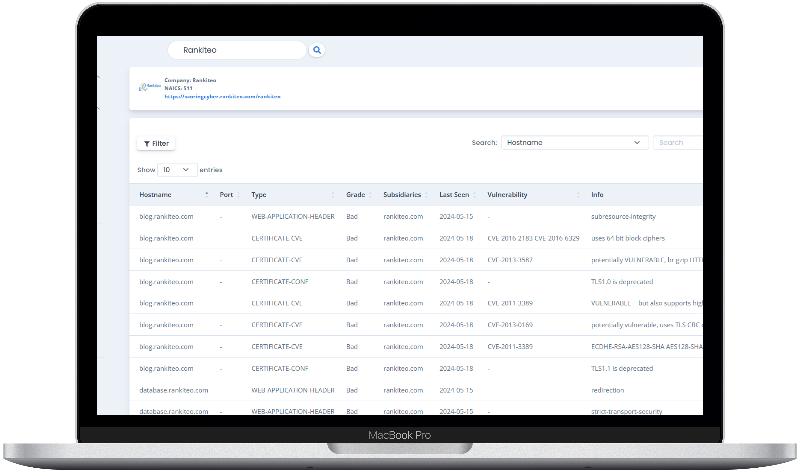
Identify exposed access points, detect misconfigured SSL certificates, and uncover vulnerabilities across the network infrastructure.
Gain visibility into the software components used within an organization to detect vulnerabilities, manage risk, and ensure supply chain security.
Monitor and manage all IT assets and their configurations to ensure accurate, real-time visibility across the company's technology environment.
Leverage real-time insights on active threats, malware campaigns, and emerging vulnerabilities to proactively defend against evolving cyberattacks.









 Rapid
Rapid