








HHM
Company Details
Linkedin ID:
hancock-historical-museum
Employees number:
4
Number of followers:
74
NAICS:
712
Industry Type:
Homepage:
hancockhistoricalmuseum.org
IP Addresses:
0
Company ID:
HAN_6770066
Scan Status:
In-progress


Hancock Historical Museum Company CyberSecurity Posture
hancockhistoricalmuseum.org


The Hancock Historical Museum is a privately-funded, non-profit history museum founded in 1970 by five local civic leaders: Harold Corbin, Jack Harrington, Ed Heminger, Jim Brucklacher, and Joe Opperman. These five men had the foresight to create a place to preserve and share our local history. Over the years, the museum’s role in the community has grown significantly. Through educational programming and outreach, as well as curation activities, the museum: • Provides a place for family-focused cultural enrichment • Creates and strengthens community identity • Instills a sense of community pride and ownership • Embodies our unique sense of place • Preserves our collective memory Today, the Hancock Historical Museum is the only nonprofit organization preserving and sharing our community’s rich heritage, Annual attendance at the museum, special events, and outreach programming exceeds 20,000 people, including more than 4,000 Hancock County schoolchildren. The museum began with the acquisition of the Hull-Flater House at 422 West Sandusky Street, and first opened to the public in 1971. The house was built in 1881 by Jasper Hull, co-founder of the Findlay Artificial Gas and Light Company, and was one of the grandest homes of the day. Today, the home still serves as the welcoming “front porch” of an expansive development that has grown to nine facilities, including the Little Red Schoolhouse and the new Marathon Energy & Transportation Annex. In addition to an expansive campus, the museum houses more than 70,000 books, photographs, manuscripts and artifacts in its collections. Without the efforts of the Hancock Historical Museum, we would lose many of the stories, buildings, memories and treasures – and the lessons they hold – for future generations. Preserving the rich heritage of Hancock County to honor the past and inspire the future.
Company Details
hancock-historical-museum
4
74
712
hancockhistoricalmuseum.org
0
HAN_6770066
In-progress
 HHM Risk Score (AI oriented)
Between 750 and 799
 HHM Global Score (TPRM)
XXXX


No incidents recorded for Hancock Historical Museum in 2026.
No incidents recorded for Hancock Historical Museum in 2026.
No incidents recorded for Hancock Historical Museum in 2026.
HHM cyber incidents detection timeline including parent company and subsidiaries

The Hancock Historical Museum is a privately-funded, non-profit history museum founded in 1970 by five local civic leaders: Harold Corbin, Jack Harrington, Ed Heminger, Jim Brucklacher, and Joe Opperman. These five men had the foresight to create a place to preserve and share our local history. Over the years, the museum’s role in the community has grown significantly. Through educational programming and outreach, as well as curation activities, the museum: • Provides a place for family-focused cultural enrichment • Creates and strengthens community identity • Instills a sense of community pride and ownership • Embodies our unique sense of place • Preserves our collective memory Today, the Hancock Historical Museum is the only nonprofit organization preserving and sharing our community’s rich heritage, Annual attendance at the museum, special events, and outreach programming exceeds 20,000 people, including more than 4,000 Hancock County schoolchildren. The museum began with the acquisition of the Hull-Flater House at 422 West Sandusky Street, and first opened to the public in 1971. The house was built in 1881 by Jasper Hull, co-founder of the Findlay Artificial Gas and Light Company, and was one of the grandest homes of the day. Today, the home still serves as the welcoming “front porch” of an expansive development that has grown to nine facilities, including the Little Red Schoolhouse and the new Marathon Energy & Transportation Annex. In addition to an expansive campus, the museum houses more than 70,000 books, photographs, manuscripts and artifacts in its collections. Without the efforts of the Hancock Historical Museum, we would lose many of the stories, buildings, memories and treasures – and the lessons they hold – for future generations. Preserving the rich heritage of Hancock County to honor the past and inspire the future.

The Tech is a mission driven organization that develops the next generation of problem-solvers locally, nationally and globally, through the creation and distribution of world-class immersive STEAM education resources. We believe that everyone is born an innovator who can change the world for the be

Founded in 1838 and now a National Historic Landmark, Green-Wood was one of the first rural cemeteries in America. By the early 1860s, it had earned an international reputation for its magnificent beauty and became the prestigious place to be buried, attracting 500,000 visitors a year, second only t

O Instituto Odeon é uma associação privada de caráter cultural, sem fins lucrativos, que tem a missão de promover a cidadania e o desenvolvimento socioeducacional por meio da realização de projetos culturais. O Instituto foi formado a partir de uma ampliação da Odeon Companhia Teatral, organização

The NAS was formed to further interest in our underwater cultural heritage. We are dedicated to advancing education in nautical archaeology at all levels from the general public to professionals in the sector. To this end we: run an accredited training programme, publish a peer-reviewed journal; org

The Auburn Cord Duesenberg Automobile Museum offers over 120 cars on exhibit on three levels, nine automotive themed galleries allow the visitor to experience everything from classic cars (as defined by the Classic Car Club of America), to Indiana built cars, to racing and engineering themed exhibit

The Adirondack Experience Museum in Blue Mountain Lake, New York is centrally located in the heart of the Adirondacks. Founded in 1957, the museum preserves and interprets an extensive collection of historic artifacts, photographs, archival materials, and fine art. The museum's twenty-two indoor a

Cranbrook Institute of Science is a science and natural history museum that strives to nurture curiosity, advance scientific literacy, and encourage advocacy for our natural and cultural worlds. As a premier resource for science and natural history, the Institute of Science consistently delivers an

Discovery Station at Hagerstown, Inc. is a hands-on museum that provides life-long learning experiences to thousands of children and families each year. We create an environment that stimulates curiosity for discovery, exploration, and further investigation through exhibits and programs that focus

The Roman Baths is one of the finest historic sites in Northern Europe, and one of the most popular tourist attractions in the UK. It is run by the Heritage Services section of Bath & North East Somerset Council. The Roman Baths, at the heart of the City of Bath World Heritage Site, consists of the
.png)
Western Alliance Bancorporation recently appointed Stephen McMaster as Chief Information Security Officer, tasking him with leading...
Cybersecurity narratives this week converged on a single reality: digital risk has fully migrated into the executive and institutional...
The European Commission this week presented its proposed revision of the Cybersecurity Act, as part of a cybersecurity package.
Tanium has shared an update. The company is hosting a webinar on January 27 featuring a Forrester senior analyst and a Tanium executive to...
Miami, Florida, January 22nd, 2026, CyberNewsWire. Halo Security, a leading provider of external attack surface management and penetration...
A Texas-based telecommunications giant is building out a Charlotte cybersecurity office, with dozens of employees already hired.
The ETF applies a covered call mechanism on HACK holdings, with monthly distributions tied to option premiums.
The trillion-dollar biopharma is balancing innovation with caution.
A 9.8-severity flaw (CVE-2026-24061) in GNU InetUtils telnetd allows remote authentication bypass and root access in versions 1.9.3 to 2.7.

Explore insights on cybersecurity incidents, risk posture, and Rankiteo's assessments.
The official website of Hancock Historical Museum is http://hancockhistoricalmuseum.org/.
According to Rankiteo, Hancock Historical Museum’s AI-generated cybersecurity score is 763, reflecting their Fair security posture.
According to Rankiteo, Hancock Historical Museum currently holds 0 security badges, indicating that no recognized compliance certifications are currently verified for the organization.
According to Rankiteo, Hancock Historical Museum has not been affected by any supply chain cyber incidents, and no incident IDs are currently listed for the organization.
According to Rankiteo, Hancock Historical Museum is not certified under SOC 2 Type 1.
According to Rankiteo, Hancock Historical Museum does not hold a SOC 2 Type 2 certification.
According to Rankiteo, Hancock Historical Museum is not listed as GDPR compliant.
According to Rankiteo, Hancock Historical Museum does not currently maintain PCI DSS compliance.
According to Rankiteo, Hancock Historical Museum is not compliant with HIPAA regulations.
According to Rankiteo,Hancock Historical Museum is not certified under ISO 27001, indicating the absence of a formally recognized information security management framework.
Hancock Historical Museum operates primarily in the Museums, Historical Sites, and Zoos industry.
Hancock Historical Museum employs approximately 4 people worldwide.
Hancock Historical Museum presently has no subsidiaries across any sectors.
Hancock Historical Museum’s official LinkedIn profile has approximately 74 followers.
Hancock Historical Museum is classified under the NAICS code 712, which corresponds to Museums, Historical Sites, and Similar Institutions.
No, Hancock Historical Museum does not have a profile on Crunchbase.
Yes, Hancock Historical Museum maintains an official LinkedIn profile, which is actively utilized for branding and talent engagement, which can be accessed here: https://www.linkedin.com/company/hancock-historical-museum.
As of January 22, 2026, Rankiteo reports that Hancock Historical Museum has not experienced any cybersecurity incidents.
Hancock Historical Museum has an estimated 2,178 peer or competitor companies worldwide.
Total Incidents: According to Rankiteo, Hancock Historical Museum has faced 0 incidents in the past.
Incident Types: The types of cybersecurity incidents that have occurred include .
.png)
Backstage is an open framework for building developer portals, and @backstage/backend-defaults provides the default implementations and setup for a standard Backstage backend app. Prior to versions 0.12.2, 0.13.2, 0.14.1, and 0.15.0, the `FetchUrlReader` component, used by the catalog and other plugins to fetch content from URLs, followed HTTP redirects automatically. This allowed an attacker who controls a host listed in `backend.reading.allow` to redirect requests to internal or sensitive URLs that are not on the allowlist, bypassing the URL allowlist security control. This is a Server-Side Request Forgery (SSRF) vulnerability that could allow access to internal resources, but it does not allow attackers to include additional request headers. This vulnerability is fixed in `@backstage/backend-defaults` version 0.12.2, 0.13.2, 0.14.1, and 0.15.0. Users should upgrade to this version or later. Some workarounds are available. Restrict `backend.reading.allow` to only trusted hosts that you control and that do not issue redirects, ensure allowed hosts do not have open redirect vulnerabilities, and/or use network-level controls to block access from Backstage to sensitive internal endpoints.
Backstage is an open framework for building developer portals, and @backstage/cli-common provides config loading functionality used by the backend and command line interface of Backstage. Prior to version 0.1.17, the `resolveSafeChildPath` utility function in `@backstage/backend-plugin-api`, which is used to prevent path traversal attacks, failed to properly validate symlink chains and dangling symlinks. An attacker could bypass the path validation via symlink chains (creating `link1 → link2 → /outside` where intermediate symlinks eventually resolve outside the allowed directory) and dangling symlinks (creating symlinks pointing to non-existent paths outside the base directory, which would later be created during file operations). This function is used by Scaffolder actions and other backend components to ensure file operations stay within designated directories. This vulnerability is fixed in `@backstage/backend-plugin-api` version 0.1.17. Users should upgrade to this version or later. Some workarounds are available. Run Backstage in a containerized environment with limited filesystem access and/or restrict template creation to trusted users.
Backstage is an open framework for building developer portals. Multiple Scaffolder actions and archive extraction utilities were vulnerable to symlink-based path traversal attacks. An attacker with access to create and execute Scaffolder templates could exploit symlinks to read arbitrary files via the `debug:log` action by creating a symlink pointing to sensitive files (e.g., `/etc/passwd`, configuration files, secrets); delete arbitrary files via the `fs:delete` action by creating symlinks pointing outside the workspace, and write files outside the workspace via archive extraction (tar/zip) containing malicious symlinks. This affects any Backstage deployment where users can create or execute Scaffolder templates. This vulnerability is fixed in `@backstage/backend-defaults` versions 0.12.2, 0.13.2, 0.14.1, and 0.15.0; `@backstage/plugin-scaffolder-backend` versions 2.2.2, 3.0.2, and 3.1.1; and `@backstage/plugin-scaffolder-node` versions 0.11.2 and 0.12.3. Users should upgrade to these versions or later. Some workarounds are available. Follow the recommendation in the Backstage Threat Model to limit access to creating and updating templates, restrict who can create and execute Scaffolder templates using the permissions framework, audit existing templates for symlink usage, and/or run Backstage in a containerized environment with limited filesystem access.
FastAPI Api Key provides a backend-agnostic library that provides an API key system. Version 1.1.0 has a timing side-channel vulnerability in verify_key(). The method applied a random delay only on verification failures, allowing an attacker to statistically distinguish valid from invalid API keys by measuring response latencies. With enough repeated requests, an adversary could infer whether a key_id corresponds to a valid key, potentially accelerating brute-force or enumeration attacks. All users relying on verify_key() for API key authentication prior to the fix are affected. Users should upgrade to version 1.1.0 to receive a patch. The patch applies a uniform random delay (min_delay to max_delay) to all responses regardless of outcome, eliminating the timing correlation. Some workarounds are available. Add an application-level fixed delay or random jitter to all authentication responses (success and failure) before the fix is applied and/or use rate limiting to reduce the feasibility of statistical timing attacks.
The Flux Operator is a Kubernetes CRD controller that manages the lifecycle of CNCF Flux CD and the ControlPlane enterprise distribution. Starting in version 0.36.0 and prior to version 0.40.0, a privilege escalation vulnerability exists in the Flux Operator Web UI authentication code that allows an attacker to bypass Kubernetes RBAC impersonation and execute API requests with the operator's service account privileges. In order to be vulnerable, cluster admins must configure the Flux Operator with an OIDC provider that issues tokens lacking the expected claims (e.g., `email`, `groups`), or configure custom CEL expressions that can evaluate to empty values. After OIDC token claims are processed through CEL expressions, there is no validation that the resulting `username` and `groups` values are non-empty. When both values are empty, the Kubernetes client-go library does not add impersonation headers to API requests, causing them to be executed with the flux-operator service account's credentials instead of the authenticated user's limited permissions. This can result in privilege escalation, data exposure, and/or information disclosure. Version 0.40.0 patches the issue.

Get company history

Every week, Rankiteo analyzes billions of signals to give organizations a sharper, faster view of emerging risks. With deeper, more actionable intelligence at their fingertips, security teams can outpace threat actors, respond instantly to Zero-Day attacks, and dramatically shrink their risk exposure window.
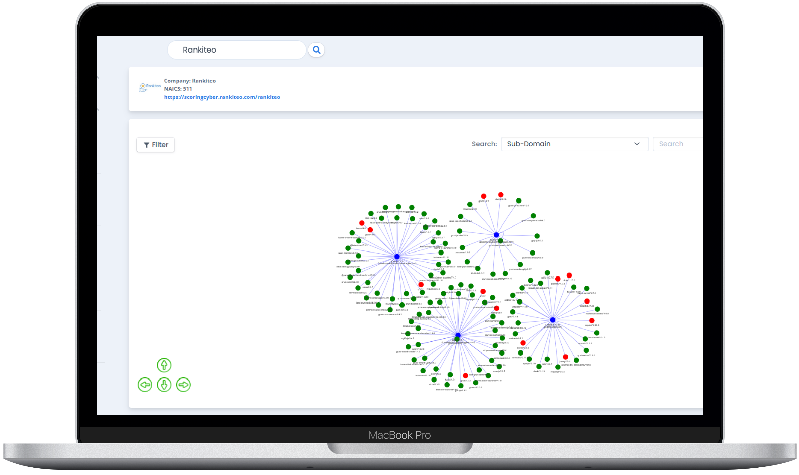
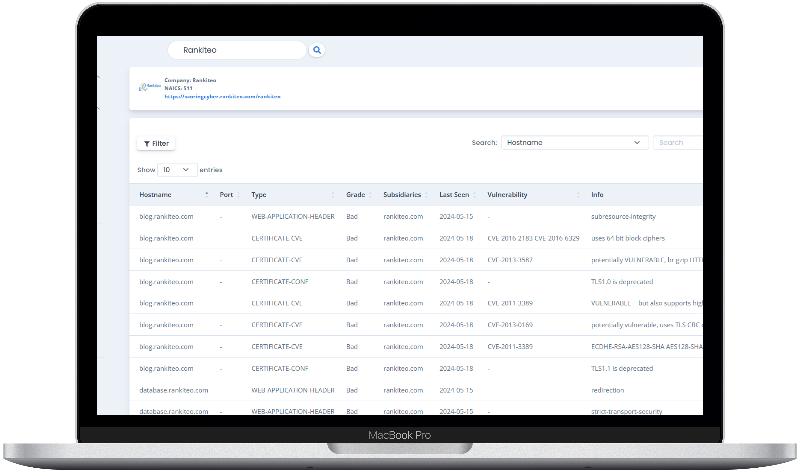
Identify exposed access points, detect misconfigured SSL certificates, and uncover vulnerabilities across the network infrastructure.
Gain visibility into the software components used within an organization to detect vulnerabilities, manage risk, and ensure supply chain security.
Monitor and manage all IT assets and their configurations to ensure accurate, real-time visibility across the company's technology environment.
Leverage real-time insights on active threats, malware campaigns, and emerging vulnerabilities to proactively defend against evolving cyberattacks.




 Rapid
Rapid