






CCMH
Company Details
Linkedin ID:
czech-center-museum-houston
Website:
Employees number:
5
Number of followers:
158
NAICS:
712
Industry Type:
Homepage:
czechcenter.org
IP Addresses:
0
Company ID:
CZE_2138683
Scan Status:
In-progress


Czech Center Museum Houston Company CyberSecurity Posture
czechcenter.org


The Czech Center Museum Houston is a 501(c)(3) non-profit educational and cultural arts organization. Proud to be one of Houston's eighteen fine museums, the CCMH strives to preserve and expand public knowledge of Czech and Slovak heritage with the ultimate goal of serving as a catalyst for the exploration of all heritages. For fifteen years now the CCMH has worked under this tenet that exploration of heritage is key to becoming Global Citizens.
Company Details
czech-center-museum-houston
5
158
712
czechcenter.org
0
CZE_2138683
In-progress
 CCMH Risk Score (AI oriented)
Between 750 and 799
 CCMH Global Score (TPRM)
XXXX


No incidents recorded for Czech Center Museum Houston in 2026.
No incidents recorded for Czech Center Museum Houston in 2026.
No incidents recorded for Czech Center Museum Houston in 2026.
CCMH cyber incidents detection timeline including parent company and subsidiaries

The Czech Center Museum Houston is a 501(c)(3) non-profit educational and cultural arts organization. Proud to be one of Houston's eighteen fine museums, the CCMH strives to preserve and expand public knowledge of Czech and Slovak heritage with the ultimate goal of serving as a catalyst for the exploration of all heritages. For fifteen years now the CCMH has worked under this tenet that exploration of heritage is key to becoming Global Citizens.


At the forks of the Deshkan Ziibi/Thames River on the traditional lands of the Anishinaabek, Haudenosaunee, Lūnaapéewak and Attawandaron, and operating within the homeland of the Chippewas of the Thames, Oneida Nation, and Munsee Delaware Nations, we are Museum London. We’re more than a museum—we’r

Located at 43 Patton Ave, in the heart of Asheville’s thriving downtown cultural area, Asheville Museum of Science (AMOS) ignites imagination, enhances science capability, and unlocks innovation. For more than 60 years, AMOS has fostered an appreciation for the Earth and its resources and environmen

Mission Statement The mission of the Children’s Discovery Museum is to provide an array of exhibits and activities that promote developmental skills including social, cognitive, problem solving and peer interaction. Our environment creates an interactive community in which hands on learning is pr

About the Museum: The Museum is located on the sixth and seventh floors of an early 20th-century warehouse formerly known as the Texas School Book Depository. The permanent exhibit features films, photographs and artifacts that chronicle President Kennedy's life, death and legacy. Temporary exhibits

The Art Gallery Society of NSW is the membership program of the Art Gallery of NSW. Members receive a host of benefits including free exhibition viewings, special discounts, exclusive entry to the Members Lounge, ‘Look’ magazine and access to over 400 events each year including concerts, parties, le

Museums Victoria (MV) is responsible for the state's scientific and cultural collections, providing public access through three museums. The organization also oversees a wide range of research programs, the continued development of the state's collections, and run major education and research based

Fort Mason Center for Arts & Culture is a waterfront destination for thought-provoking programs, events, restaurants, and nonprofit organizations that support and reflect the evolving cultural fabric of San Francisco and the Bay Area. An arts hub within San Francisco, the campus consists of former m

Open since 1927, the Sacramento Zoo is home to more than 140 native, rare and endangered species and is one of over 200 accredited institutions of the Association of Zoos and Aquariums. The Zoo is wholly managed by the nonprofit Sacramento Zoological Society and inspires conservation awareness thro

The Nerman Museum of Contemporary Art has earned its place in the vanguard of contemporary art through its cutting-edge art exhibitions and permanent collection. The collection focuses on international, national, and regional contemporary artists, with an emphasis on diverse practitioners and educat
.png)
Corporations across the globe are facing a dynamic risk environment, as AI adoption surges with few guardrails, business resilience takes...
Digital health and telehealth companies are scaling faster than regulators can write rules. AI-driven clinical workflows, remote monitoring,...
Investing.com -- OpenAI CEO Sam Altman revealed that the company plans to release several Codex-related products in the coming month,...
Guardz is a company that provides an AI-powered, unified cybersecurity platform designed specifically for Managed Service Providers (MSPs)...
Highlights. A U.S. congressional hearing found that threats are converging as cyberattacks, AI and physical systems now intersect,...
As the agency's vulnerability database buckles under a flood of submissions, it's planning to shift some responsibilities to other parties.
Artificial intelligence (AI) is rapidly reshaping the enterprise landscape, promising a leap in productivity and efficiency.
Healthcare cybersecurity is a Gordian Knot problem—complex, difficult, and essential—but AI might provide the sword.
Defense contractors subject to Cybersecurity Maturity Model Certification (CMMC) compliance under government contracts will be subject to...

Explore insights on cybersecurity incidents, risk posture, and Rankiteo's assessments.
The official website of Czech Center Museum Houston is http://www.czechcenter.org.
According to Rankiteo, Czech Center Museum Houston’s AI-generated cybersecurity score is 762, reflecting their Fair security posture.
According to Rankiteo, Czech Center Museum Houston currently holds 0 security badges, indicating that no recognized compliance certifications are currently verified for the organization.
According to Rankiteo, Czech Center Museum Houston has not been affected by any supply chain cyber incidents, and no incident IDs are currently listed for the organization.
According to Rankiteo, Czech Center Museum Houston is not certified under SOC 2 Type 1.
According to Rankiteo, Czech Center Museum Houston does not hold a SOC 2 Type 2 certification.
According to Rankiteo, Czech Center Museum Houston is not listed as GDPR compliant.
According to Rankiteo, Czech Center Museum Houston does not currently maintain PCI DSS compliance.
According to Rankiteo, Czech Center Museum Houston is not compliant with HIPAA regulations.
According to Rankiteo,Czech Center Museum Houston is not certified under ISO 27001, indicating the absence of a formally recognized information security management framework.
Czech Center Museum Houston operates primarily in the Museums, Historical Sites, and Zoos industry.
Czech Center Museum Houston employs approximately 5 people worldwide.
Czech Center Museum Houston presently has no subsidiaries across any sectors.
Czech Center Museum Houston’s official LinkedIn profile has approximately 158 followers.
Czech Center Museum Houston is classified under the NAICS code 712, which corresponds to Museums, Historical Sites, and Similar Institutions.
No, Czech Center Museum Houston does not have a profile on Crunchbase.
Yes, Czech Center Museum Houston maintains an official LinkedIn profile, which is actively utilized for branding and talent engagement, which can be accessed here: https://www.linkedin.com/company/czech-center-museum-houston.
As of January 23, 2026, Rankiteo reports that Czech Center Museum Houston has not experienced any cybersecurity incidents.
Czech Center Museum Houston has an estimated 2,181 peer or competitor companies worldwide.
Total Incidents: According to Rankiteo, Czech Center Museum Houston has faced 0 incidents in the past.
Incident Types: The types of cybersecurity incidents that have occurred include .
.png)
Improper validation of specified type of input in M365 Copilot allows an unauthorized attacker to disclose information over a network.
Improper access control in Azure Front Door (AFD) allows an unauthorized attacker to elevate privileges over a network.
Azure Entra ID Elevation of Privilege Vulnerability
Moonraker is a Python web server providing API access to Klipper 3D printing firmware. In versions 0.9.3 and below, instances configured with the "ldap" component enabled are vulnerable to LDAP search filter injection techniques via the login endpoint. The 401 error response message can be used to determine whether or not a search was successful, allowing for brute force methods to discover LDAP entries on the server such as user IDs and user attributes. This issue has been fixed in version 0.10.0.
Runtipi is a Docker-based, personal homeserver orchestrator that facilitates multiple services on a single server. Versions 3.7.0 and above allow an authenticated user to execute arbitrary system commands on the host server by injecting shell metacharacters into backup filenames. The BackupManager fails to sanitize the filenames of uploaded backups. The system persists user-uploaded files directly to the host filesystem using the raw originalname provided in the request. This allows an attacker to stage a file containing shell metacharacters (e.g., $(id).tar.gz) at a predictable path, which is later referenced during the restore process. The successful storage of the file is what allows the subsequent restore command to reference and execute it. This issue has been fixed in version 4.7.0.

Get company history

Every week, Rankiteo analyzes billions of signals to give organizations a sharper, faster view of emerging risks. With deeper, more actionable intelligence at their fingertips, security teams can outpace threat actors, respond instantly to Zero-Day attacks, and dramatically shrink their risk exposure window.
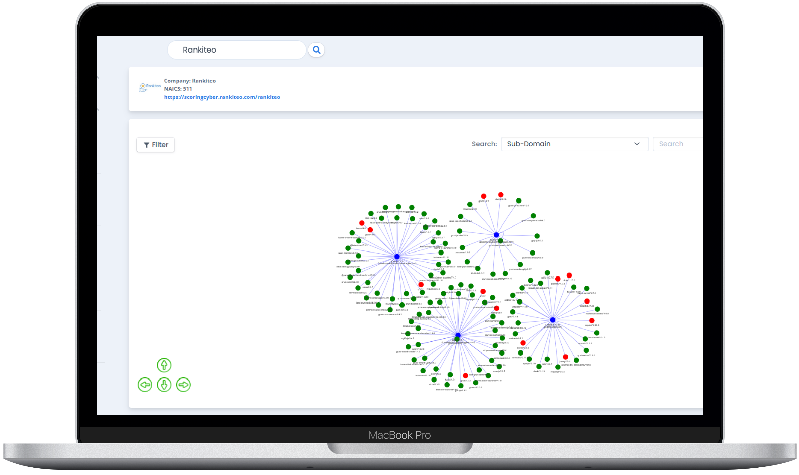
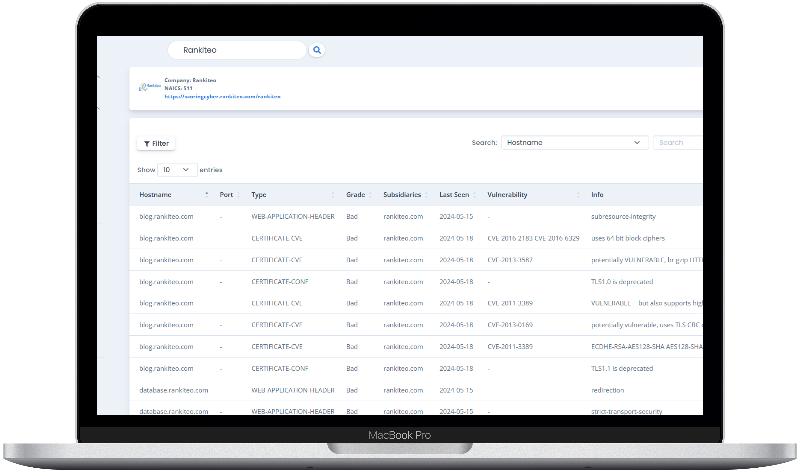
Identify exposed access points, detect misconfigured SSL certificates, and uncover vulnerabilities across the network infrastructure.
Gain visibility into the software components used within an organization to detect vulnerabilities, manage risk, and ensure supply chain security.
Monitor and manage all IT assets and their configurations to ensure accurate, real-time visibility across the company's technology environment.
Leverage real-time insights on active threats, malware campaigns, and emerging vulnerabilities to proactively defend against evolving cyberattacks.



 Rapid
Rapid