







CNMA
Company Details
Linkedin ID:
complexul-national-muzeal-astra
Website:
Employees number:
36
Number of followers:
0
NAICS:
712
Industry Type:
Homepage:
muzeulastra.ro
IP Addresses:
0
Company ID:
COM_2356702
Scan Status:
In-progress


Complexul National Muzeal ASTRA Company CyberSecurity Posture
muzeulastra.ro


Structura muzeala cu profil etnografic, cu patru unitati muzeale, specializate pe etnografie romaneasca (Muzeul Civilizatiei Populare Traditionale ASTRA), saseasca (Muzeul de Etnografie si Arta Populara Saseasca "Emil Sigerus"), transilvana (Muzeul Civilizatiei Transilvane ASTRA) si universala (Muzeul de Etnografie Universala "Franz Binder"). In cadrul C.N.M. ASTRA (transmis generic cu formula simplificata Muzeul ASTRA) functioneaza de asemenea ASTRA Film, unitate specializata in realizarea de filme documentare cu profil antropologic, in arhive foto si video etc.
Company Details
complexul-national-muzeal-astra
36
0
712
muzeulastra.ro
0
COM_2356702
In-progress
 CNMA Risk Score (AI oriented)
Between 800 and 849
 CNMA Global Score (TPRM)
XXXX


No incidents recorded for Complexul National Muzeal ASTRA in 2026.
No incidents recorded for Complexul National Muzeal ASTRA in 2026.
No incidents recorded for Complexul National Muzeal ASTRA in 2026.
CNMA cyber incidents detection timeline including parent company and subsidiaries

Structura muzeala cu profil etnografic, cu patru unitati muzeale, specializate pe etnografie romaneasca (Muzeul Civilizatiei Populare Traditionale ASTRA), saseasca (Muzeul de Etnografie si Arta Populara Saseasca "Emil Sigerus"), transilvana (Muzeul Civilizatiei Transilvane ASTRA) si universala (Muzeul de Etnografie Universala "Franz Binder"). In cadrul C.N.M. ASTRA (transmis generic cu formula simplificata Muzeul ASTRA) functioneaza de asemenea ASTRA Film, unitate specializata in realizarea de filme documentare cu profil antropologic, in arhive foto si video etc.

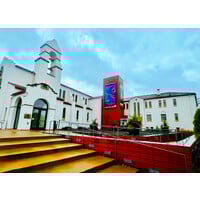
The Museum of Russian Art collects, preserves, exhibits, and illuminates the rich artistic tapestry of Russia, past and present, through outstanding exhibitions and public programs for all audiences. The Museum upholds an independent voice and the freedom of expression to carry out its mission unco

Liberty Science Center is a nonprofit organization dedicated to getting learners of all ages excited about the power, promise, and pure fun of science and technology. We are located in Liberty State Park on the Jersey City bank of the Hudson near the Statue of Liberty. The Science Center houses 12

Chinese Culture Center, under the aegis of the Chinese Culture Foundation, is dedicated to elevating underserved communities and giving voice to equality through education and contemporary arts programming. We elevate Chinatown and other underserved communities by empowering youth and residents. F

Artpace was founded by artist, collector, and businesswoman Linda Pace (1945-2007) in 1993 and opened to the public in 1995. Pace conceived of Artpace as a laboratory of dreams, providing artists from all over the world with an environment that would encourage experimentation and growth. In the y

Chuck Jones Center for Creativity is a gymnasium for the creative brain. We teach our students, both young and young of heart, to nurture the creative genius that exists in all of us. We connect both left and ride sides of the brain in exercising creativity to solve problems, foster innovation, and

The Denver Art Museum has been a leader in educational programming for more than two decades. The family-friendly approach is fully integrated into the galleries through a unique partnership between curators, designers, and educators for each discipline. A trailblazer in creating innovative oppo

The Nelson-Atkins Museum of Art invites all people to explore the art in its care, and through its vast collections, the depths and complexities of human experiences. We strive to create a sense of belonging, where staff and volunteers can do meaningful work connecting people to art. We create an i

The Lone Star Flight Museum's (LSFM) mission is to celebrate flight and achievement in Texas aviation history; and educate and engage our youth through Science, Technology, Engineering and Math (STEM). Lead by Anna Hawley, LSFM opened its $38 million state-of-the-art museum on Labor Day weekend 2017

The Museum of Contemporary Art (MCA) Chicago offers exhibitions of the most thought-provoking art created since 1945. The MCA documents contemporary visual culture through painting, sculpture, photography, video and film, and performance. Located in the heart of downtown Chicago, the MCA boasts a gi
.png)
ReliaQuest has shared an update. The company announced an upcoming webinar focused on modern detection strategies for cybersecurity operations.
Global Legal Insights' tenth edition of “Fund Finance” features a chapter titled, “Data Privacy and Cybersecurity Considerations for Private...
SandboxAQ has shared an update. The company participated in a cybersecurity-focused breakfast session alongside CrowdStrike and CoreWeave,...
Fortinet, Palo Alto Networks, CrowdStrike, Globant, and SentinelOne are the five Cybersecurity stocks to watch today, according to...
As businesses continue their digital transformation journeys, they are exposed to an ever-expanding attack surface.
Corr-Serve, a South African value-added distributor of cybersecurity solutions, has strengthened its long-standing partnership with Seceon,...
HHS must address the persistent cybersecurity threats facing the healthcare sector and adapt its approach to cybersecurity within the...
Corporations across the globe are facing a dynamic risk environment, as AI adoption surges with few guardrails, business resilience takes...
Investing.com -- OpenAI CEO Sam Altman revealed that the company plans to release several Codex-related products in the coming month,...

Explore insights on cybersecurity incidents, risk posture, and Rankiteo's assessments.
The official website of Complexul National Muzeal ASTRA is http://www.muzeulastra.ro.
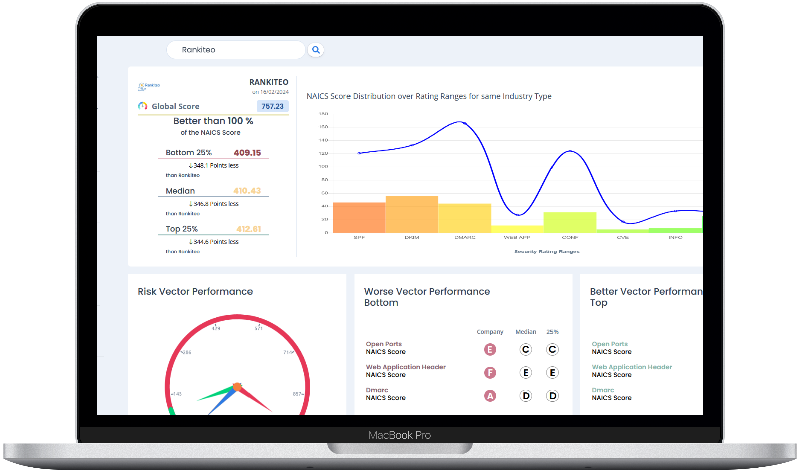
According to Rankiteo, Complexul National Muzeal ASTRA’s AI-generated cybersecurity score is 823, reflecting their Good security posture.
According to Rankiteo, Complexul National Muzeal ASTRA currently holds 0 security badges, indicating that no recognized compliance certifications are currently verified for the organization.
According to Rankiteo, Complexul National Muzeal ASTRA has not been affected by any supply chain cyber incidents, and no incident IDs are currently listed for the organization.
According to Rankiteo, Complexul National Muzeal ASTRA is not certified under SOC 2 Type 1.
According to Rankiteo, Complexul National Muzeal ASTRA does not hold a SOC 2 Type 2 certification.
According to Rankiteo, Complexul National Muzeal ASTRA is not listed as GDPR compliant.
According to Rankiteo, Complexul National Muzeal ASTRA does not currently maintain PCI DSS compliance.
According to Rankiteo, Complexul National Muzeal ASTRA is not compliant with HIPAA regulations.
According to Rankiteo,Complexul National Muzeal ASTRA is not certified under ISO 27001, indicating the absence of a formally recognized information security management framework.
Complexul National Muzeal ASTRA operates primarily in the Museums, Historical Sites, and Zoos industry.
Complexul National Muzeal ASTRA employs approximately 36 people worldwide.
Complexul National Muzeal ASTRA presently has no subsidiaries across any sectors.
Complexul National Muzeal ASTRA’s official LinkedIn profile has approximately 0 followers.
Complexul National Muzeal ASTRA is classified under the NAICS code 712, which corresponds to Museums, Historical Sites, and Similar Institutions.
No, Complexul National Muzeal ASTRA does not have a profile on Crunchbase.
Yes, Complexul National Muzeal ASTRA maintains an official LinkedIn profile, which is actively utilized for branding and talent engagement, which can be accessed here: https://www.linkedin.com/company/complexul-national-muzeal-astra.
As of January 23, 2026, Rankiteo reports that Complexul National Muzeal ASTRA has not experienced any cybersecurity incidents.
Complexul National Muzeal ASTRA has an estimated 2,181 peer or competitor companies worldwide.
Total Incidents: According to Rankiteo, Complexul National Muzeal ASTRA has faced 0 incidents in the past.
Incident Types: The types of cybersecurity incidents that have occurred include .
.png)
Improper validation of specified type of input in M365 Copilot allows an unauthorized attacker to disclose information over a network.
Improper access control in Azure Front Door (AFD) allows an unauthorized attacker to elevate privileges over a network.
Azure Entra ID Elevation of Privilege Vulnerability
Moonraker is a Python web server providing API access to Klipper 3D printing firmware. In versions 0.9.3 and below, instances configured with the "ldap" component enabled are vulnerable to LDAP search filter injection techniques via the login endpoint. The 401 error response message can be used to determine whether or not a search was successful, allowing for brute force methods to discover LDAP entries on the server such as user IDs and user attributes. This issue has been fixed in version 0.10.0.
Runtipi is a Docker-based, personal homeserver orchestrator that facilitates multiple services on a single server. Versions 3.7.0 and above allow an authenticated user to execute arbitrary system commands on the host server by injecting shell metacharacters into backup filenames. The BackupManager fails to sanitize the filenames of uploaded backups. The system persists user-uploaded files directly to the host filesystem using the raw originalname provided in the request. This allows an attacker to stage a file containing shell metacharacters (e.g., $(id).tar.gz) at a predictable path, which is later referenced during the restore process. The successful storage of the file is what allows the subsequent restore command to reference and execute it. This issue has been fixed in version 4.7.0.

Get company history

Every week, Rankiteo analyzes billions of signals to give organizations a sharper, faster view of emerging risks. With deeper, more actionable intelligence at their fingertips, security teams can outpace threat actors, respond instantly to Zero-Day attacks, and dramatically shrink their risk exposure window.
Identify exposed access points, detect misconfigured SSL certificates, and uncover vulnerabilities across the network infrastructure.
Gain visibility into the software components used within an organization to detect vulnerabilities, manage risk, and ensure supply chain security.
Monitor and manage all IT assets and their configurations to ensure accurate, real-time visibility across the company's technology environment.
Leverage real-time insights on active threats, malware campaigns, and emerging vulnerabilities to proactively defend against evolving cyberattacks.



 Rapid
Rapid