







CRMM
Company Details
Linkedin ID:
columbia-river-maritime-museum
Website:
Employees number:
18
Number of followers:
406
NAICS:
712
Industry Type:
Homepage:
crmm.org
IP Addresses:
0
Company ID:
COL_2985183
Scan Status:
In-progress


Columbia River Maritime Museum Vendor Cyber Rating & Cyber Score
crmm.orgThe Columbia River Maritime Museum has been sharing the Columbia River’s rich maritime heritage and history since 1962. The Museum’s wide-ranging exhibits, programs, collections and distinctive architecture express the vision of Founder Rolf Klep. The Museum is Oregon’s official state maritime museum, was the first Oregon museum to be nationally accredited, and is widely regarded as among the finest maritime museums in the United States.
Company Details
columbia-river-maritime-museum
18
406
712
crmm.org
0
COL_2985183
In-progress
 CRMM Risk Score (AI oriented)
Between 750 and 799
 CRMM Global Score (TPRM)
XXXX


No incidents recorded for Columbia River Maritime Museum in 2026.
No incidents recorded for Columbia River Maritime Museum in 2026.
No incidents recorded for Columbia River Maritime Museum in 2026.
CRMM cyber incidents detection timeline including parent company and subsidiaries
The Columbia River Maritime Museum has been sharing the Columbia River’s rich maritime heritage and history since 1962. The Museum’s wide-ranging exhibits, programs, collections and distinctive architecture express the vision of Founder Rolf Klep. The Museum is Oregon’s official state maritime museum, was the first Oregon museum to be nationally accredited, and is widely regarded as among the finest maritime museums in the United States.

The Carolwood Foundation’s mission is to preserve Walt Disney’s railroad legacy. We accomplish this through: sharing our volunteers’ and supporters’ love of railroading; teaching our children to understand the role that railroads served in building America, and encouraging the continual appreciation
The Mississippi Museum of Art connects Mississippi to the world, and the power of art to the power of community. The Mississippi Museum of Art is more than an art museum in Jackson, Mississippi. It is a museum of Mississippi—a museum that connects Mississippians to our culture, our history, our com
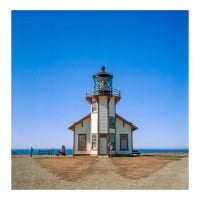
To ensure this national treasure for current and future generations, the mission of the Point Cabrillo Lightkeepers Association is to manage, protect, restore, interpret, and provide public access to the historic Point Cabrillo Light Station State Historic Park, and to assist State Parks in mainten
The Andrew Low House is a Greek and Italianate Revival- style house museum with historic gardens in the heart of Savannah's National Historic Landmark District that was built in 1848, by New York architect, John Norris. The museum and gift shop welcomes visitors seven days a week, running tours and

Nestled in the heart of it all on the north end of Keuka Lake, the Saunders Finger Lakes Museum stirs the imagination, educates the mind, and inspires visitors of all ages. Our goal is to bring the unique cultural heritage and natural history of the Finger Lakes directly to you. Let us show you why
The mission of the South Florida Science Center and Aquarium (SFSCA) is to open every mind to science through the strategic programming of interactive exhibits, engaging community-based camps and events. Founded in 1959 and formerly known as the South Florida Science Museum, the new SFSCA features m
The New Children's Museum is a dynamic new model of a museum that celebrates children and the arts. The Museum brings families together in a rich educational environment that fosters creativity— blending elements of art museum, children's museum, and community center. A non-profit institution funded

The Anchorage Museum shares the art, history, culture, and stories of Alaska and the North from diverse perspectives through exhibitions, public programs, and community projects focused on people, place, planet and potential. Located in Anchorage, Alaska, the museum sits on the traditional homeland

The Museum of Life and Science is one of North Carolina’s top attractions. Situated on 84-acres, our interactive science park includes a science center, a butterfly conservatory which is one of the largest in the world and beautifully-landscaped outdoor exhibits which are safe havens for rescued bla
.png)
An Oregon Coast museum was recognized as one of the nation's best maritime museums in USA Today's 2026 10Best Readers' Choice Awards.
The US Coast Guard Cutter Alert (WMEC 630) and crew held a change of command ceremony, Thursday, at the Columbia River Maritime Museum in Astoria.

Explore insights on cybersecurity incidents, risk posture, and Rankiteo's assessments.
The official website of Columbia River Maritime Museum is http://www.crmm.org.
According to Rankiteo, Columbia River Maritime Museum’s AI-generated cybersecurity score is 762, reflecting their Fair security posture.
According to Rankiteo, Columbia River Maritime Museum currently holds 0 security badges, indicating that no recognized compliance certifications are currently verified for the organization.
According to Rankiteo, Columbia River Maritime Museum has not been affected by any supply chain cyber incidents, and no incident IDs are currently listed for the organization.
According to Rankiteo, Columbia River Maritime Museum is not certified under SOC 2 Type 1.
According to Rankiteo, Columbia River Maritime Museum does not hold a SOC 2 Type 2 certification.
According to Rankiteo, Columbia River Maritime Museum is not listed as GDPR compliant.
According to Rankiteo, Columbia River Maritime Museum does not currently maintain PCI DSS compliance.
According to Rankiteo, Columbia River Maritime Museum is not compliant with HIPAA regulations.
According to Rankiteo,Columbia River Maritime Museum is not certified under ISO 27001, indicating the absence of a formally recognized information security management framework.
Columbia River Maritime Museum operates primarily in the Museums, Historical Sites, and Zoos industry.
Columbia River Maritime Museum employs approximately 18 people worldwide.
Columbia River Maritime Museum presently has no subsidiaries across any sectors.
Columbia River Maritime Museum’s official LinkedIn profile has approximately 406 followers.
Columbia River Maritime Museum is classified under the NAICS code 712, which corresponds to Museums, Historical Sites, and Similar Institutions.
No, Columbia River Maritime Museum does not have a profile on Crunchbase.
Yes, Columbia River Maritime Museum maintains an official LinkedIn profile, which is actively utilized for branding and talent engagement, which can be accessed here: https://www.linkedin.com/company/columbia-river-maritime-museum.
As of April 04, 2026, Rankiteo reports that Columbia River Maritime Museum has not experienced any cybersecurity incidents.
Columbia River Maritime Museum has an estimated 2,193 peer or competitor companies worldwide.
Total Incidents: According to Rankiteo, Columbia River Maritime Museum has faced 0 incidents in the past.
Incident Types: The types of cybersecurity incidents that have occurred include .
.png)
nimiq/core-rs-albatross is a Rust implementation of the Nimiq Proof-of-Stake protocol based on the Albatross consensus algorithm. Prior to version 1.3.0, two peer-facing consensus request handlers assume that the history index is always available and call blockchain.history_store.history_index().unwrap() directly. That assumption is false by construction. HistoryStoreProxy::history_index() explicitly returns None for the valid HistoryStoreProxy::WithoutIndex state. when a full node is syncing or otherwise running without the history index, a remote peer can send RequestTransactionsProof or RequestTransactionReceiptsByAddress and trigger an Option::unwrap() panic on the request path. This issue has been patched in version 1.3.0.
PraisonAI is a multi-agent teams system. Prior to version 1.5.95, FileTools.download_file() in praisonaiagents validates the destination path but performs no validation on the url parameter, passing it directly to httpx.stream() with follow_redirects=True. An attacker who controls the URL can reach any host accessible from the server including cloud metadata services and internal network services. This issue has been patched in version 1.5.95.
PraisonAI is a multi-agent teams system. Prior to version 4.5.97, OAuthManager.validate_token() returns True for any token not found in its internal store, which is empty by default. Any HTTP request to the MCP server with an arbitrary Bearer token is treated as authenticated, granting full access to all registered tools and agent capabilities. This issue has been patched in version 4.5.97.
PraisonAI is a multi-agent teams system. Prior to version 4.5.97, the PraisonAI Gateway server accepts WebSocket connections at /ws and serves agent topology at /info with no authentication. Any network client can connect, enumerate registered agents, and send arbitrary messages to agents and their tool sets. This issue has been patched in version 4.5.97.
PraisonAI is a multi-agent teams system. Prior to version 4.5.90, MCPToolIndex.search_tools() compiles a caller-supplied string directly as a Python regular expression with no validation, sanitization, or timeout. A crafted regex causes catastrophic backtracking in the re engine, blocking the Python thread for hundreds of seconds and causing a complete service outage. This issue has been patched in version 4.5.90.

Get company history

Every week, Rankiteo analyzes billions of signals to give organizations a sharper, faster view of emerging risks. With deeper, more actionable intelligence at their fingertips, security teams can outpace threat actors, respond instantly to Zero-Day attacks, and dramatically shrink their risk exposure window.
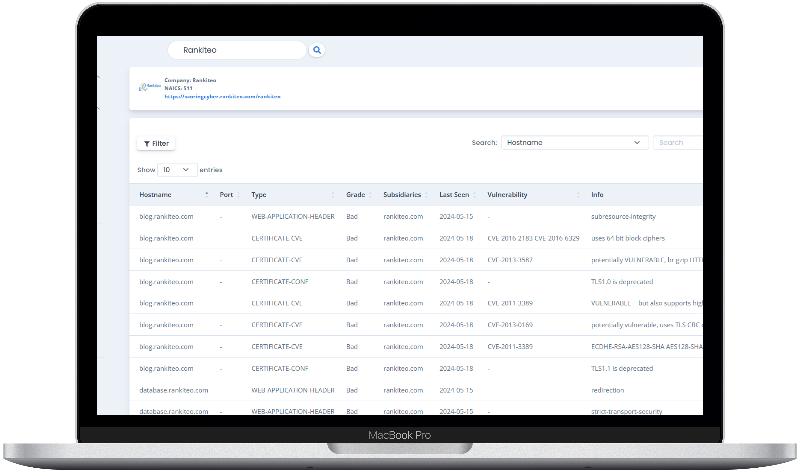
Identify exposed access points, detect misconfigured SSL certificates, and uncover vulnerabilities across the network infrastructure.
Gain visibility into the software components used within an organization to detect vulnerabilities, manage risk, and ensure supply chain security.
Monitor and manage all IT assets and their configurations to ensure accurate, real-time visibility across the company's technology environment.
Leverage real-time insights on active threats, malware campaigns, and emerging vulnerabilities to proactively defend against evolving cyberattacks.




 Rapid
Rapid