









COAM
Company Details
Linkedin ID:
chiltern-open-air-museum
Website:
Employees number:
32
Number of followers:
329
NAICS:
712
Industry Type:
Homepage:
coam.org.uk
IP Addresses:
0
Company ID:
CHI_2701322
Scan Status:
In-progress


Chiltern Open Air Museum Company CyberSecurity Posture
coam.org.uk


Chiltern Open Air Museum was founded in 1976 with the aim of rescuing threatened buildings. More than thirty historic building have now been saved and rebuilt at the site, and there are more in store. The Museum only accepts buildings that would otherwise be demolished. The Museum’s collection focuses on vernacular buildings – the past houses and workplaces of ordinary people that are gradually disappearing from the landscape. In the Chilterns, an Area of Outstanding Natural Beauty on London’s doorstep, the pressures of redevelopment are particularly great. Chiltern Open Air Museum preserves a heritage that would otherwise have been lost. The Museum is a registered charity and receives no regular grants towards its running costs or capital projects. We are grateful for the fantastic support of over 200 volunteers and the Friends of the Museum Association.
Company Details
chiltern-open-air-museum
32
329
712
coam.org.uk
0
CHI_2701322
In-progress
 COAM Risk Score (AI oriented)
Between 750 and 799
 COAM Global Score (TPRM)
XXXX


No incidents recorded for Chiltern Open Air Museum in 2026.
No incidents recorded for Chiltern Open Air Museum in 2026.
No incidents recorded for Chiltern Open Air Museum in 2026.
COAM cyber incidents detection timeline including parent company and subsidiaries

Chiltern Open Air Museum was founded in 1976 with the aim of rescuing threatened buildings. More than thirty historic building have now been saved and rebuilt at the site, and there are more in store. The Museum only accepts buildings that would otherwise be demolished. The Museum’s collection focuses on vernacular buildings – the past houses and workplaces of ordinary people that are gradually disappearing from the landscape. In the Chilterns, an Area of Outstanding Natural Beauty on London’s doorstep, the pressures of redevelopment are particularly great. Chiltern Open Air Museum preserves a heritage that would otherwise have been lost. The Museum is a registered charity and receives no regular grants towards its running costs or capital projects. We are grateful for the fantastic support of over 200 volunteers and the Friends of the Museum Association.


Located in Coal Valley, IL, Niabi Zoo offers an opportunity to explore 40 acres of a 287-acre forest preserve while enjoying the countryside of Rock Island County. This exploration guides guests through the discovery of more than 600 animals representing over 200 biologically diverse species. With i

Advancing the understanding and appreciation of nature through evidence, knowledge, engagement, and wonder. The Canadian Museum of Nature is Canada's national museum of natural history and natural sciences. The museum provides evidence-based insights, inspiring experiences and meaningful engagement

Calusa Nature Center is a non-profit organization that seeks to educate the public on wildlife, rehabilitated wildlife, water conservation, and other nature-related conservation and education. The nature center has programs for adults and children and is seeking to expand and update the musuem, exhi

Our Mission We invite you to discover contemporary art in settings that provoke thought and joy. Our programs join art with place in a pursuit of a deeper experience, a bigger conversation, and a closer community. Our Vision We believe in the capacity of art to transform lives. We dream of a fu

The Museum of Human Rights, Freedom and Tolerance was established in 2009 with a mission to promote the universal message of freedom as basic human right, educate public about the struggle for tolerance and against oppression, and to help diverse communities preserve the memories of genocide and per

The Fram Museum (Norwegian: Frammuseet) is a museum telling the story of Norwegian polar exploration. It is located on the peninsula of Bygdøy in Oslo, Norway. [1] The Fram Museum was inaugurated on 20 May 1936. It honours Norwegian and international polar exploration and the three great Norwegian

The Historical Society of Long Beach collects, preserves and presents local history. Through historical collections, exhibits, and programs we connect people to the past and to the place they live. We present an inclusive community narrative and help create greater understanding of our neighborhoods
Marblehead Museum is here to preserve, protect, and promote Marblehead's past as a means of enriching the present. The Museum welcomes people of all ages to discover what makes Marblehead extraordinary through innovative learning opportunities. The Museum's preeminent collection serves as the cataly
The New England Aquarium is a catalyst for global change through public engagement, commitment to marine animal conservation, leadership in education, innovative scientific research, and effective advocacy for vital and vibrant oceans. It is the only Boston-based cultural institution with a mission
.png)
ADIB hosted the UAE Cybersecurity Innovation Challenge, naming Corgea, Nothreat, and DTEX Systems as winners in a push for AI-driven and...
On December 30, Peter Levine, a Software Analyst at Evercore ISI, appeared on a CNBC interview to discuss the cybersecurity playbook for...
The European Commission has unveiled a new cybersecurity package aimed at reinforcing the European Union's (EU) resilience against growing...
International Seaways recently highlighted its cybersecurity focus as Global CISO Amit Basu presented at the 8th Annual Global Cyber Future...
Agentic AI operations are moving into production as organizations focus on observability, human oversight, and control of autonomous...
Kelley Information Technology outlines key cybersecurity actions every SMB executive in Central Florida should take to mitigate risks and...
The European Commission presented a revision of the Cybersecurity Act that introduces a phase-out of "high-risk suppliers" from critical...
James Yu, Palo Alto Networks' country manager in Taiwan, stated that while 2025 was predicted as the "disruptive year" for AI,...
AI agents' autonomy and wide access to data also exposes them to a new type of cybersecurity attack. It is also an opportunity for...

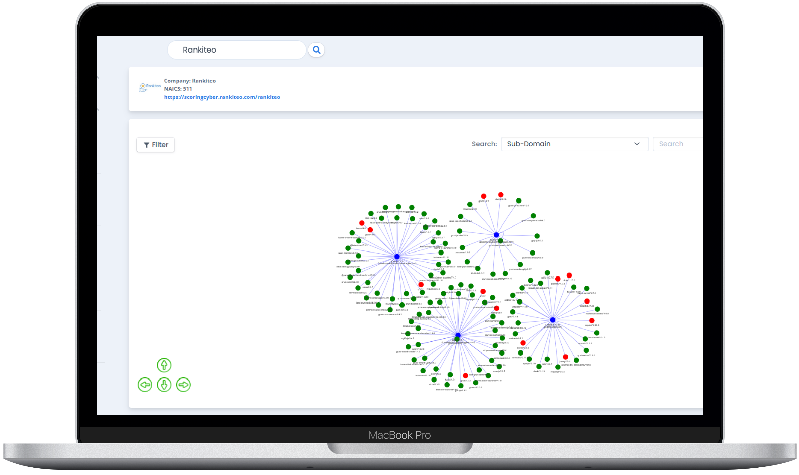
Explore insights on cybersecurity incidents, risk posture, and Rankiteo's assessments.
The official website of Chiltern Open Air Museum is http://www.coam.org.uk.
According to Rankiteo, Chiltern Open Air Museum’s AI-generated cybersecurity score is 763, reflecting their Fair security posture.
According to Rankiteo, Chiltern Open Air Museum currently holds 0 security badges, indicating that no recognized compliance certifications are currently verified for the organization.
According to Rankiteo, Chiltern Open Air Museum has not been affected by any supply chain cyber incidents, and no incident IDs are currently listed for the organization.
According to Rankiteo, Chiltern Open Air Museum is not certified under SOC 2 Type 1.
According to Rankiteo, Chiltern Open Air Museum does not hold a SOC 2 Type 2 certification.
According to Rankiteo, Chiltern Open Air Museum is not listed as GDPR compliant.
According to Rankiteo, Chiltern Open Air Museum does not currently maintain PCI DSS compliance.
According to Rankiteo, Chiltern Open Air Museum is not compliant with HIPAA regulations.
According to Rankiteo,Chiltern Open Air Museum is not certified under ISO 27001, indicating the absence of a formally recognized information security management framework.
Chiltern Open Air Museum operates primarily in the Museums, Historical Sites, and Zoos industry.
Chiltern Open Air Museum employs approximately 32 people worldwide.
Chiltern Open Air Museum presently has no subsidiaries across any sectors.
Chiltern Open Air Museum’s official LinkedIn profile has approximately 329 followers.
No, Chiltern Open Air Museum does not have a profile on Crunchbase.
Yes, Chiltern Open Air Museum maintains an official LinkedIn profile, which is actively utilized for branding and talent engagement, which can be accessed here: https://www.linkedin.com/company/chiltern-open-air-museum.
As of January 23, 2026, Rankiteo reports that Chiltern Open Air Museum has not experienced any cybersecurity incidents.
Chiltern Open Air Museum has an estimated 2,178 peer or competitor companies worldwide.
Total Incidents: According to Rankiteo, Chiltern Open Air Museum has faced 0 incidents in the past.
Incident Types: The types of cybersecurity incidents that have occurred include .
.png)
Improper validation of specified type of input in M365 Copilot allows an unauthorized attacker to disclose information over a network.
Improper access control in Azure Front Door (AFD) allows an unauthorized attacker to elevate privileges over a network.
Azure Entra ID Elevation of Privilege Vulnerability
Moonraker is a Python web server providing API access to Klipper 3D printing firmware. In versions 0.9.3 and below, instances configured with the "ldap" component enabled are vulnerable to LDAP search filter injection techniques via the login endpoint. The 401 error response message can be used to determine whether or not a search was successful, allowing for brute force methods to discover LDAP entries on the server such as user IDs and user attributes. This issue has been fixed in version 0.10.0.
Runtipi is a Docker-based, personal homeserver orchestrator that facilitates multiple services on a single server. Versions 3.7.0 and above allow an authenticated user to execute arbitrary system commands on the host server by injecting shell metacharacters into backup filenames. The BackupManager fails to sanitize the filenames of uploaded backups. The system persists user-uploaded files directly to the host filesystem using the raw originalname provided in the request. This allows an attacker to stage a file containing shell metacharacters (e.g., $(id).tar.gz) at a predictable path, which is later referenced during the restore process. The successful storage of the file is what allows the subsequent restore command to reference and execute it. This issue has been fixed in version 4.7.0.

Get company history

Every week, Rankiteo analyzes billions of signals to give organizations a sharper, faster view of emerging risks. With deeper, more actionable intelligence at their fingertips, security teams can outpace threat actors, respond instantly to Zero-Day attacks, and dramatically shrink their risk exposure window.
Identify exposed access points, detect misconfigured SSL certificates, and uncover vulnerabilities across the network infrastructure.
Gain visibility into the software components used within an organization to detect vulnerabilities, manage risk, and ensure supply chain security.
Monitor and manage all IT assets and their configurations to ensure accurate, real-time visibility across the company's technology environment.
Leverage real-time insights on active threats, malware campaigns, and emerging vulnerabilities to proactively defend against evolving cyberattacks.




 Rapid
Rapid