






Arkin
Company Details
Linkedin ID:
arkin
Website:
Employees number:
1,927
Number of followers:
20,972
NAICS:
62133
Industry Type:
Homepage:
linktr.ee
IP Addresses:
0
Company ID:
ARK_2422021
Scan Status:
In-progress

Arkin Company CyberSecurity Posture
linktr.ee


Arkin is één van de grootste GGz-instellingen in Nederland. Cliënten kunnen hier terecht voor behandeling van al hun psychiatrische behandelingen. Ook bij verslavingsproblematiek kunnen mensen bij Arkin terecht. Jaarlijks worden bij Arkin ongeveer 35.000 cliënten behandeld. Arkin heeft vijftig locaties in Amsterdam waar deze cliënten terecht kunnen, plus twaalf klinieken waar cliënten kortere of langere tijd verblijven. De verblijfsduur is afhankelijk van fase waarin de ziekte zich bevindt. Bij Arkin werken circa 4.000 mensen. Dit is inclusief de collega’s van Roads, het merk dat dagbesteding biedt aan (ex)cliënten. De jaaromzet is circa 200 miljoen euro. Arkin bestaat sinds 2008 (fusie JellinekMentrum en AMC de Meren). De zorg wordt aangeboden onder acht servicemerken: Mentrum, PuntP, Spoedeisende Psychiatrie Amsterdam, Inforsa, Novarum, Jellinek, NPI en Roads.
Company Details
arkin
1,927
20,972
62133
linktr.ee
0
ARK_2422021
In-progress
 Arkin Risk Score (AI oriented)
Between 750 and 799
 Arkin Global Score (TPRM)
XXXX


No incidents recorded for Arkin in 2026.
No incidents recorded for Arkin in 2026.
No incidents recorded for Arkin in 2026.
Arkin cyber incidents detection timeline including parent company and subsidiaries
Arkin is één van de grootste GGz-instellingen in Nederland. Cliënten kunnen hier terecht voor behandeling van al hun psychiatrische behandelingen. Ook bij verslavingsproblematiek kunnen mensen bij Arkin terecht. Jaarlijks worden bij Arkin ongeveer 35.000 cliënten behandeld. Arkin heeft vijftig locaties in Amsterdam waar deze cliënten terecht kunnen, plus twaalf klinieken waar cliënten kortere of langere tijd verblijven. De verblijfsduur is afhankelijk van fase waarin de ziekte zich bevindt. Bij Arkin werken circa 4.000 mensen. Dit is inclusief de collega’s van Roads, het merk dat dagbesteding biedt aan (ex)cliënten. De jaaromzet is circa 200 miljoen euro. Arkin bestaat sinds 2008 (fusie JellinekMentrum en AMC de Meren). De zorg wordt aangeboden onder acht servicemerken: Mentrum, PuntP, Spoedeisende Psychiatrie Amsterdam, Inforsa, Novarum, Jellinek, NPI en Roads.


The Armstrong Center for Hope is a group behavioral health practice where we specialize in psychological and spiritual wellness for all ages. We provide individual, couples, family, and group psychotherapy, in addition to psychological evaluation, consultation, and training. Our interdisciplinary

In 1897, Allendale opened its doors to youth who suffered from home and family situations ill-equipped to meet their childhood needs, often including abandonment, neglect and abuse. We believe everyone deserves a healthy childhood, a caring family and a chance to learn, grow and change course. Allen

At Summit Malibu, we believe that addiction recovery is just the beginning of a new beginning. Our world-class luxury drug rehab and addiction rehab programs are individually customized for each client, with individual therapy as a core component. They are designed to help our clients create the lif

Counseling Services of Greater Boston proudly offers individualized mental health treatment to our surrounding communities. Founded in 2012 by Dana Venable and Kristen Radlinski, CSGB opened its doors in Wakefield, MA. What started out as one small office, and a few clients, quickly expanded. In 201

A great Omaha resource for individual, couples and family counseling solutions. Also, a strong provider of drug and alcohol evaluations and outpatient treatment. We have the ability to help you or your relationships strengthen. call us when you need help! We also have been a great help to busine

Stonewater Adolescent Recovery Center is a unique, adolescent, behavioral healthcare organization providing every patient with a comprehensive and customized level of care. Stonewater is located on 62 acres of grasslands in the rolling, green hill country of Northern Mississippi. The custom-built re

S2V s’adresse à toute personne, homme ou femme, concernée par une situation de grossesse non prévue ou non souhaitée. S2V s’adresse aussi aux femmes ressentant un mal être, des troubles psychologiques, difficultés relationnelles dans le couple, en lien avec une interruption de grossesse médicale (I.

De ontwikkeling van kind naar volwassene is een complex proces dat zich afspeelt op verschillende gebieden. Soms zo complex, dat uw kind, jongere of leerling kan stagneren op een bepaald gebied of in een bepaalde fase. De ene keer heeft hij of zij een klein zetje in de goede richting nodig van ouder
North Bay Recovery Center is an innovative drug and alcohol treatment center exclusively for men located in beautiful San Rafael, California, part of Marin County in the San Francisco Bay Area. Our rehab facility helps men who are addicted to alcohol or drugs learn the skills needed to heal and live
.png)
Discover how to build resilient, prevention-first AI security — from models and agents to cloud workloads and connectivity.
Extends Agentic AI Safety from infrastructure to application with agentless EDR and integrated guardrails to secure next-generation AI...
Xage Security, vendor of Zero Trust access and protection, announced the integration of its Xage Fabric Platform with the NVIDIA BlueField...
CyberRidge, which specialises in photonic encryption technology that makes sensitive data disappear, has emerged from stealth mode after...
Trend Micro has announced a new integration with NVIDIA BlueField, embedding cybersecurity capabilities at the data centre layer to help...
CyberRidge, a startup from Israel that is developing photonic-encryption technology, has raised US$16 million in a series A funding round...
Zero-trust cybersecurity company Xage Security Inc. today announced the integration of the Xage Fabric Platform with the Nvidia BlueField...
The Israeli cybersecurity company has developed a photonic-based encryption layer for optical fiber networks that introduces a...
On Tuesday, Xage Security announced the integration of its Fabric Platform cybersecurity product with NVIDIA's BlueField Data Processing...

Explore insights on cybersecurity incidents, risk posture, and Rankiteo's assessments.
The official website of Arkin is https://linktr.ee/arkin.ggz.
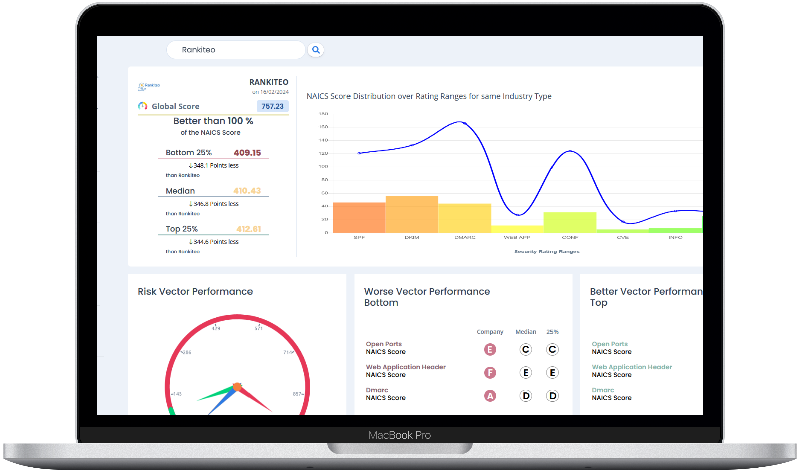
According to Rankiteo, Arkin’s AI-generated cybersecurity score is 762, reflecting their Fair security posture.
According to Rankiteo, Arkin currently holds 0 security badges, indicating that no recognized compliance certifications are currently verified for the organization.
According to Rankiteo, Arkin has not been affected by any supply chain cyber incidents, and no incident IDs are currently listed for the organization.
According to Rankiteo, Arkin is not certified under SOC 2 Type 1.
According to Rankiteo, Arkin does not hold a SOC 2 Type 2 certification.
According to Rankiteo, Arkin is not listed as GDPR compliant.
According to Rankiteo, Arkin does not currently maintain PCI DSS compliance.
According to Rankiteo, Arkin is not compliant with HIPAA regulations.
According to Rankiteo,Arkin is not certified under ISO 27001, indicating the absence of a formally recognized information security management framework.
Arkin operates primarily in the Mental Health Care industry.
Arkin employs approximately 1,927 people worldwide.
Arkin presently has no subsidiaries across any sectors.
Arkin’s official LinkedIn profile has approximately 20,972 followers.
Arkin is classified under the NAICS code 62133, which corresponds to Offices of Mental Health Practitioners (except Physicians).
No, Arkin does not have a profile on Crunchbase.
Yes, Arkin maintains an official LinkedIn profile, which is actively utilized for branding and talent engagement, which can be accessed here: https://www.linkedin.com/company/arkin.
As of January 22, 2026, Rankiteo reports that Arkin has not experienced any cybersecurity incidents.
Arkin has an estimated 5,278 peer or competitor companies worldwide.
Total Incidents: According to Rankiteo, Arkin has faced 0 incidents in the past.
Incident Types: The types of cybersecurity incidents that have occurred include .
.png)
Backstage is an open framework for building developer portals, and @backstage/backend-defaults provides the default implementations and setup for a standard Backstage backend app. Prior to versions 0.12.2, 0.13.2, 0.14.1, and 0.15.0, the `FetchUrlReader` component, used by the catalog and other plugins to fetch content from URLs, followed HTTP redirects automatically. This allowed an attacker who controls a host listed in `backend.reading.allow` to redirect requests to internal or sensitive URLs that are not on the allowlist, bypassing the URL allowlist security control. This is a Server-Side Request Forgery (SSRF) vulnerability that could allow access to internal resources, but it does not allow attackers to include additional request headers. This vulnerability is fixed in `@backstage/backend-defaults` version 0.12.2, 0.13.2, 0.14.1, and 0.15.0. Users should upgrade to this version or later. Some workarounds are available. Restrict `backend.reading.allow` to only trusted hosts that you control and that do not issue redirects, ensure allowed hosts do not have open redirect vulnerabilities, and/or use network-level controls to block access from Backstage to sensitive internal endpoints.
Backstage is an open framework for building developer portals, and @backstage/cli-common provides config loading functionality used by the backend and command line interface of Backstage. Prior to version 0.1.17, the `resolveSafeChildPath` utility function in `@backstage/backend-plugin-api`, which is used to prevent path traversal attacks, failed to properly validate symlink chains and dangling symlinks. An attacker could bypass the path validation via symlink chains (creating `link1 → link2 → /outside` where intermediate symlinks eventually resolve outside the allowed directory) and dangling symlinks (creating symlinks pointing to non-existent paths outside the base directory, which would later be created during file operations). This function is used by Scaffolder actions and other backend components to ensure file operations stay within designated directories. This vulnerability is fixed in `@backstage/backend-plugin-api` version 0.1.17. Users should upgrade to this version or later. Some workarounds are available. Run Backstage in a containerized environment with limited filesystem access and/or restrict template creation to trusted users.
Backstage is an open framework for building developer portals. Multiple Scaffolder actions and archive extraction utilities were vulnerable to symlink-based path traversal attacks. An attacker with access to create and execute Scaffolder templates could exploit symlinks to read arbitrary files via the `debug:log` action by creating a symlink pointing to sensitive files (e.g., `/etc/passwd`, configuration files, secrets); delete arbitrary files via the `fs:delete` action by creating symlinks pointing outside the workspace, and write files outside the workspace via archive extraction (tar/zip) containing malicious symlinks. This affects any Backstage deployment where users can create or execute Scaffolder templates. This vulnerability is fixed in `@backstage/backend-defaults` versions 0.12.2, 0.13.2, 0.14.1, and 0.15.0; `@backstage/plugin-scaffolder-backend` versions 2.2.2, 3.0.2, and 3.1.1; and `@backstage/plugin-scaffolder-node` versions 0.11.2 and 0.12.3. Users should upgrade to these versions or later. Some workarounds are available. Follow the recommendation in the Backstage Threat Model to limit access to creating and updating templates, restrict who can create and execute Scaffolder templates using the permissions framework, audit existing templates for symlink usage, and/or run Backstage in a containerized environment with limited filesystem access.
FastAPI Api Key provides a backend-agnostic library that provides an API key system. Version 1.1.0 has a timing side-channel vulnerability in verify_key(). The method applied a random delay only on verification failures, allowing an attacker to statistically distinguish valid from invalid API keys by measuring response latencies. With enough repeated requests, an adversary could infer whether a key_id corresponds to a valid key, potentially accelerating brute-force or enumeration attacks. All users relying on verify_key() for API key authentication prior to the fix are affected. Users should upgrade to version 1.1.0 to receive a patch. The patch applies a uniform random delay (min_delay to max_delay) to all responses regardless of outcome, eliminating the timing correlation. Some workarounds are available. Add an application-level fixed delay or random jitter to all authentication responses (success and failure) before the fix is applied and/or use rate limiting to reduce the feasibility of statistical timing attacks.
The Flux Operator is a Kubernetes CRD controller that manages the lifecycle of CNCF Flux CD and the ControlPlane enterprise distribution. Starting in version 0.36.0 and prior to version 0.40.0, a privilege escalation vulnerability exists in the Flux Operator Web UI authentication code that allows an attacker to bypass Kubernetes RBAC impersonation and execute API requests with the operator's service account privileges. In order to be vulnerable, cluster admins must configure the Flux Operator with an OIDC provider that issues tokens lacking the expected claims (e.g., `email`, `groups`), or configure custom CEL expressions that can evaluate to empty values. After OIDC token claims are processed through CEL expressions, there is no validation that the resulting `username` and `groups` values are non-empty. When both values are empty, the Kubernetes client-go library does not add impersonation headers to API requests, causing them to be executed with the flux-operator service account's credentials instead of the authenticated user's limited permissions. This can result in privilege escalation, data exposure, and/or information disclosure. Version 0.40.0 patches the issue.

Get company history

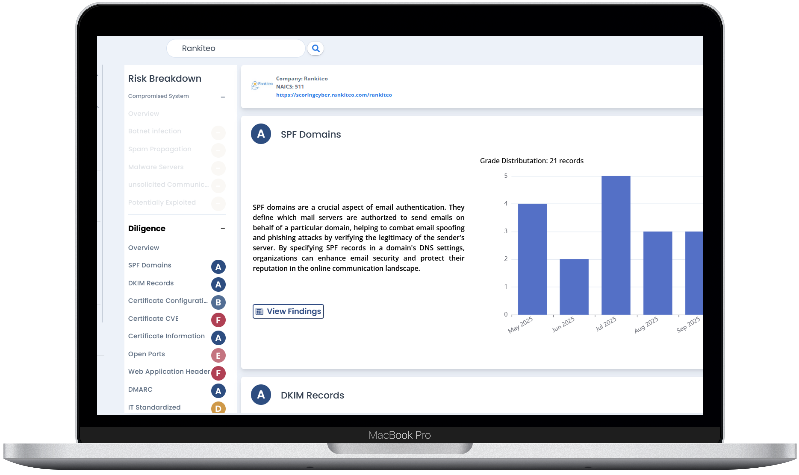
Every week, Rankiteo analyzes billions of signals to give organizations a sharper, faster view of emerging risks. With deeper, more actionable intelligence at their fingertips, security teams can outpace threat actors, respond instantly to Zero-Day attacks, and dramatically shrink their risk exposure window.
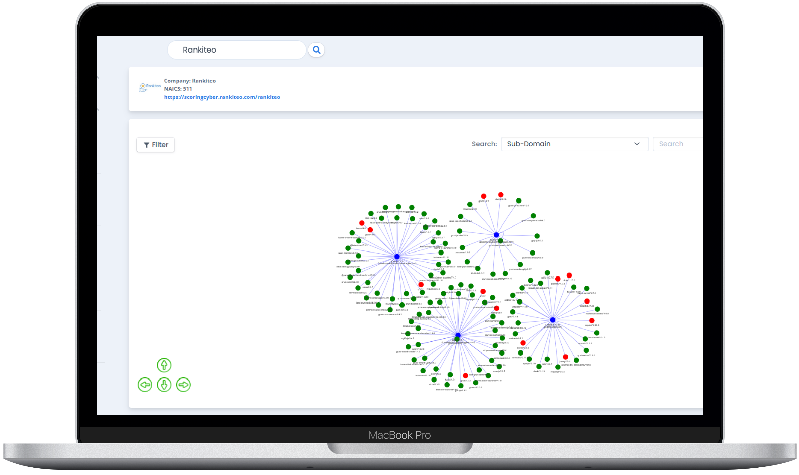
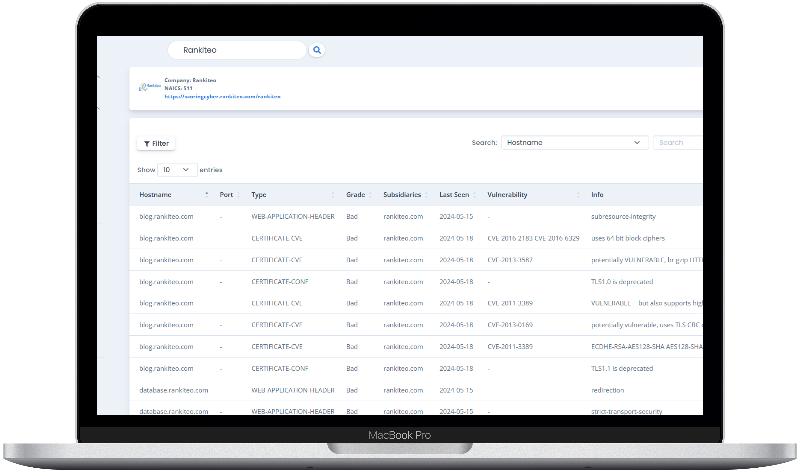
Identify exposed access points, detect misconfigured SSL certificates, and uncover vulnerabilities across the network infrastructure.
Gain visibility into the software components used within an organization to detect vulnerabilities, manage risk, and ensure supply chain security.
Monitor and manage all IT assets and their configurations to ensure accurate, real-time visibility across the company's technology environment.
Leverage real-time insights on active threats, malware campaigns, and emerging vulnerabilities to proactively defend against evolving cyberattacks.



 Rapid
Rapid