






AZG
Company Details
Linkedin ID:
abilene-zoological-gardens
Website:
Employees number:
16
Number of followers:
240
NAICS:
712
Industry Type:
Homepage:
abilenezoo.org
IP Addresses:
0
Company ID:
ABI_2726116
Scan Status:
In-progress


Abilene Zoological Gardens Company CyberSecurity Posture
abilenezoo.org


At Abilene Zoological Gardens (The Abilene Zoo) our purpose and our Mission is to be "a place of learning and adventure, where families make memories, share the joy of discovery and become inspired to preserve wildlife" for the citizens and the visitors of Abilene, Texas where we are one of the prominent, must-see, attractions in the City of Abilene. The Abilene Zoo was first established in 1919 before moving and becoming a formally founded zoological institution in 1966. Currently, it is a sixteen-acre facility, located in scenic Nelson Park, and is home to more than 1000 animals representing over 250 species from across the world with plans of expansion as part of our Master Plan. The Abilene Zoo became a proud member of the Association of Zoos and Aquariums (AZA) in 1985 and in 2015 were presented a prestigious Quarter Century of Continuous Accreditation Award by the AZA, promoting and meeting the current and highest standards of Animal Welfare and Care in North America. Our collection holds, and currently participates in, more than 30 of the AZA's Species Survival Plan (SSP) species and promote nearly two dozen local and international conservation efforts through our Conservation Fund Program "Quarters for Conservation". Of those SSPs we are participants and holders of several native Texas SSP species including: Attwater's Prairie Chicken, Ocelot, Greater Roadrunner, Swift Fox, Ring-tailed Cat, Burrowing Owl, Black-Footed Ferret, and Whooping Crane.
Company Details
abilene-zoological-gardens
16
240
712
abilenezoo.org
0
ABI_2726116
In-progress
 AZG Risk Score (AI oriented)
Between 750 and 799
 AZG Global Score (TPRM)
XXXX


No incidents recorded for Abilene Zoological Gardens in 2026.
No incidents recorded for Abilene Zoological Gardens in 2026.
No incidents recorded for Abilene Zoological Gardens in 2026.
AZG cyber incidents detection timeline including parent company and subsidiaries

At Abilene Zoological Gardens (The Abilene Zoo) our purpose and our Mission is to be "a place of learning and adventure, where families make memories, share the joy of discovery and become inspired to preserve wildlife" for the citizens and the visitors of Abilene, Texas where we are one of the prominent, must-see, attractions in the City of Abilene. The Abilene Zoo was first established in 1919 before moving and becoming a formally founded zoological institution in 1966. Currently, it is a sixteen-acre facility, located in scenic Nelson Park, and is home to more than 1000 animals representing over 250 species from across the world with plans of expansion as part of our Master Plan. The Abilene Zoo became a proud member of the Association of Zoos and Aquariums (AZA) in 1985 and in 2015 were presented a prestigious Quarter Century of Continuous Accreditation Award by the AZA, promoting and meeting the current and highest standards of Animal Welfare and Care in North America. Our collection holds, and currently participates in, more than 30 of the AZA's Species Survival Plan (SSP) species and promote nearly two dozen local and international conservation efforts through our Conservation Fund Program "Quarters for Conservation". Of those SSPs we are participants and holders of several native Texas SSP species including: Attwater's Prairie Chicken, Ocelot, Greater Roadrunner, Swift Fox, Ring-tailed Cat, Burrowing Owl, Black-Footed Ferret, and Whooping Crane.


Artpace was founded by artist, collector, and businesswoman Linda Pace (1945-2007) in 1993 and opened to the public in 1995. Pace conceived of Artpace as a laboratory of dreams, providing artists from all over the world with an environment that would encourage experimentation and growth. In the y

The North Carolina Museum of Natural Sciences is the largest museum of its kind in the Southeast. Through our exhibits, programs and field experiences, we provide visitors with opportunities to get up close and personal with science and nature. Featuring an array of permanent and special exhibits, l

THE LIRIODENDRON FOUNDATION INC is a non-profit organization responsible for upkeep and management of the historic Liriodendron Mansion in Bel Air, Maryland, United States. Built in 1898, The Liriodendron Mansion was the summer home of Dr. Howard Atwood Kelly, his wife Laetitia, and their nine chi
The Stamford Museum & Nature Center is dedicated to the preservation and interpretation of art and popular culture, the natural and agricultural sciences, and history. The Museum is a vital cultural and educational resources for the community, and a focal point for family activity, lifelong learning

Exhibitions | Classes | Music | Summerfest | Gift Shop Standing in BDAC’s main gallery at 90 North Main Street, it can be hard to fathom how much this art center has developed in 40+ years. By 1974, the growing Davis County community developed a need for a local art center. That need was met as Bou

Service over self has been the foundation of the American spirit from the very beginning. In countless ways, large and small, that spirit of service is renewed and revealed every day wherever Americans commit themselves to help others. Now, perhaps more than ever, we need a place to tell the story

Founded in 1910, the Institut français du Royaume-Uni exists to promote French language and culture and to encourage cross-cultural exchange. Comprising a language centre, a cinema (Ciné Lumière), a multi-media library (La Médiathèque) a children's library (Bibliothèque Quentin Blake) and a cafe-r

In the Maritime Museum Rotterdam, you can discover the enormous effect that shipping has on our daily lives. Go on a journey with us through the maritime past and present in modern exhibitions for adventurers large and small. Listen to the stories, admire the prize exhibits from our leading collecti

The Lakeshore Museum Center houses our natural and cultural history exhibits. It is comprised of multiple sites and buildings including the Muskegon Museum of History & Science, the Hackley & Hume Historic Site, the Fire Barn Museum, the Scolnik House of the Depression Era, the Muskegon Heritage Mus
.png)
ABILENE, Texas (KTAB/KRBC) – With more than a million lights throughout the park, activities, treats, reindeer, both Mr. and Mrs. Claus,...
The Abilene Zoo ushered in the concluding weekend of its Boo at the Zoo celebration on Saturday, signaling the finale of a three-weekend...
ABILENE, Texas (KTAB/KRBC) – Officials at the Abilene Zoo have received the fuselage of a retired C-130 Hercules cargo plane,...
ABILENE, Texas (KTAB/KRBC) – As part of its 60th anniversary celebration, the Abilene Zoo is set to unveil a unique and historic...
ABILENE, Texas (KTAB/KRBC) – The Abilene Zoo has announced the successful hatching of eight Mangshan pit vipers, a critically endangered...
ABILENE, Texas (KTAB/KRBC) – Lots of work has been going on at the zoo, but the fruits of all that hard labor will be ready for visitors,...
Abilene Zoo announced Tuesday that their African lions Kenya and Dixie will be moving to another zoo.
Kenya and Dixie, the zoo's African lions, are preparing to go to another AZA-accredited zoo as part of the Lion Species Survival Plan (SSP).
Uno, an 8-year-old bison, has already arrived at the Abilene Zoo and is settling into his new home. In the coming weeks, he will be joined by a female bison.

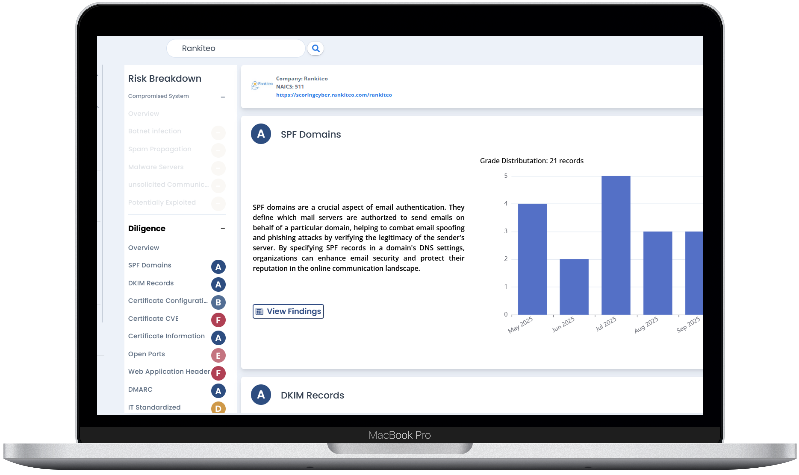
Explore insights on cybersecurity incidents, risk posture, and Rankiteo's assessments.
The official website of Abilene Zoological Gardens is http://abilenezoo.org/.
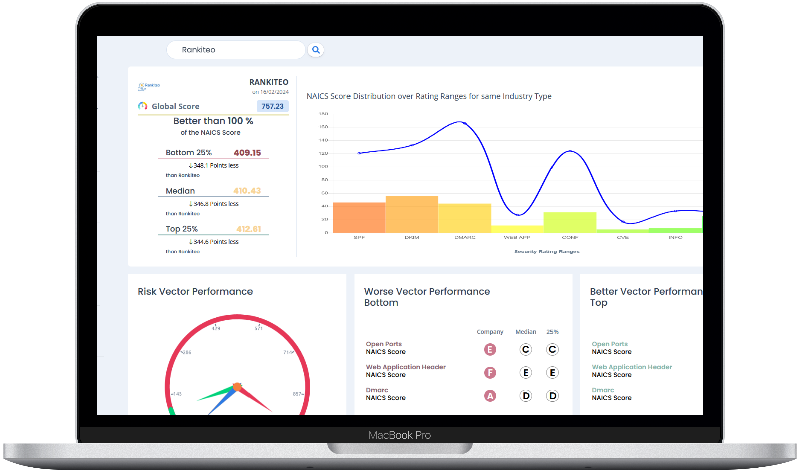
According to Rankiteo, Abilene Zoological Gardens’s AI-generated cybersecurity score is 763, reflecting their Fair security posture.
According to Rankiteo, Abilene Zoological Gardens currently holds 0 security badges, indicating that no recognized compliance certifications are currently verified for the organization.
According to Rankiteo, Abilene Zoological Gardens has not been affected by any supply chain cyber incidents, and no incident IDs are currently listed for the organization.
According to Rankiteo, Abilene Zoological Gardens is not certified under SOC 2 Type 1.
According to Rankiteo, Abilene Zoological Gardens does not hold a SOC 2 Type 2 certification.
According to Rankiteo, Abilene Zoological Gardens is not listed as GDPR compliant.
According to Rankiteo, Abilene Zoological Gardens does not currently maintain PCI DSS compliance.
According to Rankiteo, Abilene Zoological Gardens is not compliant with HIPAA regulations.
According to Rankiteo,Abilene Zoological Gardens is not certified under ISO 27001, indicating the absence of a formally recognized information security management framework.
Abilene Zoological Gardens operates primarily in the Museums, Historical Sites, and Zoos industry.
Abilene Zoological Gardens employs approximately 16 people worldwide.
Abilene Zoological Gardens presently has no subsidiaries across any sectors.
Abilene Zoological Gardens’s official LinkedIn profile has approximately 240 followers.
Abilene Zoological Gardens is classified under the NAICS code 712, which corresponds to Museums, Historical Sites, and Similar Institutions.
No, Abilene Zoological Gardens does not have a profile on Crunchbase.
Yes, Abilene Zoological Gardens maintains an official LinkedIn profile, which is actively utilized for branding and talent engagement, which can be accessed here: https://www.linkedin.com/company/abilene-zoological-gardens.
As of January 24, 2026, Rankiteo reports that Abilene Zoological Gardens has not experienced any cybersecurity incidents.
Abilene Zoological Gardens has an estimated 2,178 peer or competitor companies worldwide.
Total Incidents: According to Rankiteo, Abilene Zoological Gardens has faced 0 incidents in the past.
Incident Types: The types of cybersecurity incidents that have occurred include .
.png)
Typemill is a flat-file, Markdown-based CMS designed for informational documentation websites. A reflected Cross-Site Scripting (XSS) exists in the login error view template `login.twig` of versions 2.19.1 and below. The `username` value can be echoed back without proper contextual encoding when authentication fails. An attacker can execute script in the login page context. This issue has been fixed in version 2.19.2.
A DOM-based Cross-Site Scripting (XSS) vulnerability exists in the DomainCheckerApp class within domain/script.js of Sourcecodester Domain Availability Checker v1.0. The vulnerability occurs because the application improperly handles user-supplied data in the createResultElement method by using the unsafe innerHTML property to render domain search results.
A Remote Code Execution (RCE) vulnerability exists in Sourcecodester Modern Image Gallery App v1.0 within the gallery/upload.php component. The application fails to properly validate uploaded file contents. Additionally, the application preserves the user-supplied file extension during the save process. This allows an unauthenticated attacker to upload arbitrary PHP code by spoofing the MIME type as an image, leading to full system compromise.
A UNIX symbolic link following issue in the jailer component in Firecracker version v1.13.1 and earlier and 1.14.0 on Linux may allow a local host user with write access to the pre-created jailer directories to overwrite arbitrary host files via a symlink attack during the initialization copy at jailer startup, if the jailer is executed with root privileges. To mitigate this issue, users should upgrade to version v1.13.2 or 1.14.1 or above.
An information disclosure vulnerability exists in the /srvs/membersrv/getCashiers endpoint of the Aptsys gemscms backend platform thru 2025-05-28. This unauthenticated endpoint returns a list of cashier accounts, including names, email addresses, usernames, and passwords hashed using MD5. As MD5 is a broken cryptographic function, the hashes can be easily reversed using public tools, exposing user credentials in plaintext. This allows remote attackers to perform unauthorized logins and potentially gain access to sensitive POS operations or backend functions.

Get company history

Every week, Rankiteo analyzes billions of signals to give organizations a sharper, faster view of emerging risks. With deeper, more actionable intelligence at their fingertips, security teams can outpace threat actors, respond instantly to Zero-Day attacks, and dramatically shrink their risk exposure window.
Identify exposed access points, detect misconfigured SSL certificates, and uncover vulnerabilities across the network infrastructure.
Gain visibility into the software components used within an organization to detect vulnerabilities, manage risk, and ensure supply chain security.
Monitor and manage all IT assets and their configurations to ensure accurate, real-time visibility across the company's technology environment.
Leverage real-time insights on active threats, malware campaigns, and emerging vulnerabilities to proactively defend against evolving cyberattacks.



 Rapid
Rapid