







KCM
Company Details
Linkedin ID:
kidspace-children's-museum
Website:
Employees number:
55
Number of followers:
1,644
NAICS:
712
Industry Type:
Homepage:
kidspacemuseum.org
IP Addresses:
0
Company ID:
KID_8377367
Scan Status:
In-progress


Kidspace Children's Museum Company CyberSecurity Posture
kidspacemuseum.org


Kidspace Children's Museum is an industry leader in the field of informal education whose mission is to nurture the potential of all children through kid-driven experiences, inspiring them to become joyful, active learners. In its 40-year history, Kidspace has become known for seeking out new ways to bring children and families together to learn and play. Located on 3.5 acres in Pasadena, California, Kidspace Children's Museum has more than 40 hands-on exhibits, and a variety of outdoor spaces, programs, and special events that are designed to encourage a child's growth and development through exploration of natural environments, investigation in science, and artistic expression.
Company Details
kidspace-children's-museum
55
1,644
712
kidspacemuseum.org
0
KID_8377367
In-progress
 KCM Risk Score (AI oriented)
Between 750 and 799
 KCM Global Score (TPRM)
XXXX


No incidents recorded for Kidspace Children's Museum in 2026.
No incidents recorded for Kidspace Children's Museum in 2026.
No incidents recorded for Kidspace Children's Museum in 2026.
KCM cyber incidents detection timeline including parent company and subsidiaries

Kidspace Children's Museum is an industry leader in the field of informal education whose mission is to nurture the potential of all children through kid-driven experiences, inspiring them to become joyful, active learners. In its 40-year history, Kidspace has become known for seeking out new ways to bring children and families together to learn and play. Located on 3.5 acres in Pasadena, California, Kidspace Children's Museum has more than 40 hands-on exhibits, and a variety of outdoor spaces, programs, and special events that are designed to encourage a child's growth and development through exploration of natural environments, investigation in science, and artistic expression.


The Amon Carter Museum was established through the generosity of Amon G. Carter Sr. (1879–1955) to house his collection of paintings and sculpture by Frederic Remington and Charles M. Russell; to collect, preserve, and exhibit the finest examples of American art; and to serve an educational role thr

The Children’s Museum of Indianapolis is extraordinary—always! Through its world-class exhibits, the museum strives to excite and encourage family learning and curiosity by providing limitless opportunities to create memories and foster a sense of discovery. The mission of The Children’s Museum of I

BUEI is a non-profit organization founded in 1997. BUEI’s mission is “To advance the understanding, appreciation and knowledge of the ocean and to encourage the protection and preservation of the marine environment”. BUEI is open Monday - Friday from 10am-5pm, and Saturday - Sunday from 10am-4pm. L

Experience real ranches, real stories and real heritage through the National Ranching Heritage Center. Roam more than 19 acres at "the Ranch" and discover over 200 years of ranching history in the NRHC historical park. Immerse yourself in the culture, values, and authenticity that define ranching

The Oregon Museum of Science and Industry (OMSI) is a nationally-renowned science center providing science learning to a range of audiences. Our programming is guided by OMSI’s long-term vision to promote a healthy, innovative, and sustainable society where everyone is prepared to participate in civ

The mission of the Mahwah Museum is to preserve and present the history of the community and its connection to the region. Museum exhibits display information about the history of Mahwah and the surrounding community. Gallery talks are presented in the museum by volunteers who have researched and

The Lighthouse ArtCenter Museum and School of Art is constantly working to bring the community unique and diverse visual arts exhibitions and events, art outreach programs and art education. The Museum is made up of five Galleries including the Artists’ Guild Gallery, the Lighthouse ArtCenter Maste
The Norton Simon Museum is known around the world as one of the most remarkable private art collections ever assembled. Over a thirty-year period industrialist Norton Simon (1907–1993) amassed an astonishing collection of European art from the Renaissance to the 20th century and a stellar collection

Hillwood's mission is to delight and engage visitors with an experience inspired by the life of our founder, Marjorie Merriweather Post, and her passion for excellence, gracious hospitality, art, history, and gardens. As a female business trailblazer, Marjorie Merriweather Post had extremely high
.png)
The DETANGLE cybersecurity project has kickstarted in Athens, aiming to help critical EU sectors navigate complex cybersecurity regulations.
UK mid-market organisations are increasingly managing cybersecurity internally as confidence in technology vendors continues to decline,...
The Cybersecurity and Infrastructure Security Agency's acting leader used a hearing on Wednesday to defend the Trump administration's mass...
A recent study exploring insider cybersecurity threats revealed that a majority of college students would be willing to violate the HIPAA...
Multi‑stage AiTM phishing campaign abusing SharePoint, SmarterMail flaw exploited despite patch, the problem of AI agents emerges at Davos.
Photographing this scenario, and also suggesting solutions to be adopted, the Richmond Cyber resilience forum promoted by Richmond Italy.
Michael Johnson, Sammy Migues and John Steven join a group of 2025 appointees, including Mark Koumans, Phil Horvitz and James Smith.
New York-based Claroty, which specializes in infrastructure cybersecurity, said it raised $150 million in a Series F round led by Golub...
The U.S. Department of Commerce's National Institute of Standards and Technology (NIST) has kicked off a revision of SP 800-82 Rev.

Explore insights on cybersecurity incidents, risk posture, and Rankiteo's assessments.
The official website of Kidspace Children's Museum is http://www.kidspacemuseum.org.
According to Rankiteo, Kidspace Children's Museum’s AI-generated cybersecurity score is 762, reflecting their Fair security posture.
According to Rankiteo, Kidspace Children's Museum currently holds 0 security badges, indicating that no recognized compliance certifications are currently verified for the organization.
According to Rankiteo, Kidspace Children's Museum has not been affected by any supply chain cyber incidents, and no incident IDs are currently listed for the organization.
According to Rankiteo, Kidspace Children's Museum is not certified under SOC 2 Type 1.
According to Rankiteo, Kidspace Children's Museum does not hold a SOC 2 Type 2 certification.
According to Rankiteo, Kidspace Children's Museum is not listed as GDPR compliant.
According to Rankiteo, Kidspace Children's Museum does not currently maintain PCI DSS compliance.
According to Rankiteo, Kidspace Children's Museum is not compliant with HIPAA regulations.
According to Rankiteo,Kidspace Children's Museum is not certified under ISO 27001, indicating the absence of a formally recognized information security management framework.
Kidspace Children's Museum operates primarily in the Museums, Historical Sites, and Zoos industry.
Kidspace Children's Museum employs approximately 55 people worldwide.
Kidspace Children's Museum presently has no subsidiaries across any sectors.
Kidspace Children's Museum’s official LinkedIn profile has approximately 1,644 followers.
No, Kidspace Children's Museum does not have a profile on Crunchbase.
Yes, Kidspace Children's Museum maintains an official LinkedIn profile, which is actively utilized for branding and talent engagement, which can be accessed here: https://www.linkedin.com/company/kidspace-children's-museum.
As of January 23, 2026, Rankiteo reports that Kidspace Children's Museum has not experienced any cybersecurity incidents.
Kidspace Children's Museum has an estimated 2,178 peer or competitor companies worldwide.
Total Incidents: According to Rankiteo, Kidspace Children's Museum has faced 0 incidents in the past.
Incident Types: The types of cybersecurity incidents that have occurred include .
.png)
Improper validation of specified type of input in M365 Copilot allows an unauthorized attacker to disclose information over a network.
Improper access control in Azure Front Door (AFD) allows an unauthorized attacker to elevate privileges over a network.
Azure Entra ID Elevation of Privilege Vulnerability
Moonraker is a Python web server providing API access to Klipper 3D printing firmware. In versions 0.9.3 and below, instances configured with the "ldap" component enabled are vulnerable to LDAP search filter injection techniques via the login endpoint. The 401 error response message can be used to determine whether or not a search was successful, allowing for brute force methods to discover LDAP entries on the server such as user IDs and user attributes. This issue has been fixed in version 0.10.0.
Runtipi is a Docker-based, personal homeserver orchestrator that facilitates multiple services on a single server. Versions 3.7.0 and above allow an authenticated user to execute arbitrary system commands on the host server by injecting shell metacharacters into backup filenames. The BackupManager fails to sanitize the filenames of uploaded backups. The system persists user-uploaded files directly to the host filesystem using the raw originalname provided in the request. This allows an attacker to stage a file containing shell metacharacters (e.g., $(id).tar.gz) at a predictable path, which is later referenced during the restore process. The successful storage of the file is what allows the subsequent restore command to reference and execute it. This issue has been fixed in version 4.7.0.

Get company history

Every week, Rankiteo analyzes billions of signals to give organizations a sharper, faster view of emerging risks. With deeper, more actionable intelligence at their fingertips, security teams can outpace threat actors, respond instantly to Zero-Day attacks, and dramatically shrink their risk exposure window.
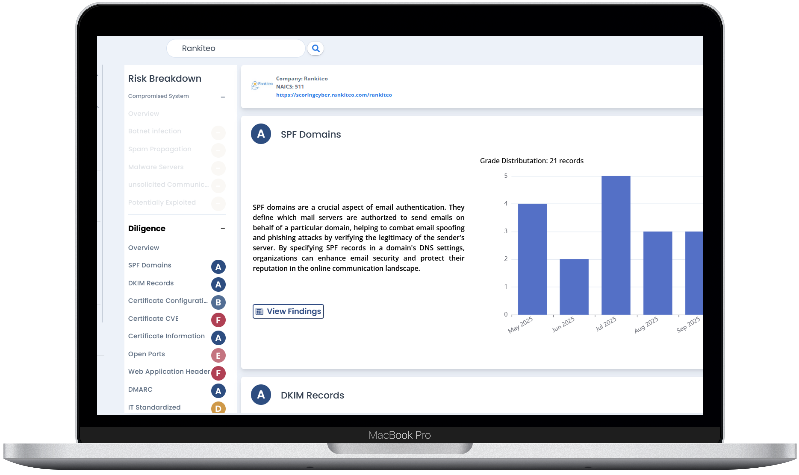
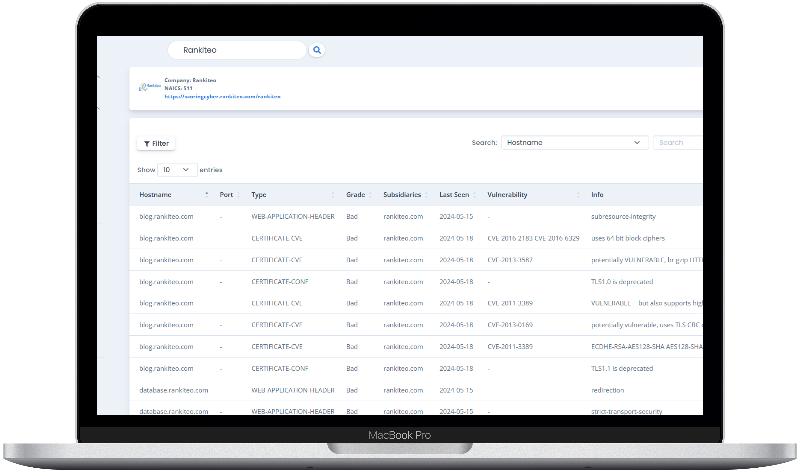
Identify exposed access points, detect misconfigured SSL certificates, and uncover vulnerabilities across the network infrastructure.
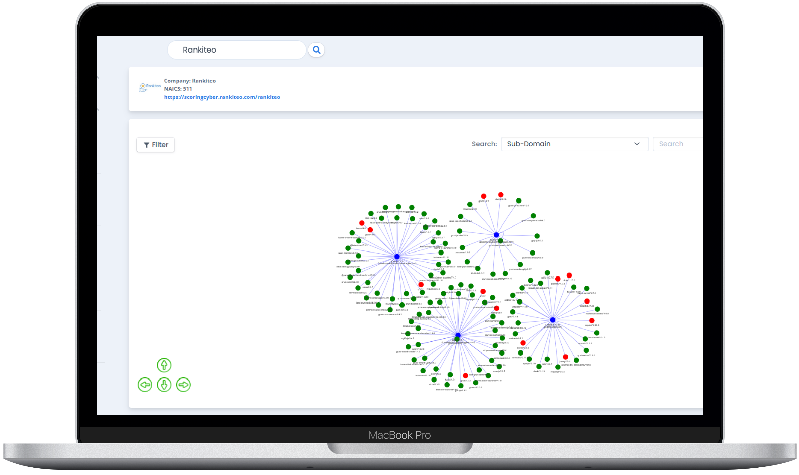
Gain visibility into the software components used within an organization to detect vulnerabilities, manage risk, and ensure supply chain security.
Monitor and manage all IT assets and their configurations to ensure accurate, real-time visibility across the company's technology environment.
Leverage real-time insights on active threats, malware campaigns, and emerging vulnerabilities to proactively defend against evolving cyberattacks.



 Rapid
Rapid