





FMCAC
Company Details
Linkedin ID:
fort-mason-center-for-arts-&-culture
Website:
Employees number:
46
Number of followers:
1,144
NAICS:
712
Industry Type:
Homepage:
fortmason.org
IP Addresses:
0
Company ID:
FOR_1406223
Scan Status:
In-progress


Fort Mason Center for Arts & Culture Company CyberSecurity Posture
fortmason.org


Fort Mason Center for Arts & Culture is a waterfront destination for thought-provoking programs, events, restaurants, and nonprofit organizations that support and reflect the evolving cultural fabric of San Francisco and the Bay Area. An arts hub within San Francisco, the campus consists of former military-use buildings, piers, and open space within the Golden Gate National Recreation Area.
Company Details
fort-mason-center-for-arts-&-culture
46
1,144
712
fortmason.org
0
FOR_1406223
In-progress
 FMCAC Risk Score (AI oriented)
Between 750 and 799
 FMCAC Global Score (TPRM)
XXXX


No incidents recorded for Fort Mason Center for Arts & Culture in 2026.
No incidents recorded for Fort Mason Center for Arts & Culture in 2026.
No incidents recorded for Fort Mason Center for Arts & Culture in 2026.
FMCAC cyber incidents detection timeline including parent company and subsidiaries

Fort Mason Center for Arts & Culture is a waterfront destination for thought-provoking programs, events, restaurants, and nonprofit organizations that support and reflect the evolving cultural fabric of San Francisco and the Bay Area. An arts hub within San Francisco, the campus consists of former military-use buildings, piers, and open space within the Golden Gate National Recreation Area.


Located in the heart of San Francisco, the museum is home to one of the world’s finest collections of Asian art, boasting more than 18,000 awe-inspiring artworks ranging from ancient jades and ceramics to contemporary video installations. Dynamic special exhibitions, cultural celebrations and public
The Museum of Jewish Heritage – A Living Memorial to the Holocaust is New York’s contribution to the global responsibility to never forget. The Museum is committed to the crucial mission of educating diverse visitors about Jewish life before, during, and after the Holocaust. As a place of memory, t
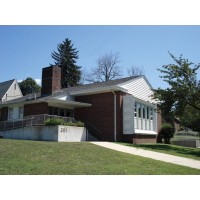
The mission of the Mahwah Museum is to preserve and present the history of the community and its connection to the region. Museum exhibits display information about the history of Mahwah and the surrounding community. Gallery talks are presented in the museum by volunteers who have researched and

The Great Lakes Children’s Museum creates hands-on, interactive, and informal educational environments for children and the adults in their lives that invite curiosity, allow exploration, encourage participation, and celebrate the child-like wonder in all of us. Why is that important? We belie
MISSION STATEMENT The Bass, Miami Beach’s contemporary art museum, creates connections between international contemporary art and the museum’s diverse audiences. The Bass shares the power of contemporary art through experiences that excite, challenge and educate. ABOUT THE BASS The Bass is Miami Be

Founded in 1976 in celebration of the nation's Bicentennial, the African American Museum in Philadelphia (AAMP) is the first institution funded and built by a major municipality to preserve, interpret and exhibit the heritage of African Americans. Throughout its evolution, the museum has objectively
Crystal Bridges Museum of American Art welcomes all to celebrate the American spirit in a setting that unites the power of art with the beauty of nature. We explore the unfolding story of America by actively collecting, exhibiting, interpreting, and preserving outstanding works that illuminate our h

We are the Contemporary Museum of Photography, Art & Culture. A destination to discover world-class photography, inspiring programming, elevated dining and surprising new perspectives. Aiming to create a more conscious world through the power of photography, arts & culture, Fotografiska produces
The Oklahoma City Museum of Art is one of the leading arts institutions in the region. The Museum presents a dynamic range of exhibitions organized from prestigious museums and collections throughout the world. The Museum’s own diverse collection features highlights from North America, Europe, and A
.png)
SAN FRANCISCO (KGO) -- Super Bowl week is not just about the big game but also about the slew of events going on around the Bay Area leading...
January is packed with openings, events and art fairs. Let us help you make sense of the schedule.
Here are the top art events to fill your calendar and keep you cultured, warm and indoors in San Francisco in the coming months.
Cowell Theater at Fort Mason Center for Arts & Culture ... Mark Foehringer Dance Project|SF announces the 17th season of its annual holiday show,...
Post Malone and Bud Light are bringing a free live music experience to San Francisco just in time for the 2026 Super Bowl.
Tchaikovsky's classic ballet The Nutcracker is time-honored Christmas tradition for many! Here's our guide to San Francisco Bay Area...
Event details about West Coast Craft in San Francisco on November 23, 2025 - watch, listen, photos and tickets.
The Fort Mason Center for Arts and Culture will host the Renegade Craft Fair this weekend. The two-day event brings businesses that...
Renegade Craft Fair will return to Fort Mason Center next weekend, November 1 through 2 for their winter market.

Explore insights on cybersecurity incidents, risk posture, and Rankiteo's assessments.
The official website of Fort Mason Center for Arts & Culture is http://www.fortmason.org.
According to Rankiteo, Fort Mason Center for Arts & Culture’s AI-generated cybersecurity score is 762, reflecting their Fair security posture.
According to Rankiteo, Fort Mason Center for Arts & Culture currently holds 0 security badges, indicating that no recognized compliance certifications are currently verified for the organization.
According to Rankiteo, Fort Mason Center for Arts & Culture has not been affected by any supply chain cyber incidents, and no incident IDs are currently listed for the organization.
According to Rankiteo, Fort Mason Center for Arts & Culture is not certified under SOC 2 Type 1.
According to Rankiteo, Fort Mason Center for Arts & Culture does not hold a SOC 2 Type 2 certification.
According to Rankiteo, Fort Mason Center for Arts & Culture is not listed as GDPR compliant.
According to Rankiteo, Fort Mason Center for Arts & Culture does not currently maintain PCI DSS compliance.
According to Rankiteo, Fort Mason Center for Arts & Culture is not compliant with HIPAA regulations.
According to Rankiteo,Fort Mason Center for Arts & Culture is not certified under ISO 27001, indicating the absence of a formally recognized information security management framework.
Fort Mason Center for Arts & Culture operates primarily in the Museums, Historical Sites, and Zoos industry.
Fort Mason Center for Arts & Culture employs approximately 46 people worldwide.
Fort Mason Center for Arts & Culture presently has no subsidiaries across any sectors.
Fort Mason Center for Arts & Culture’s official LinkedIn profile has approximately 1,144 followers.
Fort Mason Center for Arts & Culture is classified under the NAICS code 712, which corresponds to Museums, Historical Sites, and Similar Institutions.
No, Fort Mason Center for Arts & Culture does not have a profile on Crunchbase.
Yes, Fort Mason Center for Arts & Culture maintains an official LinkedIn profile, which is actively utilized for branding and talent engagement, which can be accessed here: https://www.linkedin.com/company/fort-mason-center-for-arts-&-culture.
As of January 23, 2026, Rankiteo reports that Fort Mason Center for Arts & Culture has not experienced any cybersecurity incidents.
Fort Mason Center for Arts & Culture has an estimated 2,181 peer or competitor companies worldwide.
Total Incidents: According to Rankiteo, Fort Mason Center for Arts & Culture has faced 0 incidents in the past.
Incident Types: The types of cybersecurity incidents that have occurred include .
.png)
Improper validation of specified type of input in M365 Copilot allows an unauthorized attacker to disclose information over a network.
Improper access control in Azure Front Door (AFD) allows an unauthorized attacker to elevate privileges over a network.
Azure Entra ID Elevation of Privilege Vulnerability
Moonraker is a Python web server providing API access to Klipper 3D printing firmware. In versions 0.9.3 and below, instances configured with the "ldap" component enabled are vulnerable to LDAP search filter injection techniques via the login endpoint. The 401 error response message can be used to determine whether or not a search was successful, allowing for brute force methods to discover LDAP entries on the server such as user IDs and user attributes. This issue has been fixed in version 0.10.0.
Runtipi is a Docker-based, personal homeserver orchestrator that facilitates multiple services on a single server. Versions 3.7.0 and above allow an authenticated user to execute arbitrary system commands on the host server by injecting shell metacharacters into backup filenames. The BackupManager fails to sanitize the filenames of uploaded backups. The system persists user-uploaded files directly to the host filesystem using the raw originalname provided in the request. This allows an attacker to stage a file containing shell metacharacters (e.g., $(id).tar.gz) at a predictable path, which is later referenced during the restore process. The successful storage of the file is what allows the subsequent restore command to reference and execute it. This issue has been fixed in version 4.7.0.

Get company history

Every week, Rankiteo analyzes billions of signals to give organizations a sharper, faster view of emerging risks. With deeper, more actionable intelligence at their fingertips, security teams can outpace threat actors, respond instantly to Zero-Day attacks, and dramatically shrink their risk exposure window.
Identify exposed access points, detect misconfigured SSL certificates, and uncover vulnerabilities across the network infrastructure.
Gain visibility into the software components used within an organization to detect vulnerabilities, manage risk, and ensure supply chain security.
Monitor and manage all IT assets and their configurations to ensure accurate, real-time visibility across the company's technology environment.
Leverage real-time insights on active threats, malware campaigns, and emerging vulnerabilities to proactively defend against evolving cyberattacks.




 Rapid
Rapid